

An herb, a spice, an aromatic, etc. — What's your own “catnip”?
2 years ago
last modified: 2 years ago
Featured Answer
Sort by:Oldest
Comments (26)
Related Discussions
Which spice and herb reference book.
Comments (15)So here I am opening it, carefully, though with this kind of binding there isn't a worry about cracking the spine. :) This is a beautiful book and exactly what I wanted. herbs & spices the cook's reference Jill Norman The page edges and backgrounds are different colors. I can't find a theme for the colorings, on first glance, and it may just be for pretty. The author talks about different definitions of spice by region and uses what she calls the European version (though it's what I've always used too) that herbs are called herbs whether fresh or dried, and the same for spices. The very first one is parsley. She only has curly, flat leaf and root, and I have more kinds trying to die in the garden (I'm the only one I know who has trouble grown parsley but none growing roses and orchids), but that's what I like about the book. I can taste the difference between the different kinds of flat leaf parsley I have, but they're really nearly the same. Each large picture of the three forms gets a one paragraph description, takes about flavor and where it's from. There are a couple of paragraphs of culinary uses for the group, what kinds of things it goes in, how to prepare it, what it goes well with and what it's necessary for. There's a sidebar with a paragraph of "tasting notes", then "parts used", "buying and storing" and "grow your own" (which just talks about seeding and not why mine always wants to die...) On the other hand, extra pages are devoted to multiple kinds of sage and thyme, for instance (those are very happy in my garden and thrilled to be in the book!). This template is used for all the entries. They're written using lists of overlapping names and a point of view that straddles the Atlantic. My only quibble so far is that the author says that welsh onions (which have nothing to do with Wales which I learned from an article online) are different from scallions, but as far as I can tell she's the only one who thinks so...the Latin names are the same. So no matter how hard she has tried to cover global usage, I think it's an impossible task. On the Rosemary page, since there aren't a bunch of alternate forms, she uses the facing page for a big picture and small paragraph on Herbes de Provence. Similarly, on the spice side, there are pictures of it ground and also of it in use, when there aren't a bunch of alternates to show. There are pictorials on bruising, grating slicing and shredding spices, dry roasting and frying spices, grinding crushing and making spice pastes, and how to deal with fresh and dried chili peppers. On the herb side, there's stripping, chopping and pounding herbs, drying and rubbing herbs, and making vinegars, oils and butters If I'd had this book three days ago I would have seen chives flowers before mine bloomed. :) At the end are short chapters on herb mixtures, which are recipes bouquets garnis, pastes, seasoning mixes etc. Spice mixtures includes some curry pastes and powders, seven- and five-spice, masalas, ras el hanout etc., organized by region of origin. The Sauces and condiments chapter has everything from salsa verde to pesto to bearnaise, salsas, chutneys and sambals. The Marinades include dry adobo, and some other, more general flavors. The Soups and Light dishes have things like tarragon soup, fattoush and spring rolls. There are also a couple of pages each for fish, all meats, and vegetables, many leaning East, but some Western too. There's a pasta, noodles and grains section with some classics and a desserts and drinks page with some basics. There's an extensive bibliography, a couple pages of sources around the world, most UK, The Spice House (father of Penzey's) and several US live and dried herb purveyors, some Canadian and Australian, and a few other countries. Also a website (in French) for Middle Eastern herbs and spices. I haven't had it long enough to know if the index is good, but given the organization, it almost doesn't have to be. Most of the pages are the two page layouts that I described above. There isn't a lot of verbiage. This isn't a botanical or a gardening book. (Yeah!) What it is is a great reference for people who don't want to read through a whole big book to get a quick answer, who generally know how to cook and how to garden, and just want to look up the essentials. I didn't even know there was lemon myrtle! (It's Australian.) And the recipes are best for spice mixtures and least for complete dishes to make. Those, however, could be great jumping off points. I love this book!! It's very easy to browse, and will be easy to use, and it's SO PRETTY! and it says just what I want to know without wasting my time with excess and has big, delicious photographs, instead of tight little drawings and parsimonious crowded snapshots. This one is getting shelf space in the kitchen. :) edit: words left out about Spice House founder above. The Spice House was founded as bricks and mortar by Penzey Sr. Penzey's was started later as a catalog business by Penzey Jr., and has become a larger chain of bricks and mortar. Both have (crummy) web sites, though Spice House is much better. Spice house has more variety. Penzey's probably makes more money by limiting. Personal opinion. YMMV. This post was edited by plllog on Thu, Apr 10, 14 at 0:22...See MoreJarred spice/herb shelf lifes?
Comments (11)What I like about Penzeys is they sell almost all of their spices in the little 1/4 cup jars, which really helps me keep my spices fresh, since single-me doesn't use up spices that fast, especially the less common ones. I also love some of Penzeys unique blends. But I have to pay shipping so not much of a cost savings so I only order things once and a while from there, specialty items, etc. I can also get good spices locally so it's all good. I don't throw spices out too often, I just use them a little more liberally if they are older. Chile powders seem to hold up relatively well for me, I don't go thru the hotter stuff very fast. Paprika, on the other hand, looses its delicate flavor fast. But who cares if you are just using paprika for the color. I do some N. African/Middle Eastern and Hungarian cooking and I actually use paprika for the taste. As for having little jars of weird spices on the counter, I hear ya! But in those situations I try to find recipes I like using that ingredient. I love to experiment in the kitchen. Tumeric is so good for you, I have developed a repertoire of recipes using it. BTW, that's another spice that doesn't do well sitting on the shelf for long periods of time. I think that's why a lot of people don't think tumeric has much taste, because the taste it does have seems to fade faster than I can use it up. I like tumeric with rice and peas or spinach. It's the poor man's saffron....See MoreHelp me choose spices and herbs for outdoor garden
Comments (10)"How can I tell if it is *really* French Tarragon?" If the nursery has only one variety of "Tarragon," it's Russian Tarragon. If they only have "French Tarragon," it's mis-marked. If they have both French Tarragon and Russian Tarragon, put one of each plant next to each and compare them. The French Tarragon should have: darker leaves, smoother leaves, shinier leaves, a stronger, more pungent aroma a stronger flavor with no trace of bitterness Russian Tarragon has a weaker flavor and aroma, with a slight bitter edge. If the nursery has both "Russian Tarragon" and "French Tarragon," and they appear, smell and taste virtually identical, they are both Russian Tarragon. If the nursery is growing from seed, the seed supplier is probably the origin of the misidentification. If they are growing from cuttings, the nursery itself is suspect. If they buy from a "wholesale nursery," then the problem is upstream in the chain, and the wholesale nursery or their seed supplier is suspect. Which brings me to this overall advice: If you're planting herbs to cook with, when shopping at the nursery, smell and taste every plant you're going to buy. Reject any with weak flavor or off flavor or off aroma. Find that taste good and smell good. Don't buy any of that "cat pee sage" we see g posts about on here. Oh, and some mint is good. Be careful, that's another one that spreads far and wide from where you plant it. One final note, even with all "perennial herbs," there are some differing requirements from one type to another. Separating your herbs in some way will work to your advantage. You could have your "garden guy" use blocks or bricks build up "raised beds" and separate your various herbs. I use old tires for raised "mini-beds" in my herb garden. I cut out the sidewall on the side that goes down on the ground. I break up the soil underneath to allow for some deeper root growth, and I work some perlite into the soil because here my soil is very water retentive with a lot of clay in it. I then fill in the tire with a mix of good topsoil and "forest floor compost" that I rake up from the woods here on my acreage. I rake the loose leaves off the top, then rake up and shovel up the "coffee grounds" like layer under that, on top of the topsoil. It's great compost. You can use a mix of any good finished compost and good draining topsoil/garden soil to build up the raised beds. Some perlite in the mix will help with drainage....See Moreare all Spice Island brand spices use msg etc?
Comments (22)Curry powder is really a European (British) invention. One derivation of the word itself is from medieval English 'cury', meaning to cook. 'Curry' or curry powder as such did not exist in India but they did use a similar spice mix combination - garam masala. Garam masala just omits any chilis or peppers that gives curry powder its heat. This was a feature favored by the early explorers and European colonists, probably to disguise the taste of less than fresh meat. Curry, as westerners know it, is not found in India and is not served in traditional Indian restaurants.....about as close as you would get with authentic Indian cuisine is korma And just like there is no single style of BBQ (sorry, Dan), there is no single recipe for garam masala (or curry powder for that matter). Individual areas or regions have their own combination of spices that are unique to them, just as various areas of the US have their own BBQ methodology. But I doubt you will find recipes for either garam masala or curry powder in any form that include MSG....See More- 2 years ago
- 2 years ago
 2 years agolast modified: 2 years agoplllog thanked carolb_w_fl_coastal_9/10
- 2 years agolast modified: 2 years agoplllog thanked carolb_w_fl_coastal_9/10



Related Stories
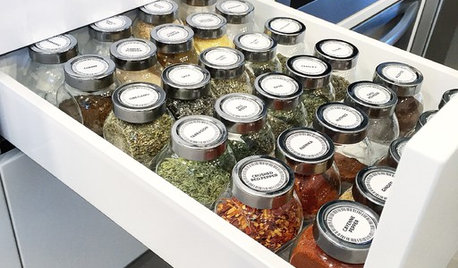
KITCHEN STORAGE16 Ways to Store Your Herbs and Spices
From super neat and organized to surprisingly artistic, there’s a seasoning-stashing solution for everyone
Full Story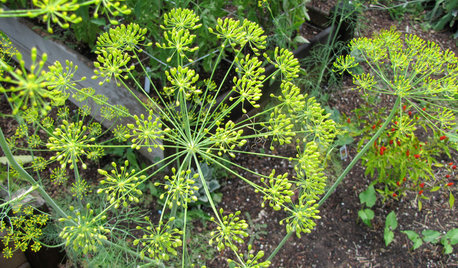
EDIBLE GARDENSHerb Garden Essentials: Grow Your Own Tasty, Frilly Dill
Flavor your food and attract butterflies with easy-care (and pretty) dill in the garden
Full Story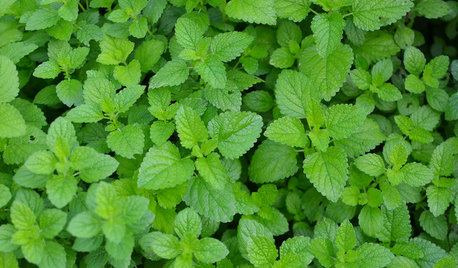
EDIBLE GARDENS12 Essential Herbs for Your Edible Garden
Make home cooking and drinks even better with herbs plucked from your own backyard or windowsill pot
Full Story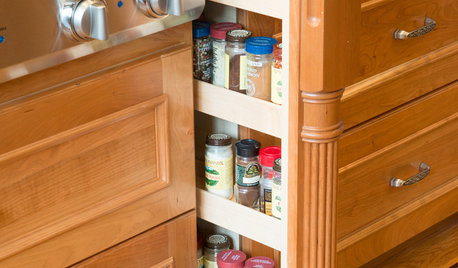
KITCHEN STORAGEHow to Add a Pullout Spice Rack
Keep spices neat and free of kitchen grime by giving them a well-organized home in your cabinets
Full Story
KITCHEN DESIGNKitchen of the Week: Rustic Space Opens to Herb and Vegetable Gardens
Well-chosen recycled and repurposed features create a North Carolina cottage kitchen with a distinctive look and personality
Full Story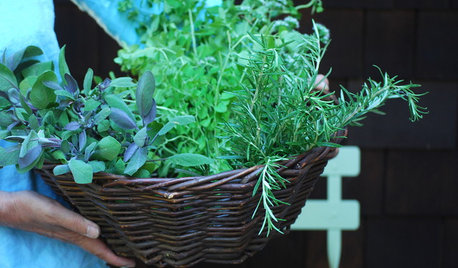
GARDENING GUIDESExtreme Herb Gardening for Extreme Flavor
Fresh herbs grown at home are the secret to sumptuous meals for you and your guests
Full Story
KITCHEN DESIGNCreate Your Own Checklist for a Well-Stocked Kitchen
Personalize the kitchen with your own must-haves from our list of top cooking tools, small appliances, pots, pans and more
Full Story
KITCHEN STORAGEHouzz TV: Turn a Junk Drawer Into an Organized Space for Spices
In 4 steps, go from random stuff to streamlined spice drawer
Full Story
KITCHEN DESIGNRenting? 15 Ways to Make Your Kitchen Your Own
If you’re feeling stuck with a blah kitchen you can’t renovate, these small moves can help make it feel like home
Full Story
GARDENING GUIDES6 Gift-Giving Gardens for Delights Beyond the Visual
Grow your own natural dyes, snip herbs for home brews and more ... these creative gardens have benefits beyond beauty alone
Full Story
John Liu