

Language Change Index
9 years ago
last modified: 9 years ago
Featured Answer
Sort by:Oldest
Comments (80)
 9 years agolast modified: 9 years ago
- 9 years agolast modified: 9 years ago
Related Discussions
Current Keetch-Byram Drought Index Map
Comments (15)Scott, Thanks for the explanation of how the timing of the rainfall affects the quality/size of the crop. I found that really interesting. I think, oddly enough, that your trees will suffer more than mine in a dry year. Mine are used to dry years more often but yours are "spoiled" and are used to plentiful moisture since that's what they normally have. Mine cannot miss what they never have, but yours surely must miss the level of moisture they're used to receiving. I'm in the part of OK that still is teetering just on the edge of drought, but not in drought yet, and adjacent areas of Texas between us and Dallas are in the same boat. Yet, there have been some very big, fast-moving grassfires and wildfires there in between rounds of rain. That was especially true in May and June when wheat fields were catching fire, often from the combines that were doing the harvesting. One week I'll think they look insanely dry when we drive through there, but then a couple of weeks later it will look a lot more green. It is such an odd year down here--seesawing back and forth from too dry to a little wet to too dry again. In February and March we were too wet, but that seems so long ago. Scott, I don't put much faith in any forecast more than 48 hours in advance. The NWS seems to have more luck forecasting, for example, the conditions that come together for a severe weather outbreak than they have forecasting the high temperature 24 hours in advance. Last year and this year our high temp has consistently gone 3 to 5 degrees (or more) higher than forecast. Last year I decided maybe our thermometers (mounted 5' above ground in full shade all day) were wrong and kept buying more thermometers. We now have 6 and I can tell you that our thermometers all tend to agree with one another within 1 degree, but almost never agree with the Burneyville mesonet station or the forecast. If the NWS says "93", then Tim and I expect it will be at least 95 to 97, and it usually is. I just look at the rain forecasts and shrug. Most of the time when there is a chance of rain, it doesn't fall here, and there's nothing we can do to change that. I try not to obsess over it because we sure cannot make it rain. I expect that it is somewhat challenging to forecast the weather here in the middle of the country because of the way so many different contributing factors come together (or don't come together). Our local forecasters seem to have a pretty good handle on our weather, and often they will disagree with the NWS forecast and sometimes they even explain why the don't expect some part of the NWS forecast to pan out. I appreciate that they take the time to explain their reasoning. It cannot be easy, either, because they cover a lot of area on both sides of the river. Remember the words of Mark Twain? He said "everybody talks about the weather but nobody does anything about it". That's as true now as it was when he wrote it. Dawn...See MoreSalt-index of chemical fertilizer & soluble for hot weather
Comments (37)Purlisa: I no longer post for the pubic, but I make exceptions when people ask for me specifically. I respect & learn from honest folks like you who share about their garden. I learn more from honest folks who talk about problems in their garden, than gorgeous pics. of roses (with zero details as to type of soil & pH-level & climate & annual rainfall). That's my pet-peeve in HMF, folks just post pics, without specifying if it's own-root or grafted, zero info. on planting zone & type of soil & climate. If you click on my Houzz profile-picture , I updated to include tips on how to tell which own-roots are appropriate for which soil pH, type of soil & climate, just by looking at the leaves. https://www.houzz.com/user/strawchicago I received 8 roses yesterday 6/15 from RU summer sale, they are BIG, and some are over 2 feet tall & with buds & blooms .. very healthy. These roses are bigger & more blooms that the 7 roses I bought full-price early May. My last house was acidic clay: soft & easy to dig, with blue hydrangeas & deep-colors roses. My current house is alkaline clay: rock-hard, need a pick-ax to dig, pink hydrangeas, and roses have faded colors. Roses are much healthier in alkaline clay. My purpose of posting is to help foiks NOT to make the same mistakes like I did in my 30+ years of growing roses, and 110 own-root varieties. My B.S. is in Computer Science, minor in Chemistry, so I want to use my background to help folks. If you have sticky & dense clay, skip the Epsom salt (magnesium sulfate), since it hardens clay further. MAGNESIUM DEFICIENCY IS RARE, EXCEPT IN SANDY SOIL (this is from the booklet when I got my soil tested by EarthCo.) My sticky clay soil was tested exceedingly high in magnesium. Skip the molasses, I tested for many years and it attracts rose-slugs, plus sugarly stuff LOWERS soil pH, sugar sours things fast. Azomite is similar to dolomitic lime (both have pH 9), but Azomite works faster. Digging deep, and remove the dense & icky clay & rocks at bottom helps with drainage, so acidic rain water don't sit at the bottom to rot roots. If your clay soil is acidic, COARSE sand (paver's sand) is good on top. BAGGED SAND AT STORES IS VERY ALKALINE, so it will neutralize the acidity of rain. Niels in Denmark, with hundreds of roses, put sand on top of his acidic clay. Skip the alfalfa, it becomes VERY ACIDIC like Kimchi if decays in acidic rain water. Many folks report roses breaking out in blackspots after "sour alfalfa tea", it's like watering roses with sauerkraut or Kimchi-water. At least Kimchi or sauerkraut has salt to control the acidity, but I already tested acidic-alfalfa-tea and it made leaves thinner, thanks to its acidity. Since my clay is rock-hard alkaline at pH near 8, I use acidic pine bark (pH 4) to fix my clay. People root roses in sand. I read a book by a CA rose-grower on the coast (mild temperate climate), he bought a land filled with sand and converted into a rose nursery, to sell cut-flowers !! Here's an excerpt from Houzz when I googled on clay .. folks in CA have heavy abode clay, while I have dolomitic clay. But both are mineral-rich clay. Kittymoonbeam have over 100+ roses in Southern CA, wrote this in Houzz .. from my experience I agree with her 100% .. I killed plenty of roses with acidic organic matter in the planting hole. And Roses Unlimited's tip of 1 cup of alfalfa meal mix-in WORKS ONLY FOR THEIR ALKALINE-TAP WATER inside nursery, but NOT FOR OUTDOOR ACIDIC RAIN, with pH 4.5 in my Chicagoland, and even more acidic rain on the East Coast. Kittymoonbeam - "I just came from a soils class by a local nurseryman. He said DON'T add organic amendment into the soil. The plants only tolerate it, not prosper in it. The short of it is that eventually it breaks down and rots causing oxygen problems in the root zone. A NASA guy said NO terrestrial plant wants to live in ground up dead tree. So most potting soils are only good for maybe 5 months, then they start harming plants. The growers know the plants can only survive a short period before they decline in that mix. Potting up in non amended soil causes no harm. You can grow in 100 percent sand as long as you water and feed often enough. Strawberry leaves from plants grown in sand were twice the size of those in the premium potting mix! There are no overwatering issues. Why the change from propagation in soil to wood products is a long story. However, we've all been taught to do it. But no one ever used to in the old days. Disneyland removed their riverbed soil and replaced with amended soil. After a few years, they took it all out and purchased new riverbed sandy loam and now they only mulch on top. This is all new to me but that's the way it was for millions of years. The organic stuff stays on top where it breaks down and travels to the roots below. Roots want a purely mineral soil with as much oxygen as they can get and still be moist." Kittymoonbeam. Lauren (Los Angeles, 10a, Sunset Zone 19) - kittymoonbeam, that does seem to make sense. Limited personal experience has also showed me that top dressing compost with shredded leaves/mulch produced better results than than simply mixing some compost into the surrounding soil" Lauren...See More(Food) Price Index to All-Time High
Comments (14)God bless the grass that grows through cement. It's green and it's tender and it's easily bent. But after a while it lifts up its head, For the grass is living and the stone is dead, And God bless the grass. --Malvina Reynolds I was thinking about this some days ago, that they're covering over some of the best farmland in the world, in the San Joaquin Valley, with subdivisions. And how when there's no more food and water in the Valley, they'll be digging up houses and parking lots looking for good earth. I'm not a big food snob. I love a good burger, emphasis on the "good" (best I ever had was in a roadside stand in the backwoods of Oregon). I love Amy's Macaroni and Soy Cheeze (frozen prepared food). But in the past few years, in big city fine dining restaurants, I've had really fine meals only a couple of times. That wasn't a food quality issue or availability issue. It was a lack of care. And I think that's at the root of a lot of these other issues as well. I saw a report on TV about the "new cuts" of meat. They had people who "invented" them. A lot of it was about producing more affordable cuts that would cook up better than just cutting slabs off the larger hunk. What makes me wonder though is the growing popularity of cuts formerly thought to be inferior. Following the faddish popularity of fajitas, skirt steak became very popular and fine dining chefs are now treating it as a prize. The whole point of fajitas was that the skirt was cheap. It was tough and almost considered trimmings, and by marinating it for three days and frying it up with the onion and peppers it could be made into something yummy. There's very little skirt on an animal, however, so with low supply and high demand... Chicken wings became a thing because they used to be cheap too because they were undesirable. They're bony, little meat, and hard to cook. Even harder to eat with a knife and fork. They're not cheap anymore! But I did learn the trick to soup bones. The butcher told me. If you ask for soup bones in his store, it costs about the same as ground chuck. If you ask for dog bones, the same bones cost about $2/lb. I too miss the free bones (though they do give free shankbones for Passover), but $2 for meaty, marrowy bones doesn't feel outrageous. I was watching a news discussion show to see one of my dear ones showing her expertise, but just before her segment was a discussion of "food gentrification". They were talking about how rich people had discovered chard and driven up the price and now were doing the same with collards. They said this was affecting poor people's health, especially in the South where these greens have been an important staple, and nutritionally necessary....See More110 Heat Index Today
Comments (9)I have owned two houses (not at the same time) and have experience with the older thermostatic coil thermostats. My first had contacts exposed to the air and the second one used a small bulb of mercury. The bi-metallic elements in both lasted forever. The exposed contacts were not as reliable as the mercury switch. Once in a great while, a speck of debris would get between the contacts and prevent circuit closure. (This is a low voltage circuit, about 24 volts and powered from the bell transformer.) The mercury switch did not have such problem and has been the most reliable by far. I owned the first house 13 years and the second house 39 years have never replaced either thermostat. The only maintence I do on my present mercury swith thermostat is to pull the cover off and inspect for dust bunnies - it does collect and assortment of household dust over time. I blow these out by mouth or by a breeze from hair dryer (with heat turned off). One has to use care when blowing by mouth to avoid spittle on the parts. I will not be so lucky if I ever get a programmable thermostat since these have electronic parts and a circuit board. These are susceptible to voltage transients and aging. Some day, I may replace the furnace with a high efficiency model and that will involve electronic controls both for the furnace and the thermostat circuit. I am not looking forward to that since we do get a number of power line lightening strikes every year. My old gas furnace has been reliable. In all this time, I have replaced very few faucets, and merely did standard maintenance such as replace stem tip washers, repack gland nuts, and on newer faucets, replaced the "O"-ring seal on the end of the stem. Two years ago, I did replace a set of kitchen faucets because the diverter valve for the rinse hose had been ruined with some heavy handed tool work (by me). The bath tub/shower valve had to be replaced. That was broken trying to remove the cartridge after having been in place for 15 years. A had a plumber friend replace this for me since it involved cutting and soldering copper plumbing....See More- 9 years ago
- 9 years ago
- 9 years ago
- 9 years agolast modified: 9 years ago
- 9 years agolast modified: 9 years ago
- 9 years ago
 9 years ago
 9 years ago
- 9 years ago
- 9 years ago
- 9 years ago
- 9 years ago
- 9 years ago
- 9 years agolast modified: 9 years ago
- 9 years ago
- 9 years ago
- 9 years agolast modified: 9 years ago
- 9 years ago
- 9 years agolast modified: 9 years ago
- 9 years ago
- 9 years agolast modified: 9 years ago
- 9 years agolast modified: 9 years ago
- 9 years agolast modified: 9 years ago
- 9 years ago
- 9 years ago
- 9 years agolast modified: 9 years ago
- 9 years ago
- 9 years ago
 9 years agolast modified: 9 years ago
- 9 years ago
- 9 years ago
- 9 years ago
- 9 years ago
- 9 years ago
- 9 years ago
- 9 years ago
- 9 years ago
- 9 years ago
- 9 years ago
- 9 years ago
- 9 years ago
- 9 years ago
- 9 years ago
- 9 years ago
- 9 years ago
- 9 years ago
- 9 years ago
- 9 years ago
Related Stories

REMODELING GUIDESGreat Compositions: The Language of Walls
See how a well-designed wall can do much more than enclose a space
Full Story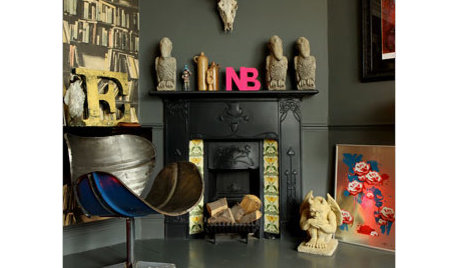
BOOKSCan Tidying Up Result in Life-Changing Magic?
Organizing phenom Marie Kondo promises big results — if you embrace enormous changes and tough choices
Full Story
HOME TECHHow Smart TV Will Change Your Living Room
Get ready for the future of TV, in which your living room becomes a movie set, a communication hub and a gaming zone
Full Story
LIFEHow to Make Your House a Haven Without Changing a Thing
Hung up on 'perfect' aesthetics? You may be missing out on what gives a home real meaning
Full Story
LIFEStop the Toy Takeover by Changing the Way You Think
Make over your approach and get gift givers onboard with your decluttering efforts by providing meaningful toy alternatives
Full Story
HOUZZ TOURSMy Houzz: The Orchard and the Life-Changing Decision
Toxins give way to pure, wholesome produce and passionately green living in this home and orchard in Eastern Oregon
Full Story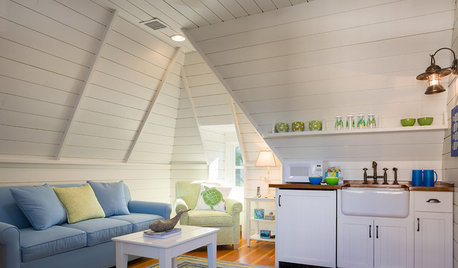
LIFEThe Polite House: How to Set Rules for Adult Children Living at Home
Here are 3 important conversations to have, and the language that will help you succeed
Full Story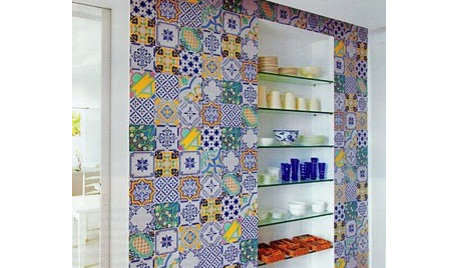
TILETile From Around the Globe Adds Out-of-This-World Panache
Go ahead, let color and pattern run wild in your tile. Your walls, floors and countertops will say "thank you" in a whole new language
Full Story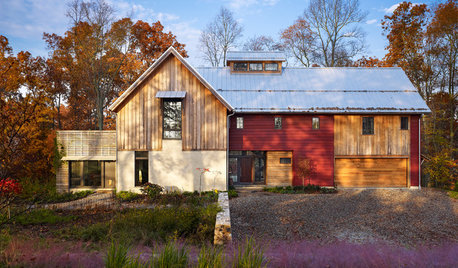
ARCHITECTUREVernacular Design: Architecture's Regional Voices
See how local sites and materials create a language rooted to an area. Is your home part of the conversation?
Full Story
vee_new