

A dichotomy of climates and what foods we produce
3 years ago
Featured Answer
Sort by:Oldest
Comments (10)
Related Discussions
Why We Need Mandatory GMO Food Labels
Comments (11)The consumer must educate themselves. Obviously there exists widely varying opinions and deep emotions on the subject of GM foods as well as sources of information on the subject. Let there be a broad, bright source of light whose source is rooted in science rather than emotion and opinion shining out across the world. What precious little research on GMOs in food I've seen in refereed journals doesn't make a good case for consuming GMOs but I haven't seen nearly enough to conclude that they are a threat to my diet. Much more work needs to be done for me to make a rational, knowledge based decision. In the meantime, this country needs to get it's feces congregated and institute COOL, Country of Origin Labeling at the very least, if we can't get that done there is no hope for trying to get GM labeling. The thought of eating produce from China is both sickening and a tad frightening considering their environmental laws and regs.....See MoreFertilizer suggestions for food producing houseplants?
Comments (4)Figs: You'll be much further ahead of the game if you forget about fertilizing and give them a long cold rest for the winter, placed directly on the floor of an unheated garage or buried against the foundation of a heated building on its north side, away from sun and wind. They'll wake in spring with almost all of their stored energy, rather than showing you a weak spring push because their reserves steadily declined over winter due to unfavorable indoor conditions. If you DO decide to overwinter indoors, you'll find compost to be a woefully inadequate NPK source. If you're looking for best results for container culture, any commonly found soluble fertilizer in a 3:1:2 ratio (24-8-16, 12-4-8, 9-3-6 are all 3:1:2 ratios) will efficiently deliver most or all of the elements essential to normal growth (depending on what you choose) and allow you to keep TDS/EC at the lowest levels possible without deficiencies - which would be a significant plus in dry indoor conditions because the low TDS/EC will facilitate water uptake; but again, the best course for the figs would be to give them the rest they want. Al...See MoreClimate change, Water crisis, food shortage??
Comments (8)This is a huge opportunity for farming all over the country. Like someone else said, fruit and vegetable growing is shifting back east. There are however, things we won't be able to grow in New Jersey or Kansas such as avocadoes and pistaschios. This doesn't mean the collapse of California's huge agrobusiness and I wouldn't want to see that. But, here's a chance for farmers in states like mine (Kansas) to grow fruit and vegetables that traditionally have not been grown here because of the tradition of growing grain crops and meat animals. In a lot of states, this is going to be a challenge to break up the old models of agriculture and that will need to start with pressure on the Land Grant Universities to be more proactive in helping farmers diversify their crops. Getting people to think outside of the box is the hardest part, but it can, and will be done as farmers realize the potential markets that are out there. There will always be the army of experts and spin doctors that will come up with all kinds of reasons not to think this through, but that's with any kind of change....See MoreIs climate change affecting food nutirents
Comments (3)glib, while the article was published in, and by, Politico they were not the source of the information. The researcher was studying for his PhD at the University of Arizona Although the article was written by someone employed by Politico. To summarily dismiss what is in the article indicates a closed mind....See More 3 years agoplllog thanked dcarch7 d c f l a s h 7 @ y a h o o . c o m
- 3 years agolast modified: 3 years ago
- 3 years ago


Related Stories
GARDENING GUIDESYes, You Can Grow Food in a Shady Yard
Your shady garden doesn’t have to be forever barren. Berries, herbs and other shade-loving plants can produce a delicious bounty
Full Story
FARM YOUR YARD6 Things to Know Before You Start Growing Your Own Food
It takes time and practice, but growing edibles in the suburbs or city is possible with smart prep and patience
Full Story
FARM YOUR YARDHello, Honey: Beekeeping Anywhere for Fun, Food and Good Deeds
We need pollinators, and they increasingly need us too. Here, why and how to be a bee friend
Full Story
WORLD OF DESIGNWorld of Design: These Gardeners Dig Cold Climates
Passionate gardeners in Maine, Russia and northern Sweden know how to get the most from their short growing seasons and freezing conditions
Full Story
FARM YOUR YARDTo Get the Food They Believe In, These Urbanites Grow Their Own
Home gardeners farming on their city lots find that local, organic food isn’t the only reward
Full Story
LOFTSHouzz Tour: 12 Years of Tinkering Produce an Amazingly Artful Loft
Major DIY efforts turn 3 units in a former Portland factory into a single home brimming with personality
Full Story
GARDENING GUIDES7 Fall Beauties for Mild-Climate Container Gardens
We're talking long-term relationship: These showy shrubs will bring color to your container garden autumn after autumn
Full Story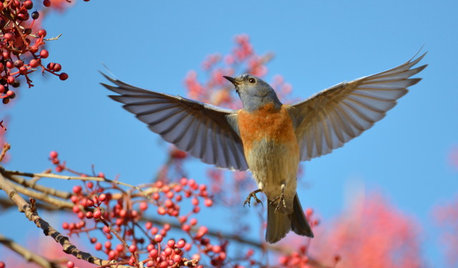
GARDENING GUIDESHow to Bring the Joy of Bluebirds to Your Garden
Attract these beautiful songbirds with nesting habitat and food sources, including berry-producing trees and shrubs
Full Story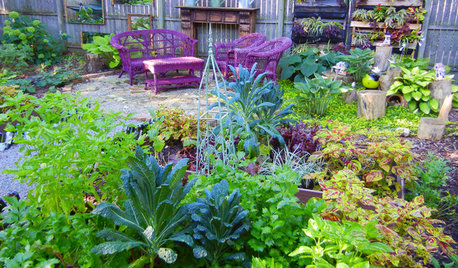
GARDENING GUIDESShades of Vegetable Gardens: Growing Edibles in Less Sun
See how one gardener produces a veritable feast of vegetables and herbs under a canopy of shade
Full Story
GREEN BUILDINGThe Big Freeze: Inventors Break New Ground to Keep Things Cool
Old-fashioned fridges can be energy guzzlers, but there are more eco-friendly ways of keeping food fresh, as these global innovations show
Full Story
agmss15