

How do you do your bread making?
8 years ago
last modified: 8 years ago
Featured Answer
Sort by:Oldest
Comments (13)
 8 years ago
 8 years ago
Related Discussions
Do you have a favorite recipe book for bread making?
Comments (7)no need to really get a book - it's really hard to screw up bread. First thing you should do, if you're really interested, is make some w/out the instant yeast. Just set some water and flour out (I use stone ground whole wheat), and you'll have something bubbling in a few days. You can throw in some fresh apple peel or something - not a supermarket apple, something from a green market. The idea is to get some yeast growing in there. It settles on everything, so you'll have some in the flour, some on the apple, and some hanging around in the air. Once you see some bubbles, which can take 4-5 days, you have a yeast. Whether it's good or not, you won't know until you use it. I have 3 of them right now - one tastes really good but one works much faster. Then you can make bread with those - it's "sourdough" bread, meaning it wasn't made with a commercial yeast. Remember - bread yeast is like anything else - it has been developed to have certain characteristics. So you get something that is reliable and relatively quick, but lacks flavor. The wild, or feral, yeasts provide much more complex flavors. In part that is because they work in harmony with bacteria, which are also floating around. Those bacteria, which are similar to those in yogurt, also eat the sugars in the flour and help to develop those really nice complex flavors in the bread. Just keep a little of the flour/water mix aside, add more of both, and keep the starter dough going. As far as time - this is why your commercial yeast was developed. With one of my yeasts, if I knead the dough in the morning, it won't rise until the next day. So basically, I put it in the fridge for rising. Those long, slow, rises do help the flavoring. Then, when you're done messing around with that, you can start adding different things. Fats, whether they be in the form of oils or something else like butter, will make your bread have a more tender crumb and will also help with the shelf-life. The bread will not be as dry and will last a few days longer. You can incorporate seasonings - be careful with salts because they'll kill your yeast, but you can add any kind of herb you like, or a combination. Ditto spices. Or fruits. Or you can use fruit juice for part of your liquid. Or something like ricotta cheese. Or eggs. Or different flours and/or grains - rye, spelt, rice, oats, etc. Just be aware that the texture of your bread will be VERY different - nothing has the gluten that wheat does. You're already having fun - so just have some more. Incidentally, this is a good thing to do in the winter when you really can't work in the garden. I don't know how any of these will work in a machine - I've never used one. But I've been making bread and doughs pretty much once or twice a week for about 30 years, and it's quite therapeutic. Have fun!...See MoreDo you love your bread machine?
Comments (29)I have a zojirushi bread machine and I love it. I knew I wanted the zoji so I watched Craigslist and got one for $90. I use the dough cycle a lot. It saves me time. I can put the ingredients in at 5 am and set the timer to deal with the dough when I am home from work.I make foccacia, bagels, pizza dough. I do bake bread in the machine too and it is great for a soup and bread supper and I have several sandwich loaves we like. I would recommend getting a food scale too if you don't have one. I find bread in bread machine or by hand works best if you weigh instead of meadure....See MoreHow do you keep your bread?
Comments (10)I never put bread in the refrigerator, I don't like it after it's been refrigerated. I store mine in a plastic "tupperware" type container with a snap lid on my counter. I never buy bread, I make all my own, in various types and flavors. When a loaf starts to get stale, usually about 3 days, I either make toast or I make bread crumbs. I used to use the blender, now I use the food processor. I freeze the fresh crumbs, and I've learned to identify on the bag what type of bread it is. When I want fresh crumbs, I just take them out of the freezer. When I want toasted crumbs, I toast the ones I take out of the freezer, if I want them seasoned, I do it when I them out of the freezer and before toasting. I've also been known to slice a loaf of something I like a lot but Ashley doesn't care for, and freeze two slices per bag. Then, if I want toast, a sandwich, whatever, I take two slices out of the freezer and don't thaw the whole batch. I make bread about twice a week and sometimes make two loaves on purpose so I can freeze one, or make french toast and freeze that for quick breakfasts. I will note that the latest loaf of cheddar beer bread does NOT make good french toast but it makes an awesome grilled cheese! Annie...See MoreHow do you make Monkey Bread?
Comments (10)I believe this is pretty much like my old recipe. MONKEY BREAD INGREDIENTS: # 1 cup whole Milk, Half & Half, or Whipping Cream, scalded # 3 pkgs. Dry Yeast - Rapid Rise Fleischmann's is good # 4 tablespoons Sugar # 1 teaspoon Salt # 1 Egg, beaten lightly # 2 sticks of Butter, melted # About 5 cups All-Purposed Flour, sifted once # 1 tablespoon Vegetable Oil Making the Bread: 1. Grease very lightly, a Bundt pan, sides up to the top and center up to the top with two (2) teaspoons of the vegetable oil. 2. Pour milk, half & half or whipping cream into a small saucepan. (Use whichever you prefer, depending on the richness of the bread you want, all are good). 3. Heat at medium high, watch closely as small bubbles form at the sides of the pan. Boil a little longer and remove from heat and pour into the bowl. (Don't let the cream rise to the top of the pan) . 4. Allow to cool slightly to a temperature between 115 and 120°. (no more, no less) 5. Having opened the three (3) yeast packages, sprinkle them on top of the warm liquid. Allow to sit for about 5 to 7 minutes then stir a bit. You want to see the yeast foam slightly before going to the next step. 6. When you see the yeast foaming, add the sugar, salt, beaten egg, and one 1 stick of the melted butter. Stir to mix well. 7. Using a measuring cup, start to add flour one (1) cup at a time. Stir each cup in to blend well. Continue adding the flour until a soft dough (ball) is formed. Leaving dough in the same bowl, pour the remaining one (1) teaspoon of vegetable oil on top and spread over the dough with your hand. Cover with a clean cloth and allow to rise, about 45 minutes to 1 hour. 8. Melt the remaining stick of butter in a medium sized shallow bowl. Put aside. Place the dough onto a floured surface and sprinkle a wee bit of flour on top so that the rolling pin won't stick to the dough. Roll out to about 1/2" thickness. Cut dough into 2" diamond shapes. 9. Holding your Bundt pan close to your dough, dip each piece in the melted butter and begin layering the dough into the pan, using smallest pieces on the bottom. All of the butter will be used. Cover the pan with the clean cloth (I use the cover of my Dough Rising Bowl) and allow dough to rise to top of pan. About 30 minutes. Monkey Bread Preheat the oven 400° F., while the dough is rising this last time. Bake the bread for about 25 minutes. The top and sides should be nice medium dark color. (A little over golden brown) Monkey Bread Remove from oven and let rest for about 5 or 10 minutes. Take a dinner plate and place on top of pan and invert the pan. Bread will fall onto plate. Gently lift pan away. Then take another serving plate and place on the bread and invert. You are now ready to serve your bread warm or allow to cool. Serve by pulling pieces apart. Sue...See More 8 years agolast modified: 8 years ago
 8 years ago
- 8 years ago
 8 years ago
- 8 years ago
- 8 years ago
 8 years ago
- 8 years agolast modified: 8 years ago
- 8 years ago
- 8 years ago
Related Stories
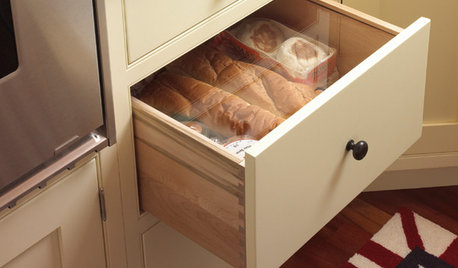
KITCHEN DESIGNKitchen Ideas for Bread Lovers
Any way you slice it, a kitchen designed with bread in mind conveys warmth and homeyness
Full Story
DECORATING GUIDESDIY Project: How to Make a Chalkboard Tabletop
The perfect table for grownups and kids — no power tools required
Full Story
MOST POPULAR8 Little Remodeling Touches That Make a Big Difference
Make your life easier while making your home nicer, with these design details you'll really appreciate
Full Story
FEEL-GOOD HOMESimple Pleasures: Make Do and Mend
Experience the satisfaction of fixing, repurposing and creating things yourself around the home
Full Story
HOME TECHMake Home Sweet Home Even Sweeter With a Brewery Or Winery
New high-tech products make small-scale home beer and wine production easy and fun
Full Story
LIFEHouzz Call: What Has Mom Taught You About Making a Home?
Whether your mother taught you to cook and clean or how to order takeout and let messes be, we'd like to hear about it
Full Story
THE HARDWORKING HOMESmart Ways to Make the Most of a Compact Kitchen
Minimal square footage is no barrier to fulfilling your culinary dreams. These tips will help you squeeze the most out of your space
Full Story
FEEL-GOOD HOMEWhat Really Makes Us Happy at Home? Find Out From a New Houzz Survey
Great design has a powerful impact on our happiness in our homes. So do good cooking smells, family conversations and, yes, big-screen TVs
Full Story
KITCHEN LAYOUTSHow to Make the Most of Your L-Shaped Kitchen
These layouts make efficient use of space, look neat and can be very sociable. Here’s how to plan yours
Full Story
CHRISTMASMake Holiday Tasks Fun With a Dining Table Takeover
Set up your table for wrapping, baking or writing, and you'll set yourself up for less stress and more festivity
Full Story


sleevendog (5a NY 6aNYC NL CA)