

How to make jalepeno poppers?
2 years ago
last modified: 2 years ago
Featured Answer
Sort by:Oldest
Comments (6)
 2 years agolast modified: 2 years ago
 2 years ago
Related Discussions
jalapeno poppers
Comments (2)I have done them over the fire. Mine are a little different though. Here is what I do 1. I stuff the peppers with Cream Cheese. 2. I coat the outside of the pepper with olive oil. 3. Then I cook the peppers in a fry pan (mine is cast iron over the camp fire). 4. The outside of the pepper will blister and turn black. This tastes awesome....See MoreLet's make poppers!!
Comments (12)Ah, great minds think alike! I also have frozen poppers that I plan to prepare this weekend. Some are already breaded according to a recipe provided (I believe) by Linda Lou this summer when we were all talking about freezing poppers. The recipe says to bake them but I have to admit, when I tried them I decided I really prefer fried. Of course. Some are not breaded. I have made poppers before by wrapping them in wonton wrappers and frying and I really like the way that comes out. So I may do that. Haven't decided whether to thaw first or not, but probably will do so in the frig. Let us know what you do and how it turns out - you too bcskye. Ann, who used to be a huge Denver Broncos fan but now also watches only for the snacks and commercials...See MoreHow do you grow - cucumbers, squash, jalepenos, watermelons, okra
Comments (4)I don't think I have any "secret" tips but I'll throw out a few tidbits about raising each crop. CUCUMBERS: I grow two kinds--slicers and picklers. I like to grow all of them either on a fence, a trellis or a cage because the cukes are easier to find that way. It is amazing how hard it can be to find a green cucumber in all those green leaves if you let the plants run along on the ground. Sometimes I plant a bush variety like Picklebush because bush pickles give maximum productivity in minimal space. You can even grow Picklebush in containers. I don't plant cucumber seeds until the soil temps are at least 60 degrees because they don't germinate well in cold soil. Adequate watering is essential or cucumber growth will stall, so I water well and mulch heavily. I like to pick cucumbers while they are smallish--esp. for pickling. And, be sure to keep the plants well-piecked. If you leave even one cucumber on the plant too long, the whole plant slows down and stops producing. If you only have room for one type, but you want to have both picklers and slicers, plant a picking type and harvest some for slicing too. However, using a slicer as a pickler doesn't usually work. If you want to grow an unusual type, Lemon Cucumber is a great heirloom type that is lemon-yellow at the picking stage, or orangey-yellow if you leave it on the vine too long. CANTALOUPE: Most of the melons we call "cantaloupe" in the USA are actually muskmelons. I grow all my melons (cantaloupe, muskmelon, and all the minor melons) the same way I grow cucumbers--vertically, usually inside tomato cages. You can put a lot more plants in your garden that way and the melons are less likely to rot or have insect damage if they are not lying on the ground. With heavier melons, I make a sling or support for them using either cheesecloth, or knee-high nylon hose. With melons, overwatering and overfeeding can dilute the flavor, so I take care not to overwater, especially once fruitset is occurring. If the plants are overwatered after melons have formed and are ripening, the flavor can be awful (as in, there is no flavor) and the texure will be poor. So, water 'em while the plants are growing and flowering, and then be really careful not to water too much. I don't feed mine at all--just improve the soil by adding organic matter every year and let the soil feed the plants. Often, people think their fruit is poorly flavored because their melons cross with cukes or other cucurbits, but that is not what happens--it is the overwatering/overfeeding. Melons perform best on loose, friable, sandy loam or silty loam although they perform well for me in highly improved clay, esp. in raised beds. I prefer the flavor of heirloom melons, but grow both heirlooms and hybrids in order to have a nice variety. If you are buying plants or seed, any of the Hale's, Hale's Best, Hale's Best Jumbo, etc. are great. For heirloom melons, you can buy seed of many. Some of my favorites are Collective Farm Woman, Canoe Creek Colossal, Piel de Sapo, Charentais, Eden's Gem, Pike (best performer in clay soil that I've ever seen), Nutmeg, Prescott Fond Blanc, Early Frame Prescott, and Golden Jenny. Honestly, though, I've never tasted an heirloom melon I didn't like. SQUASH: Lots of people overplant squash. I usually plant only 1 or 2 yellow crookneck plants and 1 or 2 zucchini plants at a time, although I will succession plant new plants later in the summer as the original plants play out. I tend to plant these at the edge of the corn bed because they are huge monsters and can get quite large. The key to good production is to check the plants daily and harvest promptly. Failure to do so can leave you with very large, tough crookneck or straightneck squash or very large, often watery zucchinis were poor texture. People who grow for "size" often don't get the best flavor. I usually plant squash only after the cold nights are over. Squash plants like a lot of water too, but are prone to foliar disease, so soaker hoses or drip lines or watering by hand at the ground level and keeping water off the foliage works best. Winter squash, including pumpkins, like really warm soil and I don't plant them until the soil temperature has been at least 70 degrees for three days in a row. Most winter squash and pumpkins take up a lot of space, so mine go on the edges of the corn bed where they can ramble and roam to their heart's content. There are a very limited number of bush types of winter squash and pumpkins, or mini-pumpkins, if you have space issues. These plants get foliar diseases like powdery mildew very easily, so I won't plant them until June if April and May are very rainy, and that often helps keep disease to a minimum. Squash bugs are a common pest. I try to keep these to a minimum by checking the backs of leaves for eggs and removing and destroying those eggs if found, and by hand-picking and drowning any squash bugs I see. Squash vine borers are your plants' number one enemy and covering the plants with floating row covers (and pollinating flowers by hand since pollinators cannot get inside the row covers) helps keep their damage to a minimum. JALAPENOS: Peppers are grown pretty much the same as tomatoes, to which they are related. I always start with transplants. If direct-seeded, peppers won't produce until late summer or fall. I set out my peppers about two to three weeks after tomatoes, or about the first couple of weeks in May since cool temperatures can permanently stunt them. Peppers set best when nightimes are above 60 degrees and daytimes are below 80, so May really is their perfect month for growing, flowering and setting fruit. If you are getting lots of blooms by the end of May or even in the first couple of weeks in June before the true summer heat arrives you'll have a great yield. Hot peppers set fruit better all summer long than sweet peppers, but both will set well in the fall. Pepper plants are brittle and break easily, so I either stake them to 2'-3' tall stakes, or use the small, cheap tomato cages you buy at the store, to support them. Even just a heavy load of ripening peppers can snap the plants in half, and support helps prevent that. Pepper fruits themselves get sunscald easily, so I often plant them where they get full sun from sunup until about 1 or 2 p.m., then shade until about 4 or 5 p.m., and then a little sun late in the day and they produce just fine, with less sunscald too. Sweet peppers are often harvested green, but I like to let them turn their mature color before I harvest--it takes a couple of weeks more, but the flavor is 1000% better. I usually grow sweet peppers that mature to red, orange, yellow, purple and chocolate. Peppers are water guzzlers and will sulk if you let them get too dry, so I like to water deeply and never let the peppers wilt. If they wilt, they do not bounce back as well as other plants do after wilting. By the way, hot weather seems to make peppers hotter, so the hotter your summer weather, the hotter and better your pepper flavor. WATERMELONS: These take up a lot of space. A whole lot. So, I tend to go with smaller space saver types. The best melon I've ever grown and eaten are Blacktail Mountain, bred by Glenn Drowns, who owns Sandhill Preservation Center. The seed is available from Sandhill and from other sources too like Seed Savers Exchange and Baker Creek. They are small melons with dark red flesh and dark green rinds and superb flavor. Other small bush-type melons that I grow in my garden include Sugar Baby, Bush Sugar Baby and Yellow Doll. Like cantaloupe and muskmelons, too much water ruins the flavor and too much fertilizer, especially nitrogen, causes white heart--which is white spots with no flavor in the middle of the melon. So, avoid chemical fertilizers and don't overwater. Melons put out their vegetative growth first but you ought to see flowers appearing about 8 to 10 weeks after the plants are transplanted, or after the seeds sprout. If you use transplants instead of seeds, and you set them out at the right time (soil temps should be at least 70 degrees), you'll get blooms and melons about 2 weeks earlier from transplants than from direct-seeding. PEAS: I don't know if you mean cool-season peas like green peas, sugar snap peas or snow peas, or if you mean southern peas like black-eyed peas, crowder peas or cream peas, so let me know which ones you're growing. OKRA: Okra is one of the true heat lovers and goes best if planted fairly late. Okra sprouts quickly if direct-seeded in warm (75-90 degree) soil. Generally one planting is all you need (unless deer get into the garden and eat your plants down to the ground) and the plants produce all summer long. Keep the okra picked or production shuts down. I pick when the pods they are 3", 4" or maybe 5" long. If you let them get longer, they'll be very tough. Once okra is producing, I pick every day or every other day. It only takes about 4 to 7 days for okra to go from the flower stage to being ready-to-pick. I think okra is a gorgeous plant and like to plant it in my mixed border along with flowers and herbs--especially when planting the ones with red pods. If space is an issue (the plants can get 6' to 8' to 10' tall), you can grow the dwarf ones like "Baby Bubba" or "Little Lucy". Both look wonderful in flower beds or pots as well as in the veggie garden. In deer country, it is almost impossible to grow okra unless it is protected by a fence. Dawn...See MoreFreezing Jalepenos
Comments (12)Paula, My experience with no cages is that the plants, even if only 3' or 4' tall, eventually fall over and that leaves the fruit vulnerable to pill bugs, sow bugs and every other tomato-loving bug in the garden. Also, heavily loaded branches can snap off which is even worse. I even cage 2' tall determinates for the same reason. In fact, I grew a row of dwarf plants (Orange Pixie, Canary Yellow and Red Robin) in the garden this year that reached 18" tall at the most. I staked each of them to one stake and it was a good thing because they carried heavy, heavy fruit loads and would have been lying flat on the ground without their stakes. Once the plants are too big to be caged, you can stake them, but I wouldn't rely on one stake for the main stem. I'd put up a stake for the main stem and one for each major stem. It will look a little silly, but it will keep your plants and fruit up off the ground. Or, you can use stakes and twine to do a Florida Weave type trellis. Normally, you'd use the Florida Weave as soon as the plants start to grow and keep adding more twine as they get taller. However, it is not impossible to go back and add it later. I'll link some Florida Weave instructions below. We made grilled poppers last weekend, and I think we'll make more today. Last week we stuffed them with a mixture of cream cheese, cheddar cheese and Monterrey Jack, and then wrapped them in bacon. This week I don't yet know what we'll stuff them with. We made a lot last week, so there were some left over and I heated them up in the microwave and ate them for breakfast! Ok, so it was not a traditional breakfast, but it sure was yummy. With the grandkids, there are so many fun things you can do. Remember that you can scratch their name into a young pumpkin or winter squash, and the rind will heal over but the scar still will spell out their name as it enlarges. Kids love that. And, save some bottles and then insert very young (newly formed) cucumbers or squash into the bottles and let them grow inside the bottles. (This works best in spring's cooler weather.) That fascinates kids. I've also found that children love to grow vegetables in odd colors like yellow tomatoes or purple bush beans. They also enjoy having their own plants that grow mini-watermelons like Black Tail Mountain, Bush Sugar Baby, Sugar Baby or Yellow Doll. One of the dwarf okras like Little Lucy or Baby Bubba are really fun for kids too. If you grow birdhouse gourds (plant as soon as soon is warm enough in spring because they take forever to mature) on a fence or even up a tree, y'all can harvest the gourds in the late summer or fall, let them dry over the course of the winter, and turn them into birdhouses by early spring. I could go on forever....there's so many ways to entertain a child in the garden. I almost bought Maddie gardening tools this spring but she was going on an extended trip with her great-grandparents and grandmother so she was gone for most of June. Then, she was back but soon off again to spend a month with her dad. It feels like she's hardly been here in Oklahoma at all. I do expect her back in early August though, so maybe we still have time for some quality gardening fun. She does have a watering can and trowel, and the cutest Holstein Cow rainboots, complete with a face on the toe area and a tail at the rear end of the boot. Mostly she puts on the boots and spends time filling up the watering can at the wading pool and then watering the grass. It is pretty easy to amuse a two-year-old. One day we'll have to do a whole thread on gardening with kids. I know we did one a few years ago and it was full of creative ideas. Pepper juice under nails. Yikes! I'm asking this tongue-in-cheek, of course, but what were you thinking? LOL I can't really think of any way to get it out of there either, but if I come up with any ideas I'll come back and post them. I ALWAYS wear gloves and won't handle hot peppers without them, but then I suspect you normally wear them too. Let's just say you were excited about the harvest and got caught up in the moment and forgot the gloves. Jay, Chuckwagon cooks! Oh, I am so jealous. My dad was a great cook, but not a chuckwagon cook, and he cooked on weekends. His favorite things to cook were anything from his garden! My mom, who did most of the cooking, couldn't cook at all. I just bet you ate a lot of wonderful meals growing up. I also bet you have a cast-iron stomach. I can only eat wimpy mild peppers, but Tim and our son's girlfriend eat the hot, hot, hot ones like habaneros. Dawn Here is a link that might be useful: Florida Weave How-To...See More 2 years ago
 2 years agolast modified: 2 years ago
 2 years agolast modified: 2 years ago

Related Stories

MEDIA ROOMS10 Ways to Make Your Home Theater More Awesome
Check out these ideas for bringing more tech sophistication to your media space
Full Story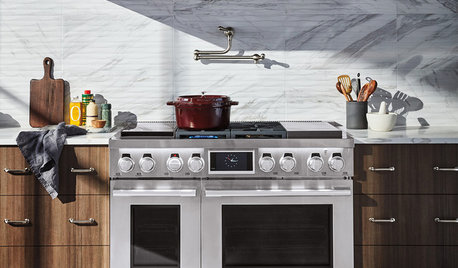
KITCHEN DESIGNThese New Products Aim to Make Your Kitchen Smarter
The latest appliances use home assistants, apps and sensors to help you shop, prep, cook and communicate
Full Story
HOLIDAYS10 Holiday Gift Ideas to Help Make Home a Little Cozier
Consider these suggestions for presents to pamper the special people in your life
Full Story
ORGANIZING10 Things to Remember When Decluttering in the New Year
Fast-track the process and ease the stress by making a plan before you begin
Full Story
HOLIDAYSHouzz Call: Show Us Your Festive Holiday Tablescape
What makes your table festive for the holiday season? Post photos of your decked-out table
Full Story
CHRISTMAS10 Thoughtful and Thrifty Christmas Table Touches
If you’re after some affordable decorative touches to add to your holiday table this year, here are a few ideas to inspire you
Full Story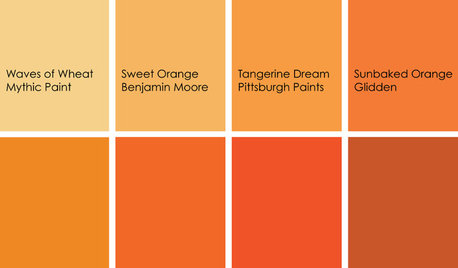
COLORCooking With Color: When to Use Orange in the Kitchen
Try a dash of Cayenne or swaths of Sweet Orange for zesty, high-energy kitchen flavor
Full Story
GARDENING GUIDESGreat Design Plant: Kumquats for a Juiced-Up Winter
Grow it for the edible fruit or its good looks alone. This citrus cousin will brighten any gray winter day
Full Story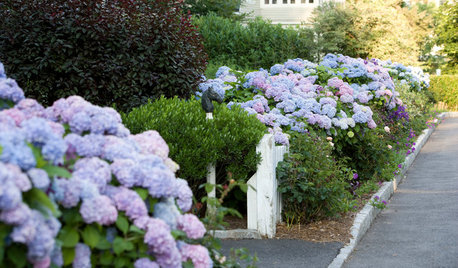
FLOWERSWhy You Should Give Hydrangeas a Place in Your Yard
The exuberant mop-headed beauties evoke dreams of an endless summer by the sea
Full Story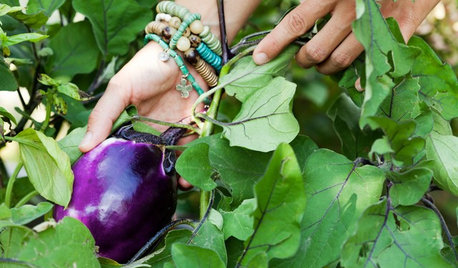
EDIBLE GARDENSHouzz Call: What Did You Grow This Summer?
Let’s celebrate the homegrown fruits and vegetables of the season. Post your pictures and tell us about your harvest
Full Story
l pinkmountainOriginal Author