

Fall in New England - Common Ground Fair
4 years ago
Featured Answer
Sort by:Oldest
Comments (6)
 4 years ago
Related Discussions
New Englanders--what is your Fall feeding schedule?
Comments (1)Over the past few weeks I've spent countless hours determing my schedule and was going to post the same question as you so I could compare my findings. Good timing! Next year will be the first time I fully implement this schedule with the timing mentioned. This year I am off my a couple weeks. This is also the first year I'll be doing three apps in the fall. In the past I only did one or maybe two. I also felt like I was under fertilizing, which is why I spent so much time digging thru the old posts for guidance. Quick answer: Late July - alfalfa pellets Late Aug - soybean meal Late Sep - soybean meal (timing will be dependant on temp trends and anticipated temps. basically it will be a 'feel' thing) Reasoning: Late July - alfalfa pellets. They tend to take a little longer to break down. In case it stays hot and muggy through Aug I wont be getting a rush of growth that requires my sweat equity to tend to. Also, since I don't always water the lawn it may still be dormant and this should provide an easier transition. (so far that would not be a problem this year - very cool aug) Late Aug - SBM. The grass will generally be out of dormancy, and the humid days will mostly have passed. Time for the grass to rock and roll. SBM will give it a nice kick right in the heart of the growing season. Late Sep - SBM. The timing here will be mostly by 'feel'. I am aiming for ground temps still warm enough to break down the organics, but not necessarily looking for a lot of top growth. But, I also dont want the nutrients used up before the roots start storing reserves for the winter. Each year the weather will be different so I'll pretty much be guessing based on the (mainly unreliable) forecasts I'd definitely like to hear from others who have an established routine and how it's been working. btw- my grass is TTTF....See MoreNew England Fall Swap and Gathering
Comments (59)Im saddened to say I cannot attend. My 3.5 year old girl got the gastrointestinal virus last night. So Ive had the pleasure of cleaning up puke all night. I cant very well leave her in this condition with a sitter today. So, my plants are all dug up and potted and my canna lily tubers are cleaned and dried. Im not sure where any of you swapppers live but I live in shrewsbury. If anybody lives near shrewsbury and has room to bring more plants, please respond. Or if anyone lives near shrewsbury and wants some plants during the next few weeks, let me know. Im sorry and bumbed. But, alas, I guess when it comes to health, families are allowed to take precedence over hobbies. Hope you all have fun....greg...See MoreWhat books are recommended for New England gardeners?
Comments (0)New gardeners, or experienced gardeners who move to New England from very different climates, often ask for recommended books that are appropriate to our region. This is a compilation of three related threads that were posted on the New England Gardening Forum. Some of these books are of most interest to New Englanders; others apply to gardening in general. Additional recommendations will be added as they appear. The first thread discusses whether books are still relevant in a time when the internet teems with information, some of it much more current than any publication can carry. There are also some book recommendations in this thread. The second thread is the main listing, with comments, of books New England Garden Webbers consider worth reading. The third thread concerns Thalassa Cruso, an Englishwoman who moved to New England, wrote many useful books, and hosted a TV show remembered with delight by many of us. ................................................................................................................................................................................................................................................ Proposed FAQ on recommended books Posted by claire z6b Coastal MA (My Page) on Mon, Jan 18, 10 at 14:39 I'm wondering if people think an FAQ on recommended gardening books would be useful. This could be either general gardening books or those specific to New England Regional gardening, and an easy format would be to just copy a thread like this so that individual comments would be included. What do people think? Please post your recommendations on the other thread, but just comment here or there if you think it's a good idea. Claire Follow-Up Postings: RE: Proposed FAQ on recommended books Posted by bill_ri_z6b (My Page) on Mon, Jan 18, 10 at 16:20 Claire, I have lots of gardening books. One of my first and favorites is a two volume set called "Exotica" by Dr. A. B. Graf. I bought it in the 70's for $75.00. A few years later I bought his book "Tropica" for $100.00. Now that's some serious money in those days! And although I did learn a lot from them many years ago, I find that browsing the internet is far more up-to-date. First of all, there are always changes in the taxonomy. I see many cases where the genus, species or even the family has been reclassified. Another thing is that seeing one single photo in the books gave me an impression of what I thought the plant looked like. Now, seeing some of the same plants online, with many more angles, perspectives and lighting conditions, etc. I have a new concept of many of them. Some are more attractive than I had thought, while others not so much. So I guess what I'm saying is that books are kind of old school where so many new plants and new ideas abound. Finally in these tough economic times, I don't know if people would care to spend money on books when the latest information is available for free. I know that some people still don't have internet access, but then again they wouldn't be on the forum anyway. RE: Proposed FAQ on recommended books Posted by corunum CT 6 (My Page) on Mon, Jan 18, 10 at 16:23 Yes! It's a great idea! And, good of you to do it. Read the other thread and saw that that was where I discovered Stein's "Noah's Garden". Without that posting, I would have missed that book. Also from the other thread, "For general ambience of gardening and idiosyncratic gardeners, read anything by Thalassa Cruso, or anything by Beverley Nichols, or anything by Henry Mitchell.". I have already ordered a one cent copy of Cruso's "To Everything There Is a Season: The Gardening Year". As if that were not enough, I also discovered that I am an idiosyncratic gardener! That now replaces the moniker whacko eccentric. Thanks, Claire. Jane RE: Proposed FAQ on recommended books Posted by claire z6b Coastal MA (My Page) on Mon, Jan 18, 10 at 18:04 Bill: I understand what you say about browsing the internet rather than reading books. However, you started browsing with a solid background gained from excellent reference books. I'm a happy browser, but my problems with the internet are always 1. Where do I start?, and 2. Who do I believe? I love my books, even the ones I haven't gotten around to reading yet. The information in them is already assembled and digested by someone who has some expertise in the field. I can read about a plant and then go and google for more pictures and more opinions and maybe interesting new cultivars. Believing everything on the internet is like believing everything in some of the more disreputable catalogs. I give preference to .edu or .org or .gov sites, and take .com sites with a varying amount of salt. Also, not everyone is equally comfortable searching the web or has the patience to dig through all the information available. Besides, it's fun to read about a gardener's personal experience - I discovered Thalassa Cruso about the same time I discovered Julia Child (they both had great TV shows). People still post questions on many forums about what books are recommended for gardeners, so the interest seems to be there. Whether it's worth doing a FAQ is another issue. Claire RE: Proposed FAQ on recommended books Posted by prairiemoon2 zone 6/MA (My Page) on Tue, Jan 19, 10 at 5:37 I had a smile on my face reading your three posts. I could agree with all of you. First I have to say Claire, that was the funniest line I've read in awhile. [g] "I love my books, even the ones I haven't gotten around to reading yet." What is so funny is that I completely understand what you are saying. :-) I've been horrified by the interest in Kindle. Just as iPods are quickly replacing CDs, I can see it won't be long before book publishers are going to be absent from the landscape. I think that's very sad. I grew up with books and they have a lot of value to me that is hard to put into words, above and beyond the obvious. And Bill, I see your side of it too. When I want information, the internet has become the first place I look more often than not. But despite that, I've often been disappointed with the information I've found. And there is too much of it, so it is hard to gather it all together and it's time consuming. I love information that has already been assembled and edited as Claire mentions, by an expert. But then again, I really value hearing many opinions about other gardener's experiences. So I do need both. Now I browse the library catalog a few times a week online and have books on reserve continually. So access to the internet has actually increased my use of the library. And Bill, your point about seeing many different photos on the internet, really struck a chord. A picture is worth a thousand words and multiple photos of something you have never seen, is even better. One book I would have really missed seeing was 'The Garden at Highgrove.' by Prince Charles of Wales. I love his garden and he and his gardeners grow organically. English gardens are my very favorite and his is amazing on a grand scale. He is coming out with a book on the environment this year, called 'Harmony' that evidently will include criticism of big business. Not that I am an admirer of him personally, but I do find his interest in organic gardening and the environment surprising and refreshing in such a prominent figure. Another English gardener, whose garden I greatly admire is Beth Chatto, who has a few books out. She has 'The Dry Garden' and The Damp Garden' but my favorite is'Beth Chatto's Woodland Garden: Shade-Loving Plants for Year-Round Interest'. Her book was the first time I found myself intrigued by her winter gardening choices. I love the way she has managed to combine cultivating plants in a natural setting in a seamless way. She elevates it to an art. See link to an interesting interview with her below. 'Meadows'by Christopher Lloyd is another favorite that has some memorable photos in it. Meadows like I've never seen in my life. Made me really long for a landscape that had meadows. Jane, I have not gotten around to reading 'Noah's Garden' yet, but I have heard many people mention it as one of their favorites. Thalassa Cruso is another author I haven't tried yet. Is she from New England? Here is a link that might be useful: Interview with Beth Chatto RE: Proposed FAQ on recommended books Posted by claire z6b Coastal MA (My Page) on Tue, Jan 19, 10 at 11:36 PM2: Thalassa Cruso was a young Englishwoman from a horticultural family who married an American and moved to New England. She immediately began to set up gardens here and had to deal with a new climate, new zones and new plants. Her books relate how she dealt with the new problems, the mistakes she made, and how she learned from them - all this with great humor and intelligence. A good read. Claire RE: Proposed FAQ on recommended books Posted by prairiemoon2 zone 6/MA (My Page) on Tue, Jan 19, 10 at 14:02 Claire, that sounds like a book I would find very interesting. Thanks RE: Proposed FAQ on recommended books Posted by idabean 5A (My Page) on Tue, Jan 19, 10 at 23:32 wonderful idea. I would contribute titles and read the recommended. Since I saw "Its complicated" I was thinking about rereading the Secret GArden. I don't think I've read it recently with the eye of a gardener. idabean/marie RE: Proposed FAQ on recommended books Posted by bill_ri_z6b (My Page) on Wed, Jan 20, 10 at 5:45 Claire and Prairiemoon, I used to watch Thalassa Cruso ("Making Things Grow") all the time. From some of your comments, I'm thinking that maybe because I have a solid background about gardening in general, which I acquired from such shows, as well as from the great old reference books that I had and I suppose from many years of gardening experience, that my interest has now shifted more to the "What?" rather than the "How?" do I grow. So, at least for me, the internet is the best source to find those new and exciting plants. I am particularly interested in finding lesser-known species of a familiar genus that is hardier than it's better known relatives and worth a try here in my zone 6 garden. Also, there are newer hybrids of more tender genera that have been bred for cold hardiness. And finally there are some plants that are seldom grown (for reasons unknown) that are perfectly hardy here but just aren't used. I certainly don't know everything (Can any of us ever?) but I do know the basics. So for me, the internet is the tool of choice, but I can see how good books might be best for someone who is starting out with gardening. And there aren't any TV programs that even come close to Thalassa's. Even with HGTV and all the other channels, the shows are almost ridiculously vapid when it comes to actual identification and culture of the plants themselves. They're geared toward the "WOW!" factor of the before and after yard makeover. They all seem to take place in California, in a flat suburban yard, neatly fenced or walled in. It goes from a scruffy, weed infested messy yard to a trendy but uninspired one.........must have a gravel patio, pergola, fire pit and water feature. Then the homeowner is required to say "Awesome!" a minimum of six times. I sit and wonder how long before the plants are dead and the pergola falls over.......... RE: Proposed FAQ on recommended books Posted by prairiemoon2 zone 6/MA (My Page) on Wed, Jan 20, 10 at 11:35 Bill, I never gardened at all until the early 1980s when a friend of mine introduced me to vegetable gardening. I loved it and still do. I used to watch 'The Victory Garden' show. HGTV has really reduced their programming in the area of gardening. One show I have enjoyed is 'Gardener's Diary' which spends a whole episode visiting one person's garden of interest. Very worthwhile show which you can still catch reruns of, once in awhile. Sorry I missed 'Making Things Grow' I am sure it was interesting and educational. So, the FAQ on gardening books wouldn't be something you would use too much, maybe you could start a thread to share some of your favorite links to internet sites that have been helpful to you? I'm always looking for a good internet reference too. There's so many out there, it's hard to weed through it all to come up with the best sites. RE: Proposed FAQ on recommended books Posted by claire z6b Coastal MA (My Page) on Wed, Jan 20, 10 at 11:45 Marie (idabean): Please post your recommended books on the other thread (or here if you prefer). My intent is to take these two threads and combine them loosely so that each post is retained in each entirety. That way all the comments will be available on the FAQ. I did something similar to that with the How do I keep deer and moose from eating up my garden? FAQ although I may leave the dates in. Once I get the FAQ on the FAQ page, I can always add more recommendations as they come in. Claire RE: Proposed FAQ on recommended books Posted by bill_ri_z6b (My Page) on Wed, Jan 20, 10 at 12:26 Prariemoon, I had forgotten about "A Gardner's Diary" but I did watch it all the time. It was a last remnant of the type of programming that we should see more of. Intelligent and educational with nice photography. I have noticed that even the video talents of whoever does the shoots for some of the newer HGTV shows are sorely lacking. Underexposed or totally blown-out videos are common. I just don't think they want to spend the money for a real professional, just as they don't want truly experienced hosts. It seems the shows are more for good times and laughs during the makeover rather than to demonstrate good practices to us, or introduce us to some interesting plants, trees or flowers. I will post links to some internet sites that I find useful. .................................................................................................................................................................................................................................................... Recommended gardening books? Posted by ctreynard ) on Wed, Jul 23, 08 at 6:02 Hey, all! Looking to read some gardening books (perennial and botanical) that have knocked other people's sox off, or given you "aha" moments.... Any suggestions? Follow-Up Postings: RE: Recommended gardening books? Posted by arbo_retum z5 ,WinchstrMA (My Page) on Wed, Jul 23, 08 at 15:37 The Well Tended Perennial Garden RE: Recommended gardening books? Posted by amysrq 5 (My Page) on Wed, Jul 23, 08 at 17:27 Oh, that's nice to hear....my copy just showed up on the doorstep this afternoon! I also orderedYour House, Your Garden on the advice of a very experienced gardening friend. RE: Recommended gardening books? Posted by thyme2dig 5 (My Page) on Wed, Jul 23, 08 at 20:34 Another good DiSabato book is The Well Designed Mixed Garden. Dirr's Hardy Trees and Shrubs, and his Viburnum and Hydrangea books are good resources Time Tested Plants, Pamela Harper The Collector's Garden, Ken Druse Newcomb's Wildflower Guide is very helpful for identification RE: Recommended gardening books? Posted by davidinct (My Page) on Thu, Jul 24, 08 at 0:39 If the logistics, history and economics of world flower trade interest you "Flower Confidential: The Good, the Bad, and the Beautiful in the Business of Flowers" by Amy Stewart is worth a look. Starts with the somewhat tragic story of Leslie Woodriff who bred the "Stargazer" lily, touches on one of the last sweet violet growers in America, growers in South America, importers in Miami, the Amsterdam auction houses and high line florists in New York. For humor and some history of rose breeding, pick up Aurelia C. Scott's "Otherwise Normal People: Inside the Thorny World of Competitive Rose Gardening" RE: Recommended gardening books? Posted by ctreynard ) on Thu, Jul 24, 08 at 17:32 Wonderful suggestions, all! Keep them coming! :) RE: Recommended gardening books? Posted by claire z6b Coastal MA (My Page) on Thu, Jul 24, 08 at 18:04 For general ambience of gardening and idiosyncratic gardeners, read anything by Thalassa Cruso, or anything by Beverley Nichols, or anything by Henry Mitchell. For beautifully written and effortlessly informative books about native plants, read anything by William Cullina (formerly of the New England Wild flower Society). He wrote the best explanation I've ever read about why some plants grow well in acidic soil and others in alkaline. Claire RE: Recommended gardening books? Posted by emily06 72 (My Page) on Thu, Jul 24, 08 at 19:18 In addition to those already recommended: The Garden Primer by Barbara Damrosch Color Echoes: Harmonizing Color in Your Garden, by Pamela J. Harper The Damrosch book is a compendium which has helped this newbie gardener avoid big mistakes countless times. The newest edition also stresses organic practices. The Harper book was truly "aha!" for me. RE: Recommended gardening books? Posted by terrene 5b MA USA (My Page) on Thu, Jul 24, 08 at 19:29 I love William Cullina's books and just ordered the one about Ferns, Mosses, and Grasses. Claire, why do you say that Cullina is formerly of NEWFS? Their website says that he is the nursery director. RE: Recommended gardening books? Posted by prairiemoon2 zone 6/MA (My Page) on Thu, Jul 24, 08 at 19:46 I've taken out a few of Cullina's books too. The library system even has that Ferns and Mosses book and I've borrowed it already. Barbara Damrosch has a wonderful garden! She and her husband Eliot Coleman hosted a gardening TV series called 'Gardening Naturally'. So I know she is a great gardener, but I took her books out and never warmed up to them. Sorry. Eliot Coleman wrote, 'The New Organic Grower' and'Four Season Harvest'. He is very innovative about organic growing methods and growing vegetables in New England. I have taken out 'The Garden at Highgrove' which was to me, a mesmerizing coffee table quality book about Prince Charles' efforts to renovate their royal property using organic methods. Gorgeous photos. I always mention 'Meadows' by Lloyd Christopher which is quite delicious to me. I find the photos again, very inspiring and satisfying and make me wonder how there is a gardener that exists that could create some of these landscapes. I have a real love of many gardens created by Piet Oudolf who has four books in our library system. 'Dream Plants for the Natural Garden' was a great one. I wish someone would invite him to come to Boston and design some of our public spaces. I'm sure I am forgetting some of my favorites. I did take a minute to see what was new in the library system and a couple of titles...looked interesting that I have not read yet.... 'The Authentic Garden: five principles for cultivating a sense of place', by Claire Sawyers 'The Magic of Monet's Garden: his planting plans and color harmonies' by Derek Fell If I remember the one I am forgetting I will come back. Have fun... pm2 RE: Recommended gardening books? Posted by claire z6b Coastal MA (My Page) on Thu, Jul 24, 08 at 20:40 terrene: I don't remember where I read it, but he's moving to the Coastal Maine Botanical Garden in Boothbay, Maine. He talks about the move on his web site. Claire RE: Recommended gardening books? Posted by diggerb2 z5oh (My Page) on Fri, Jul 25, 08 at 17:21 my aha book was sara stein's Noah's Garden. I just so enjoyed it after checking it out of the library 3 times, i had to go and buy it for myself. but its more about the philosphy of the garden that actual gardening. But nopw i know how to get lightening bugs in my yard and the neighborhood kids come to my house to catch them all of june and july. yes the book by HRH Charles about Highgrove is just lovely and full of information on a grand scale. I liked the Botany of Desired by Michael Pollan. the book about growing Giant Pumpkins was a good read. i refer to it as backyard biggies-- but i think the title is Backyard Giants-- its a new book in the past year or so. Buried Treasures-- its a book about rare/exotic bulbs was interesting to read. but i always suggest Noah's Garden. Diggerb RE: Recommended gardening books? Posted by moccasinlanding z8B AL/z5b MA (My Page) on Sat, Jul 26, 08 at 21:41 One of my very favorite books is by Roy Guste, SECRET GARDENS OF THE VIEUX CARRE. Long out of print, it recently came out in second edition. Having such a lovely series of photos and text showing the courtyard gardens of New Orleans has provided me much inspiration. Another one I liked for years, THE SCENTED GARDEN by Rosemary Verey, is OOP but Amazon has some for sale. I am awaiting delivery of HYDRANGEAS which was recommended on this forum or on the hydrangea forum. So much variety I never imagined in these over-achieving plants. One of my favorites was lost in Katrina, MONET'S GARDEN...don't recall the exact title. But it is the source of inspiration for my mass planting of nasturtiums which grow with reckless abandon along the drive and patio at our house in MA. It is way to hot to do that in south AL. RE: Recommended gardening books? Posted by davidinct (My Page) on Sat, Jul 26, 08 at 22:49 Cornell has 1,849 "agricultural texts published between the early nineteenth century and the middle to late twentieth century" on line below: Here is a link that might be useful: Core Historical Literature of Agriculture RE: Recommended gardening books? Posted by jackied164 z6 MA (My Page) on Sun, Jul 27, 08 at 22:09 The Well Tended Perennial Garden would be top on my list and I was happy to see it was the first to be recommended. I have many other books I got to to find out about plants but this it the one to go to to find out how to really grow perennials. My asters no longer flop, my hellenium is much more to my liking and I am much better at fall and spring garden chores. A great read is Margery Fish's book "We Made A Garden". I love forces of nature and she was one. RE: Recommended gardening books? Posted by carl18 z6 NJ (My Page) on Mon, Jul 28, 08 at 20:22 Three cheers for this post! You've already tipped me off to a couple more books I need to look for. . . Let me echo the recommendations for Pam Harper, Michael Pollan (almost everything he's written) and most definitely HRH Prince Charles's Highgrove book. . .glanced at it in the PHS library in Philadelphia thinking it was just another "photo-op" coffee table book and ended up tracking down a used copy on Amazon. . . Other favorites, especially about gardeners and the pursuit of gardening: - "Two Gardeners: A Friendship in Letters" a remarkable exchange between Elizabeth Lawrence, the noted southern garden writer, and Katherine S. White, the legendary New Yorker writer; - "A Gentle Plea for Chaos" by Mirabel Osler, a charming gardening memoir; - "Duck Hill Journal", my favorite of the Page Dickey writings, partially because I've visited her garden in Connecticut and this just helped you understand how it all came to be; - "Deep in the Green", a collection of some of Ann Ravers best columns for The New Yorker and the the NY Times; - Two splendid Piet Oudolf books: "Dream Plants for the Natural Garden" and "Designing With Plants"; - "On Garden Style" by Bunny Williams (another CT garden I've visited) but oddly enough, I found the book more interesting than the actual garden. . . Carl RE: Recommended gardening books? Posted by ellen_s z5 centralMA (My Page) on Tue, Jul 29, 08 at 9:55 Reader's Digest Organic Gardening for the 21st Century, by John Fedor is one of the books that changed my gardening outlook when I was given it as a gift. It is one of those books where the photos draw you into the text, and explains the concepts of organic gardening in an easy-to-understand way. Highly inspiring. And its reference section on growing vegetables is one that I still regularly turn to. The Cullina books are also must-have for anybody growing native plants and learning about natural-style gardening. I love his books and his writing style is so enjoyable. RE: Recommended gardening books? Posted by natgreeneveg 6 (My Page) on Mon, Nov 2, 09 at 12:41 In case anyone missed the PBS special The Botany of Desire which premiered Wednesday, October 28, 2009, you can still watch the entire program online. It's incredible. BOTANY OF DESIRE is a documentary which tells the utterly original story of everyday plants and the way they have domesticated humankind. An interpretation of the relationship between plants and people. This two-hour documentary explores plant evolution and takes viewers from the potato fields of Peru and Idaho, the apple forests of Kazakhstan, and the tulip markets of Amsterdam. View online in it's entirety: here This is another related program by the same presenter on LINK TV (a cable access channel) which is timely: Deep Agriculture Traditional methods of agriculture in most developed nations have long ignored environmental concerns. Factors such as soil erosion, water shortage and the impact of chemicals on bio-systems have been overlooked in favour of massive crop yields and cheaper food. But what impact does this have on our health and our environment? View online in it's entirety: here __________________________ Sit down with a cup of tea or coffee and witness the evolution of an Organic Kitchen Garden. RE: Recommended gardening books? Posted by claire z6b Coastal MA (My Page) on Mon, Jan 18, 10 at 14:32 I'm wondering if people think an FAQ on recommended gardening books would be useful. This could be either general gardening books or those specific to New England Regional gardening, and an easy format would be to just copy a thread like this so that individual comments would be included. What do people think? ;;;;;;;;;;;;;;;;;;;;;;;;;;;;;;;;;;;;;;;;;;;;;;;;;;;;;;;;;;;;;;;;;;;;;;;;;;;;;;;;;;;;;;;;;;;;;;;;;;;;;;;;;;;;;;;;;;; Below is a post I clipped a while ago for possible inclusion in this kind of FAQ. In any case, it belongs in this thread too. RE: Porcelain berry --worry or not? (Follow-Up #7) posted by: carl18 on 09.02.2008 at 11:32 am in New England Gardening Forum Let me attempt to brighten your frame of mind: My feeling is that Mother Nature really DOES have it all under control (how many millions of years has it been?). . .for example, with any luck, one day you'll find one of those nasty hornworms on your prized tomatoes and, lo and behold, it has a pack of tiny parasitic wasps glued to it's backside. . .once these little predators turn up, you'll have no more hornworms that season. Bottom line: we're the one's who are out of line, not M. Nature. . . sigh. . . Appropos this subject, I am HIGHLY recommending a remarkable book (discovered here on GW on someone's book list) titled "Noah's Garden" by Sara Stein. . .it's all about understanding the complex ecology of our (very unnatural) gardens, and trying to go native. . .which she freely acknowledges is tough (given how extreme our gardens have become), but possible in moderation. I found an inexpensive copy at used books. . . Carl RE: Recommended gardening books? Posted by corunum CT 6 (My Page) on Wed, Jan 20, 10 at 11:57 Gardens: An Essay on the Human Condition Author: Robert Pogue Harrison Here is a link that might be useful: Gardens: An Essay on the Human Condition RE: Recommended gardening books? Posted by prairiemoon2 zone 6/MA (My Page) on Wed, Jan 20, 10 at 19:22 So many books and so little time... :-) I would really love to just sit and read all of these books. Anyway, since you are going to do the FAQs Claire, I dug up the book I was trying to remember the last time this thread was circulating. I don't know if any of you like fiction, but this is a novel about an Englishwoman who was a horticulturist during World War II and was sent to a country estate to manage 'land girls' to grow vegetables as part of the war effort. I loved it! It had all my favorite themes, the English countryside, gardening, garden restoration and WWII. Link below to Amazon. The Amazon review is not that great, but read the customer reviews. I would have given the book 4 stars. It's called' The Lost Garden' by Helen Humphreys and it is available at the library. Here is a link that might be useful: The Lost Garden by Helen Humphreys RE: Recommended gardening books? Posted by prairiemoon2 zone 6/MA (My Page) on Thu, Jan 21, 10 at 10:23 Claire, I visited some of the book websites this morning, trying to remember some of the titles I've enjoyed on the subject of New England Gardening and then I went to the library database when the bookseller sites had more new books than old. At least at the library, I was expecting to see many titles that I had read, because I have taken a ton of gardening books home over the years, but I was quite surprised to find so many titles that I hadn't read and stirred my interest. So here is an account of my morning book browsing..... 'The New Hampshire Gardener's Companion: An Insider's Guide to Gardening in the Granite State. ' I have not read it but the customer reviews gave it 5 stars. 'The Massachusetts Gardener's Companion: The Insider's Guide to Gardening in Massachusetts' I saw one for Vermont and Rhode Island and I assume they also have one for Maine and Connecticut, too. I enjoyed 'The New England Gardener's Book of Lists' by Karan Davis Cutler And it looks like there is a new book out just this year...'New England Gardener's Resource: All you Need to Know to Plant and Maintain a New England Garden' by Jacqueline Heriteau & company Another new book just out in 2010... 'Roses for New England: A Guide to Sustainable Rose Gardening' by Mike and Angelina Chute Here's one for Tree Oracle and ego45... 'Republic of Shade: New England and the American Elm' by Thomas J. Campanella I was surprised to see a music CD in among the books on the Barnes & Noble website called 'Nights in the Gardens of Maine' by Paul Sullivan. He also has one called 'Sketches of Maine' And here is a book I want to read, called... 'Oh Garden of Fresh Possibilities!: Notes from A Gloucester Garden' by Kim Smith. It is written by a woman who is a professional decorator and lives on a quarter acre seaside property. She crams a lot in, even apricots, which made me think of Bill, trying to push his zone. On the Amazon website, there were rave reviews for the book. See link below. Another book that I also want to read.... 'On Guerrilla Gardening: A Handbook for Gardening Without Boundaries' by Reynolds, Richard. "....this lighthearted guide is a seriously silly romp through the adventurous pastime of gardening other people's plots. Reynolds, after five months living in a 10-story tower block in London, missed gardening and began surreptitiously cultivating the planters in front of his building, gardening in the dead of night to avoid interference. He started a blog to share his delight in illicit gardening, and discovered he was part of an international movement." Has anyone read 'Native Plants of the Northeast: A Guide for Gardening & Conservation' by Donald Joseph Leopold? That sounds like it's right up your alley, terrene. Or...'Gardening at the Dragon's Gate: at work in the wild and cultivated world' by Wendy Johnson. I've heard other recommendations for this book but haven't read it yet. Did anyone mention 'Tasha Tudor's Garden' by Tovah Martin, yet? She lived a 19th century lifestyle in a hand hewn house in Vermont, and kept a lot of animals from parrots to Nubian goats. She illustrated 'A Child's Garden of Verses' by Robert Louis Stevenson and has evidently written a lot of children's books. And....... 'Once Upon a Windowsill : a history of indoor plants' by Tovah Martin And here's one for Ginny.... 'So Fine a Prospect: Historic New England Gardens' by Alan Emmet Did someone mention they were planning to build stone walls? 'The Granite Kiss: Traditions and Techniques of Building New England Stone Walls' by Kevin Gardner I read 'Island Garden'by Celia Thaxter last year which was an enjoyable read. She gardened on an island off the coast of New Hampshire. I have not read the 'Arrows Cookbook' by Clark Frasier and Company...but we did eat there once and the food was wonderful. They have their own herb garden. I came across a book that looks fascinating and I hope to read soon. 'Tales of the New England Coast'compiled by Frank Oppel. It is reprints of magazine articles from 1884 to 1910, giving you little glimpses of New England history. I know it's not gardening but ignore it if it doesn't appeal to you. :-) That's what I found on the subject of New England gardening. I did begin to scan a long list on the library website, but I guess I started with the most recent books and those I would have read would be older. I will try to look at it again soon. I don't think I have read a lot of books specifically focused on New England, for some reason. I skipped over Vegetable Gardening. Aside from Eliot Coleman who I've already mentioned, I've read 'The Victory Garden' and not much else, that I remember. Maybe someone else has read others? If anyone has read any of the above titles and could add their opinions on them, it would be great. Here is a link that might be useful: Oh Garden of Possibilities RE: Recommended gardening books? Posted by jackied164 z6 MA (My Page) on Thu, Jan 21, 10 at 20:42 I was also happy to see The Well Tended Perennial Garden as the first response. That is where it should be and I am another gardener who is much happier with my asters and hellenium and other perennials having read it. Seeing Beverly Nichols, Henry Mitchell and Margery Fish also made me happy. I read them over and over. Here are a few I do not think I saw above. Eleanor Perenyi's. This is another book I read and re-read. Not necessarily because there is a whole lot of garden advice but because it is so beautifully written - and written by a woman with HUGE opinions. I love her and I found an old hardcover edition of the book that has a great picture of her out in her garden with a cocktail which increased my love for her. Her non-gardening book "More Was Lost" is very good as well. I also highly recommend Jamaica Kincaid's "My Garden (Book)". She is a great writer and also full of opinions. I think I read this book at least once a year. Finally I recently read Joe Eck and Wayne Winterrowd's "Our Life In Gardens" and loved it. Their other books are good too. RE: Recommended gardening books? Posted by claire z6b Coastal MA (My Page) on Sun, Jan 24, 10 at 13:47 I just went to my bookshelves and the isolated piles and I pulled out books that I often use as references, plus a few that are half read or still in the waiting line. I'm very interested in using native plants where appropriate, so I often start with William Cullina's New England Wild Flower Society Guides concerning Wildflowers, Native Trees, Shrubs, and Vines, and Native Ferns, Moss & Grasses. After these, I check the entries in "Native Plants of the Northeast" by Donald J. Leopold (mentioned above and very comprehensive). "Armitage's Native Plants for North American Gardens" by Allen M. Armitage concentrates on gardenworthy plants and is also useful. "The Natural Habitat Garden" by Ken Druse is in my half-read pile and is worth finishing. "Dirr's Hardy Trees and Shrubs" by Michael A. Dirr is a classic, mentioned already. The plants mentioned aren't all native, but they will survive in most of New England. If you know and appreciate "The Sibley Guide to Birds", you'll like "The Sibley Guide to Trees" by David Allen Sibley. The book has very clear illustrations and sensible discussions, and maps showing where the trees grow in this country. It includes both natives and introduced trees. For general reference, there's the little "Great Plant Guide" by the American Horticultural Society. The version I have covers 3000 recommended plants. And then there's the Brooklyn Botanic Garden's Handbook series. I've been a subscriber for years and I just counted a little more than 100 separate handbooks on my shelf; each one covering a specific topic. Lee Reich's books are always sensible and well-researched - I have his "Weedless Gardening" - not really weedless, but a persuasive argument for caring for the soil and the soil structure. I've only dabbled in his "Uncommon Fruits for Every Garden" and his" Landscaping with Fruit", but I consider them to be valuable reference books. Some of us may appreciate the "Allergy-Free Gardening" book by Thomas Leo Ogren, which is invaluable to anyone who has to deal with pollen and other sensitivities. Finally, one book I haven't read yet but that has great reviews is "Wicked Plants" by Amy Stewart subtitled 'THE WEED THAT KILLED LINCOLN'S MOTHER & OTHER BOTANICAL ATROCITIES". Now I just have to force myself to put these books back on the shelves... maybe I'll just read a little bit.... Claire RE: Recommended gardening books? Posted by prairiemoon2 zone 6/MA (My Page) on Sun, Jan 24, 10 at 16:53 Claire, I have the 'American Horticultural Society encyclopedia of gardening' and I rarely open it any more. Which sort of supports Bill's suggestion that he would rather use the internet. I must be using it a lot more for gathering information too. So my garden reading is more topical I guess. I did think of a few more books, some of which have a New England slant..... 'Earthly pleasures : tales from a biologist's garden' is a new book out by Roger Swain who was a long time host of The Victory Garden. Did you know he graduated from Harvard with a Ph.D. in Biology? I didn't. [g] Then he worked for Horticulture Magazine and has written other books. He also hosted the television show 'People, Places, and Plants'. 'The Boston Globe illustrated New England gardening almanac : a gardener's weekly companion.' by Carol Stocker, a Providence native who wrote the gardening column for the Boston Globe for many years. 'The garden squares of Boston' by Phebe S. Goodman 'To dwell is to garden : a history of Boston's community gardens' by Sam Bass Warner, Jr. For lovers of poetry and those who live in the western part of Massachusetts.....'Emily Dickinson's gardens : a celebration of a poet and gardener' by Marta McDowell. And two more books written by New England gardeners.... 'Four tenths of an acre : reflections on a gardening life' by Laurie Lisle is a biography of one Connecticut gardener. 'Dear Mr. Jefferson : letters from a Nantucket gardener' by Laura Simo Another book for gardeners living on the Cape .... �Į'Nantucket : gardens and houses' by Taylor Lewis Some unusual vegetables to grow..... �Į'The Gardener's Handbook of Edible Plants' by Rosalind Creasy �Į".....Includes such unlikely plants as kumquat, lotus, sorrel, borage, and nasturtium" 'The gardener's life : inspired plantsmen, passionate collectors, and singular visions in the world' by Larry Sheehan "....More than a how-to gardening book, The Gardener���s Life works its way to the heart of why gardeners have unlimited fascination with their pastime, and why the garden is a place where art and nature, technique and toil���not to mention joie de vivre���meet to create paradise." 'Legends in the garden : who in the world is Nellie Stevens?' by Linda L. Copeland and Allan M. Armitage My Mother's Garden' by Deena Rosenberg and Penelope Hobhouse �Į"....A garden and a child - the similarities between the two are striking. Both require an investment of time and patience. Both call for a special caretaker to consider their needs and look out for their futures. And both will blossom when tended with a mother's love." I wonder if anyone has any good children's books to add? I have read....'Linnea's windowsill garden' by Christina Bjork and Lena Anderson and enjoyed it. Claire, you must have a book title to recommend for attracting birds to the garden? I have read 'Bird by Bird Gardening' by Sally Roth and enjoyed it but have read so-so reviews for it. 'The wildlife gardener's guide' by Janet Marinelli is another publication by the Brooklyn Botanic Garden published in 2008. And a DVD of 'Gardens of the World' with Audrey Hepburn' is a nice way to spend a rainy Sunday. So nice to see Audrey Hepburn as host too. I did want to mention, that I plan on copy/pasting this list to keep a copy for myself, since GW seems to be having continuing difficulty maintaining the website. You never know what's going to be missing next. [g] RE: Recommended gardening books? Posted by claire z6b Coastal MA (My Page) on Sun, Jan 24, 10 at 21:11 PM2: I like the way you only highlighted the book titles in red, not the authors. It reads better than doing both. I'll change the FAQ to that method tomorrow, when I go in to enter your latest post. Thanks, Claire RE: Recommended gardening books? Posted by prairiemoon2 zone 6/MA (My Page) on Sun, Jan 24, 10 at 23:15 Claire, I didn't notice I was doing it different. If you prefer it that way, I could change my posts tomorrow, if that will help. I think you are right, it is easier to read. I left out something on the Arnold Arboretum and on Frederick Law Olmsted... 'Charles Sprague Sargent and the Arnold Arboretum' by S.B. Sutton 'Frederick Law Olmsted and the Boston park system' by Cynthia Zaitzevsky RE: Recommended gardening books? Posted by nhbabs z4b-5a NH (My Page) on Fri, Feb 5, 10 at 21:23 I love the books of Joe Eck and Wayne Winterrowd - well written & by a couple of great gardeners: Our Life in Gardens A Year at North Hill: Four Seasons in a Vermont Garden Annuals for Connoisseurs I like Michael Dirr's books, not only for his incredible knowledge of plants, but also for his sense of humor and opinions. Besides Hardy Trees and Shrubs, I also like his Viburnums: Flowering Shrubs for Every Season and Hydrangeas for American Gardens. A recent purchase is 1000 garden ideas by Stafford Cliff. Little text, but lots and lots of images, grouped by theme - fences, paths, water features, statues, etc., etc. For me a great visual vocabulary list. RE: Recommended gardening books? Posted by diggerb2 z5oh (My Page) on Sun, Feb 7, 10 at 16:06 i would heartily recommend : gardening at dragon's gate as a great read. also the 3000 mile garden diggerb2 .............................................................................................................................................................................................................................. From a thread on Mapping Nurseries: Posted by ginny12 z5 MA on Fri, Apr 16, 10 at 19:50 This is a great project and I hope it goes forward. Don't forget about that most interesting and useful book, "The Adventurous Gardener" by Ruah Donnelly. It's all about just the kind of New England nurseries you are talking about, altho not necessarily right off the interstate. And it came out awhile ago but most are still around. Any New England gardener should have this book--in the car at all times! .............................................................................................................................................................................................................................. Thalasso Cruso video Posted by bill_ri_z6b (My Page) on Wed, Jan 20, 10 at 14:18 It seems that this is the only available video of her show from 1967 called "Making Things Grow". The author of the website tells us that WGBH said it does not have the funds to convert the archived tapes to a modern format. That's too bad because she was quite knowledgeable and had a straightforward approach to gardening. Listen to her comments as she learns about bonsai from her guest! Follow-Up Postings: RE: Thalasso Cruso video - link Posted by bill_ri_z6b (My Page) on Wed, Jan 20, 10 at 14:32 Seems the link did not paste in the previous post, so here it is: (editor's note: search the internet for "Thalassa Cruso Returns!", posted on Michael Weishan's blog) RE: Thalasso Cruso video Posted by prairiemoon2 zone 6/MA (My Page) on Wed, Jan 20, 10 at 15:28 See if this works Here is a link that might be useful: Thalassa Cruso video RE: Thalasso Cruso video Posted by corunum CT 6 (My Page) on Wed, Jan 20, 10 at 16:26 Thank you both. Absolutely priceless film! I've ordered a copy of her book "To Everything There Is a Season: The Gardening Year" from which was recommended by Claire. This is a classic! Made my afternoon! Jane RE: Thalasso Cruso video Posted by prairiemoon2 zone 6/MA (My Page) on Wed, Jan 20, 10 at 17:06 I just watched the whole video and it was not only educational but very humorous. I like her style, because she didn't take any shortcuts, she demonstrated the whole process from start to finish with enough detail, that you weren't left guessing. I wouldn't feel anxiety to try a bonsai after watching that video. I wish there were more of her tapes. She's a riot. I looked on You Tube but nothing. I looked in the library system and they had 4 books but no videos. I did read on the PBS site, that this one was available because the new host of the Victory Garden took an old VHS tape of her program and digitized it. But it is expensive to do them all I guess. I'm going to get the books from the library. Thanks for finding that Bill. RE: Thalasso Cruso video 2 Posted by prairiemoon2 zone 6/MA (My Page) on Wed, Jan 20, 10 at 17:23 One last thought, I wonder if the Mass Hort Library would have old videos to borrow? Jane, that is the book that sounded interesting to me too. Plus the tales of how she started a garden here, being a transplant from England. I also wonder Claire, if you're reading, if it might be nice to have the link to her video on the FAQ posts on favorite books? Especially since she was a New England author. RE: Thalasso Cruso video Posted by claire z6b Coastal MA (My Page) on Wed, Jan 20, 10 at 18:02 PM2: I can't put web links directly on the FAQ - they don't allow anything that might change in a few years. I can (and will) put a note to "do a search for Thalassa Cruso video and/or Michael Weishan", or something like that. Claire PS: I wonder if Meryl Streep could be enticed to take on Thalassa Cruso.... RE: Thalasso Cruso video Posted by bill_ri_z6b (My Page) on Wed, Jan 20, 10 at 18:34 Claire, If anyone could pull it off it would Meryl Streep! As far as I know there are no other videos available since WGBH has only the archived tapes (?) and Michael Weishan said that when he asked them about making more episodes available (presumably by transferring to DVD or some digital process?) they claimed that they simply did not have the budget resources. It's too bad. She was a real character! PM2, I'm glad that some people got to enjoy that video! RE: Thalasso Cruso video Posted by prairiemoon2 zone 6/MA (My Page) on Wed, Jan 20, 10 at 18:48 LOL Claire....we just saw Julie and Julia. Such a coincidence, that I had given that book to my daughter for Christmas two years ago. She loves to cook. I didn't realize at the time how popular the book was or that they would come out with the movie. Meryl did an amazing job, as usual. Bill, I have one of those machines that burn video to DVDs. I haven't learned to use it yet, [g] but I need to put our old home movies onto DVD. It seems like a pretty small investment, but maybe they feel they would have to do it to a higher standard than a home video/DVD recorder. RE: Thalasso Cruso video Posted by ginny12 z5 MA (My Page) on Wed, Jan 20, 10 at 18:53 I loved Thalassa Cruso. Her books are great and still very useful. I never understood why Julia Child got so much publicity compared to Thalassa Cruso, especially when you consider that gardening is so much more fun than cleaning up the kitchen!...See MoreWhat groundcovers are recommended for New England gardens?
Comments (0)Image by: Rubby Mazus reptans This thread was posted by runktrun on the New England Gardening Forum, and has been added to the FAQ because of the valuable information contributed by many forum members. ====================================================================== Covering the Ground Posted by runktrun z7a MA (My Page) on Tue, Sep 20, 11 at 18:03 I don't know if it is because of my hunch back, shy persona, or lack of coordination but I am one of those folks who at a comfortable daydreaming stride always have my head slightly hung with my eyes to the ground. If I am distracted and not really paying attention to my surroundings I would at a later date be far more able to describe what I saw on the ground than hanging from a wall or tree. This is why I find it odd that I have for the most part shied away from groundcovers. In the two garden areas that I have used groundcovers I am head over heels with the effect and function (lack of weeding). I am presently in the process (I know bad timing) of reconstructing a couple of different areas and would love to get some groundcovers planted as well. My latest obsession is Asarum and I am wondering what your experiences have been with any type of Asarum or if you have any experience good or bad with ground covers that you might share. ____________________________________________________________________________ Follow-Up Postings: Posted by molie z6 CT (My Page) on Tue, Sep 20, 11 at 19:27 I was given some clumps of Asarum europeaeum two springs ago. I planted it in a shaded area along the chimney and it's thriving. It's a tough plant that does not require special care but it's slow growing so I consider it more of an accent plant in my garden. One groundcover I have that really surprised me was Veronica Waterperry Blue. I bought a few small plants about five years ago and planted them in part sun area in front of a large rock. The blue flowers put on quite a show in the spring, covering the whole plant, and then bloomed sporadically in the summer. What I also like about this plant is the fact that the leaves change color in the cooler fall weather, kind of purple/red/green. Last summer I moved some into two other areas. One cluster was put in a very sunny spot in my long garden. These have taken off as well and now creep over the stepping stones. The other clumps were put along the foundation at the front of our house, which gets just morning light and even less behind my Cornus Kousa 'Wolf Eyes.' The long and the short of it is that wherever I've put Waterperry, it has thrived. Molie ____________________________________________________________________________ Posted by nhbabs z4b-5a NH (My Page) on Tue, Sep 20, 11 at 21:02 I love the added texture and ease of care of a great groundcover. Like Molie, I find Asarum europeaeum to be a slow spreader, though it's lovely. Mine is in mostly shade. I haven't tried growing Asarum canadense which is the only other one that would be fully hardy here; the rest would be borderline at best. A. canadense has much less shiny, slightly larger leaves, but is also a charming plant that I have seen growing wild in the midwest. I do think that if I lived in a warmer zone, I would be growing some of the varieties that have variegated leaves; I think that they are stunning. I have both Veronica Waterperry Blue and V. Georgia Blue and have found them to be good groundcovers as well, spreading, but not pushy. Cranberries make a great groundcover in ordinary garden soil and provide a shiny, fine texture along with the tiny pink early summer flowers and huge berries that last until spring. In my experience all of them are happy in full sun to about 2/3 shade. ________________________________________________________________________ Posted by mayalena 6 - MetroWest Boston (My Page) on Wed, Sep 21, 11 at 6:05 Hi Katy. I am in a tiarella phase. I love the shape and color of the foliage and the wonderful early summerish bloom. I want masses of it everywhere. I have several cultivars. The ones with the prettiest red-streaked, cut foliage are clumpers, so maybe not really groundcovers. The plainer green ones, 'wherryi', spread by runners. There must be a combo of prettier foliage and spreading, but I haven't done the research. ____________________________________________________________________________ Posted by diggingthedirt CapeCod Zone7ish (My Page) on Wed, Sep 21, 11 at 12:13 I have a half dozen varieties of asarum - some of the variegated ones are actually not asarum, but its close relatives - I've lost track of what's what. It takes a few years to get established but spreads nicely after that, at least here in zone 7. I find A. europeaeum popping up all over, not too far from the clumps I've planted. Marie has the mother of all A. europeaeum plants, with unusually big leaves. She gave me a clump a few years ago, and its leaves are definitely bigger than my other "straight" A. e. plants. I have a lot of dianthus, and especially like the silver foliage of cottage pinks. The others (green-leaved varieties) tend to pop up in pavement, but for some reason this doesn't bother me much. For sunny spots, I also love the compact thymes - I collect those and some do really nicely. The bigger ones tend to be obnoxious here - lots of self-sowing and climbing up the trunks of perennials nearby, so I'm trying to root them out everywhere except in the lawn. I used to use a lot of tunica (which now has the unlovely moniker Petrorhagia saxifraga) but it isn't as reliable a self-seeder as I thought, and it seems to be hard to find. Lovely light, bright green, feathery foliage and tiny baby's breath flowers - no idea why it isn't more popular. Maybe it doesn't classify as a ground cover -it's more of a very short perennial, since it dies back in winter? ____________________________________________________________________________ Posted by pixie_lou 5 (My Page) on Wed, Sep 21, 11 at 13:08 Not traditional ground covers, but I'm using a few varieties of mint as ground covers in some of my gardens. Peppermint and Lemon Balm in particular. They look nice, they smell nice, and as an added bonus, I harvest the leaves for tea. In my front white garden, I planted a bunch of carpet of snow alyssum this year - with the hopes that it will self sow for next year. It has self sown in other (unwanted) places in my garden - so hopefully this year it will self sow in an area that I want it! The only traditional ground cover I have is Vinca Minor. ____________________________________________________________________________ Posted by carl18 z6 NJ (My Page) on Wed, Sep 21, 11 at 13:27 Does your obsession with Asarum suggest you are only looking for shade groundcovers? I once admired a splendid bed of Asarum in someones' garden, only to learn it had taken over a decade to look that way, which promptly discouraged me from replicating such a look in my own garden. For sheer ease of creating - and an excellent flush of Spring bloom - it's hard to beat Vinca minor. . .and I even have success with it in full sun. Gallium odoratum creates a wonderful carpet in several spots here, but sometimes can look "tatty" at the end of summer (like this year) and does not, of course, stay evergreen - but it certainly surges back in the Spring and spreads easily if the soil is amenable. Contrary to popular opinion, my bed of Aegopodium thriving under an old silver maple is a joy, easily rejuvenated in August with a quick mowing and it bounces back until frost; the flowers are beautiful and substantial, and it's infamous "running" habit is just something you have to be aware of and prevent. On one open slope in shade with occasional shrubs, I have found a bed of Euonymus has worked well, and it is easily pruned back at any time if it overruns it's space - NOT a good groundcover in which to sprinkle perrennials, which will not prevail. Tried Lamium many times, but with zero success; Lamiastrum, on the other hand, has taken off and created a lovely bed. While I very much like the look and bloom of Ajuga, it seems not to be happy here, so only a small patch remains. In the sun, my two happiest experiences have been with Iberis - those brilliant white mats in Spring are breathtaking, and most of the minor bulbs can be planted underneath it - and Sedum 'Angelina', startling chartreuse carpets that take on reddish tones over the winter. Finally, these past two seasons I've helped a friend in Philadelphia create a full-blown bed, not just a border, of Liriope, mostly the green-leaved varieties, but with a few variegated plants randomly mixed in; for added contrast, there is one Carex "Bowles Golden", and several Hemerocallis "Happy Days". . .the effect is quite lush and handsome, especially with all the Liriope now in bloom, but the downside is having to cut EVERYTHING back in the Spring. . .just another gardening trade-off! Carl ____________________________________________________________________________ Posted by wendyb 5A/MA (My Page) on Thu, Sep 22, 11 at 0:11 My European ginger took a few years to get going and now it is filling in fast and has a nice effect. Its in full moist shade. It's nice, but doesn't get me going. Galax urceolata has fizzled. I liked it better than Asarum, but it didn't like me as much. Nearby is Mukdenia 'Crimson Fans'. It also took several years to get going, but worth the wait. There is another cultivar I recently read about whose name escapes me but it sounded interesting. A nice evergreen groundcover is Paxistma Canbyi. Tiny cute dark foliage. Spreads at a reasonable pace. part-shade. Ditto Veronica Waterperry. Love love love Geranium macrorrhizum 'Variegata'. ____________________________________________________________________________ Posted by Rubby none (My Page) on Thu, Sep 22, 11 at 9:06 I am a Mass. Certified Horticulturist and worked at a nursery in Southern Mass for many, many years. One of the key crops of the nursery was alpine groundcovers. "Steppables" was our main marketing tool. A couple of my favorites were Ajuga "Chocolate Chip" (Dwarf Bugleweed), Gypsophila cerastoides (Crawling Baby's Breath, Isotoma fluviatilis (Blue Star Creeper), Hydrocotyle sibthorpioides (Variegated Pennywort) and we can't forget the beautiful blue flowers of Ceratostigma plumbaginoides (Blue Plumbago). I love good spreading tight foliage with the added bonus of long lasting beautiful flowers. ____________________________________________________________________________ Posted by Rubby 6 (My Page) on Thu, Sep 22, 11 at 9:12 But I did forget the best of all. Mazus reptans "Purple". Just look at it....... ____________________________________________________________________________ Posted by debra_boston Zone 5 - Boston (My Page) on Thu, Sep 22, 11 at 11:09 Lovely thread, Runktrun! Enjoying it immensely. Looked up a bunch of the plants mentioned and I can see that I will be purchasing (or asking for them at swaps) in the very near future. I think, as I begin to see how physical limitations will severely curtail my gardening activities in the future, some of these plants will delight me in that I can count on them year after year with little to no maintenance. I especially love that they can be used, for the most part, with bulbs, so that when Spring finally arrives, as we agonizingly wait for it, we will be treated to a riot of color and aroma from these first blooms of the spring. Here in Zone 5 Massachusetts, at the end of winter, you are dying to see anything green, including grass! A ground cover which reliably blooms and surrounds bulbs would be a joy, as the only thing currently surrounding my spring bulbs is brown dead leaves, or last year's mulch! LOL Rubby that photo of Mazus Reptans purple is gorgeous. You are an "enabler!" Thanks for posting. Don't let me stop you. As the British say, Carry On! Debra ____________________________________________________________________________ Posted by Rubby 6 (My Page) on Thu, Sep 22, 11 at 16:15 Debra, the nursery I worked at was called Quansett Nurseries. Located in South Dartmouth, MA. If you visit this link, ……… , it will take you to their grouncover page. (Note that I took all of the pictures during the many years I was there. Quansett supplies many of the Garden Centers throughout New England. You could special request them through your garden center and they will order them from Quansett for you. Here is a link that might be useful: Quansett Nurseries Groundcovers ____________________________________________________________________________ Posted by silvergirl426 (My Page) on Thu, Sep 22, 11 at 19:20 I too have common asarum European. I have it in clumps, all in different shade places, all divisions from a plant originally given as a gift from WFF. As everyone else has said, it does not spread fast, but the foliage is so rounded and rich -- my library has a huge clump more or less in the sun, so go figure. I am loving the phlox subulata -- now that they have developed some more tepid, accomodating colors. I tuck it everywhere, as it blooms so early in spring when we are just dying for color and blooms. I shy away from that brilliant magenta -- I heard that patches of it can be identified from the satellites of Google Earth! lucia ____________________________________________________________________________ Posted by diggingthedirt CapeCod Zone7ish (My Page) on Thu, Sep 22, 11 at 19:37 Funny you should mention sedum, Carl - after I posted I was outside admiring a bed full of low varieties of this plant. No idea what varieties I've got, but it's a very adaptable plant - the area where I have the low growing ones doesn't get much sun at all. The bed is at the base of a stone wall, and is a bit of a hodge-podge, but all sedum; no weeding needed! I also like variegated Liriope - it's especially nice planted near Bergenia (love the common name, which is pigsqueak) because of the contrast between the foliage of the two (pigsqueak has fat, slightly fleshy, rounded, reddish leaves, and the Liriope is at the other extreme for texture, shape,, and color). Lucia - I haven't planted Phlox subulata for the reason you mentioned. In my part of the state, there are a lot of people who have big patches of this plant, and nothing else (besides lawn) in their yards. In some neighborhoods, at a certain time of year, it's positively blinding. It hadn't occurred to me that it could also be available in less glaring colors - maybe I'll give it a try. ____________________________________________________________________________ Posted by ginny12 z5 MA (My Page) on Thu, Sep 22, 11 at 19:40 Groundcovers are wonderful but as always, it's the principle of right plant, right place. I tried and failed with European ginger for many years--soil was too moisture-retentive and chilly in winter. And those "steppables", a commercial term, are great in hot sunny areas but most do not do well elsewhere. As with most things in gardening, we need to study our growing conditions before falling in love with a plant. Like others here, I am looking towards lower maintenance so groundcovers have a renewed appeal for me. I have a spread of silver-leaf pachysandra that is truly striking (and slow-growing) and zero care except for pulling out the occasional all-green leaf. ____________________________________________________________________________ Posted by wendyb 5A/MA (My Page) on Fri, Sep 23, 11 at 8:02 Ginny, do you mean the native pachysandra procumbens? I have that too and I love it. It is barely semi-evergreen here. THis year I didn't bother cutting back the old declining foliage and it was unattractive for a short bit, but I got over it while the new filled in. The spring blooms are very delicate. That's interesting about Euro Ginger and moisture. Mine is in a very moist area and does nicely ____________________________________________________________________________ Posted by leslie6ri (My Page) on Fri, Sep 23, 11 at 11:04 I agree with the recommendations for the creeping Veronicas. I have 'Georgia Blue' and 'Waterperry Blue', and will try 'Blue Reflection' next Spring. Both Georgia and Waterperry look good even when not it bloom. So far, I'm happy with Ajuga 'Chocolate Chip'. I also like some Lamium for a shady spot. They can be aggressive, I guess, but do brighten up a dark corner and will grow in difficult sites. I bought one called 'Anne Greenway' from Home Depot that looked great, --much better than it does it photos. I killed it, sigh. Hard to believe, but I did. (I really want to blame Home Depot, but...) And Gautheria procumbens is a nice native. It needs acidic soil, but I've got two that are doing well. Little white bell flowers and red fruit. Not showy, but it is a New Englander. I have some Phlox stolonifera --'Bruce's White' and 'Sherwood Purple' that may be nice. They were lost in deep shade and I finally got around to moving them. They may be lovely, but I won't really know until next year... Great thread. Lots to consider for my garden. Asarum, Tiarella, creeping thymes, Dianthus (fragrant ones!)... I have no idea about tunica; will look it up. Blue plumbago! Love those blue flowers. Mazus reptans (beautiful photo!). ____________________________________________________________________________ Posted by Rubby 6 (My Page) on Fri, Sep 23, 11 at 16:01 I try my best to stay away from Home Depot. Although they have color and their prices are cheap, all they do is strangle the "true" garden centers and the people that actually care about your garden. It's a dying breed and Home Depot is kicking them while they are down..... ____________________________________________________________________________ Posted by ginny12 z5 MA (My Page) on Fri, Sep 23, 11 at 18:16 The silver-edge pachysandra is the evergreen Japanese Pachysandra terminalis, Wendy. Beautiful year round. This cultivar has a white edge--very striking with variegated hostas, Japanese Solomon's seal etc. Very slow-growing compared to the all-green variety. Must say I love "regular" pachysandra too, especially in large curving swathes. I know a lot of people turn their noses up at it and I don't know why. Especially in an area full of tree roots, it's a wonderful textural effect and horticultural solution. ____________________________________________________________________________ Posted by molie z6 CT (My Page) on Fri, Sep 23, 11 at 22:33 Thanks all! I've been writing down many plants to remind myself next spring. Mazus reptans was always one of my mother's favorites that I had forgotten to include the last few years. Your photo is a great reminder, Rubby! You also mentioned Isotoma 'Blue Star Creeper.' I planted that this summer and it's really taken off and is still filling out with tiny blue flowers. And yes, Iberis is such a warm strinking white in the spring! I was encouraged to read about Gautheria procubens, a plant my husband has always admired. I should find a spot for that and then be patient, it seems. No one mentioned Houttuynia. I've always thought the colors and form striking but have been afraid to plant it because I've heard it goes wild. Is that true? This spring I moved my variegated Lirope into more sun and they are fantastic. I've never had so many tall blooms as this year. At a local garden center (I also prefer those to the big box stores though I certainly have bought things at Home Depot, etc.) I did find a very strange, tiny little creeper called Leptinella 'Platt's Black.' You hardly notice it at first because the leaves are brown like the dirt but with a bright green at the tips. It spreads along and forms a dense mat, like a moss crossed with a fern, and has crept between the stones leading to the garden shed. Molie ____________________________________________________________________________ Posted by runktrun z7a MA (My Page) on Sat, Sep 24, 11 at 9:44 I was so excited by the responses yesterday regardless of a good steady rainfall I ran off to one nursery and picked up Veronica prostrate 'Aztec Gold' and Veronica spicata 'Blue Carpet'. The tag describes V 'Aztec Gold' as A Terra Nova introduction, displaying sunproof brilliant gold foliage that spreads into congested mats. Coupled with Bavarian blue flowers in late spring. It makes a masterful combination. I am back out today on the prowl for ground covers so I quickly made a list of suggested plants to bring along with me. If I missed adding any suggested plants to the list it was unintentional so please feel free to make any corrections. Thanks kt 1. Veronica Waterperry Blue, Georgia Blue and Blue Reflection 2. Asarum europeaum 3. Asarum canadense 4. Veronica Georgia Blue 5. Cranberries 6. Tiarella 7. Variegated Asarums 8. Dianthus � cottage pinks 9. Thyme 10. Tunica (Petrorhagia saxifrage) 11. Vinca minor 12. Gallium odoratum 13. Aegopodium 14. Lamiastrum 15. Lamium 16. Iberis 17. Sedum 'Angelina' 18. Liriope 19. Galax urceolata 20. Mukdenia 'Crimson Fans' 21. Paxistma Canbyi 22. Geranium macrorrhizum 'Variegata' 23. Ajuga 'Chocolate Chip' 24. Gypsophila cerastoides 25. Isotoma fluviatilis 26. Hydrocotyle sibthorpiodes 27. Ceratostigma plumbaginoides 28. Mazus reptans �Purple� 29. Carpet of snow alyssum 30. phlox subulata 31. Bergenia (love the common name, which is pigsqueak) 32. Lamium'Anne Greenway' 33. Gautheria procumbens 34. Pachysandra terminalis 35. "regular" pachysandra 36. Leptinella 'Platt's Black.' ____________________________________________________________________________ Posted by wendyb 5A/MA (My Page) on Sat, Sep 24, 11 at 10:18 Good luck with V. 'Aztec Gold'. I hope its improved over my V. 'Goldwell'. I'm still waiting for the spreading mat or any blooms. I've tried 2 locations. That's a good list to carry around. Thanks for publishing that. I wish we could rate them 1-5 and show an aggregate User Rating and then sort by User Rating. Hmmm, that would be a good exercise for my website development training. Could also use a column for sun/shade/pt-sh too. ____________________________________________________________________________ Posted by molie z6 CT (My Page) on Sat, Sep 24, 11 at 18:36 I copied and saved the list and was going to add my own notes next to the names. Wendy, you have a great idea about rating the plants as to opinions, sun vs. shade, flowers and growth habits or even the zones in which they are grown. Website development is way beyond me! I also thought of one new groundcover I forgot to add to my list. It's Thymus 'Highland Cream' which has cream-edged foliage. It flowers pink, stays low, and grows slowly. I have it between paving stones. Molie ____________________________________________________________________________ Posted by diggerdee z6 CT (My Page) on Sun, Sep 25, 11 at 20:24 I love groundcovers! I think I have tried almost every one I have ever come across, lol. That's quite a list there - everything from ground-creepers to taller ones. I have not, however, tried asarum because it is rather pricey and spreads so slowly. I've tried lamium and just have no luck with it. Love it, but it sadly does not love me. I also killed off Anne Greenaway... three times. The one that held on the longest was White Nancy, which looked wonderful in spring under blue hostas, but it is fading fast. I even killed off ajugas, except for a plain ol' variety I got at a swap. I love it in the hosta bed its in, and keep an eye on it when it wants to escape. Speaking of escaping, I am also loving Golden Creeping Jenny. I have it in a small (about 4' x 2') bed surrounded by a sidewalk, a brick patio, and a driveway. Figured it was safe to try there! I also have the Georgia Blue Veronica. I got some at a swap and wasn't aware it was a groundcover. But it is lovely in spring, and spreads nicely without being overly aggressive. I am planning on moving it out of its bed and putting it in place of the blue creeping phlox that I've supplemented for ten years and am finally giving up on. Did I mention I tried phlox?... maybe I should get a few tips from the folks at the local Wendy's. They have an amazingly beautiful swath of it. Sedums - wonderful! I've got kamschaticum planted on a slope, put there by mistake when I thought I was buying and adding to my Westeinphaler (sp??) Gold. So I have half WG and half kam. I like both, and will just separate and add to each. Wonderful foliage, takes abuse, needs no care, nice carpet, pretty flowers, nice winter interest. What more can you ask for? I also love chrysogonum. I have Pierre, which really forms a nice mat with cheerful yellow flowers in spring. Tried gaultheria procumbens several times and just can't get it to grow - too expensive to keep trying. Also a big fan of sweet woodruff, iberis, and yes, pachysandra. I don't know why so many people dismiss pachysandra. It really does have a beautiful leaf, is so low maintenance and easy, grows in lots of situations, and stays evergreen. What's not to like? I guess it's dismissed because its so common, but I have to put in a vote for it. There are one or two on that list I have not tried... yet... Dee ____________________________________________________________________________ Posted by nhbabs z4b-5a NH (My Page) on Sun, Sep 25, 11 at 21:22 I hate to tell you, Katy, but most Veronicas that I have grown are messy plants, ranging from pretty to stunning when in bloom and a liability when not. Veronica prostrata and Veronica spicata are both species I have grown and though I still have one of them (can't remember which off the top of my head) I am considering shovel pruning it. The gorgeous blue for 2 weeks doesn't make up for the tangled sprawl the rest of the year. V. peduncularis includes both Waterperry Blue and Georgia Blue, and I like this species. As mentioned above, it looks nice even when not in bloom. It coexists well with others while spreading well and has very nice flowers that cover the plant in midspring. The texture is much less coarse than any other Veronica I have grown. Astilbe chinensis pumila is a great ground cover for shade since it grows densely enough that there is no problem with weeds invading, but it only spreads slowly. It has typical astilbe leaves, but a bit smaller with quite short stems. Mine is about 4 inches tall except when it blooms (August & September) with slightly mauvy pink blooms. I have it in a bed with hosta and it fills in where the hostas don't completely block out light. One more groundcover for shade that I love is a native, partridge berry, Mitchella repens. It has tiny round dark green leaves with whitish veins, white flowers in spring, and bright red berries that are larger than the leaves and frequently last all winter. It likes shade and spreads, but is never obnoxious; very neat and totally ground-hugging. Wendy - if you can put a groundcover survey on the web, that would be great! I'd fill out my views of the ones that I have grown. You might want to add a column for hardiness since there are several of these that I probably can't grow. Having a good combination of opinions would be such a great source of available info. ____________________________________________________________________________ Posted by molie z6 CT (My Page) on Mon, Sep 26, 11 at 18:33 I second the suggestion to put my views of groundcovers on the web especially as they relate to hardiness. ____________________________________________________________________________ Posted by claire z6b Coastal MA (My Page) on Tue, Sep 27, 11 at 17:30 All sorts of wonderful groundcovers mentioned here. I'd just like to put in a plug for the various ornamental strawberries and the native Virginia strawberry (Fragaria virginiana). Pretty little flowers and even some fruit if the critters don't get there first. A very informal groundcover that spreads happily but is easily controlled. Claire ____________________________________________________________________________...See More 4 years ago
 4 years ago
 4 years agolast modified: 4 years ago
 4 years ago

Related Stories

WORLD OF DESIGNEngland’s Most Famous Garden Designer Has These Tips for You
Lancelot 'Capability Brown' was born 300 years ago, but his ideas about naturalistic landscape design may be more relevant than ever
Full Story
EVENTSTreasure Hunting at the Brimfield Antiques Fair
More than 5,000 antiques dealers are selling their goods along a 1-mile stretch of rural New England this week. Here's what we found
Full Story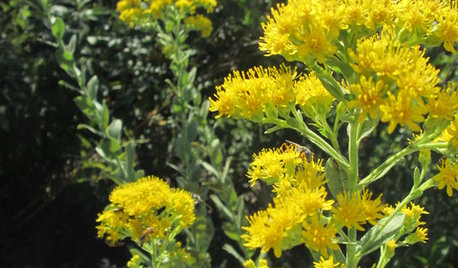
FALL GARDENINGGreat Design Plant: Oligoneuron Rigidum Brightens Fall Gardens
Create a pollinator feeding ground with this cheery, fuss-free goldenrod, formerly known as Solidago rigida, native to much of the U.S.
Full Story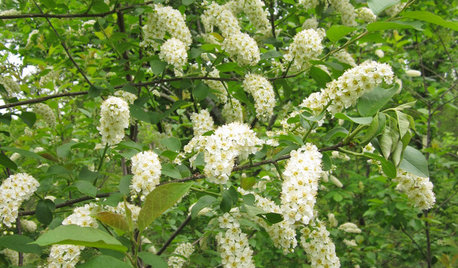
TREESNative Plant Alternatives to Invasive Common Buckthorn
Learn how to identify and control this aggressive plant, and what to grow in its place
Full Story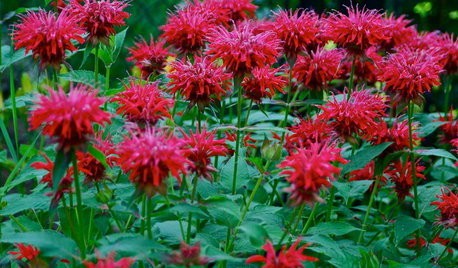
GARDENING GUIDES10 Deer-Resistant Native Flowers to Plant This Fall
Learn about natives that embrace some kinds of wildlife but resist grazing deer
Full Story
LANDSCAPE DESIGNGet the Look: New England Garden Style
Stone walls, clipped hedges and flowering borders contribute to this traditional look
Full Story
HOUZZ TOURSHouzz Tour: From Old Stable to Minimalist Guesthouse in England
Its interior bays once held racehorses, but now this all-white and wood home holds fascination as a modern part-time home
Full Story
GARDENING GUIDES8 Deer-Resistant Elegant Evergreen Shrubs to Plant This Fall
Who knew that such beautiful shrubs could be deer-resistant?
Full Story
GREEN BUILDINGThe Big Freeze: Inventors Break New Ground to Keep Things Cool
Old-fashioned fridges can be energy guzzlers, but there are more eco-friendly ways of keeping food fresh, as these global innovations show
Full Story
GARDENING GUIDESGarden Myths to Debunk as You Dig This Fall and Rest Over Winter
Termites hate wood mulch, don’t amend soil for trees, avoid gravel in planters — and more nuggets of garden wisdom
Full Story
sleevendog (5a NY 6aNYC NL CA)