

New Shipping Rates at Central Milling. Whatever. It's Bread.
4 years ago
last modified: 4 years ago
Featured Answer
Sort by:Oldest
Comments (10)
 4 years ago
Related Discussions
Cost Benefit Analysis Store Bought Bread vs Homemade
Comments (37)After reading these horribly high prices for flour I went out this morning and purchased 50-pounds of wheat to add to my already sizable stash. Kansas wheat is not looking all that good, especially in the western part of the state where they have been in a drought. With rising fuel prices, we can only look forward to higher prices for wheat and flour - and everything they are used in. FYI - Wheat has a nearly indefinite shelf-life while commercial bleached and unbleached flour will keep 6-12 months at room temperature (double that if frozen). I use wheat for making wheat sprouts, wheatgrass, cooked wheat berries, farina, flakes, "wheat meat", bulgar and cracked wheat - and oh, yes, flour. I ran across a book recently - "No Wheat Grinder Wheat Recipes" by Cindi Van Bibber. A great little collection of recipes you can use whole wheat berries in even if you don't have a grain mill. Cooked wheat berries are mixed in the blender to use in recipes like: No Flour Muffins, Cornbread, Brownies, Meatloaf, Biscuits, Meatballs, and hubby's favorite - Peanut Butter Cookies. A great little book for anyone wanting to use whole wheat but who doesn't have a grain mill. I've included the link below for anyone interested. I like to "cook" a large batch of wheat in my Thermal Cooker and then bag it in 2-cup amounts and keep it in the freezer. Lots of uses for cooked wheat, as well as all the recipes in the little cookbook. -Grainlady Here is a link that might be useful: Cindi's Lifestyle Treasures...See MoreDaily Bread
Comments (22)Our daily bread is challah. My husband makes a double batch almost every Friday (2 small loaves go to my son who lives nearby). When my other son's visit, he may even make a triple batch to make french toast for everyone and send a loaf or two home with them. I think my husband would happily have that as his only bread - there seems to be a trend here of husbands who prefer soft breads. Bit it isn't universal; one of my son's makes sour dough and really likes that. He has tweaked the recipe to use white whole wheat for part of the flour. If we have any other kind of bread, I make it. So I fill out variety for our daily bread. I've been working on perfecting bagels and rye bread. My bagels sometimes come out perfect and sometimes come out tasting fine but looking kind of bumpy. I think that happens when they have over-risen before boiling so I'm working on perfecting that timing. I'm pretty happy with my rye bread now. The secret to getting the right chewy deli rye texture is the choice of wheat flour for the bread. It needs a flour that isn't quite a whole wheat but that uses more of the grain than white bread flour. BC (before Covid) I was using first clear flour from King Arthur, but that was out of stock forever (King Arthur's website now says it is "sold out for the season." I've found that 110 flour from Central Milling produces good results. I tried it because some websites on flour types said that German 110 flour is equivalent to American first clear. I also do pita, naan, sour dough and whole wheat breads. I just made some naan and wasn't happy with the results; we replaced our ovens recently and I need to figure out what settings on my new oven work best for naan....See MoreGrinding wheat berries for flour for bread; conversion to ounces?
Comments (9)No. Soaking the wheatberries will make them too soft, and you'll get slurry instead of flour, and it will be hard to control the hydration. Yes, soak the flour, but in the amount of water you want to use for the recipe. It may seem crumbly dry, but just make sure it's as well mixed as you can. It'll be nice and moist at the end of the soaking period. I think I'd soak all the flour, rather than just the WW, but that's something to experiment with. Maybe the white would be greedy and soak it all up before the WW had a chance. Best of both worlds, soak the ww, then do an hour autolyze after mixing the rest. Do soak the WW for at least 8 hrs. Overnight is good. This is even more important if you have little chunks you’re trying to soften. An alternative to having coarsely ground bits of wheat, would be to mix in some interesting other whole grain, like millet. Just toss it into the soak. It's very nice. I've also used amaranth, buckwheat groats, various seeds and whatever took my fancy. Just keep to a small enough quantity that it doesn't impede the rise. Don't chill it unless your baking day gets postponed more than a day or two, and you think you'll get mold. Just cover your vessel, and leave it on the counter. Ambient humidity does make a big difference. I know you baked professionally, but I can't remember what. IME, all that “baking is chemistry” cliche stuff is about cake (which includes quickbreads and cookies). You have to have the right specific ingredients, in the right quantities, with the right methods under the right circumstances, to get a replicable product. Breads are different. They're much more about art, about adjusting for how dry your flour is, how dry the air, how active the yeast. You know there’s enough flour or water when it feels right. Pastry seams somewhere in between....See MoreBread without Fear
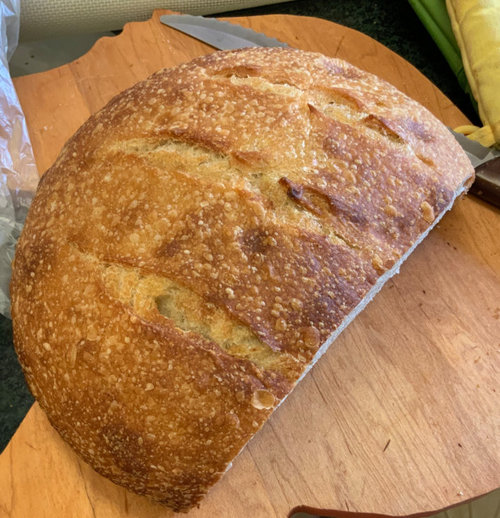
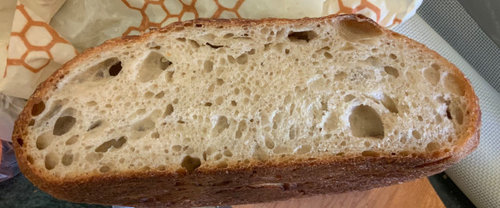
Comments (13)So, the thing about deciding to bake bread is to have time. My mother always started bread early, like before breakfast. I might start after my work is done and be willing to have it finally done after midnight. You need to choose a time when you can give it time. You can always shove your dough in the fridge if something comes up, but since you need to bring it back to room temperature before baking, I don't find it saves time. A long ferment in the fridge can do other nice things, but time saving really isn't one. Here are the instructions and the recipe for the bread above, with the additions as I specified in the original post: Bread is easy. Nearly foolproof and you're not a fool. The good thing about stylish recipes is the cast iron Dutch oven. As with other kinds of cooking, it takes away the variability of the ovens, which is the hardest part. The other thing is getting your hands to learn bread. To know when it needs a little more flour or water, more kneading, etc. Just keep trying. Don't go trying to use all the tricks and advice from different people. Just bake. Most times when you try a new recipe you can get a doorstop, or other mess. You can always turn it into bread pudding or crumbs. Try again. Bread is much easier with a kitchen scale, especially one that will do grams. You also need a big bowl and something to cover it with (could be a mixer bowl and a tea towel. I also use the Anchor Hocking 2 qt. measuring jug with cover). You need a clear counter space and a baking board or silpat to knead and shape your loaves on. A Danish dough whisk is useful, but not required if you're willing to use your hands to mix your dough. A heavy mixer will mix and knead. KitchenAid Artisan will do one loaf, or up to three if it’s soft dough. Anskarum will do big batches of dough. If your dough is very sticky and drippy, add a little more flour. If it’s too stiff to work, add a little water. A single loaf can be made in a 2 qt. Dutch oven, loaf pan, baking sheet, pizza pan, cake pan.... Make a bed of flour for the dough to rest on for a flat pan,or spray some oil in any pan. Ingredients: Flour. Malt will help your rise. I add malt powder to many recipes, but for daily bread (eaten daily, not baked daily) I use Central Milling Artisan Bakers Craft Plus. It's 11% protein, which is on the heavy end for All Purpose flour, about equivalent to King Arthur AP, but has the malt already in it. If you want a very hearty, heavy bread with a lot of stretch, a 14-15% protein flour will do you better. I've made bread from Central Milling Tony Gemignani pizza flour, which has fantastic flavor and 15% protein, as well as a fine "00" grind, and it was really good, but it's too much for general bread. Highly recommended for pizza. The high hydration breads need more protein so that fewer of the gluten strands break and you get a better crumb. I'm not fond of King Arthur flours. Gold Medal Better for Bread (12% protein) is a good choice, but King Arthur All Purpose (11.7% protein) will work fine. N.B: The protein content on the nutrition label loses the difference as a matter of rounding error. The protein content tells you the ratio of gluten you can develop. Kneading speeds up the gluten forming, but it’ll happen just sitting if you leave it alone long enough. Whole wheat breads are a whole different story. The bran cuts the gluten and 100% whole wheat takes some experience and confidence. You can use up to 40% whole wheat flour in a regular recipe without too much problem, but you might not get as much loft. Water. Do use spring water or whatever good tasting water you can. There's nothing in bread for it to hide behind if it doesn't taste good. Salt. Regular granulated table salt works fine. If you prefer a larger grain, grind it up for bread, so it dissolves fast. Tuscan bread has no salt but is mean to be eaten with very salty foods. Generally, breads want half a TBSP (or 1.5 tsp or 11g) table salt per pound of flour. Otherwise, they're exceedingly bland. If you want to weigh your salt, you may need a special scale. They cost about $25. You don't need that kind of precision, however. Your dough should taste salty--unless you use a lot of salt in general and can't taste it in small quantities any more. Salt retards the rise. If you're having trouble with the rise, you can add the salt later, but you shouldn't need to. Stir the salt into the flour first, and you'll be fine. Yeast. ADY=Active Dry Yeast. The Instant is for bread machines. It's the same thing but ground up to work faster. It's a pain to use in other applications. Yeast should be stored in the fridge, but set it out to warm up to room temperature before you use it. A packet is the same amount as a small cake (1" square) is the same as 2.25 tsp. Two tsp should work fine if you don't want to be bothered. Jars are much more economical, and if you're going to be baking regularly, get the 2 lb. bag and store most in the freezer. Given the above, just follow the recipe and you should have bread. :) JC's Daily Bread Lower Hydration Adapted from King Arthur flour Ingredients 1 packet ADY (Active Dry Yeast) = 2 ¼ tsp. 11g or 1.5 tsp Salt 1.5 cups lukewarm Water 475g Central Milling Organic Artisan Baker’s Craft Plus malted flour Or Gold Medal Better For Bread or King Arthur All Purpose plus a teaspoon of diastatic malt, dried malt extract (powder), liquid malt, or even a heaping tsp. of Malt-o-Meal Optional: An egg or milk to brush the top with for sheen and color, and oil spray for pot. Optional: Replace up to 1 cup of the liquid with vegetable puree of any kind, beer, juice or other liquid. You may have to add up to half a teaspoon more salt if the liquid doesn’t have salt. You may also add other seasoning, spices, etc. but better to add it to the liquid first to get the balance right. Directions Combine all ingredients, mix, and knead at least 10 minutes to a well-stretched, smooth, elastic dough Put dough in greased bowl, turn over (grease both sides, thereby), cover, and let rise at (warm) room temperature for about 1 hour, to double volume. If your kitchen is cool, you can run a load of towels and set the bowl on the dryer, or the cable box, or set it on top of a simmering pot of water, or heat your oven for an hour before starting to its lowest temperature and turn it off and put your dough in when it has cooled to pleasantly warm.. Punch down—i.e., let out the air by poking it, and bake in a 2 qt. cast iron pot or other high sided vessel. Optionally spray with oil to fry the sides a little. Cover and let rise to double again. Optionally, brush the top lightly, without deflating the dough, with a beaten egg or milk. You can slash the top of the dough with a very sharp knife, but don’t deflate it. Preheat to 415° F Bake for 35 minutes. Remove cover and lower temperature to 375° F for 12-15 minutes....See More- 4 years agolast modified: 4 years ago
 4 years ago
- 4 years ago
- 4 years agolast modified: 4 years ago
- 4 years agolast modified: 4 years ago
 4 years agolast modified: 4 years ago
- 4 years agolast modified: 4 years ago
- 4 years ago

Related Stories

SMALL HOMESHouzz Tour: Sustainable, Comfy Living in 196 Square Feet
Solar panels, ship-inspired features and minimal possessions make this tiny Washington home kind to the earth and cozy for the owners
Full Story
GARDENING GUIDES6 Plants That Beat Butterfly Bush for the Wildlife Draw
It's invasive, a nonnative and a poor insect magnet. Check out these better alternatives to butterfly bush in the garden
Full Story
STUDIOS AND WORKSHOPS10 Creative Live-Work Spaces
Get inspired to ditch the commute or just have a dedicated zone for making whatever floats your boat
Full Story
LIFESimple Pleasures: The Joy of Baking
Fill your house with a heavenly scent and your heart with cheer by making time to bake
Full Story
BATHROOM DESIGN12 Things to Consider for Your Bathroom Remodel
Maybe a tub doesn’t float your boat, but having no threshold is a no-brainer. These points to ponder will help you plan
Full Story
FARMHOUSESWorld of Design: See How 9 Families Live and Farm on Their Land
Join us as we visit the homes and farms of passionate food producers and hear about rural life around the globe
Full Story
ORGANIZING7-Day Plan: Get a Spotless, Beautifully Organized Kitchen
Our weeklong plan will help you get your kitchen spick-and-span from top to bottom
Full Story
HOUZZ TOURSMy Houzz: History Resonates in a New Washington Farmhouse
Sentimental memorabilia join reclaimed pieces to create a warmly personal home for a family
Full Story
HOME OFFICESHouzz Tour: Ecofriendly Home-Office Shed in Austin
A new father finds work-life balance with a stylish home-office shed in the backyard
Full Story
INSIDE HOUZZA New Survey Suggests How Much a Kitchen Remodel Might Cost You
It’s a good starting point, but the true cost will depend on regional and other factors
Full Story
colleenoz