

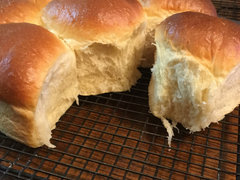
Have any of you tried the Tangzhong method in baking bread?
6 years ago
Featured Answer
Sort by:Oldest
Comments (30)
 6 years ago
- 6 years ago
Related Discussions
Bread baking and oven with max 350 d?
Comments (3)Thank you Nancy for the tips. No, he does not have a baking stone but might look into getting an unglazed clay tile. Also, he will try the egg wash idea. He likes whole wheat/rye containing breads, so French bread is not really the type he likes to eat. Hopefully this is very temporary and soon he will have an oven that can reach 450 d again....See MoreKAF - Bread Baking enhancers
Comments (4)I've used Rye Bread Improver and Deli Rye Flavor, but not Caramelized Coloring. I thought they were a waste of money. When you look at the ingredients in Rye Bread Improver, you can use potato flakes, or potato starch or flour, your own vital wheat gluten, malt, etc... You can use potato water from boiled potatoes for all or a portion of the water in a recipe, instead of potato products. I sometimes malt my rye and dry it before I mill it to add that malty flavor. Malting the grain also makes it easier to digest. King Arthur used to sell malted rye grain and I used to mill it into flour and use it occasionally. If you do purchase the ingredients you mentioned above, try to use them in King Arthur rye bread recipes that call for these ingredients first, so you can see how they work. They are designed for these products. I mill my own rye flour and it is superior in flavor to using commercial rye flour. I can also mill it anywhere from fine to coarse, which allows for a variety of rye breads. There are also several types of rye flour... If you use light rye flour, it has the bran and germ removed and is akin to using unbleached white flour and has little flavor and color. I use freshly milled rye for making cookies and quick breads as well. Much of the flavor and color people associate with "rye bread" is from the add-ins, rather than the flour. Add-ins like coffee, molasses, cocoa, etc. Some even incorporate copious amounts of food coloring to darken them. The use of seeds and flavorings such as caraway, onion, anise, flax, and orange is traditional in various cultures. As far as I'm concerned, more people associate the flavor of caraway with rye bread, not rye flour. You can add caraway seeds to white bread and people will assume it's rye, that's how dominate the flavor is in the bread and how it is associated with rye. If you want more flavor from your caraway seeds, grind a portion of them into a fine powder (using a spice mill, a suribachi and pestle or a mortar and pestle) and add it to the dough. American pumpernickel has little to do with traditional pumpernickel. Traditional pumpernickel is a very dense mixture that is pressed into a pan (sometimes with a lid) and steam-baked for as much as 20-hours. The Germans call these varieties "kastenbrots", which translates as "box bread." If you have an Aldi store near you, they sell loaves of this type of bread - usually in the fall. Danish ryes tend to be lighter and sweeter than most German ryes. Molasses and malt extract are popular ingredients in Danish rye. Danish ryes tend to contain either buttermilk or butter, or both, which helps preserve the loaves and gives them a richer and more open texture. Rye bread is associated with a tighter crumb than wheat bread due to less gluten. You can get a more open texture by incorporating a slow-rise technique and using a high percentage of wheat flour, or additions of vital wheat gluten. Because rye flour has little gluten in it, you need to mix your wheat flour into the liquid FIRST and beat it very well in order to develop the gluten while the mixture is still in the bowl. THEN add the rye flour. If you want that "sour" flavor, use a rye flour based starter and make a naturally-leavened bread. When you use a typical direct dough method, which is the fastest way to make bread and the one most people use these days, you'll also give up a lot of flavor that can only develop from long, slow, cool rises. The larger the percentage of rye flour you have in your recipe, the stickier the dough will be - even with the correct hydration. Sticky dough often means people add too much flour to their rye bread recipes while kneading and get a "brick" for a loaf. If you find you have difficulty kneading the sticky dough, place it in a large freezer-style zip-lock bag. Press out all the air, zip it shut, and knead the dough in the bag from the outside. You can still adjust the hydration, if necessary. Turn the bag inside out to remove the dough. This is one bag you won't be able to clean and reuse. Handle the dough with oiled hands. You can also knead the dough with wet hands (keep a small bowl of water handy to dip your hands in). This will help keep the dough well-hydrated. It's better to err on the side of a wet dough than a dry dough from adding too much flour to compensate for the stickiness. You might enjoy some of the rye bread recipes associated with Wisconsin, Ohio, Minnesota, Iowa and Nebraska. Seeded rye is also known as Jewish rye and is another popular rye bread. Be sure to keep us posted on which rye bread recipes you like! -Grainlady...See MoreGaggenau Combi Steam Bread Baking
Comments (9)I have a Viking combi steam, so the settings don't actually relate, and have played with a number of different approaches. Just wanted to chime in to point out that the 0% setting means that it is vented to the open, and the 30% setting means that no steam is introduced, but the vents are closed so that any steam coming out of the bread stays in the oven. I make ciabatta very often, some sourdough boules, and batards ( a baguette is too long to fit in my oven) I normally use only 100% whole wheat, so my results may be different from yours, but I find that I miss a higher starting temp. My oven can't go any higher than 440 F. I have tried using a baking stone with a preheat using the combi steam function for about 1/2 hour, and that works okay, though I have a sneaking suspicion that the steam is getting into the stone, and then comes out when I turn off the steam after the first few minutes ( just a suspicion, could be totally off base on that ). I usually switch to a regular convection oven setting once the bread has been in 3 or 4 minutes. When I remember, I also open the door briefly to let out any moisture, then reduce the temp setting. Unfortunately, the Viking doesn't allow custom settings with changes in modes, so I can't program it to do that on its own. I am not sure I understand your first step - if you set it to 100% steam ( in my oven that would be steam only ) it is limited to 212 F . To go above that I have to use a combi mode. The Viking doesn't have steam pop, but if I were you, I would leave it in at 100% steam and continue to steam pop during the first 4 or 5 minutes, then set it to 0 % for the rest of the bake. For sourdough, a longer steam time can help....See MoreAny baking experts help me with my bread?
Comments (19)Just looking at that slice, I notice the bottom looks a bit too dense - almost undercooked. I do not consider myself an expert, just competent. For many years, I used to bake bread weekly (no bread machine)and occasionally had problems like that - I always figured that might mean not enough gluten development, dough is too dense, not enough yeast, old yeast without enough activity, or dough raised for too long, and fell in the oven. For yeasted doughs, I learned to mix some unbleached white or bread flour with my whole wheat flour (a bit less than 1/3 part) for a lighter result, proof the yeast, and really knead it very well for the second rise. First kneading I just do enough to mix well. And I also look for whole wheat flour that isn't too coarse, to get bigger fluffier results. King Arthur's organic whole wheat is a finer grind than most of the bulk whole wheat flour around here. My proportions are 1 Tbsp. yeast, 1 1/2 cups water, 3 1/2 cups flour (1 cup unbleached or bread), 1 tsp. salt, and 2 Tbsp. fat - usually extra virgin olive oil or butter King Arthur's bread flour is high gluten, with some barley flour in it, I seem to recall....See More- 6 years ago
- 6 years ago
 6 years ago
 6 years ago
- 6 years agolast modified: 6 years ago
 6 years ago
- 6 years ago
 6 years ago
- 6 years ago
- 6 years ago
 6 years ago
- 6 years ago
- 6 years ago
 6 years ago
- 6 years ago
- 6 years ago
- 6 years ago
 6 years ago
- 6 years ago
- 6 years ago
- 6 years ago
- 6 years ago
- 6 years agolast modified: 6 years ago
- 6 years ago
- 6 years ago
- 6 years ago
- 6 years ago

Related Stories
KITCHEN DESIGNLove to Bake? Try These 13 Ideas for a Better Baker's Kitchen
Whether you dabble in devil's food cake or are bidding for a bake-off title, these kitchen ideas will boost your baking experience
Full Story
DESIGN POPBakers’ Home Storage Tips for Sliced Bread’s 90th Birthday
In honor of the bread slicer’s debut in 1928, we offer the best bread storage tips since, well ... you get it
Full Story
KITCHEN DESIGNKitchen Ideas for Bread Lovers
Any way you slice it, a kitchen designed with bread in mind conveys warmth and homeyness
Full Story
KITCHEN DESIGNWhy You Might Want to Give ‘Bokashi’ Composting a Try
Turn kitchen scraps into gardening gold with this low-maintenance, space-saving method
Full Story
LIFESimple Pleasures: The Joy of Baking
Fill your house with a heavenly scent and your heart with cheer by making time to bake
Full Story
HOUSEKEEPINGGet Those Carpet Stains Out: Best Nontoxic Methods for Spot Cleaning
Banish blotches the safe way with pantry staples, to get your rugs looking as clean as the day they came home
Full Story
DECLUTTERINGCan’t Figure Out What ‘Sparks Joy’? Try This Question Instead
If you can’t decide whether to keep something or let it go, shift your perspective to find the answer
Full Story
KITCHEN DESIGNHow to Create a Dedicated Baking Station
Avid bakers love having a designated kitchen space. Here’s what to consider when planning yours
Full Story
HOUSEKEEPINGBaking Soda: The Amazing All-Natural Cleanser You Already Own
Battle grime, banish odors and freshen clothes with this common nontoxic cupboard staple
Full Story
KITCHEN DESIGNGet Organized for Holiday Baking
Before you crack that first egg, establish a game plan for stress-free success
Full Story
2ManyDiversions