

Common misuse of words, Part 2
7 years ago
last modified: 7 years ago
Featured Answer
Sort by:Oldest
Comments (170)
- 7 years ago
 7 years agolast modified: 7 years ago
Related Discussions
What is yellow pattern pls? Do I need to get rid of these? part 2
Comments (19)Malcolm Manners, thank you for pointing out the distinction between the two names. I checked the internet and apparently "biological index" is the general term and the two subterms are herbaceous index and woody index. Davis in their 2004 web article "The Rose Clean Stock Program" use the term "biological index". I am interested in any literature comparing the 2 subterms for rose virus testing. I did find the following for Rubus: "Transmission to herbaceous indicators CRLV, ApMV, BRLV (and indeed TSV in general) can be transmitted by inoculation of sap to herbaceous test plants and can usually be detected in this way. Grind rapidly growing leaves from Rubus plants to be tested in a small volume of 2%, nicotine solution with a little celite as abrasive. Gently rub this sap extract on leaves of young, soft, rapidly growing plants of Chenopodium quinoa and/or Cucumis sativus. Keep test plants in aphid-proof glasshouses at about 20°C and observe for symptoms over about 3 weeks, Symptoms caused by these viruses in inoculated leaves should be apparent in 4-10 days. BRLV and ApMV are probably best detected in very young cucumber cotyledons, but all viruses should induce symptoms in C. quinoa. All four viruses should become systemic in C. quinoa, but some strains of tobacco streak virus (BRLV is a strain of TSV) are not systemic in this host. Woody indicators While the nepoviruses and ilarviruses could be detected by grafting Rubus to woody indicators, there is no purpose in doing so for the alternative methods are much superior. In the case of RLCV, however, this is the only method of detection. Graft scions of test Rubus plants to Rubus phoenicolasius (wineberry) which develops particularly severe symptoms. In general, R. idaeus can also be used. Symptoms may take 2-12 months to appear after graft inoculation. The two strains of RLCV (alpha and beta) are both detected." http://74.125.93.132/custom?q=cache:IolSYfkHYSoJ:archives.eppo.org/EPPOStandards/PM3_PROCEDURES/pm3-31-e.doc+rubus&cd=2&hl=en&ct=clnk&gl=us&client=google-coop ------------------------ "Rubus is a large genus of flowering plants in the rose family, Rosaceae" from ( http://en.wikipedia.org/wiki/Rubus ). Here is a link that might be useful: link for rubus indexing...See MoreMALVACEAE in Hawaii--Part 2
Comments (0)MALVACEAE (Mallow family) Part 2The Abutilons In a previous posting I spoke about the Hawaiian members that belong to the popular genus Hibiscus. There are several genera of the Family Malvaceae in Hawaii, including two endemic genera. The genera include Abutilon, Gossypium, Hibiscadelphus, Hibiscus, Kokia, Sida, Thespesia, and Waltheria. Please note: In this and following postings I will refer to all the Hawaiian Islands at times as "Hawaii," while the Big Island as Hawai'i. Notice the glottal stop, or 'okina, between the double-"i's" In this posting I will address, again briefly, another member of the Family Malvaceae (Mallow family)Âthe Abutilons. MaÂo, or Hoary abutilon (Abutilon incanum) is our only native abutilon species that is also found out side of the Hawaiian Islands. They are naturally found on all the islands except HawaiÂi (the Big Island). This is the smallest member of the Hawaiian abutilons and can found at lower elevations in dry areas such as Kaena Point and Barber's Point on O'ahu. Only pink-flowered forms are known from Hawaii. With no known Hawaiian name, the Hidden-petal abutilon (Abutilon eremitopetalum) is an unusual abutilon in that the small apple-green petals are nearly completely "hidden" within the fuzzy calyx (sepals). Only the red staminal column protrudes noticeably. They are extremely rare in the wild, but fortunately rather easy to cultivate. These hybridize easily with the next listed species, A. menziesii. the Hidden-petal abutilon is endemic to LânaÂi and a federally endangered species. KoÂoloa Âula (Abutilon menziesii) is closely related to the previously mentioned species. If grown too close together, they will readily hybridize. Best to make cuttings from these plants. Though the word Âula means "red" in Hawaiian, there are in fact many color variations of koÂoloa Âula. While maroon is perhaps the most common color, it can also be found in pink, salmon, yellow (blonde), maroon or pink with white, and a deep burgundy color. The long-lasting flowers make an impressive lei and it is a very special person that receives a koÂoloa Âula lei. A federally endangered species, koÂoloa Âula can be found on LânaÂi, east Maui, and HawaiÂi. They are possibly from OÂahu as well as there is a very limited wild population on the Ewa Plains. KoÂoloa Âula is becoming very popular in Hawaiian gardens perhaps because it is very easy to grow as a xeric plant and is easier to obtain in recent years. They propagate easily from seed or cuttings. The fourth species is Abutilon sandwicense. It has no known Hawaiian name. These have the largest flowers and leaves of the Hawaiian abutilons. The large yellow, sometimes maroon, flowers usually hang downwards. These federally endangered plants are only found in a few locations in the Waianae Mts. on OÂahu. But again they are easy to cultivate and make an attractive and unique addition to the garden. All the Hawaiian abutilons are easy to grow. They thrive in an open sunny area with a gentle breeze. They require very little water. In fact too much water can even reduce flower production. Abutilons also appreciate some fertilizer now and then, but be careful not to over do it because this can produce large floppy leaves and attract leave-chewing insects. They can be attacked by Chinese rose beetles, which create holes in the leaves. While this does not kill the plant outright, it can make them very unsightly. Planting them near or under a street lights can lessen the invasion. Systemic pesticides, such as Merit, can also be effective in controlling pests. Once established the abutilons will not need much care. Enjoy them and remember the koÂoloa Âula lei! To see photos of these plants visit http://ravenel.si.edu/botany/pacificislandbiodiversity/hawaiianflora/result2.cfm and http://www.botany.hawaii.edu/faculty/carr/abutilon.htm...See Moreradiation in granite countertops Part2: response
Comments (151)Well, looks like we have one consumer that wasn't buffaloed by the personal attacks, and more remarkably, she had the guts to stand up for her right to know about any risks. Paulines, Bill Vincents, and a few others seem to like to proclaim each others crediblity on this issue. How convenient. Paulines, I wouldn't put myself in the same leauge as Bill, he no doubt is a very talented tile guy, but doens't know much about radiation or granite. Like you, he has a reputation to uphold, and like you he participated in the installation of a lot of granite over the years. Opposition to this testing effort is all about the money and loss of reputation. After all, what expert wants the public to find out that they really didn't know everything about what they were selling or installing? Paulines want to whine about baselines, but measurements are measurements. The simple fact is that today I was measuring a slab that averaged around 5 mR/hr and had hot spots over 10 mR/hr. Think about that, a chest xray is around 20 mR... two hours on a hot spot or four hours just using the kitchen countertop gives you the same exposure. There is a difference though, the chest X ray is used to protect your health, there is public good in exchange for the exposure. A hot granite countertop is not any prettier than a low level one of the same type. Where is the benefit? And Paulines, Dr. Llope and I stay in touch constantly either through email or the rad forum I got him hooked on. The guy has become a friend of mine and I can tell you that people like you, Kevin, Bill, and Sue are the ones that made him stop contributing. He won't likely come back till comments like your side makes on a constant basis are stopped. Bill, I still see you as misguided, but basically a decent man on the wrong side from lack of information. Problem is is that you refuse to consider any info but what fits your world view, so there is no help for it. Split hairs if you must, but installing and selling isn't much different. I'm not knocking you for what you didn't know before, but from last year on, you should have educated yourself on the issues instead of spending the time and effort to try to squash the discussion. Bill, Geiger counters are go/no go devices. They won't give you a extremely accurate reading because of the inefficiencies of the small units, but they are designed to be portable and fast. Designed for the aftermath of a nuclear war, testing food and water for safety didn't require exact levels, just good or bad. That is what they can do for the fabricator. The EPA stance is not up for interpetation. Prior to mid May, they said not to worry about radiation or radon from a granite countertop. Now they say they don't really know, that some granite can have high levels, that if you have a granite countertop, you ought to test your home for Radon. That is not a 180 but it is a 150 degree turn. Once Dr. Llope gets done testing and publishing, the other 30 degee turn will happen. NORM regulations are in 33 states, from 5 uR/hr to 30 uR/hr, and I can take any fool that still wants to debate to a slab yard and find two dozen granite types that will be higher than the highest state NORM level. Lisagraz, thank you for having the courage to stand up to the bullies. There are plenty of safe granites out there, I have reported on some on both here and stone sites, but the other side doesn't dare admit that or they would lose their only effective weapon against the testing effort, using personal attacks to attempt to destroy the messanger. You see that Revans1 and I are way closer on the facts than the others, but he can't admit it or the others will stop listening to him as well. The facts are that somewhere between 5 and 10 percent of all granites are a problem. Revans1 gets this, spent time educating himself on the issues, and is now on the opposite side he was last year. It is a wonder the others haven't attacked him more than they have already. arda, will you ever understand that that cartoon is about electomagnetic radiation not ionizing radiation? Electromagnetic has not been proven dangerous, a small fringe thinks so, but it hasen't been proven. But today I worked cutting samples from a top that was 40 times background radiation, and BEIR VII said that even background radiation caused some cancers. It is open and shut on that issue. Luvmyguys, it isn't a mess to the stoners, they want this to be a mess. They will continue to smear anyone that dares mention the issue and post distortions along with their personal attacks. It is the only weapon they have cause the facts are against them. Bill, again microwaves are not ionizing radiation. Saying that they equate to ionizing radiation from a granite countertop is just plain ignorant. And as always, your argument is that it is too expensive to make sure granite is safe, better to let the consumers take the risk than the stone shops lose a few bucks. And some quarries are testing now, and some importers. All the chinese importers brag about their class A granite rating. Really, does anyone that has read the posts believe that one side of this debate is not only endangering consumers for personal gain, but has resorted to personal attack and outright lies despite haveing seen data to the contrary? And don't think for a minute that when this thread is gone that will be the end of it. People will continue to ask questions, are you going to riducle all of them?...See MoreMore Words I Have Looked Up - Part 2
Comments (56)* The mantle of Mrs. Grundy - a figurative name for an extremely conventional person who worries about being different * The Grand Guignol - a Parisian theater that opened in 1897 * The "qui vive" of expectation - Que vive? Is a question: Who goes there? To be on the alert, suspicious. * Carlyle on the Dutch (who was who and who did what?) - Carlyle was Scottish writer/philosopher in nineteenth century who wrote social/political criticism. Not sure about the Dutch reference. Any ideas? * Cassandra could have looked more gloomily prophetic - Cassandra was the royal daughter at the time of the Trojan War. She rejected ApolloâÂÂs advances and in retaliation, he made it so no one would believe what she said. (Perhaps âÂÂgloomily prophecticâ due to this?) * A veritable colossus of negation - âÂÂcolossusâ was a huge ancient statue on the Greek island of Rhodes, so perhaps this refers to how immovable negativity is when people espouse it strongly * Fox (re: pity?) - not sure about this one. * Bib and tucker (clothing) - refers to oneâÂÂs best clothes; first used in 18th century. âÂÂBibsâ were similar to current day baby bibs, except these were worn by adults over their clothes (mostly women). Made of lace and fitted over the bodice; sometimes called âÂÂpinnersâ or âÂÂmodesty piecesâÂÂ. âÂÂTuckerâ were bibs that were tucked in. (Pinners/Bibs were pinned and tuckers were tucked.) Linked with âÂÂpinaforeâÂÂ, âÂÂpin-a-foreâÂÂ: a pin/bib thatâÂÂs pinned on the front of clothing. (Taken from Patricia Brent, Spinster - Herbert Jenkins.)...See More- 7 years ago
- 7 years ago
- 7 years ago
- 7 years agolast modified: 7 years ago
- 7 years agolast modified: 7 years ago
- 7 years ago
- 7 years ago
 7 years ago
- 7 years ago
- 7 years ago
- 7 years ago
- 7 years ago
- 7 years ago
- 7 years ago
- 7 years ago
- 7 years ago
- 7 years ago
- 7 years ago
- 7 years ago
- 7 years ago
- 7 years ago
- 7 years ago
 7 years ago
- 7 years ago
- 7 years ago
- 7 years ago
- 7 years ago
- 7 years ago
- 7 years ago
- 7 years ago
- 7 years ago
- 7 years ago
- 7 years ago
- 7 years ago
- 7 years ago
- 7 years ago
- 7 years ago
- 7 years ago
- 7 years ago
- 7 years ago
- 7 years ago
- 7 years ago
- 7 years ago
- 7 years ago
- 7 years ago
- 7 years ago
- 7 years ago

Related Stories
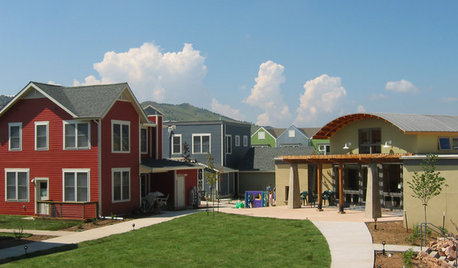
COMMUNITYTogetherness Take 2: Is a Cohousing Community for You?
Missing that sense of connection? Consider the new breed of neighborhood with a communal bent
Full Story
BATHROOM DESIGN5 Common Bathroom Design Mistakes to Avoid
Dodge blunders in toilet placement, shower type and more, and see examples of how to get your bathroom right
Full Story
MOST POPULARThree Magic Words for a Clean Home and a Better Life
Not a natural tidying and organizing whiz? Take hope in one short phrase that can change your life forever
Full Story
WORKING WITH PROSThe 4 Potentially Most Expensive Words in Remodeling
‘While you’re at it’ can result in change orders that quickly add up
Full Story
DECLUTTERING6 Common Causes of Clutter and Their Cures
Life changes, decision avoidance and a lack of efficient systems can be contributing factors
Full Story
KITCHEN DESIGN10 Common Kitchen Layout Mistakes and How to Avoid Them
Pros offer solutions for a stylish and efficient cooking space
Full Story
MOST POPULARA Few Words on the Power of Simplicity
An architect considers a pared-down approach to modern home design
Full Story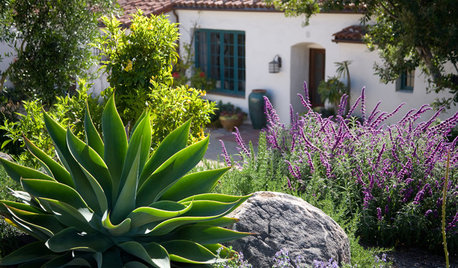
GARDENING GUIDESCommon Myths That May Be Hurting Your Garden
Discover the truth about fertilizer, soil, staking and more to keep your plants healthy and happy
Full Story
GARDENING GUIDESExperts Share 13 Common Gardening Mistakes and How to Avoid Them
See how to avoid overwatering, spacing out plants incorrectly and other landscaping pitfalls
Full Story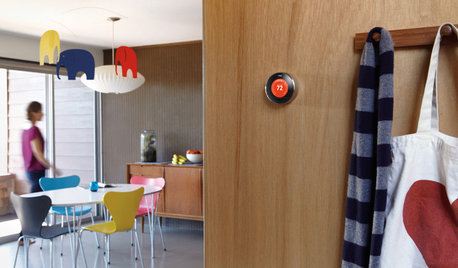
HOME TECHWhy Google Just Paid $3.2 Billion for a Company That Makes Thermostats
Smart home technology just got a new champion — and everyone is speculating about the reasons
Full Story
colleenoz