

What's For Dinner #366
I'm behind, so I need to go back and get caught up on previous thread.
Last night's dinner.
Artichoke and Pesto Pizza as requested by Matt.
Neither Moe or I were hungry as we had Sushi for a late lunch.
Matt did share a piece with his dad.
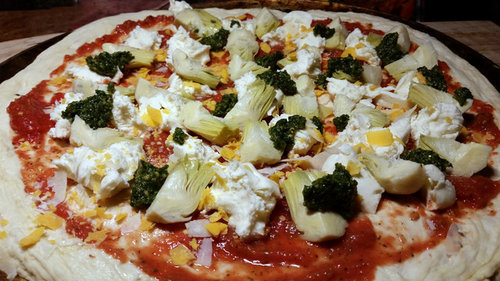
Ready to go on the stone on the grill.

Just off the grill.

Rim "Shot"
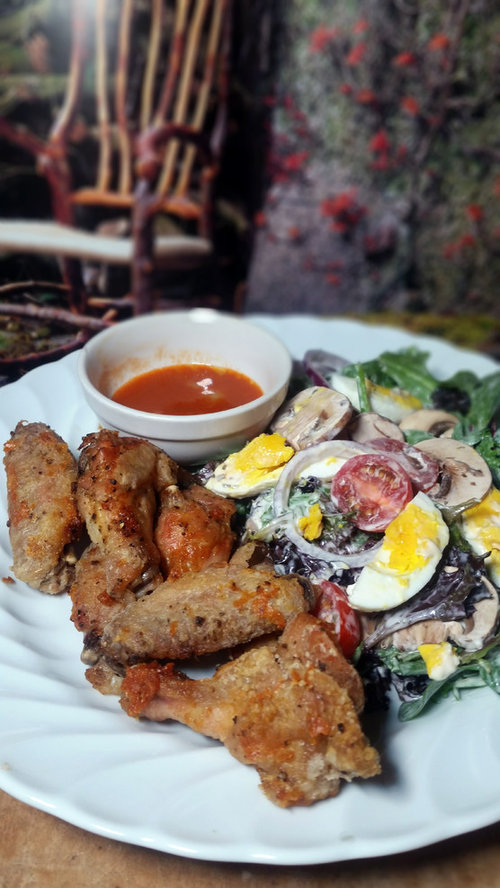
Moe requested a salad Sunday night so I made wings to go with it.
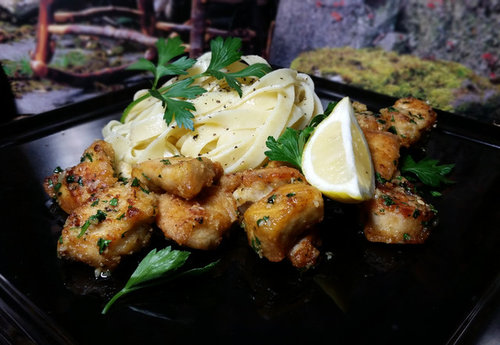
This was actually breakfast one morning.
I had intended to make Jacques Pepin's Chicken with Garlic and Parsley for dinner the night before but it became breakfast instead.
Such a simple recipe and so delicious.

And I made Bacon and Cheddar biscuits one morning last week.
Comments (110)
 7 years ago
neely, that's what I do when I make something with wonton wrappers too, I get them from the grocery store. They come in a couple of different sizes, and they're convenient. JohnLiu told me how to make them, but I haven't yet. Your soup looks very warm and inviting.
It must be the time of the year for chicken thighs, because I also baked some with some BBQ seasoning, although mine came from the freezer from the chickens we raised earlier in the year. I served it with roasted butternut squash from our storage.
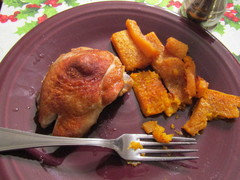
Tonight's dinner was some more of the butternut squash, this time cooked in the crockpot with brussels sprouts and cranberries. It's the second time I've made it, but I still haven't figured out how to keep the squash from turning to mush when I stir in the glaze at the end of the cooking time. The first time I tossed it all in together, this time I cooked the sprouts for a couple of hours first, then added the cubes of squash. Cranberries go in at the end. I really like the flavors so I'll keep on trying, cooking the squash even less time before adding the cranberries and glaze.
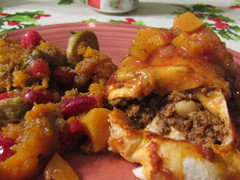
I made some beef and bean burritos with low calorie/low carb tortillas, topped with my home canned enchilada sauce and low fat cheese. It seemed an odd combination, but was actually pretty good together.
Annie
 7 years ago
Neely, I stock up when our butcher sells the thighs and drums for .99/lb. (We use metric here, but I can't get my head around the math, sorry). Anyway, they're cheap!
Annie, I looked on Sol's site for her caramel chicken, since I've heard to recommend it over the years, and again now. I can't find it. Can you direct me?
Related Discussions
Wolf dual fuel DF366 enamel failure What to do?
Q
Comments (92)I thought I was alone in this experience. I had a jenn-air downdraft for 30 years with no functional trouble whatsoever. If only they had made the downdraft cavity of stainless steel so it could have been cleaned more easily, I would have bought another one. But I had my eye on the Wolf for so long... The first oven cavity had significant crazing, and Wolf eventually replaced the cavity. Then, it happened again and they replaced the stove. That was a couple of years ago. I don’t use the oven cleaning function that often; generally it says fairly clean with a good wipe down. But a few days ago, I ran the self clean, and danged if it isn’t happening again. This time I searched and found the class action suit. It is beyond unacceptable to spend that amount of money and have this extent of structural problems....See MoreLast dinner of 2013? What's for dinner ?
Q
Comments (17)We were visiting my wife's family in Vermont which ends up being a large group, with most of her brothers and sisters, and their spouses and kids, and this year even several girlfriends of the kids. All told we were about thirty. Meals were split up with one or two people volunteering for each meal. New Year's Eve was my night. I was stumped at first as far as what to make, but the co-volunteer Eric (a foodie BIL) came up with the suggestion of top-your-own tacos. We actually went with tostadas, and made black beans, three different meat toppings, and about a dozen other topping options, with side dishes of Mexican-spiced rice, and homemade cole slaw. Logistically the meal worked well, although some people didn't realize that they were supposed to be able to pick up the tostada after they made it, and instead they buried it beneath a 2-inch deep mound of toppings. Also we forgot to put out the guacamole until after half the people had served themselves. Food wise, some parts of the meal worked better than others. The shredded chicken verde was good but would have been better with more of the tomatillo salsa, however the co-op closed early, and the normal grocery store had no green salsa. The beef/chorizo was good but could have used a bit more of something, Eric and I couldn't decide what it needed. The shrimp was a big hit, the only problem with it was it disappeared so fast, the recipe (as well as I remember it) for the shrimp is below. Chili-Lime Shrimp 2 lbs peeled uncooked shrimp (31-40 count -- cut into thirds) 10 cloves garlic (minced) 1 4oz can diced green chilies 2 limes chili powder canola oil Liberally cover raw shrimp with chili powder and the juice of 1 half of a lime, and let rest for 10 minutes. In small pan, heat oil over medium heat, add garlic and green chilies, until garlic is softened and fragrant. remove from heat. In large pan, heat oil over high heat, until it is smoking hot, add shrimp stirring occasionally to make sure all the shrimp are getting cooked, and none are burning, after about 2-3 minutes the shrimp should all be cooked, add the garlic and green chilies that you set aside, and the rest of the juice of the limes. Stir for about 1 more minute, and place in large bowl to serve. Overall the meal received rave reviews....See MoreAdvice on range hood for Wolf SRT366
Q
Comments (2)If this is for cooking rather than show then start here: https://www.gardenweb.com/discussions/5161173/hood-faq In a recent discussion someone mentioned that the fan in the Best/Bruan is quite poor. Consider a Fantech or Pritzer blower....See MoreFYI: LowE 366 has strong green tinge / tint / cast
Q
Comments (20)@Mia Smyth Recent commentary from another poster: https://www.replacement-windows.com/windowbb/viewtopic.php?t=1555 I actually have both the Sun Coat and now the Sun Coat Max. All my windows face South and West and the sun is very strong. I live in CA. The 2 sliding glass doors I purchased about 4 years ago have just the Sun Coat. Its terrible I continually find myself closing the black out drapes. The room is hot and very cold at night. I am happy that I ordered the same Milgard Thermally Improved windows for my entire home with the Sun Coat Max. We have not had them installed yet although I did place the window in the living room on the floor and can tell I will not have to keep closing the drapes and hopefully will not need window coverings at all. I can definitely see the difference. I hear they make a room more comfortable and I can see why....See More- 7 years ago
Jasdip, I've never found it on her blog, but I do find it here on the forum, so here it is! I do use a few dried pepper flakes in place of the chili peppers, because I'm a wuss when it comes to spicy food, and I make double the sauce, because it's so good on the rice. It's not something I can make right now, but I sure wish I could!
Chicken in Caramel Sauce
Sol on the CF
1/2 C packed dark brown sugar
1/4 C water
1/4 C Asian fish sauce
3 T rice vinegar
1 tsp minced garlic
1 tsp soy sauce
1 tsp thinly sliced fresh ginger
1/2 to 1 tsp freshly ground black pepper
2 small chili peppers, fresh or dried, halved
1 T canola oil
1 shallot thinly sliced
1 1/2 - 2 lbs boneless, skinless chicken breast or thigh meat, cut into bite-size piecesIn a small bowl, combine brown sugar, water, fish sauce, vinegar, garlic, soy sauce, ginger, pepper, and chilis, and mix well. Set aside.
Heat oil in a large skillet over high heat. Add shallot and cook, stirring, until brown, about 5 minutes. Add chicken and cook, stirring occasionally, until lightly browned on each side but not cooked through, about 5 minutes.
Stir the reserved sauce mixture and add to skillet. Bring mixture to boil, reduce heat to med-low and cook, stirring occasionally, until the liquid is reduced by about half and the chicken is cooked through, about 15 minutes. Remove and discard the chili peppers. Remove pan from heat, set aside until sauce has thickened and cooled slightly, about 3 minutes.
Serve with rice.
Annie

User
Original Author7 years agoNeely, your tuna salad and your fried rice look delicious. I've been making Moe more salads since he came home including one with hard boiled eggs and tuna.
I haven't made fried rice in a while but now that I have seen yours I have a craving.
I've never seen bone in thighs that cheap here. And boneless are a ridiculous price.
Jasdip, I'm sorry that your Chicken wasn't as good as you were expecting. But I have to tell you, I would be happy with just the rice and a double serving of your roasted green beans.
John, We love oysters too. Unfortunately they are not cheap here. Even clams are not cheap.
Annie, I'm guessing by the time you add your filling and sauce, you probably don't notice too much difference in the flavour of the flour tortillas. At least I hope that is the case.
Not cooking dinner every day. Moe just isn't hungry for a big meal. So I'm trying to give him his main meal in the morning.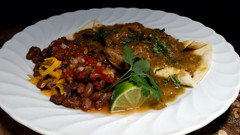
But I did make Mexican last Sunday. Cooked the Chile Verde in the morning before leaving for work and then just had to make the homemade tortillas and the salsa after I got home.
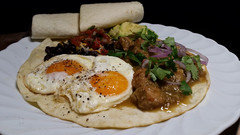
And I used the leftovers to make Moe breakfast. Butter basted eggs with the pork Chile Verde, black beans (cooked in the Breville PC) and avocado. He didn't eat it all but made a good dent.
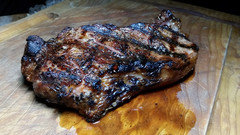
Grilled him a NY steak Thursday morning and he had a few slices on one of my baguettes. I split it and rubbed with garlic and olive oil and grilled to toast. Open face steak sandwich.
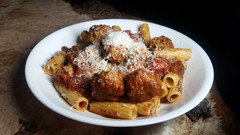
Last night he ate a little Rigatoni with meatballs and Italian Sausage.
 7 years ago
wintercat_gw, thank you so much for the flower photo! They really cheered me up : ) My favorite thing to do when not feeling well is to plan or think about things I want to do, and I’d ordered 20 seed varieties to winter sow, so your flowers gave me quite a boost! Are those periwinkles? So bright and pretty! I’ve yet to try avocado toast, so thanks for the wonderful reminder… laughed at your pre-emergent shaved leg story! Those pressure sprayers always seem to be against me, as well. Mostly it’s the wands that come flying off for me!
Finally feeling better! I’ve had a week ‘off’ chemo, another week to go, and then one week on, and I’m done for a bit I hope. Simultaneously I had topical chemo (never heard of it before) for skin cancer and pre-cancer on my face (because I thought why not get that over with while I’m at it, doh) Not. Fun. I won’t leave the house until I heal, LOL! DH has been amazing… The side effects hit me harder than I thought they would. Can’t complain too much, with a purring kitty and a sweet dog napping with me, hot cups of tea, laying in bed was not exactly torture!
I can’t possibly comment on all the meals I’ve missed, but I have enjoyed reading and looking at all the meals here (ok, I lie, there were a few days I didn’t want to see food, ha ha)… So, I’ll hit my personal fav’s:
Annie, I’m so envious of your Elery’s cooking abilities! That turducken with stuffing… really amazing! And your plate with the plum sauce has kept my mouth watering. Below freezing temps, sleet, snowfall, and still my rosemary, chives, and oregano and mint are still green and thriving. Strange!
Jasdip, I used to make all our pizzas in the 12” cast iron skillet too! Love spinach on pizza, and yours looks so enticing. We had one of those soggy limp-crusted Pizza Hut things a while back, and those just don’t compare! I could eat your entire pizza myself today, or at least I’d try : )
Ann, so good to hear Moe is doing better, glad you’re home, and with all the wonderful meals you’ve prepared, even if his appetite isn’t yet up to par, I’m sure he’s feeling much better and stronger in your loving care : ) Your rack of lamb looks incredible, but it’s the eggs with the Chile Verde, black beans and avocado that has my heart now : ) So glad Moe also had kitties to nap with : )
John Liu, your DD’s oysters would be my choice of the two… I’ve not had raw oysters in far too long. No fresh oysters here, and that looks heavenly! (still following your espresso maker thread and enjoying your progress!)
Neely, you know how I love your ‘chunky’ meals! Tuna salad typically does not appeal to me, but I actually saved yours in my recipe list here because it’s got your signature ‘chunk’ to it and I’ve never seen a tuna salad look so delicious. Even DH would be chomping at the bit over yours! It’s one of the meals I’ve re-visited several times : )
Cookebook, a shout-out to ya! (I scrolled back up to get a sneak peak of your jambalaya again!)
What’s for dinner tonight? I’m gonna guess a Zaxby’s cob salad. Or Thai again. Yes, we’ve made good use of the Thai place, and thank goodness for it! Recent meals have been the usual… A few McD’s salads (they taste like candy. I’m not kidding). One evening I just wanted a berry smoothie, and DH forgot it, then went back for it… Sweet man : ) Sitting on the porch in 24 F weather late at night just for fresh air… amazing the things that can make a person feel better. Saw a pair of bald eagles soaring the other afternoon, and the coyotes sound like they are getting closer.- 7 years agolast modified: 7 years ago
AnnT, that breakfast with the chili verde would just be calling Elery's name, he often has things like chili and tortillas with eggs in the morning. I just can't, I'm not a morning person anyway, and it's all I can do to eat an egg and a slice of toast. The steak, though, just.....yum. I hope Moe gets his appetite back soon, but at least he's eating a little bit, so that's encouraging.
The tortillas don't actually taste bad, but they have a weird stretchy texture and you know how I am about texture. Fill them, cover them with sauce and bake them and they aren't terrible,
Bone in chicken thighs were on sale here this week, 88 cents a pound, along with spiral sliced ham, also 88 cents a pound, but lettuce went up nearly 100%, to almost $2 a head for iceberg. Probably everyone is buying it because of the romaine issues?
2many, I'm glad you are feeling a little better and that you are nearly done with chemo for a bit. It sounds like your DH and the pets are taking good care of you, and that SnowKitty is settling right in comfortably. Eating at McDonald's, though, that would probably do me in.
24F, though, that's a little nippy even for me to go outside. Here it reached almost 40 today, it was a nice break from the cold, but we'll be back to normal temps by Monday. Right now it's still above freezing, which is amazing for December in Michigan.
Here Amanda has a horrible cold and so I made breakfast for Dave and the kids. Biscuits and sausage gravy for breakfast, at least for them. Elery had leftover burritos and I had the usual egg and black coffee. We had ham for supper, along with home canned green beans, mashed squash from our "stash", baked potatoes, also from storage, and chocolate chip cookies for dessert because I made them for the freezer, preparing for Christmas. I was satisfied with the ham, beans and squash, skipped the potatoes and cookies and I didn't take any pictures, I didn't even think about it!
Annie
- 7 years ago
You know who we've been missing?? Cathy!!! (cathyinpa) Does anyone know if she's okay? She usually participates on the WFD.
- 7 years ago
Jasdip, you're right, I haven't seen her here either, and I miss her. She's funny as heck!
Annie
- 7 years ago
She is!! She makes me laugh right out loud!!!
Ann, I'm glad Moe can eat some of your cooking, even though it's not his usual portions. I hope he's steadily improving.
I made Tom's potato dish tonite, it's so good......sweet potatoes and regular potatoes, baked with lots of garlic cloves and olive oil. Since th oven was on, I roasted brussels sprouts and did a pork tenderloin with a grainy mustard and apricot jam sauce.
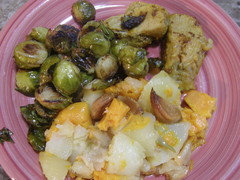
 7 years ago
Sorry to have been gone for a couple of weeks-- I feel like there's quite a bit to catch up on. Today is really a crummy day for me to be so tempted with all these delicious dishes, because I'm fasting for a routine colonoscopy tomorrow! LOL
First of all, AnnT- I'm glad the Moe is continuing to recover and if your amazing meals don't tempt his appetite, I'm not sure what would do the trick! I'm glad that he's attempting to eat, even in lesser portions. Besides, he's not burning calories with exercise to increase his appetite. Maybe he's trying to keep that lean, mean physique! ;-PAnnie, you're cooking up a storm! I'm impressed with your willpower to adhere to the diet and still bake goodies. Glad to hear that your Mom is going to be ok and didn't suffer a stroke. Her BP was astounding! Sorry to hear that Ashley has to go back to surgery for round two and three. Besides the pain and the cost, the separation from home and family must be so difficult. I know that you're there to pitch in with M &M, but it's still an upset to the routine. Has her pain eased at all from the first surgery?
Jasdip, your meal sounds delicious, pork tenderloin is so easy to cook and you can portion out the meat without cooking a big roast.
Neely, that soup looks fabulous. I know my DH would love it. I use the potstickers from Trader Joe's for a quick saute with soy and ponzu. I never though to incorporate them into chicken soup! I definitely want some of that Tuna Salad!
2Many- Hang in there! My friend is feeling so much better after his reward trip to Maui. His PET scan is in Feb, but they feel encouraged that his port is being removed next week!
John Liu, I always enjoy your writing. Your DD looks to be the next chef in the kitchen with you and SWMBO. How lucky are you?
Nothing cooking here today for obvious reasons. DH made eggs for breakfast, is having lunch at a museum with a friend and for dinner will be enjoying leftovers of his favorite meatloaf that I POOF'ed from the freezer this morning.
I need to wrap my head around making dinner for next week. It will be a small group but still should be special. Maybe beef tenderloin?
- 7 years ago
Ellen, good luck tomorrow! I've had one colonoscopy and after I came out of anesthesia Elery and I went out and had burritos, LOL. I guess I'm resilient. (grin)
Ashley does feel better after the first surgery, but she still has some pain. She's getting a stent on the other side this time, and a scan to see how the first surgery is faring. If necessary, they'll stent that side too, on a later date. Various venous abnormalities that require embolization, and hopefully she'll be "done", all repaired and replaced and roadworthy...
Mother is coming to stay with me for a couple of days. She sounds better and is getting around better, but my brother is driving her crazy, fussing and taking her blood pressure a dozen times a day. She's gonna kill him or drive her blood pressure back up if they don't get a break from each other, so she's coming here. I hope I can convince her to stay through Christmas, although it's going to put a pinch on my holiday preparations.
Supper tonight? An egg sandwich, after watching Madi's ballet recital. They danced to Rosemary Clooney's version of "Suzi Snowflake" and surprise, she was a snowflake. (grin) Maci refused to dance, but did come on stage to take a bow with the rest of the class. Yes, indeed, take a bow for a dance you never danced, LOL.
She looks a lot different with her hair all up, but here's Madi:

And the refuser, who will not do one single thing she doesn't want to, Maci. She's in the middle, with snowflakes, very blonde...

Makayla went with us, so she had a double bacon cheeseburger, fries and a chocolate shake at McDonald's after the ballet and she was very, very happy. The little girls went out to dinner with Kevin's parents afterward and went to Madi's favorite place, the Chinese buffet. Geez, can these people even be related to me??? (snicker)
Annie
- 7 years ago
The snowflakes are adorable, dancing or not! Colonoscopy is done and not again for six years. I'm not as resilient as you are, I had scrambled eggs and tea! LOL
 7 years ago
Laughing about post colonoscopy food. Last time I had craving for salmon. Excellent on the 6 years compumom, was same for me.
Darling little girls Annie,.
Lovely rememberance meal of those potatoes Jasdip and yummy with the pork and Brussels.
Glad to hear you are feeling a bit better 2 many. Your berry smoothy sounds yummy.
Great meals for Moe and yourself AnnT, stand out is that NY steak. Now I have a craving for a good piece of steak.
I roasted a leg of lamb which we enjoyed cold with salad over several nights after the first night roast. Cold sliced lamb with salad is a very typical perhaps old fashioned meal here in Australia. My old granny used to serve the sliced cold lamb with a layered salad which reminds me I haven’t had a layered salad for years.
I’ve read here a few ways people do their own layered salads. I think my granny did a layer of shredded iceberg lettuce, a layer of sliced tomatoes, a layer of sliced onions, Then a layer of shredded cheese and repeat., finishing with more lettuce which was sprinkled with a diluted salad dressing and all was left in the fridge for a while before eating. Perhaps the memory is better than the actual eating.
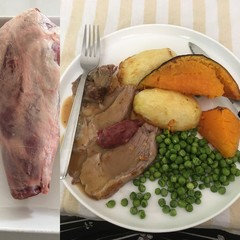
The lamb was a little welldone but tender.
When the lamb ran out we had garlic prawns below with spinach and fingerling/kipfler potatoes cooked in butter... just a little.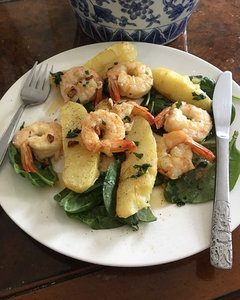
- 7 years ago
Even when she isn't dancing, Maci is adorable, Annie!!!
Compumom, I've never had a colonoscopy. Congratulations on your 6-yr reprieve!
Neely, beautiful prawns, yes just a 'little' butter.
I can't make pancakes worth a darn out of a box, but homemade ones always turn out. I didn't bother halving the recipe, and I tried freezing leftover pancakes and they didn't reheat nice, so the 4th pancake got tossed.

- 7 years ago
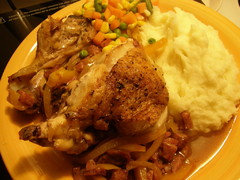
Dinner was another new recipe......Chicken Scarpariello. A Cook's Country meal. Chicken, sausage, peppers. I don't see the purpose of the sausage. Another dish that 'wasn't bad' but not worth the effort. But I'm a potato lover and the whipped potatoes were awesome! LOLIf I didn't know better, I'd think that I was lacking in cooking skills or something with so many blah recipes. But I made Pasta Puttanesca last night, and it was as good as always :-)

- 7 years ago
I love a pancake anyway they come... small and plump or a large and thin crepe. Jasdip, lovely that you are trying new recipes and that you feel they are not ‘quite’ worth the effort goes to show perhaps, that the tried and true from all nationalities have stayed the distance for a reason.
I haven’t been taking many pictures of dinners lately as been busy with Christmas visitors and seasonal chores.
This was a lunch at a friends, where she cooked flathead tails, chips and salad.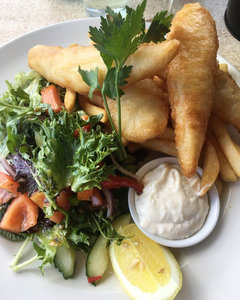
- 7 years ago
2Many - the pink and red flowers are Calibrachoa Million Bells and the purple ones with the white centre in the back are Catharanthus. I'm so glad to see you back!
- 7 years ago
Jasdip, yes, Cathinpa has been gone a while. I gave her a couple shout-outs some time ago hoping she was reading and would soon be back – I love her sense of humor. Cathy, if you’re reading this, we miss you, and hope all is well with you and yours : ) Jasdip, I love homemade buttermilk pancakes, and your pancakes look great : ) I’m sorry the Chicken Scarpariello wasn’t worth the effort, it looks delicious to me. But I’ve got to question you… does sausage ever need a purpose? Can’t it just be?! Oh lordy I have become my husband ; - )
Compumom, I hate the prep-treatment, but the actual colonoscopy is usually a breeze for me. DH is up all night, sick, from his doc’s prep instructions. So glad to hear yours is out of the way and no more for 6 years… I want your doctor! Me? I’d eat anything and everything after… cast iron stomach perhaps!
Oh Annie, those Snowflake angels are beyond adorable… how do you not spend your days cupping those precious plump-rosy cheeks?! Oh that little dickens, Maci! I did the same eons ago. Took ballet, hated it, (loved tap) and refused to participate in any recitals! Loved the tutu though. Thank you for sharing, those girls are just precious! Your egg sandwich sounds great to me… I’d like bacon in mine, though. Yes, I have become my husband -aack! On a serious note and I’ll try to keep this very brief, I think you are one amazing woman. The farm, your kids (and clearly an amazing Mother), your grandkids, all the things you do, the love you are shown by all those in your life (I’ll never forget the sunflowers in the bucket Elery picked for you, I thought that just the dearest thing) – obvious signs of the amazing person you are to so many : )
Wintercat… well, now you tell me! I just googled Calibrachoa Million Bells and found the seeds on the website I just got my seeds from! Yours are so lovely and healthy and I’ve fallen in love with those pretty flowers… I made a note to try them next year (they’d grow as annuals here). The Catharanthus… I thought I recognized periwinkles!
Neely, you do remember I’m eating mostly fast food, right? Yet you insist on posting those photos? Ha ha! I thought your lamb dish would be my undoing (which does not look too well done to me) but then I scrolled and saw your prawns… and the mention of butter… butter. I can even see the seasoning on the potatoes. There’s drool on my keyboard. My stomach just made the loudest grumble sound. I’m serious. Not about the drool, but about my stomach growling looking at those prawns…
Ah, but life is good after all! First and foremost, we are having Poofed shrimp fettuccine on Christmas day, and before anyone says, thawed pasta and re-heated shrimp… eeewww, remember, it’s been a while since we’ve eaten anything home cooked, from the freezer or not! We’ve eaten this thawed before, and it’s fine, so I’m really looking forward to it! Breakfast is a couple thawed cinnamon rolls I’d made last summer. DH will be happily surprised! He will be disappointed at the lack of bacon however. But he and I have now eaten out a few times, and I don’t mean McDonalds! Cracker Barrel yesterday, which is a chain restaurant, but we enjoy their hearty country breakfasts of grits, biscuits and gravy, eggs, and bacon. Oh, and hash browns : ) Plus we got the table by the huge fire. Thai meals brought home at least twice since I posted, chicken and dumplings one icy night at a local restaurant, and in the ‘big’ city we had… Mexican food. Why? As we drive, looking, I pointed out Italian, Seafood, the Brazilian steakhouse I’ve wanted to try, oh… there’s an artisan pizza place can we stop there? (Met with silence). First Mexican restaurant DH sees, and we stop. As per usual. Ha! Can’t complain, it was cheery, warm, and the food was good. We both had steak quesadillas.
My face is healing (faster than expected!), my weight is coming back, and next week is my last (we hope) time for the daily chemo. Still a wee bit weak, so might take me a little longer than last to recoup, but I’ve still got my hair, and after all, isn’t that all that really matters in the grand scheme of things? (You all do know I’m kidding, right?). Happy Holidays to all! - 7 years ago
WONDERFUL NEWS, 2Many!!! I'm soooo happy that your chemo is coming to an end, and that your face is healing. Weight gain is also good in this case. Here's to a wonderful 2019!!
- 7 years ago
2many, I'm also glad your chemo is ending AND that your face is healing. AND that you are at least getting something homemade for Christmas. AND that you have your hair!
Jasdip, those pancakes look really, really good, I haven't had pancakes in a long time. Those mashed potatoes, though, that's what is calling to me, they look creamy and perfect.
Neely, the fish and chips look good too, it's one of my favorite meals. I do make a layered salad, but mine has lettuce on the bottom, then a layer of thawed frozen peas, not cooked. Add a layer of sliced celery, a layer of crumbled crisp bacon, a layer of shredded cheese, topped with a layer of mayonnaise and a sprinkle of chopped tomatoes. It doesn't get soggy, but you really have to dig to get some of everything.
We had my family Christmas party last night, highlighted by a homegrown grassfed 6 pound tenderloin. I decided against a "sit down" dinner and opted for a buffet type fill-your-plate-and-find-a-place-to-land, as the kids are excited and it's hard to get them to sit and eat. This way everyone grabs a bite of whatever they want and can go back and get more of their favorites. We all agreed that it worked well and will probably do it again next year.
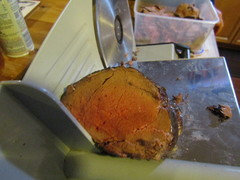
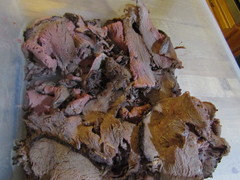
The beef shared a platter with slices of local ham, homemade white and wheat rolls, some "meatballs" that Elery made which were stuffed with sausage and cheese, wrapped in bacon and cooked in the smoker.
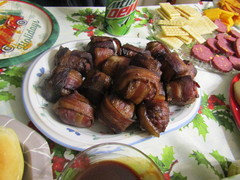
I made chili cheese dip with crisp tortilla chips, a gluten free "veggie pizza", a vegetable tray made with the veggies left from the pizza, some ham and cheese stromboli for the kids, although they liked the tenderloin better. Finished that off with a reindeer cake, some cookies and fudge and a peanut butter pie. Oh, and venison sausage that Elery made and Dave's ever present cheeseball, shaped like a Christmas tree with a cheddar stop on top (thanks to the Princess, LOL), and a big bowl of gluten free Chex Mix. I had some tenderloin and a piece of the veggie pizza and sent leftovers home with everyone.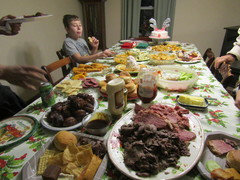
The reindeer cake wasn't quite tall enough, but I knew we'd never eat it all along with the other desserts. Even with only two layers, I threw half of it away. No one would take it home, both girls had to go to their Dads' tonight for supper and to the respective in-laws on Christmas day, and they thought the kids would have enough sugar without it. Killjoys, I'll tell you. (grin) Yeah, the cake was sitting next to the pellet stove and it kind of....well....melted. We ate it anyway, the kids didn't care. And it needed bigger ears....

A big plate of cookies and fudge, of course:

Oh, and some cheese thumbprints filled with habanero gold, I had one of those too!

Tonight we had leftovers. We might have leftover leftovers tomorrow!
Merry Christmas.
Annie
 7 years ago
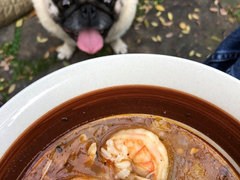
So glad your chemo is going well, Too Many! Annie I would love your meat feast! And Neely the fish and chips is calling my name! I didn't take any pictures of our Christmas food but I truly gave my cholesterol medicine a run for it's money. Yesterday was a little lighter with shrimp and chicken gumbo.
- 7 years ago
Thank you all for your kind words! One more week to go!
Jasdip, I hope your Christmas was less difficult than I imagined it might be, and you had some moments of peace and happiness : )
Annie, I was drooling over your feast of 7 meats post this early this morning, bleary eyed, coffee held close (cold here)… good thing I wasn’t anywhere near your table… just enough of that tenderloin (with horseradish of course, and thank you) and Elery’s bacon-wrapped sausage balls there for just me (okay, maybe I’d have shared!). What a feast you made! The cookie platter looks delicious (and I want to ask what each of those are, and is that fudge too? Oh my…) but the instant I spied the reindeer cake, by heart was gone : )
Wait. YOU had a habanero cheese thumbprint? You? Was it not hot/spicy?
Oh Cookebook, I laughed when I clicked on your picture! Then I laughed again! While your chicken and shrimp gumbo looks so rich and flavorful, that face… that adorable face filled with anticipation and longing… That’s just precious and hilarious! Thanks for the smiles!
While the pasta was a bit overcooked, as were the shrimp in our “poofed” fettucine, I’d added extra basil, garlic, wine, and butter to this one when first made, so it was good last night, but the old toaster oven is only limping along. We ate in the moon light, backlit a bit by the work light. Next year I’m breaking with the traditional chicken and homemade noodles and cooking steak of some sort. And Yorkshire pudding. I can’t believe I’m actually hungry for, and excited to cook, a meal which is a year away! Ha!
Okay dear friends, I’m bowing out in a short bit, much to do before I’m out of brief commission… know I am enjoying all posted meals though! - 7 years ago
Cookebook, your little friend there just looks so hopeful, waiting for a bite to fall for him, LOL. How could anyone possibly resist That Face? Oh, and the shrimp looks pretty good too. (grin) And yes, I think buying stock in cholesterol medications would be a good bet here too...
Jasdip, I've been thinking about you, and sending virtual hugs and good thoughts.
2many, Elery's sister ALWAYS makes chicken and homemade noodles or dumplings for holidays. For us, they were not special meals at all, we had them when Grandma had old stewing hens or when she needed to stretch a small amount of chicken to feed a lot of people. Just make more dumplings!
The cheese thumbprints are just a tiny bit hot, lots of cheese pastry and a dab of hot pepper jelly, LOL. Actually, I really like the habanero gold on a bagel with cream cheese too, lots of cream cheese and bagel and just a little of the habanero gold cuz I'm a wuss.
The dessert tray included frosted sugar cookies, flourless peanut butter cookies with a Reese's peanut butter cup in the middle, white chocolate cherry shortbread, Grandma's chewy molasses cookies and some good old chocolate chip. Fudge was chocolate, peanut butter, cookies n' cream and mocha and the round balls are AnnT's brandied cherry cream cheese balls, a favorite of my oldest daughter.
I'm glad your pasta was acceptable, and that you are at least planning next year's meal.
Merry Christmas, Happy New Year and Happy Everything to Everybody!
Annie
- 7 years agolast modified: 7 years ago
Wow Annie you are such a lovely cook for your family... all their favourites if I am not mistaken. And that dessert tray Yum.
2many, I am so looking forward for your kitchen next year. Can’t wait to see your meals then.
Cookebook your shrimp looks great and the doggie adorable.
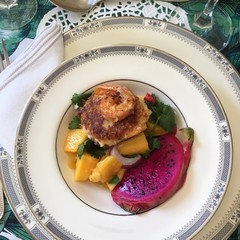
I forgot to take a picture of our main meal on Christmas Day, it was our usual turkey, ham, stuffing balls, roast potatoes, roast pumpkin, green beans, gravy and cranberry sauce.... but starter was a crab cake with prawn decoration on a mango salad... that’s a slice of red dragon fruit.
For dessert we persuaded DH to give up the English plum pudding in favour of trifle.

I used fresh peaches... just blanched to remove the skin and not much sugar in the custard ... eldest son declared it was almost a healthy meal Hah!!
Seansons Greetings everyone and Happy Eating.
- 7 years ago
"Almost" a healthy meal, LOL. The trifle looks fresh and inviting, though, and the prawn looks amazing. Plus, dragonfruit is one of the few fruits that I actually like enough to seek them out, so I'd be happy with all of that.
Happy Holidays, right back at you, and best wishes for a healthy and happy New Year.
Annie
- 7 years ago
Cookebook, your drool-worthy gumbo was the first thing I noticed, (it looks so good!) followed by your dog. What a sweetheart!!
Neely, your trifle looks so fresh! What a good idea for a Christmas dessert, especially in your summers. I met a lady from Australia on Christmas Day. I thought of you but didn't have the sense to ask where she's from. Duh.
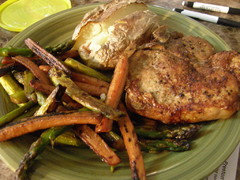
I had 2 thick-cut bone-in pork chops in the freezer, for a treat for hubby and i. I decided to cook them tonite. I'll have the second one later in the week.
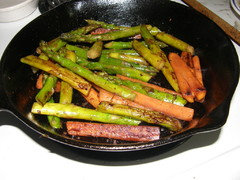
I browned them in the skillet and finished them in the oven (I left them in a bit too long). I sauteed asparagus and carrots and had a baked potato as well.
- 7 years agolast modified: 7 years ago
I made a huge pot of chililess chili. I put 1 kg (that's slightly over 2 pounds) navy beans to soak overnight, and in the morning went to the butcher for 2 kg chuck. He produced a huge hunk and chopped off a piece which turned out to be 2.8 kg. I didn't have the heart to ask him to chop it down to 2 kg. It was such a nice cut, and so I bought it.
For searing I formed large flat patties and dropped them into the sizzling butter:
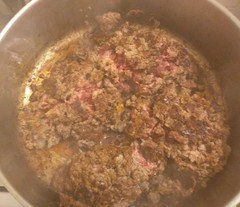
This is the clearest picture I managed to get. The kitchen was all foggy from the beans bubbling away in another pot. I get a nice sear only when I fry the meat as patties. I think I got the idea from Serious Eats, and it's a great one.I deglazed with brown Leffe beer, mixed in some sweet paprika, cumin and oregano, and poured the whole into a third pot in which I layered the strained beans and the meat. Sent that pot into the oven for three hours after bringing to a boil.
Right out of the oven:
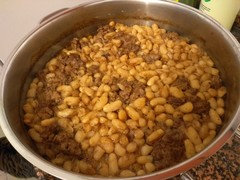
The patties disintegrated only partly, so I stirred it gently: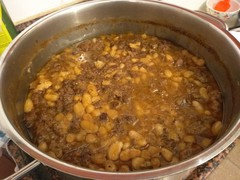
The only thing I missed in this chili was ... chili. Can't have it any longer because it's a sure GERD trigger, and I used to be like Annie's Elery. Not in his league, but I was very fond of hot sauces and used to nibble a couple of hot peppers every now and then.  7 years ago
Thanksgiving and Christmas d=seems enos ago...and my space keyboarded still is sticking....bah humbug.
Nicevfishes meal...

- 7 years agolast modified: 7 years ago
No New Years Eve plans here. We weren't much on NY anyway. I hate staying up late! LOL
Today was a better day than yesterday for me, yesterday I was a basket case. I had breakfast this morning with our dear friend. His wife was working so he called me up and asked if I wanted to go for breakfast. Hell yeah!
That was the start of a good day. This afternoon I've had Accu-Radio fired up listening to 90's Country. We usually listened to Jazz, but I need Brooks and Dunn, Alan Jackson, Martina McBride etc to bring up my spirits, so they're helping me ring in the new year (till 10 anyway!)
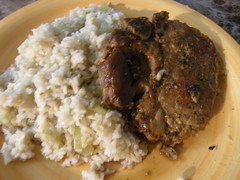
I had my pork chop from the other night and I simmered it in a bit of chicken broth to keep it moist while re-heating and made some brown rice with sauteed onions, garlic and celery. Simple but tasty.
- 7 years agolast modified: 7 years ago
Very sorry to hear you were so sad Jasdip, my heart goes out to you and what you are going through particularly at this time of the year with many happy past thoughts. Glad your friend thought breakfast out was a good idea. Tasty is the go with your pork chop indeed.
Wonderful meals presented beautifully Sleevendog. Wintercat, love your large pot of chilli less chilli.
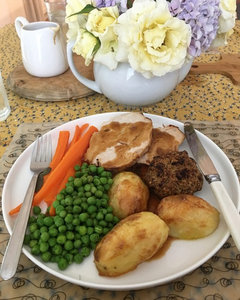
I did a more simple repeat of Christmas Day meal for New Years Day. Because I had people staying over Christmas I never got to eat left over turkey, which I love. Today just DH and I so there is plenty left of the turkey breast.
- 7 years ago
What a beautiful meal, Neely!!! Your potatoes are what I'd love to make! I assume you partially cooked them first.
- 7 years ago
Jasdip, I'm glad you had a friend to take you to breakfast. I know there are bad days and worse days and just having someone to lean on a little or having a change in scenery or schedule can be a relief. Your vegetables look perfect to me, BTW.
Wintercat, your "chili" looks good, I'm a wuss, so it would be perfect for me. Sorry about that GERD though, I know how that feels. My triggers include tomatoes and onions, but only if eaten together or if the onions are raw. My single chili cheese dog at A&W yearly keeps me clearing my throat for a couple of days.
Neely, that is a beautiful meal and as Jasdip says, the potatoes are particularly nice. I love potatoes anyway, and those golden brown and crunchy exteriors sing that siren's song...
Here cooking is getting stranger and stranger. Mother is here, she fell last week and suffered a compression fracture in her spine. She's also the pickiest eater on the face of the earth. So far she's eaten yogurt for breakfast but ONLY Oikos brand and ONLY raspberry and ONLY the blended stuff. (sigh) Occasionally she adds a banana. She likes baked potatoes, KFC chicken, broccoli in any form but especially broccoli cheese soup. There are a handful of vegetables she'll eat but she doesn't like beef or pork. She'll eat hot dogs cold from the fridge and tolerates fish. She does like shrimp. And that pretty much covers what she likes.
Add Elery's version of Weight Watchers which excludes all dairy and all grains and consists pretty much of eggs, beans, boiled/microwaved vegetables and small amounts of roasted meat and I just give up. (sigh) Tonight we had baked chicken, baked potatoes (Elery wouldn't eat any but Mother loves them) and baked squash. No sauce, no seasoning, no breading. It was boring but both Mother and Elery ate it, which is a minor miracle, and I just added salt. Lots and lots of salt.
Annie
- 7 years ago
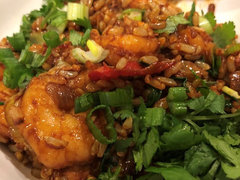
I wasn't feeling the black eyed peas and cornbread this year so I made fried rice. And made it a little healthier with brown rice and heart-healthy oil.
https://www.youtube.com/watch?v=3Q_Uqo2tGwc - 7 years ago
Cookebook your meal looks delectable.
Annie, I'm having trouble cooking for just me, I don't have the excitement that I had before. But I'm sure glad I don't have your cooking restrictions.
Typically I made an osso bucco or other kind of beef roast on New Year's day. My roast wasn't thawed yesterday so I POOFed baked ziti.
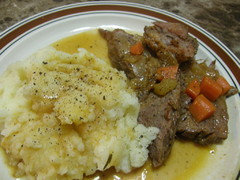
Today I did the osso bucco recipe using a roast, instead of cutting it into portions and tying it as I usually do. The wine, chicken broth, mirepoix were the same though.
I was so excited to buy some limes at .5 each, bananas, 9c/lb and cauliflower for 99c each. I mashed potatoes and cauliflower together. It makes nice light potatoes.
- 7 years ago
Wow Annie what a lot of cooking considerations you have to accomodate at the moment... and nice that you do so happily. DH gets on my nerves because he won’t eat pea and ham soup in summer so I have to freeze the soup I made iwith the left over ham bone. Not really, but I’m making a point about you cooking for your family’s food preferences.
Cookebook, delicious looking meal.
Jasdip, lovely comfort food meal there. Good prices where you are.
I haven’t felt like doing much cooking lately, just having basic salads.
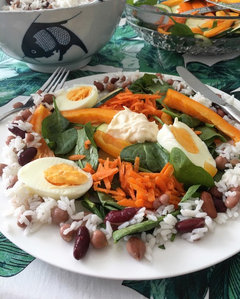
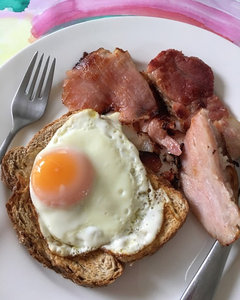
The following breakfast used up left over ham... nothing special but a good breakfast anyway.
- 7 years ago
Hi Gang! Been away too long, almost 3 weeks, but have read about and enjoyed all the mouthwatering meals : )
Neely, your healthy trifle (grin) looks so refreshing, and that dragon fruit that has me curious – never seen it, never tasted it, but sure want to! Neely, really? “basic salads” is what you call that? Plated beautifully, and those eggs – and with rice and beans! You so often inspire me, but what you call average is never, ever average! As for egg on toast with a side of crisped ham… not only would DH and I never pass that up, I’m quite sure neither would Annie!
Jasdip, your pork chops look delicious, and again I’m inspired. It’s just never occurred to me to combine asparagus and carrots, and your cast iron gave it that char I can’t resist. As for the potatoes and cauliflower, again, totally inspired! I hope I can remember that combo when we have our kitchen. Your osso bucco looks fork-tender and delicious! Jasdip, I’m so glad you are cooking such lovely meals for yourself. Cooking is wonderful therapy, I find. My thoughts remain with you : ) So glad to hear you had a nice breakfast : )
Wintercat, I’m trying to come up with a name for your chili-less chili, and can’t, other than That Looks Mouthwateringly Tasty : ) Definitely perfect for any night, but a cold night, oh my yes.
Sleeve, I hope you get a new keyboard soon, that’s no way to live! I was reading with friendly envy the fish you procured for your meal in another thread… Heavens woman, but you did all that lovely fish justice! Seriously! Utterly divine in both looks and I’m quite sure the way it tasted.
Annie, I’m so sorry to hear about your Mom – she must be in pretty severe pain. I do not envy you all the special dietary requirements and food preferences… I don’t think I’d come remotely close to making anyone happy. Oh you poor dear!
Cookebook, your fried rice does look healthy – of course all those greens too : ) Do I also see chicken? Thanks for the link… I never could figure out how to get my eggs crispy in the fried rice… now I know!
Ann T, my thoughts are with you and Moe as well. I worry when I don’t see someone for a bit. You are missed.
Lots going on here, but not cooking-wise : ) I’m tired of not having pics, so am tossing in all kinds of things here, LOL! As for meals, yes, take-out still. I’m barely eating, but somehow gained 14 lbs. eating junk. Wonder how that happened she asks sarcastically. The usual Zaxby’s salad, but DH decided to order it with fried chicken because we aren’t eating enough grease in our take-out burgers… (again with the sarcasm!). Rueben sandwich from Arby’s. And chicken and dumplings (where’s the chicken?), overcooked green beans, and fried (there’s that word again) okra from Cracker Barrel. 2nd Photos for Uploading · More Info
For New Year’s Eve, I did find some Butter Chicken in the freezer and zapped some zappable rice to go with – it actually was darned good! (no pic).
So, some renovation highlights because after all this is the cooking forum, not the kitchen forum (again with the sarcasm!). We moved half our furniture and packed items into the spare guest room – stuffed ceiling high and so tight a mouse couldn’t fit. So what you ask. Well, this idiot forgot to take out the batteries on the smoke detector (we have hardwired and battery-operated detectors because I’m scared of fires). How long can a battery beep before it dies? I don’t freakin’ know! I do know more than 2 months. I’m losing my mind… beep… beep… beep…
Our sub-floors have chicken pox. When DH and I ripped up the kitchen and foyer floors we found screws driven in past the subfloor – meaning there are screw holes open to the crawlspace. Not good. Rather odiferous. So I’ve busily covered every dang hole with autobody bondo (it works!). The new flooring people were doing some head-scratching before I told them what it was!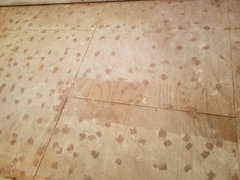 2nd Photos for Uploading · More Info
DH and I completely forgot we needed to frame out and leave a hole in the back wall for the microwave. (We’ve chosen to just place the microwave in an upper cabinet). Here I’m showing off some of DH’s work: Hole cut. Drywall scraped out a bit to fit some of the needed wiring (I thought this was so clever, and it’s just a coat closet in the back. Only a bit of the drywall removed). A liberal amount of glue. Some thinner drywall put in place. And finally, mudded and finished. The MW cabinet won’t have a back and we can fit the MW in nicely now, no matter the depth : ) I’ll cover the outlet later. Beside that is the niche over the range. 2nd Photos for Uploading · More Info
And lastly… I was working in the laundry room yesterday, DH was taking a break from cutting can-light holes in the to-be kitchen ceiling, waiting for his batteries to charge. Heard DH make the oddest noise! I came out to find we had an Alien living in the attic!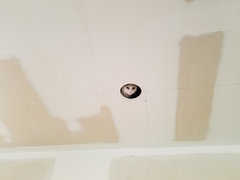 2nd Photos for Uploading · More Info
Oh wait, it’s the cat!
 2nd Photos for Uploading · More Info
Snow, who keeps us laughing, must’ve climbed up the pull-down ladder when DH wasn’t looking and stayed in the attic! She wasn’t the least afraid, and we had her safely down moments later. Goofy cat gave us such a startle, then a chuckle! Thanks for letting me share : ) Well, you all really didn’t have a choice, didja!
Guess I’m in for more chemo, different ‘recipe’ seems to be in order. And that’s pretty much all I want to say about that other than I have over 20 varieties of flower seeds to winter sow for next spring and I will be planting next spring. Quit is not in my vocabulary. We are having to move into a higher gear now, lots going on, plus daily jobs, and well, chemo. So after today I’ll most likely be very scarce, but know I am keeping up on GW with my wonderful friends : ) I'll be sure to check in on occasion, gotta see all these amazing-inspiring meals! - 7 years ago
2 Many. Nice to see you. I think about you frequently even though I'm not very active in cooking. As for your weight gain...it's to be expected after what you've been going thru. Chemo often causes weight gain...Many Blessings to you 2Many.
- 7 years ago
Aw, thank you Mamapinky... I was wondering how the heck I gained so much without eating much. BTW, I was singing your praises the other day to a neighbor - laundry advice : ) Love Persil!
- 7 years ago
Good luck with your new "recipe" Too Many. I am laughing at the cat! I thought it was a possum at first! lololol
- 7 years ago
I love your alien-in-the-attic! And I can't believe you can do all that. I couldn't, and I'm not doing chemo. Good luck with the next round.
- 7 years ago
Thank you Cookebook - and I think my husband thought it was too! Anyway, I've never heard him make that sound! "Startled" I am guessing! I am pretty sure I would have shrieked : )
- 7 years ago
2Many - that cat picture is funny! I had a friend who renovated an old farmhouse while living in it. She & her husband were eating dinner in their kitchen and a squirrel poked his head out of a hole in the ceiling. Her husband caught it, put it in a cat carrier and took it for a long ride away from the property. A few days later, a squirrel again stuck its head out of the hole in the kitchen ceiling. My friend insisted it was the same squirrel and her husband told her it couldn't be. So she managed to put some blue spray paint on the squirrels back before her husband again took it for a ride. It came back again with his head through the ceiling and sure enough, there was blue paint on its back!
- 7 years agolast modified: 7 years ago
2Many, the cat's face looks so human for some reason. Fascinating photo.
As for that chililess chili, I had two servings over the weekend. It's weekend food for me because on weekdays I live mainly off sandwiches. I ground a little black pepper the first time, which didn't improve things at all. The second time I had a bowl of the stuff - after the first unsatisfactory spoon - I remembered I keep Tabasco in the fridge for sentimental reasons and also for guests. I added between a quarter to a half teaspoon, a homeopathic quantity really, but it did make a difference. Very subtle, but palpable. Maybe I'll live dangerously and add a solid half teaspoon next weekend.
- 7 years ago
Oh, trust me writersbock, I have my rough days – even yesterday I had to go to bed the rest of the day/night, but today I’m back at it as long as I can – I do push myself, which I think has served me well for years : )
Ha! Seagrass, that’s hilarious! I can just see a blue-striped squirrel making it’s way back ‘home’!
Wintercat, well, sometimes I wonder if she isn’t just a bit human ; ) I always put about that much or a wee bit more tobacco in my huge pot of veggie soup, and yes, it does make a difference – isn’t it amazing how just a tiny bit of something can make a difference in a dish? DH often can’t tell, and I think some of us have somewhat better tasting abilities or are more sensitive to flavors : ) I think your chili-less soup is so appealing because it’s not the norm, and that’s often what this thread is about… we see things others make which we’ve not, and want to try it… especially if it looks good! BTW, I find there’s not a lot that can’t be improved with a bit of fresh cracked pepper : )
We had another Zaxby's salad last night. Our weather has been unseasonably warm so I often sit outside on the patio for a few moments here and there... and daydream about cooking. This is the longest I've gone without cooking, even vacations. I miss it so much. It does help to see what you all are cooking... but I get so hungry now looking at it all!  7 years ago
Seagrass, funny story. I know that squirrels have a circumference that they will stay within and if you release them within that area, they'll just come right back "home". My friend learned this through some very funny trial and error. Now I don't remember the details - for some reason I'm thinking a 12-24 mile radius - but I'm sure if anybody needs to know, they could look it up somewhere.
- 7 years ago
Hilarious, 2Many!! I love cats, have always had them, and their antics are always good for laughs.
You're gaining weight??!!! Wonderful news!!! I hope the new recipe doesn't cause any more or new side-effects.
This is exciting, seeing more pics of your renovations.
Another new recipe on Sunday. I cut it in half (I'm still trying to get used to the portions in meals), and it still made for quite a bit of leftovers. I still make far too many potatoes, etc.
This was supposed to be a paella type dish sans the fish, but it was more like a jambalaya. It was good, either way. Hot Italian sausage, chicken, peppers, onions and rice (I used brown rice) simmered in chicken broth.
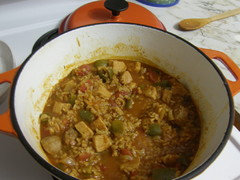
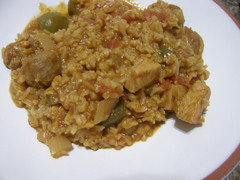
- 7 years ago
Jasdip, between you and Cookebook, jambalaya is in my top 5 of 'first meals' when I have a kitchen again. Gosh that just looks so good... warm, inviting. I'm happy you enjoyed it : ) I always liked cooking extra to freeze - so easy to thaw and have a wonderful meal when it's needed!
I'd forgotten how amusing cats were! And thank you for noticing I gained : ) I'd tried so hard before, and then now to gain and be eating less??!! I hope some of this stays on... I could never keep on 'junk food' weight before. Only home cooking and it had to be healthy, and very slowly gained. The slow gained seems to be key.
Last night was... oh dear. I can't remember. I honestly can't! Every night DH says "what do you want to eat?". Then I say "What do you want?". Then we stare at each other in dread for an hour. Oh, it came to me! We shared a Subway club sandwich! Duh. This food is making me stupid, and I'm not kidding. I think diet affects everything. And poor diets more so. - 7 years ago
2Many. I suspect your just worn out..physically and emotionally. Take it easy kiddo.
- 7 years ago
2 Many, I'm sorry that more chemo is on the menu. Hopefully this cocktail will be easier and do the trick! I agree about junk food making us duller. I'm at my best eating less carbs. It's not a recipe for weight gain, but my vitality is so much better!





2ManyDiversions