

Whole Wheat Bread in bread machine
8 years ago
Featured Answer
Sort by:Oldest
Comments (6)
Related Discussions
Qustions about yeast breads
Comments (13)gldno1- Here's the 100% Whole Wheat Bread Recipe. It's designed to be made in a bread machine, but it can be made by hand. I have to give my friend, Mildred from Missouri, the credit for this great recipe. 100% Whole Wheat Bread Bread Machine (changes for by-hand at the bottom of the recipe) Sponge: 3/4 c. lukewarm buttermilk (I use homemade kefir.) 3/4 c. lukewarm water 2-1/2 c. freshly-milled white whole wheat flour (Prairie Gold from Wheat Montana is my favorite wheat variety) 1/4 t. ascorbic acid* 2 t. SAF-Instant Yeast Mix these ingredients in the bread machine pan and set the machine to QUICK DOUGH. As soon as the mixture is well mixed, stop and unplug the machine and allow to sit (with the lid closed) at least 2-1/2 hours, or up to 12 hours (or something in between). I'd suggest at least 12 hours if you are using a whole wheat flour milled from red wheat varieties, for a more mild flavor. After the sponge has set, mix these ingredients into the sponge: 2 T. melted coconut oil (or butter or veg. oil) 2 T. agave nectar (or honey) 1 egg (I also add 1/3-1/2 c. chia seed gel. **) Add to the top of the sponge mixture in the pan: 2-1/4 c. freshly-milled whole wheat flour 2 t. salt (on top the flour) Set the bread machine on regular DOUGH cycle and process. Check the dough to make sure it's formed into a nice soft ball and adjust the hydration as needed. My changes: I process the dough in the bread machine until the dough is mixed and kneaded. I don't let it rise in the machine. I place the dough in a dough rising bucket, place the lid on the top and allow the dough to ALMOST rise to double. Whole wheat dough does NOT have the extensibility that white bread dough does, so try not to let it go more than double. Using a dough rising bucket helps you to accurately judge when dough has doubled. Place the dough into a dough rising bucket. It should come up to the 1-quart line. It's doubled when it reaches the 2-quart line. You can get plastic food storage containers (with a tight-fitting lid and graduated measures on the side) at restaurant supply stores (or through King Arthur Flour - aka dough doubler). For this recipe a 2-quart container works perfectly.) After the bread machine finishes the dough cycle (or has doubled in the dough rising bucket), dump the dough onto a Silpat and with oiled/greased hands deflate the dough by pushing it in the middle with your fist then drawing all edges of the outside dough into the middle (turning the dough inside-out, so to speak). Divide the dough into portions (I scale the dough for accuracy.) Round each portion (make it into a smooth ball) so that all the gluten strands are going into the same direction. Cover and allow to rest 10-15 minutes so the gluten relaxes. Form dough (oil your hands when you handle the dough), pan, cover with plastic wrap for the final proofing - etc.... I make this bread into 3 small loaves (7-1/2x3-1/2-inch pans - 350°F for 20-25 minutes), OR one 1# Pullman Loaf and use the other 1# of dough for 6 pecan rolls OR an 8-inch pan of dinner rolls - sometimes I use a portion of the recipe for hamburger or hot dog buns. If making two regular loaves, bake in a 375°F oven for 25-minutes. A very versitile dough. ------------------------------------------------------ * ascorbic acid powder is available at most health food stores. It's a very important ingredient when you make yeast bread that includes wheat germ (which is in whole wheat flour). There is a substance in wheat germ called Glutathione. This substance breaks down the gluten and can result in a short loaf. The bran in whole wheat bread can cut the gluten strands, which results in a short squatty loaf. The sponge helps to soften the bran. The addition of 1/8 t. ascorbic acid per loaf of bread will counteract the negative effects of Glutathione. It will help prevent the gluten bonds from breaking down and will also help repair gluten bonds that have been broken. The ascorbic acid also helps sustain the leavening of bread loaves during baking. Yeast grows longer and faster when there is also ascorbic acid. Do not add it to sourdough recipes because they are naturally an acidic atmosphere. ** Chia seed gel is a mixture of chia seeds and water (1 part chia seeds to 9 parts water). This mixture thickens as the seeds absorb the water and adds hydration to the crumb of the loaf. It looks like poppy seeds in the bread after it's baked. Excellent nutritional boost and additional fiber. --------------------------------------------------------- BY HAND, place sponge ingredients in a glass or plastic bowl and mix the sponge ingredients together with a Danish dough whisk or a wooden spoon and beat the ingredients about 100 strokes. Cover, and allow to sit at room temperature at least 2-1/2 hours, but up to 12 hours. After the sponge is done: add the flour gradually to the sponge mixture using a Danish dough whisk (or wooden spoon) and carefully beat in each addition of flour before adding more. You may end up beating the dough 500-800 strokes, but do as much mixing as you have the strength to do. If you need to stop and rest, that's fine. The rest will allow the dough to hydrate. Towards the end of mixing, add the salt (DON'T FORGET!!!). The gluten will tighten up and make mixing harder after adding salt. The better job you do of mixing the dough and developing the gluten while it's in the bowl, the less time you'll need to knead it. When you knead the dough, avoid adding a lot of bench flour. If you have a problem adding too much flour during kneading, grease/oil your hands during kneading instead - especially during the last 2-3 minutes of kneading. -Grainlady...See MoreAnnie's whole wheat bread recipe (?)
Comments (10)yes, Beachlily is right, that was a problem from the first time I posted the recipe and forgot to add the egg! I corrected the recipe but that old mistake just keeps coming back to haunt me! It's Elery's favorite bread and I made it just like you did, I let the bread machine do the work and then shape it and bake it in the oven. I've never made it without the egg, though, that's good to know in case I have a day when I'm out of eggs, so thanks for doing that "research". Now I don't have to. (grin) I have occasionally added half a cup of orange juice in place of some of the liquid, it gives a nice flavor and adds some acidity. Some people think whole wheat bread is bitter (although I love it) and the OJ seems to cut that. I think Grainlady also gave the scientific explanation of why to add citrus juice or acidity to bread dough, although the short version is that yeast likes an acidic environment and so the OJ creates an environment that yeast loves to grow in. You could actually do the same thing with a pinch of ascorbic acid (vitamin C) or a tablespoon of vinegar, but I like the orange flavor sometimes. Anyway, I'm glad you like it! Annie...See Morewhole wheat bread
Comments (4)The crumb will be dense if you use a straight dough (aka direct dough) method for 100% whole wheat flour bread. This is the "modern" bread-making method designed for making bread quickly using processed bleached and unbleached flour, and is not a great choice for wholegrain breads. If this is your preferred method and you are making the bread by hand, make sure you do a good job mixing the flour into the liquid ingredients. I'd suggest a Danish Dough Whisk for this task, but a good wooden spoon will also work. Add the flour a little at a time and make sure it's mixed well before adding more flour. By mixing, I mean you beat it with the spoon 50 or more strokes before adding more flour. Add the flour until you don't have the strength to beat it anymore - you may have several hundred strokes invested in mixing. It's okay to take a rest during mixing. Letting the mixture sit will allow the dry ingredients to absorb moisture, so take a 5-minute rest if necessary. Taking care to mix the ingredients well will develop the gluten as well, and this is a step that is often rushed and done incorrectly. If you toss a shaggy mess of dough out to be kneaded, you haven't done a good job of mixing. You'll actually get better results with wholegrain flour if you use a sponge method. This is a method where the yeast, liquid and a portion of the flour are beaten together and allowed to sit anywhere from 30-minutes to overnight - experts say 2-1/2 hours is optimum. The bran has time to soften and soak up the liquid, and the gluten will also have time to develop without manipulation (kneading). Those sharp shards of bran will actually cut the gluten strands during kneading, resulting in short squatty loaves and dense crumb. There is also a substance in wheat germ called Glutathione that affects the gluten development. Adding an acid to the recipe (lemon juice, vinegar, ascorbic acid) will not only help prevent the gluten bonds from breaking down; but it will help repair gluten bonds. Soaking the flour in an acid medium (using whey, yogurt/kefir, buttermilk, vinegar or lemon juice) is another method. I suggest adding 1/8 t. ascorbic acid crystals per loaf of bread to the flour mixture (or half of a 250 mg vitamin C tablet crushed using two teaspoons, per 2-loaves). If you happen to have some Fruit Fresh on hand, you can use it as the acid ingredient. Only use an acid in bread made with baker's yeast, not naturally-leavened bread (those made with a starter - aka sourdough bread) because naturally-leavened breads are already acidic from fermentation. I've never found additional gluten necessary, even milling my own flour. The only time I added vital wheat gluten is if there was a very large percentage of low- or gluten-free flour in the recipe. I'd also suggest using a quality bread machine (and highly recommend a Zojirushi bread machine) for making dough. That's what they use in the King Arthur Test Kitchen for mixing and kneading bread dough, and they claim it's better than by-hand or with a stand mixer. Several years ago, King Arthur had pictures in their catalogue showing the difference between a 100% whole wheat recipe made in a stand mixer and the dough made in a Zojirushi Bread Machine and baked in a loaf pan. The one made in the Zo was about 1-inch taller than the same recipe made in a stand mixer. Stand mixers tend to aerate the dough, while the Zo does what it's designed to do, knead the dough. I'll include a link to Sue Greggs 2-Stage method, which includes more information. -Grainlady Here is a link that might be useful: Sue Gregg - 2-Stage Bread Method This post was edited by grainlady on Fri, Dec 6, 13 at 11:07...See MoreLOOKING for: whole wheat french bread
Comments (2)This is called French Bread because it is formed into baguettes before baking. But it is not a *true* French Bread; however, it is delicious, that I can vouch for. If you don't want to use the alcohol, I guess you could try a non-alcoholic beer. French Bread with Beer - from Ginnie Tate 1 1/2 cups (a 12 oz. can or bottle) beer or ale 1 TB active dry yeast (2 t. instant yeast) 1 TB honey 1 TB malt syrup or maple syrup 2 TB canola oil 2 t. salt 2 cups unbleached white flour 2 cups whole wheat flour, stone ground preferred cornmeal Heat the beer or ale until it is warm and pour into a large mixing bowl; add the honey and yeast. Stir and let it sit until the yeast has dissolved and is frothy. Add the syrup, oil, salt, and white flour. Beat 2 minutes with a mixer paddle or several minutes by hand. Gradually add about 2 cups of the whole wheat flour, or as much as it takes to make a dough that pulls away from the sides of the bowl and holds together. Turn out the dough onto a floured surface and knead until it is smooth and elastic, about 10 minutes. Sprinkle on a little more whole wheat flour if it is too sticky. Put the dough into a greased bowl, turn to coat all sides, cover, and let rise in a warm place until doubled in bulk. Punch dough down, turn out and knead a few times, cut in half, cover, let rest 15 minutes. Grease a large baking sheet. Sprinkle it with cornmeal. Roll each ball of dough to a large rectangle, roll up tightly like a jelly roll, pinch the ends together and turn them under. Place the loaves on the baking sheet seam side down. Slash the top diagonally with a razor blade or sharp knife. Brush the tops with melted butter and let rise until almost doubled. Preheat oven to 450F. Spray or brush the loaves with cold water just before putting them in the oven. Spray water onto the oven floor, close the door. Spray again in 5 minutes. After 10 minutes spray again and turn down the heat to 375 for 15 minutes. Baking time is a total of about 25 minutes. Cool on a rack. Makes two long loaves....See More- 8 years ago


Related Stories
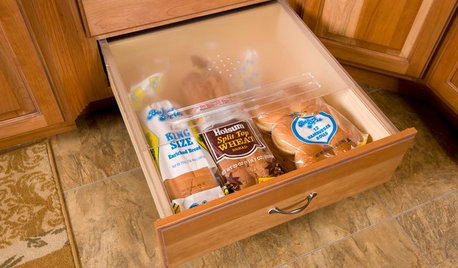
DESIGN POPBakers’ Home Storage Tips for Sliced Bread’s 90th Birthday
In honor of the bread slicer’s debut in 1928, we offer the best bread storage tips since, well ... you get it
Full Story
HOUSEKEEPINGHow to Clean Your Washing Machine
Cleaning your washer once a month will ensure that it stays spick-and-span along with your clothes
Full Story
KITCHEN DESIGNA Designer Shares Her Kitchen-Remodel Wish List
As part of a whole-house renovation, she’s making her dream list of kitchen amenities. What are your must-have features?
Full Story
KITCHEN DESIGNKitchen Accessory: The Breadbox
The breadbox — freestanding or built-in — still has a place in the modern kitchen
Full Story
LIFESimple Pleasures: The Joy of Baking
Fill your house with a heavenly scent and your heart with cheer by making time to bake
Full Story
SMALL KITCHENS10 Simple Ways to Bring Order to a Small Kitchen
It can be tricky keeping a compact cooking space tidy, but these ideas can help
Full Story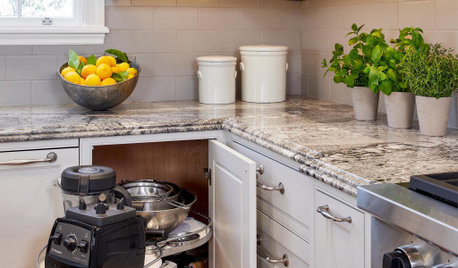
KITCHEN STORAGEFoolproof Storage Solutions for Corner Kitchen Cabinets
Consider Lazy Susans, pullouts and more to maximize storage
Full Story
KITCHEN DESIGNHouzz Call: Tell Us About Your First Kitchen
Great or godforsaken? Ragtag or refined? We want to hear about your younger self’s cooking space
Full Story
FARMHOUSESWorld of Design: See How 9 Families Live and Farm on Their Land
Join us as we visit the homes and farms of passionate food producers and hear about rural life around the globe
Full Story
LIFESimple Pleasures: Indulging in Teatime
Get out the china cups and cream-slathered scones. Tea with treats can make even an uneventful day feel extravagant
Full Story



Lars