

T&T jelly, jam, marmalade etc that don't need a HWB?
8 years ago
Featured Answer
Sort by:Oldest
Comments (36)
 8 years ago
Related Discussions
Newbie: I don't like canning. =(
Comments (21)I have a rather smallish kitchen. And I'm not real crazy about canning but like someone else said, I like home-made goodness too much to keep me from canning. Several things that help me are: Before I fire up the canner, I clear off my counters. Everything that I'm not going to use in the process is put away. I cover my work area with several layers of newspaper to speed clean-up when I'm too tired to mess with it. Just be careful not to have the newspapers too close to the flame on the stove. A roll-around cart is essential if you have a small kitchen! You can use it for all kinds of things: extra work space, for one. The under shelves can hold tools and ingredients you will be using. Even when I bake, I roll the cart into the kitchen, cover the top of it in newspaper and that's where the cookies cool. I have actually two roll-around carts. The second one lives out on my back porch and holds my dehydrator or my crockpot or my big roaster. Sure keeps a lot of heat out of my kitchen, not to mention at Thanksgiving time, roasting the Turkey in the electric roaster frees up my work space and oven space for pie, rolls and side dishes. When you're through with the cart, it can go back out of the way. My house has central heat and air and I really hate heating up the house just so the electric company can charge me more. It's enough already! So I try to plan ahead as much as I can. My peach tree is loaded and some of the fruit could probably be picked today. But it's 91 outside, and climbing. HOWEVER, we are expecting rain Tuesday night and much lower temps on Wednesday. So I'm going to try and hold off till then. When I use BWB and I need to discard the water, I take it out on the back porch and pour the water into an old bucket instead of pouring it down the drain. Keeps the steam from adding heat into the house. When the water cools, I use it to water things. I sterilize my jars in the microwave, if I'm doing just a small batch of something. Fill each jar half full with water and nuke till it boils. Keep the microwave door shut till ready to use the jar. I also put in a small bowl of water and take it out a little before I need the flats, and then drop the flats in the boiling water. And yes, for small batches, the spaghetti cooker is what I use for my BWB, too. If I'm doing a big batch, sometimes I will sterilize in the dishwasher, and keep the DW door closed till just before I need the jars. I do use a fan sometimes in the kitchen, but keep it close to the floor. You don't want air-conditioned air blowing on the jars you just took out of the canner, or blowing out your flame under the canner, or causing your pressure to bounce up and down on your pressure canner. Oh, and by the way, the Pressure Canner was the FIRST PC. LOL I also have been known to freeze things when it's stinking hot outside and I just can't stand the thought of heating up the kitchen. By fall, when my freezer is bursting at the seams, I will then make my jams and jellies. Tomatoes can be frozen whole, with just the cores cut out, to be thawed and processed in the fall. But freezing changes the tomatoes consistency some so you're looking at making juice or sauce from frozen tomatoes. I use my dehydrator a lot. It's making dried grape tomatoes (halved) on the back porch as I write this. When they're done, I'll bag 'em and store them in the freezer but they'll take a lot less room and if the bag has a leak there will be no mess. I'm sure everyone has little tips and tricks that make the canning process easier, that they've been doing so long they don't even think about it any more. And maybe all this has been addressed in this forum before. I normally post on another forum and have not been lurking here for very long, so I haven't had time to read the older posts. So hope I'm not repeating things others have already posted. If so -- sorry. Will try to read the older posts as time allows. --Ilene...See Moregeneral jam making questions..somewhat rambling..:)
Comments (21)The latest info on the calcium, when mixed with water is that if it darkens or turns an off color, toss it. Why would you want to mix the WHOLE PACKET of calcium powder with water in the first place?? They give you EXTRA calcium in that packet anyway. If you are only using PART of a package of the Pomona pectin, like 1/4 or 1/2 or 3/4, measure out the whole packet of calcium powder too, which is a tiny amount, and then measure only the 1/4 or 1/2 or 3/4 amount of it. PUT THE UNUSED PORTION OF THE REST OF the CALCIUM POWDER BACK INTO THAT SMALL PACKET, fold it over and tape it shut! Then mix that measured amount you juts got, with some water (any amount of water up to 1/4 cup!). I think your 'over analyzing' showing way too much concern about a 'small additive' that is used to trigger the setting up of the Pomona pectin (citrus based). I have not tried it yet, but I bet if you mixed a little BAKING SODA or CALCIUM CHLORIDE (Pickle Crisp) into water, it would ALSO make the Pomona pectin set up just exactly the same!! Because you seem to indicate that your making small batches of jellies, you may want stick with the low/no sugar pectins from SureJel or Ball, etc., ss they only make about 5 cups at a time. If you find the Pomona too difficult or confusing to deal with. These other pectins do not need calcium, BUT must be exact when measuring the total liquid for the batch. NO THERMOMETER NEEDED FOR ANY OF THESE!! Here is a example of a (no recipe!!) the I used to make my apricot preserves. I simply cut up and removed the stones of about 35 apricots, added a little mango nectar juice, and a small package of cut up dried California apricots and acup of water. Used a WHOLE BOX of Pomona, but mixed it with some water and the rest of the mango juice in a blender until it was dissolved. Added plenty of asorbic acid, and Splenda to the now boiling apricots, as well as my favorite 'acid blend' to boost the 'character' and flavor of the 'cots. TASTED until I felt it was sweet enough with the SPLENDA. Then, while boiling, I poured in the dissolved Pomona. Stir well while bringing back to a boil again. Then, I added the WHOLE packet of calcium that was now mixed with a little water (still a 1/4 cup). Stirring while adding it. The spoon now showed a coating and soft globs forming when I lifted it out. Got my jars ready and filled 13 pints. Then BWB processed. End result, perfection!! NO recipe, no worrying, no failure, no probelms, and no setting up failures!! simple... Pomona is good stuff!! It is virtually foolproof!! Best of luck!...See MoreMarmalade handholding
Comments (35)These are good tips, because if you are like me, the first time I made "too runny" jam (strawberry, which is NOT a good jam for a beginner), the next time I made that jam I OVER compensated and got strawberry taffy. Having mixed results over the next couple of years I decided to be more precise and start using the jelly thermometer. Well, that didn't work either, actually was worse. Now, after a lot of trial and error, I do what Annie does, use the thermometer for knowing when I get close, and use the frozen plate test for the final decision on when the jam is ready. If you are going to use this method you probably should have two small plates going in the freezer. And yes, like Annie said, turn the heat off while you're testing because jam goes from just right to burned in a matter of seconds when it is close to being ready. Same goes for any cooked sugar product. The cold plate test involved observing the jam as you are stirring it and watching for the point when the jam "sheets" which means it drips off the spoon in big globby "sheets" instead of small drips. Then, when you think the jam is ready, you put a tsp. of jam on a plate that has been sitting in the freezer for a good long while so it is cold. Then you put the jam drop back in the freezer for a minute. (This is why you have to turn off the jam cooking on the stove). Then take out the jam and look for the signs of being done. These are: it stays in a mound and a little syrupy pool doesn't form around the jam, and when you draw your finger through the mound it stays in two separate secions, like Moses parting the Red Sea, instead of quickly bleeding back together. Now it won't be perfectly as I describe, but this is the general appearance. Also if you tip the plate slightly the jam won't quickly drip down. But you don't want something that is like jello, it always will drip a little bit and run a little bit. Basically what you are looking for are signs that it is jam and not sauce. Bear in mind, these are tips for NO PECTIN jams, meaning jams that are not made by adding liquid or powdered pectin. (The jams are not devoid of pectin since that occurs naturally in fruit, they just do not have additional store bought pectin added to them). If you are making a jam using liquid or powdered pectin, use the directions that come with the pectin, they are very comprehensive....See MorePeach jam recipe needed.
Comments (12)Sorry I'm late to the party. Here is my favorite recipe, from "Summer in a Jar" by Andrea Chessman. It doesn't keep super super well once opened, so I suggest canning it in at least half pint jars. Sublime. And when eaten in the winter, lives up to the book's title! Maple Peach Jam (Book is out of print but is one of the best for no pectin jam recipes and relatively small batch canning.). Hopefully you can read this. Let me know if not. Would take quite a while to type unless you just want the ingredients and know how to do cooked jams. Supposedly makes ten half pints but I think that's overly optimistic. I'd plan for maybe seven or eight. 5 lbs. peaches 1/4 cup lemon juice 1 cup pure maple syrup or honey. I guess you could use some sugar if you wanted to cut the cost, but it's the maple that makes it sublime. 1 tsp. cinnamon I also think you can sub apples in later and make another jam from the same recipe. Can cut quantities in half, that's what I do....See More- 8 years ago
- 8 years ago
- 8 years agolast modified: 8 years ago
 8 years ago
- 8 years agolast modified: 8 years ago
- 8 years ago
 8 years ago
- 8 years ago
 8 years ago
- 8 years ago
 8 years ago
- 8 years ago
- 8 years ago
- 8 years ago
- 8 years agolast modified: 8 years ago
- 8 years ago
- 8 years ago


Related Stories
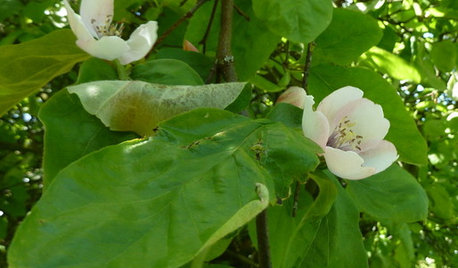
EDIBLE GARDENSWhy Grow Quince? For Beauty, Fragrance and Old-Time Flavor
Delightfully perfumed fruit and lovely spring blossoms make this apple and pear cousin worth a spot in the garden
Full Story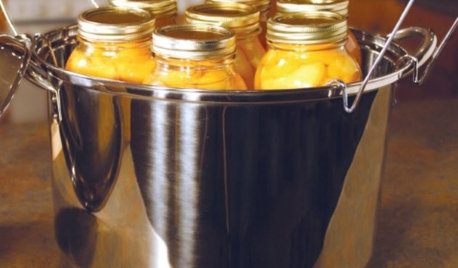
PRODUCT PICKSGuest Picks: Canning, Preserving, Steaming, Dehydrating
20 products to help make fall produce last through the season and beyond
Full Story
FEEL-GOOD HOMESimple Pleasures: Make Do and Mend
Experience the satisfaction of fixing, repurposing and creating things yourself around the home
Full Story
CHRISTMASGift Giving the Simple-ish Way
If buying holiday gifts drives you to the spiked holiday punch, try these easier but still rewarding traditions
Full Story

Olychick