

Do you read lots of books by the same author?
9 years ago
last modified: 9 years ago
Featured Answer
Sort by:Oldest
Comments (42)
 9 years agolast modified: 9 years ago
Related Discussions
Do you read Chick Lit books?
Comments (2)I haven't read those, but felt the same way about the Twilight series. I hate vampire stuff and resisted all the hype about books, but then my dil was reading them and she convinced me to try one. They are definitely not high literature, but were so much FUN. The author really captured that feeling as a teen that I remember but no longer experience (nor have I for 40+ years) of emotional/sexual longing without there being any sex at all in the books. They are set in the NW so it was fun to see references to where I have lived my whole life. Then I couldn't believe that I saw the movies, too. Sheesh, now THAT"S embarrassing! I'll check out Pretty Little Liars....See MoreDo you ever read more than one book at a time?
Comments (30)carolyn, I liked your word, "tidy-minded". It doesn't really apply to me as far as my reading, but I liked the word. Read more than one? Always. Always an upstairs book, at least one downstairs book. At least two in the car, one in my purse, one paperback mystery shoved under the seat of DH's SUV (just in case... shhhh... he doesn't know it's there.) and quite often, an audio tape in my car as well... the current audio tape is a Hamish McBeth mystery, Death of a Perfect Wife. And I usually have one textbook-type non-fiction book that I read in bits and pieces, too. Right now, that book is William J. Bennett's AMERICA: The Last Best Hope, volume 1. I cannot seem to hold myself to just one book. We are going on vacation in a month or two and with the new weight restrictions on luggage, I am seriously considering paring down the clothes so I can take the same number of books. PAM...See MoreProlific authors you still read.
Comments (20)Rosefolly, Do you think we change as well when we age, and our brains seek a different kind of book or reading? I use to read, when my children were young and needed so much of my time, Danielle Steele cover to cover. It filled the need to read when my mind and energy went in so many different directions. Now, I have no interest in them whatsoever...the last few I tried I couldn't read more than a couple of pages before becoming very impatient. But I can read history books and biographies, science based books for hours on end, which I had no hope of reading in those days. However, I do remember getting so caught up in Trinity by Leon Uris, that my four year old came over to me, after saying my name several times, took the book out of my hands, and looked me straight in the face and said "Mom" in a strident tone. Yes, he is an avid reader to this day, some 36 years later!...See Morehow do you keep track of books read?
Comments (23)I've now tried both GoodReads and LibraryThing. So far I prefer the latter simply because more of the books I have read are in the database. I also like being to choose the actual cover of the edition I've read. Of course it's not perfect. I disagree with how it handles the issue of dates of publication. I personally prefer to note the year in which the work was first published, not necessarily the edition which I read. Other people may not think this is particularly important. The downside with LibraryThing of course is that it is a pay site. I have not reached my 200 book limit (I only entered a few years of books). Once I reach 200 titles, then I would have to pay $25.00 to continue. I haven't decided whether I am willing to pay for that privilege. GoodReads is a very good site. I didn't know that I could block on the "friends", quizzes, etc. Many people would enjoy those aspects of the GR experience. This may sound strange, but I am not particularly interested in "rating" books. If I like a book, I will remember the experience of reading it. Only rarely do I force myself to finish a book I don't like....See More- 9 years ago
- 9 years ago
- 9 years ago
- 9 years ago
- 9 years ago
 9 years ago
- 9 years ago
 9 years ago
- 9 years ago
- 9 years ago
 9 years ago
 9 years ago
 PRO9 years ago
- 9 years ago
- 9 years ago
- 9 years ago
- 9 years ago
- 9 years ago
- 9 years ago
- 9 years ago
- 9 years ago
 9 years ago
- 9 years agolast modified: 9 years ago
- 9 years ago
- 9 years ago
- 9 years ago
- 9 years ago
 9 years ago
- 9 years ago
- 9 years ago
- 9 years ago
- 9 years ago
- 9 years ago
- 9 years ago
 9 years ago
- 9 years agolast modified: 9 years ago
- 9 years ago
- 9 years ago
- 9 years ago
- 9 years ago
Related Stories
ORGANIZING‘Tidying Up’ Author Marie Kondo Tells How to ‘Spark Joy’ at Home
A new book from the author of ‘The Life-Changing Magic of Tidying Up’ delves deeper into her KonMari Method of decluttering and organizing
Full Story
HOMES AROUND THE WORLDMy Houzz: Author Makes Her Home in a Quiet Corner of Hertfordshire
British novelist Freya North refreshes a dated bungalow to create an idyllic country home for her family
Full Story
HOUZZ TOURSMy Houzz: See How a Garden Author Brings Nature to the City
Garden designer and author Baylor Chapman shows her love of nature in her San Francisco apartment and deck
Full Story
HOMES AROUND THE WORLDWorld of Design: 11 Book Lovers and Where They Like to Read
Bibliophiles across the globe reveal their top books and favorite reading spots, from a 2-story library to an artfully curated book nook
Full Story
FEEL-GOOD HOME15 Cozy Book Nooks and What They Want You to Read
Put the beach reads away; these comfy spaces are creating a fall reading list. What books do they suggest to you?
Full Story
DENS AND LIBRARIES20 Book Lover’s Spaces That Will Make You Want to Read
Borrow these ideas from spaces designed around a love of books
Full Story
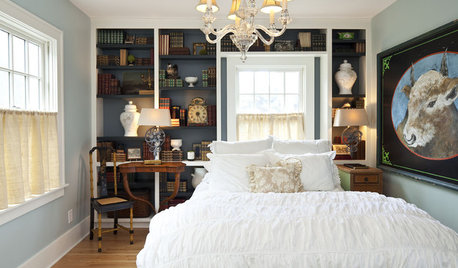
DECORATING GUIDESNovel Ways With Bedroom Books
Reading and relaxing go hand in hand. See how designers are incorporating mini and all-out libraries in the bedroom
Full Story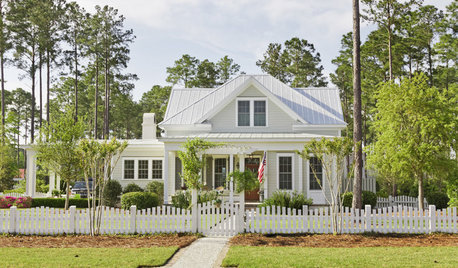
HOUZZ TOURSMy Houzz: A Storybook Cottage in South Carolina
Whimsy and color rule in this children’s book author’s home
Full Story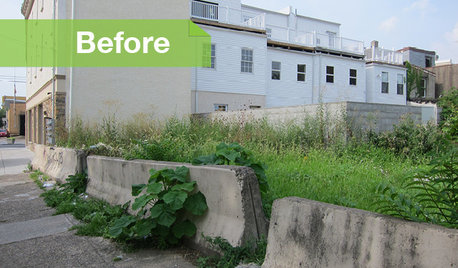
URBAN GARDENSGarbage to Garden: A Vacant Philly Lot Gets Some Green-Thumb Love
Transformed by an artist, this once-derelict urban property is now a tranquil garden with living walls
Full Story
carolyn_ky