

Have you tried using sourdough starter in a
10 years ago
last modified: 10 years ago
Featured Answer
Sort by:Oldest
Comments (11)
Related Discussions
My Sourdough Starter
Comments (13)digdirt and jimster thanks for the links , good reading. ksrogers thats a nice story as i always enjoy reading the family ones, on the other forum i have been going to for little over 3 years now we discuss fig tree and there fruit another passion of mine and the family history of the tree's are great to read as well so thanks for shareing that. My granfather in Italy was a baker by trade my father used to tell me but i never met him nor grandmother as they passed when i was small. The cast iron pan gets a ring of slight rust after it cools around inside rim which i scrub with water and then rub in some oil and heat on stove till i use it next ,it is cumbersome and this one pan is just for the bread , when i preheat oven with it i dont get any smoke which is good. I just have to keep at it or it would rust thats for sure, but your right stainless would be much much better. Today i baked a loaf of bread with some starter that i had bought last year, i tried a basket i have with one of those towels in it floured nice, so i made the dough wetter i usually freeform my loaves, i figured since in a basket i could get away with a wetter dough. I had a stone but it cracked on me last year so i use a preheated cookie sheet, i took cookie sheet out of hot oven and placed over the basket i know what your thinking burn towel and basket well that did not happen but the dough flattend out more or less at this point i slashed top and put in oven, now the funny part, my turkey roaster i was going to use i thought well if the dough rises to much it will mess things up so i used tall aluminum stock pot to cover the dough to see what would happen. After about 4 to 5 minutes i pulled rack out of oven and lifted pot up and the dough would have stuck to it as it kept on spreading. So i left top off of dough and misted it and sides of oven, the bread tasted good with slight sour taste this evening with spaghettis and the works but it looked awfull , the crum had nice holes though oh well. I have what they call chicago mettalic pan with a bunch of little holes in it if anyone is familar with it you know what it looks like, trouble is the bread crust pokes thru them iv'e tried several ways, first time for proofing in them (big mess) second time proofing loafs elswhere then baking in them another mistake as they crust still went into the wholes and made it hard to clean. Then i used parchment paper until crust formed enough not to poke thru the holes which is what i do now when i use this , basically im not crazy about it. So im going to try the basket again it seems like it works well and is the right size for the pound and a half bread i make and comes out easy for me i just need to not make the dough as wet, and i should get a bakers peel as well instead of fooling around with a hot cookie sheet like i did today, in the meen time i think i will freeform the loaves till i get the bakers peel 1 day.The starter i bought off ebay seems slow to activate but its getting there, the other one i experimented with is so far going real well as there are many more bubbles now than yesterday , today im dumpind all but a cup and then just adding cup of flour and about cup of water it seems to react faster than the other ones i have dealt with in the past and present so im anxious to try this one, it did have an off odor at first but now it seems to be ok , im going to keep feeding it for a good week and then bake and see what the results are. Sorry for long post but i tried to put what i as thinking all in one post instead of creating several different ones, any comments are always welcome. Martin...See MoreThings to make c/discarded sourdough starter?
Comments (151)This looks to be #150, so I'll start another sourdough thread with pie segue. :) Cathy, I know the liberated feeling you're talking about! I had it when I started these experiments with the discard. I do as I please with most baking recipes, usually to success. I don't have Grainlady's technical knowledge nor Ann's experience and expertise, but I know that if you control the basics, it'll come out. My mother's challah is so tetchy, however, that controlling it is enough without messing with it. A cousin did that when I was young, and tried using it as a base recipe for other breads, and they were breads, but I didn't really like them. You have to know how to not handle the challah (no typos there) to make it work out right. Add to that the old miseries of using cake yeast and I never messed with yeast dough before. I really liked the figgy loaf! Worrying about keeping the yeast alive rather than if I was going to ruin the bread was great. But that was one of those very soupy things, and if I try that again, I'll use less water/more flour. :) It's interesting that so many people think more hydration means lighter bread and more holes! That's the opposite to what I've experienced so far. Leader, like the ciabatta recipe, works the dough and develops the gluten. Controlled hydration seems to work better for me, and I definitely think the miche was too wet given how much better it got as it dried out. I had similar issues with the pizza recipe. One of the ones I tried, which was the result of much study in a pizza working group, was something like 90% hydration of whole wheat (though not soupy!). It was a very sticky dough and had to be made in a pan. It was not at all comfortable with toppings, though it was okay par-baked. Totally wrong for me, and it didn't have a good enough baked texture to stick with. It's not like my pizza recipe is low hydration. Just comparatively low. It's around 70% hydration. Cathy, I agree that inhaling pizza of any kind is frightening! Thank goodness for the widespread publicity for the Heimlich Maneuver! The miche is peasanty, as in plain old bread. I'd be happy to make the pain de levain for you! That has much more complexity even though it's mostly white. It's very yummy! The miche isn't as flavorless now, but it's not stand in line worthy, unfortunately. Next time. It was supposed to be record setting heat this weekend, but we're having monsoon influence, instead. Not the actual monsoons, which are farther South, but damp and cooler. Spaghetti and meatballs and ciabatta sounds delicious and decadent right now! (Decadent because two starches--my mother never served bread with pasta.) My favorite way to eat ciabatta, however, is with a goodly layer of good butter and an even thicker layer of powder grated good parmesan. This is the breakfast the Italian stewards on the ocean liner tempted my mother with when she was underfed and ill and returning home. I am not underfed, so I don't indulge, but the slightly salty, slightly sour bread with the sweet butter and salty, umami parm is just amazing. (Okay, I'm not underfed, but I haven't had breakfast...) Standing in line for the ciabatta... The gyros-ish meatloaf came out fine. It would have been better with more fat (who says that?), but the meat that needed using was very lean. I suppose I could have added some butter, but who does that? Not I. It's tasty, though. I didn't go full out on the seasoning (i.e., used the recipe) because I'd never made this recipe before. It could be kicked up a bit, but the flavor is about right. The leanness means I can be generous with the oil and grill some up later. :) No yoghurt sauce since since there are no pita either and my cucumbers and dill both bit it in the fridge. Tomatoes, onions and peppers will be fine. :) Ann, one lesson I learned best from you is to just put things in the fridge. Fermenting yeast things, that is. Just put it in the fridge. It's the most freeing thing I've learned recently. I've read all about it, of course, and the pizza recipe is one that's meant to develop in the fridge, but the way you just whip up a levain and throw it in the fridge until you're ready, or make up some do and go off to work, with instructions to Moe for when to take it out. Of course it's a given that cold retards yeast, but so much of my bread life until now has been about keeping yeast warm and cozy and encouraging it to rise, retarding the rise in the fridge to manage the slow process of sourdough is a revelation. Thank-you! Edited to add link and fix weird typo. This post was edited by plllog on Tue, Aug 5, 14 at 20:51...See MoreRECIPE: Sourdough Starter
Comments (13)I'd recommend getting a starter from someone rather than trying to create your own. If you create a starter yourself, the starter is created by yeast and bacteria in the air, and that is the reason why everyone's sourdough tastes different, it's because of the natural yeast and bacteria in that local, that's why San Francisco is known for it's sourdough bread. If you make your own, you might get lucky and get a good flavored starter, you might just waste some flour and time. And even if it does taste decent, chances are, it won't taste like San Francisco's sourdough. If you get a starter from a good source, it will continue to grow the yeast and bacteria in that starter. King Arthur Flour's web site has a good starter. Here is a link that might be useful: King Arthur's Sourdough Starter...See MoreSourdough starter - Can we talk?
Comments (46)Sooo....shortly before this current pandemic quarantine thing started, I started a starter. Just put equal volume of purified water and organic rye flakes and in about 36 hours I had bubbles.....so I began the discard feed routine and soon I had a starter going that doubled in about 8 hours.....but by then flour was very hard to get and I had committed to baking bread every day and giving it away, so I stashed the starter and the current jar of discard int he refrig and forgot about it for easily 3 weeks....likely longer, time flies during this quarantine and one day looks like another. Last Sunday My grand daughter came over to visit....through the door or outside at a respectable distance and asked if I could spare some starter as she had a friend who wanted to try some. So. I dug out the jar,. and poured some into another fed it, fed what I had left and sent her home with the starter and directions to feed it again before bed and again in the morning and again after work when she would give it to her friend.......and I did the same for my jar and both are up and running. I stirrred the hooch back into the starter along with any dark stuff on top....sites I have read say it's fine and I found it to be so. I have been using the discard as part of the volume in my "daily bread' and it adds to the flavor profile but I don't even think of asking it to provide leavening all by itself. but tomorrow morning, I will make myself a mix with just the starter and no yeast and leave it on the counter to rise for about 18 hours and hope it will give me some loft.....then I will bake in my Enamel cast iron Dutch oven. I'll report back. But what I have learned is that even a young and very neglected starter has live yeast if it doesn't smell rotten.....and if fed it will grow. And For L Pink the reason you don't just add flour and water to increase the volume is the food in the starter is then very quickly used up.....as there are more yeasty-beasties to eat the carbs. So either increase what you feed your starter or discard and refrigerate the discard and feed what is left....See More- 10 years ago
- 10 years agolast modified: 10 years ago
 10 years ago
- 10 years ago
- 10 years ago


Related Stories

LIVING ROOMSConversation Starter: Circular Seating
Looking to make a large space cozy or fit seating into a tight spot? Try using a ring of chairs
Full Story
PRODUCT PICKSGuest Picks: The Well-Stocked Starter Kitchen
We’ve got all the kitchen basics and tableware you need (or that recent grad needs) to make cooking a joy
Full Story
BEDROOMSGet More From Your Bed (Storage, for Starters)
Find space for all your stuff — and maybe even a seat, a writing desk or another sleep spot — by cozying up to a multipurpose bed
Full Story
LANDSCAPE DESIGNTry Slow Gardening for Some Unexpected Benefits
Why set your garden on the fast track? Here's how to relax and enjoy it in an entirely new way
Full Story
CHRISTMAS11 New Uses for Old-School Christmas Ornaments
Been there, done that with the tree? Have an embarrassment of extra ornaments? Try these beautifully creative decorations this Christmas
Full Story
COLORBathed in Color: When to Use Blue in the Bath
Look skyward or to the waters in nature for a soothing, spa-like bathroom
Full Story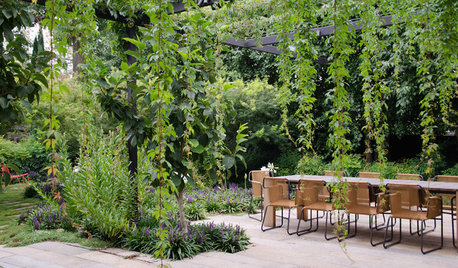
LANDSCAPE DESIGNSee 5 Unexpected Ways to Use Vines
Vines can grow over slopes, trail off pergolas and add seasonal color to the garden
Full Story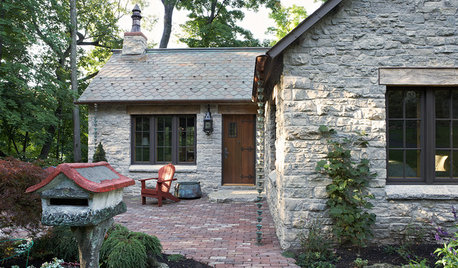
GREEN BUILDINGHouzz Call: What Have You Salvaged for Home Use?
If your floors, furniture, exterior materials or other home elements have a past life, we'd like to hear the story
Full Story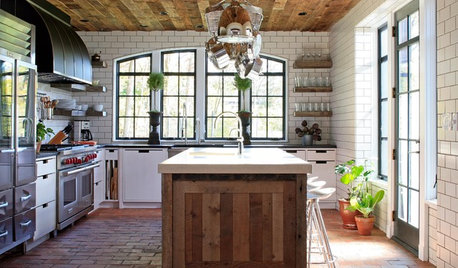
KITCHEN DESIGNWhat to Know About Using Reclaimed Wood in the Kitchen
One-of-a-kind lumber warms a room and adds age and interest
Full Story
DECORATING GUIDESThe Details: Using Typography in Design
Vintage Letters and Numbers Add Instant Interest to Walls, Furniture and More
Full Story



grainlady_ks