

Celebrity Recipes
11 years ago
Featured Answer
Sort by:Oldest
Comments (20)
 11 years ago
Related Discussions
Tax Day! What Are You Cooking To Celebrate?
Comments (28)We use the preserved vegetable also. We also never rinse. DH uses it in his stir-fry pork dish w/o green beans also. I will link to the brand that we buy. As jkom says you don't use any ginger etc in this traditional dish. In the book The Good Food of Szechwan by Delfts there is a traditional recipe . It is Gan-bian Si-ji-dou. The beans are called "four season beans" and are longer than our traditional beans. You do first deep fry the beans. There is no sauce to speak of. Here is his recipe: 1 1/2 # four season or regular green beans 3-4 dried shrimp 2 Tbsp finely chopped Szechwan vegetable 1/4 # pork 2 Tbsp. finely chopped green onion Wash and dry beans and cut into 2-3 " lengths. Chop shrimp finely. Chop vegetable, pork and green onion. In a bowl mix seasoning: 2-3 Tbsp soy sauce 2-3 Tbsp rice wine 1 1/2 tsp sugar 1 tsp salt 3 Tbsp water 2-3 Tbsp sesame oil 1/2 to 1 c oil for deep frying Heat oil in wok and deep fry beans in batches and allow oil to get back to heat in between batches. Beans should be wrinkled, crackled and soft and dark. Remove all but 2-3 Tbsp oil when beans done. Heat over high heat and stir fry pork til beginning to brown. Add the chopped vegetable, and shrimp. Heat throughly. Add the beans now cont to toss and all all seasoning mix. Stir. Add the green onion now. Cont .to cook til all liquid gone. Serve hot. Please post pics when you make this ! When DH next makes it I will also. Will be fun to compare notes. c Here is a link that might be useful: Preserved vegetable....See MoreAnyone Celebrate New Years Day with Foods
Comments (24)Kelly, of course fresh black-eyed peas are better, like any bean/veggie is. But the Ranch Style peas are excellent. They're not a bean that's hard to like. I cook both fresh and use canned when I don't have time to simmer a pot all day. We have a fresh hamhock in the freezer that I'm saving for ham and pinto beans. Yum!...See MoreSite of the Day Oct 16
Comments (1)Thanks sent the link to DIL she still entertains. I loved doing things like this in the day...See MoreAnyone have Jewish ancestry that they would like to celebrate more?
Comments (25)I know just a little about this but would like to add to the conversation some of the notions I've developed over the years based on what Jewish friends have explained to me. And what I've learned as a voracious reader of European history. Those who are active adherents know more than I do and I welcome their corrections. Off and on throughout the centuries, Jews experienced inconsistent tolerance and intolerance from their neighbors in the communities where they lived. Often there was more tolerance in Muslim regions and less tolerance in Christian ones. The Spanish Inquisition was perhaps the most extreme example of violence and intolerance - convert to Christianity or we kill you, or leave. All three happened. At times in the past, when Jews were treated as an underclass, there could be restrictions concerning where they could live, what occupations they could have, marriage restrictions, and so on. So they tended to stick together, often live by rule or by choice apart from others, work together, and intermarry less than those in other groups (in the most recent centuries). That's inbreeding and why some genetic problems have a higher incidence among some of these groups than in the general population. Many who immigrated to the US in the late 19th and early 20th centuries did so because of discrimination, violence, and awful living conditions where they were. For that period, the flow was principally from Eastern Europe. Many of those regions in Eastern Europe had numerous and multiple changes of nationality because of moving borders in the 19th and early 20th centuries, and not just for Jews. A family and its descendants could have started the 19th century with a Polish culture and nationality, then became Russian citizens, then became part of Austria Hungary, then Russian briefly and then became Poles again after WWI, all without moving from their towns. Poles tended to be Catholic, Russians tended to be Russian Orthodox, and Jews tended to be ostracized by all but all had their own cultures. So, from the same town, an immigrant to the US in 1890 who was Catholic might have said "I'm a Pole from Russia" while a Jew from the same town might have said "I'm a Jew, my village was in Russia, and my neighbors were Poles". Jews didn't have their own country at that time and for them, they tended think of members of the majority population segments in various countries as being not only of a different religion but belonging to ethnicities and cultures they lived outside of. That may be why the answer to the ancestry question might be different for a Jew as from someone else. Today, being of Jewish ancestry for some seems to be meaningful to them as being both a religion and for many also a culture. And for others, it may be neither. One couple we're friends with - the husband has Jewish ancestry, the wife was raised in a Catholic family. Through his family, she became exposed to and then attracted to the Jewish religion and became very active in a religious group and has remained so for many years. He doesn't go to services or observe much as far as I can tell, she rarely misses an event. She never converted. What would you call each of them, if anything? I'd say active participation should trump ancestry. Long way around to comment to you Anne that if your upbringing was neither religiously Jewish nor culturally Jewish, I wouldn't think there's much to your connection. What percentage of your ancestry did the report say was Jewish?...See More 11 years agolast modified: 11 years ago
 11 years ago
- 11 years agolast modified: 11 years ago
- 11 years ago
- 11 years ago
- 11 years ago
 11 years ago
- 11 years ago
 11 years ago
 11 years ago
- 11 years ago
- 11 years ago
- 11 years ago
 11 years ago
- 11 years ago
- 11 years ago
- 11 years agolast modified: 11 years ago
- 11 years ago
Related Stories

LIFEHow to Celebrate National S’mores Day When You Don’t Have a Campfire
Too hot to toast marshmallows? Never got around to building that fire pit? These recipes are for you
Full Story
HOLIDAYSHoliday Recipe: Warm Up the Kitchen With Danish ‘Aebleskiver’
If they aren’t already, these holiday breakfast treats may become a new family tradition
Full Story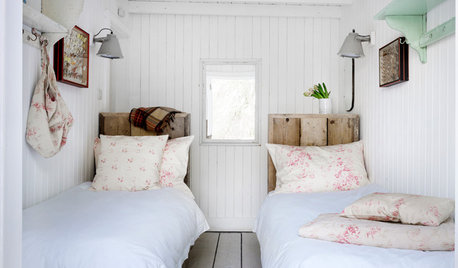
DECORATING GUIDES10 Recipes for Shabby Chic Style
Rustic furniture, floral fabrics, sparkling chandeliers. Here are 10 easy ways to bring the romantic cottage look into your home
Full Story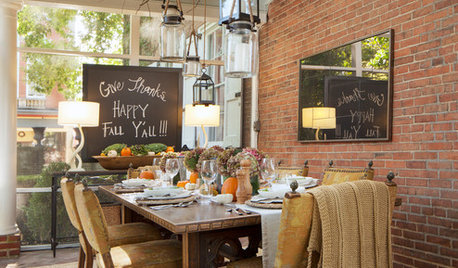
FALL AND THANKSGIVINGSimple Pleasures: Celebrate Fall With These Special Traditions
Enjoy a meaningful autumn with seasonal ideas for decorating, cooking and entertaining
Full Story
LANDSCAPE DESIGNRecipe for Asian Edible Garden Style
A surprising number of food plants are hiding out in Asian-themed landscapes. Add a few more and extend the Zen flavor to the kitchen
Full Story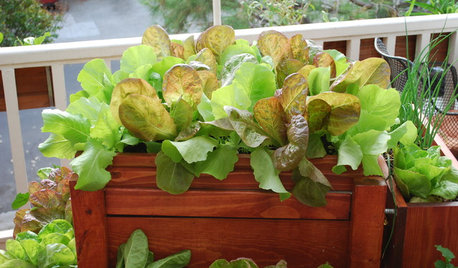
FARM YOUR YARDCheck Out These Recipes for Delicious Themed Edible Gardens
It’s garden-planning time! What you grow often inspires meals, but in these cases the reverse is true
Full Story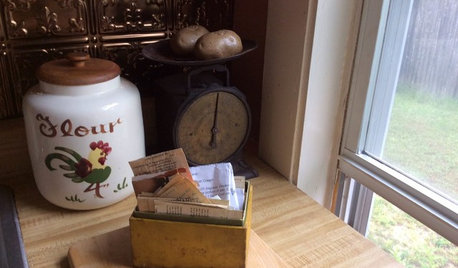
KITCHEN DESIGN5 Home Cooks Share Their Favorite Family Recipes
Peek inside the kitchens of these Houzz users and learn how to cook their time-tested, passed-down dishes
Full Story
ENTERTAININGRecipe for an Unforgettable Holiday Dessert Exchange Party
Get your gathering off to a good start with this rich Earl Grey cake and eucalyptus-and-rose tablescape
Full Story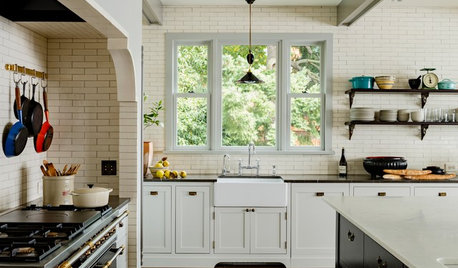
KITCHEN STYLESDesign Recipe: How to Get a Modern Farmhouse-Style Kitchen
Discover the essential materials, colors and finishes that make this popular style beautiful and functional
Full Story
LIFEThis Weekend: Celebrate Grandparents and the Season’s Bounty
It’s also a good time to hunt for an antique treasure, plant fall flowers and spruce up the TV zone
Full StorySponsored

Customized Award-Winning Interior Design Solutions in Franklin Cnty OH
lindac92