

Lard / Shortening / Fat / Suet ? I'm new !
13 years ago
Featured Answer
Sort by:Oldest
Comments (8)
 13 years ago
- 13 years ago
Related Discussions
Can I substitute bacon grease for suet in making suet cakes?
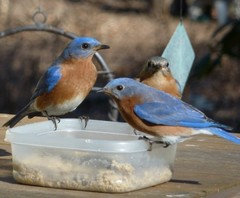
Comments (5)i have googled use of bacon grease and also bing search and asked about it with a bunch of different audubon societys in different states. the majority of them recomend useing bacon grease as long as the birds have sufficient water supplys. I have used bacon grease for many years and have lots of birds but i do keep fresh water or heated water trays in winter. I usually mix equal parts of suet or lard or bacon grease or tallow or shortning with peanut butter and add some chopped nuts and then thicken it with cornmeal and rolled oats or grits or flour to make a paste. we don't eat a lot of bacon or fatty meats anymore but do save the fats and freeze them. and mix whatever i have on hand into the mix and the bacon grease is usually pretty well diluted down. Most say it attracts the woodpeckers and chickadees and nuthatches but i get almost every kind of bird i get eating mine. including the jays and juncos and finches ect....See MoreSuet Escapade II
Comments (7)It's really simple. Purchase white kidney or loin beef fat from a butcher. It's inexpensive. Now for the larger woodpeckers you can stop right here. They'll eat the raw chunked fat. To render suet, and make cakes to attract a wide variety of birds, ask the butcher to grind the fat. Put it in a big pot; you don't want to fill the pot any more than half full of the fat, less would be better. Heat it over medium-low heat until all the fat melts. It took a couple hours, or more, for me to do the six pounds of fat. Watch it closely; the fat can flash into flames if it gets too hot. As the fat melts, there will be bits of "cracklings" floating in it. Strain the fat to remove all the solid bits. Let the suet solidify, and then do the process over again. The rendered suet will keep for up to a year in the freezer. I mix the finished product half and half with peanut butter. Then add any combination of hulled sunflower seeds, whole wheat flour, oats, chopped corn or chicken scratch, peanuts, raisins, whatever you have on hand that birds like to eat. Pour it into molds or a baking dish until it hardens, cut into blocks that fit your feeder, and serve. You can search the web and find hundreds of "recipes" for ideas of things to mix into the suet....See MoreMaking pastry with home rendered lard
Comments (12)Madonna, for you I'll also pray for no snow, so you can get to your DH without any driving issues. Dave, my mechanic/son-in-law assures me that if your vehicle runs OK, just ignore the light until you can conveniently deal with it. It can be anything from the gas tank cap not being on tight to a loose wire in the radio. If it runs OK, just go see DH and get to the Jeep repair when you can. I was hoping you would get to go south, but with DH in the hospital, I guess that's on hold. (sigh) You'll both be in my prayers, stay strong, I'll be thinking of you. I really like the Nathan's Never Fail pastry recipe, but that other poster was having such an issue with home rendered lard that I decided to haul out the most basic recipe I had, one that specifically called for lard, and use it. The recipe actually made enough for three crusts, as I tend to roll my pastry somewhat thin, so I have an extra in the fridge right now. Maybe coconut cream... LindaC, you're right, I'm not worried about my driving, I'm worried about everyone else's, snow or not. And don't even get me started on those people who need to be talking on the phone or texting while driving, and can't even get through the pharmacy drive-thru without holding up the line behind them because they're busy texting instead of watching where they're driving! As for the pie crust, I usually don't measure the fat very carefully, I plop it in. About half a pint jar of lard in the fridge? That's probably a cup, or at least it's close enough, LOL. I remember Grandma used to use a two cup measure, add a cup of water then fill with lard to the 2 cup line. She'd then use some of the water for the crust, and didn't have a greasy measuring cup to wash because the fat floated in the water, so I know she was more careful than me! Annie...See MoreLard substitute?
Comments (3)Sorry, edie, but if you add bacon fat you are going to add a smoky/porky flavor that lard doesn't have. It might go well with the Piadina, but it won't approximate lard. If smokey/bacon-y is not the flavor profile you're shooting for, I think I'd just use shortening. Annie...See More- 13 years ago
- 13 years ago
- 13 years ago
- 13 years ago
- 10 years ago
Related Stories

KITCHEN DESIGNHow to Choose the Right Hood Fan for Your Kitchen
Keep your kitchen clean and your home's air fresh by understanding all the options for ventilating via a hood fan
Full Story
GARDENING FOR BIRDSFeed the Birds: 6 Plants for Abundant Winter Berries
Be kind to your fair feathered friends during lean food times by planting a shrub or tree loaded with nutritious snacks
Full Story
FEEL-GOOD HOME21 Ways to Waste Less at Home
Whether it's herbs rotting in the fridge or clothes that never get worn, most of us waste too much. Here are ways to make a change
Full Story
TASTEMAKERSPro Chefs Dish on Kitchens: Michael Symon Shares His Tastes
What does an Iron Chef go for in kitchen layout, appliances and lighting? Find out here
Full Story
FUN HOUZZDon’t Be a Stickybeak — and Other Home-Related Lingo From Abroad
Need to hire a contractor or buy a certain piece of furniture in the U.K. or Australia? Keep this guide at hand
Full Story
GARDENING FOR BUTTERFLIESA Quick-Start Guide to Bird-Watching for Fun and Learning
Set out some seed and grab your field guide. Bird-watching is an easy, entertaining and educational activity for the whole family
Full Story
GARDENING AND LANDSCAPINGBe a Citizen Scientist to Help Wildlife, Learn and Have Fun Too
Track butterflies, study birds, capture stars ... when you aid monitoring efforts, you’re lending Mother Nature a hand
Full Story
GREAT HOME PROJECTSHate Hauling Laundry? Give Dirty Clothes the Chute
New project for a new year: Install a quick route to the laundry room
Full Story
GARDENING GUIDESBackyard Birds: Invite Entertaining Hummingbirds Into Your Garden
Hummingbirds — unique to the Americas — zip through open landscapes seasonally or year-round. Here’s how to attract them
Full Story
EARTH DAY12 Entertaining ‘Bee-haviors’ of Native Bees
The parade of pollinator antics is another reason to create a garden that nurtures native bees
Full Story
More Discussions
donald lucius