

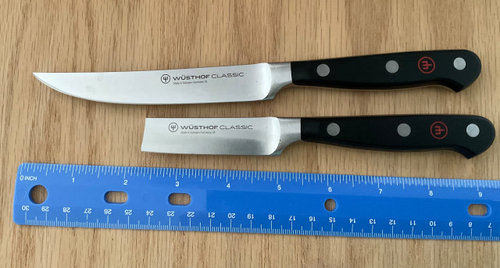
Broken Wusthof Knife
last year
last modified: last year
Featured Answer
Sort by:Oldest
Comments (25)
Related Discussions
mystery knife...
Comments (2)I found it. HarvardCutlery 391. It had wedged itself under the cutlery tray in the cabin. An old company no longer in business. Much nicer quality than i had remembered. (it has been missing for a few years now). One is listed on ebay right now. My question is, if my pic loads, if another maker produces a similar blade style. It is such a useful tool. My husband remembers me having it in college in RhodeIsland. Must have picked it up in a thrift store there. Anyway, mystery solved. Would be a good house warming gift, wedding, and my father needs a new knife more all purpose. It does slice tomatoes beautifully....See MoreChefs choice knife sharpener
Comments (15)IF you have room in your shop/garage for a dedicated bench grinder, consider getting a paper wheel system. They do take up a fair amount of space, but can put a razor edge on the dullest knife in just a few minutes. I really like mine. The web site at the link reviews all the various machines and stones, and sells paper wheels. He likes the Chef Choice, but with the caution that it can scratch the sides of the knife--okay for general use but not for collectible knives. Here is a link that might be useful: sharpening systems...See MoreWusthof Gourmet Knife Set
Comments (16)I have 3 Wusthof Classics: a large chef knive, a long serrated bread knife, and another long knive that is like a chef's knife, but it's not as wide; it might be called a carving knife. Sorry, I don't know the exact names or mesaurements. I also have a serrated knife that was given to me. It says Wustof Grand Prix on it. It's smaller than a bread knife (about 6" long blade), and so useful for just about everything. I use it every day. In addition to those, I have 3 Henkles paring knives that were very inexpensive. They have colored handles (red, yellow and green), go in the DW and are sold in a set of 3. I use those a lot too. I agree with not getting a whole set. If I had to choose only a few knives to start with I'd get a Wustof Classic chef's knife and bread knife, and then a cheaper set of paring knives like the set I mentioned. I do love that serrated knife, so if you are buying 3 of the Wustof's I'd go for that too. Also, if you want a knife block you can find them in thrift stores. I just brought one to our local thrift because I store my knives in a drawer now - and I found my drawer block at the same thrift store....See MoreSteak knives....Wusthof, Henckels or ?
Comments (21)Found this and learned some things, so am sharing. Author: Joe Talmadge, knives Newsgroup Push cuts: The main cutting is done by pushing the edge through the thing-to-be-cut. When peeling an apple, you push the edge under the skin of the apple. When chopping wood, you try to push the edge into and through the wood. Slicing cuts: The cutting action is substantially done by dragging the edge across the thing-to-be-cut. When you slice meat or a tomato, you drag the edge across the tomato as you cut through it. Slicing and sawing are examples of slicing cuts. Plain Edge vs. Serrated Edge: The Conventional View: In general, the plain edge is better than the serrated when the application involves push cuts. Also, the plain edge is superior when extreme control, accuracy, and clean cuts are necessary, regardless of whether or not the job is push cuts or slices. In general, the serrated edge will work better than the plain edge for slicing cuts, especially through hard or tough surfaces, where the serrations tend to grab and cut the surface easily. Some of the cutting power of the serrated edge is due to its format alone; thus, even a dull serrated edge knife will often perform competently at slicing jobs. The serrated edge gets its slicing ability from a number of factors. The high points on the serrations will touch the material first, and this gives those points higher pressure per area than if the same pressure was applied to a plain blade; this allows the serration to puncture more easily. In addition, serrations are normally chisel-ground into the blade, which means they are thinner (and thus cut better) than the comparable plain blade. Generally, the more push cuts are used, the more necessary it is for the plain edge to have a "razor polished" edge. One interesting case is cutting a tomato. In theory, you can just push a blade through a tomato, so a razor polished plain edge would work fine. However, the tomato is soft, and unless your plain edge knife is very sharp, the tomato will simply squish when you start pushing. You can (and many people do) use a slicing motion with your plain blade, but if it's even a little dull it won't cut well and it may not even break the skin. Use a sawing motion with a serrated knife (even a dull one), and your tomato will slice fine. The plain edge excels in push cuts, and the serrated excels in slicing cuts. So the claim that serrated edges work better than plain edges for slicing needs to be re-examined. It appears that as materials get harder or put under more tension, the serrated edge may slice a bit better than a coarse-ground plain edge. As the material gets softer and looser, the coarse-ground plain edge may slice a bit better. And as we go towards push cuts, the polished plain edge comes into its own. The user may want to experiment on those materials that he often cuts, before choosing the edge format. In addition, keep in mind that the coarse plain edge is much easier to sharpen than the serrated edge. Just grab your file or extra coarse stone, take a few swipes, and you're ready to go. With the serrated blade, you'll need to find a sharpening rig with the special serrated blade sharpener. Balancing this is the fact that serrated blades need to be sharpened less often. Thoughts On The Partially-Serrated Blade (Combo Edge): Another option is the combination plain/serrated edge. This format appears to have overtaken the all-serrated format. Typically, the 50%-60% of the blade nearest the tip is plain, while the back 40%-50% is serrated. There are mixed feelings on this format. Many people swear by this format, and feel that it is a good compromise, giving the user the choice of precise push cuts from the plain edge, and the advantage of the serrated edge for tougher...See More- last year
- last year
- last year
- last year
- last yearlast modified: last year
- last year
- last year
- last year
- last year
- last year






Related Stories
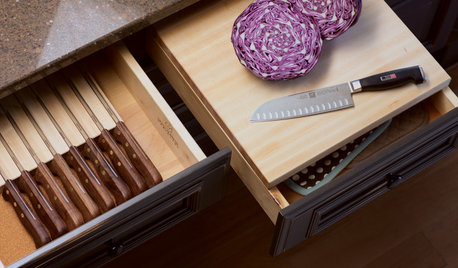
KITCHEN STORAGEKnife Shopping and Storage: Advice From a Kitchen Pro
Get your kitchen holiday ready by choosing the right knives and storing them safely and efficiently
Full Story
HOUSEKEEPINGDIY Fix: How to Repair a Broken Glass Door Pane
Don't let broken glass shatter your self-esteem. You can fix it more easily and more inexpensively than you might realize
Full Story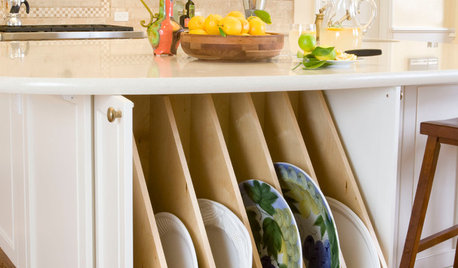
KITCHEN STORAGE13 Popular Kitchen Storage Ideas and What They Cost
Corner drawers, appliance garages, platter storage and in-counter knife slots are a few details you may not want to leave out
Full Story
CONTEMPORARY HOMESHouzz Tour: From Doghouse to Contemporary Gem
A broken-down Brooklyn row house becomes a light and innovative beauty at the hands of its architect owner
Full Story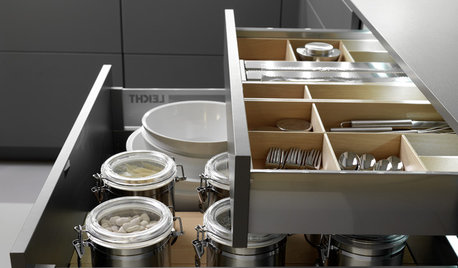
KITCHEN DESIGNGet It Done: Organize Your Kitchen Drawers
Clear 'em out and give the contents a neat-as-a-pin new home with these organizing and storage tips
Full Story
STUDIOS AND WORKSHOPSMy Houzz: Step Inside a Blacksmith’s Home Workshop
See how this New York homeowner repurposed an old structure to use as his blacksmithing hobby space
Full Story
ENTERTAININGHouzz Guide: How to Set a Table
Here’s everything you need to know to prep your table for a get-together
Full Story
PRODUCT PICKSGuest Picks: The Well-Stocked Starter Kitchen
We’ve got all the kitchen basics and tableware you need (or that recent grad needs) to make cooking a joy
Full Story
KITCHEN APPLIANCESConsidering a New Kitchen Gadget? Read This First
Save money, time and space by learning to separate the helpers from the hassles
Full Story
Olychick