Houzz Logo Print
foodonastump

Cleaning wood cutting boards

2 years ago

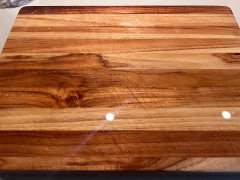
I have a love-hate relationship with my teak cutting board. Love because I like how it looks and feels to work on. Hate because no matter how well oiled I keep it, it's subject to absorbing kitchen oils, stains, and odors. As a result, there's relatively little I actually use it for anymore. I’ll use it for apples and peppers and cheese and sandwiches, but not to chop onions or garlic or beets or to cut up cooked chicken for a salad.

While plenty of scrubbing seems to take care of the stains, I've got a smell I just can't get rid of. Kind of like old onions. I've washed it a gazzillion times, and covered it with a vinegar soaked tea towel for hours, nothing helps.

So…. Any recs? I keep meaning to try diluted bleach (need to buy) and I realize I should probably try that before posting, but I'm curious to hear others' tips as well as daily routines. Are you as particular with what you use your wooden boards for? Do you just accept the staining or do you have a reasobable way to clean it?

Comments (51)

  • 2 years ago
    last modified: 2 years ago

    food, I don’t have any teak boards but wondered is this might be helpful. I just bought a package of the dish sponges they show at HomeGoods.

    https://www.teakculture.com/pages/cutting-board-care

  • 2 years ago

    Mine is oak and I never have a problem.

  • Related Discussions

    Wooden Cutting Board in DW?

    Q

    Comments (9)
    The instructions for my cutting board (end grain BB) say to wash by hand with hot soapy water and dry thoroughly, and treat periodically with mineral oil. To sanitize, it says: "To sanitize, wash the board with a solution of one part vinegar to five parts water. Remove odors by rubbing the board with kosher or table salt and half a lemon. Let sit for 2 to 3 minutes then wipe clean with a damp cloth. Remove excess moisture with a clean paper towel and stand the board on end to air dry." I never cut raw meat on it, I have DW safe boards for that.
    ...See More

    Tell me about your wooden cutting boards

    Q

    Comments (62)
    "----CSIRO here has done studies which indicate wood is self-sanitising---" I am familiar with that report, but I am still keeping an open mind. We all know wood goes rotten if not protected soon. That's why wood is used to grow mushrooms. There is very limited ability for wood to sanitize, it seems to me. And the report says, "---Some wooden boards have been reported to exhibit antibacterial properties. After a short period of time, fewer bacteria have been recovered from these boards than from identically treated plastic ones.--" "Some" means not all. "Short period of time"? what does that mean in a kitchen environment? There is also, "Experts disagree on whether wood or plastic cutting boards are the most sanitary. Most governmental agencies in the United States recommend plastic, while other experts say scarred, rutted plastic cutting boards can harbor just as much bacteria as wood." Try this: use a woodworker's scraper and scrape your wood cutting board after you clean it and you will see a lot of stuff that have not been cleaned away. A plastic cutting board in a dish washer is a very clean cutting board. Don't ever wash your wood cutting board in a dishwasher. dcarch This post was edited by dcarch on Thu, Sep 12, 13 at 17:40
    ...See More

    Babying a wooden cutting board

    Q

    Comments (18)
    I remember you posting a picture of yours on the "show me thread". I also have wooden cutting boards, 3 of them! All are large! This one is my favorite. I took the woodworkers design and asked to have a double black pinstripe put on either side. Had to wait 2 months to get it tho. The exotic woods are left over from the furniture he makes. I LOVE MINE!!!! All I ever do is put "food grade" mineral oil on it. (Purchased the oil @ Tuesday Morning). This one is 8 years old....I use it daily....cut anything and everything on it.....it retains no odor. After cutting pork or chicken on it I wash it with bleach & let it sit. It still looks FANTASTIC.....altho the little tiny red squiggly line that weaves down the middle isn't very red any more. It looks white in the picture. :0) ENJOY! This post was edited by nicole__ on Sat, Feb 22, 14 at 11:43
    ...See More

    Speaking of Nathan Myhrvold-------

    Q

    Comments (8)
    dcarch, my first thought was "how arrogant to charge $625 (MSRP) for a cookbook." But, then I started reading the reviews on amazon. I especially liked the review by the guy from egullet.com. Here are his pros and cons: Pros: ---- * Level of detail is incredible * Covers the "how" and the "why" of every detail of the cooking process * Depth and breadth of coverage is... well, worthy of 2400 pages * Stunning photography, graphic design, and even printing Cons: ---- * Many of the recipes are very challenging * Coverage of hyper-expensive equipment can be off-putting * Too tall to fit on any normal bookcase Regardless of how fabulous the book is, even the Amazon discounted price of $450 is simply out of the reach of most home cooks. The soon-to-be published home version at $150 is still out of the reach of many. Here is a link that might be useful: Amazon link to Myhrvold books
    ...See More
  • 2 years ago

    Mine are bamboo. No problems

  • 2 years ago

    I have separate boards for different uses. The John Boos stays on the counter and is used daily for veggie chopping. There's another board for beets and red cabbage, a board for raw meat, a couple boards for bread, and a very small bamboo board for single fruit slicing. It stays on the Boos board.


    I would never use bleach on a cutting board. Bleach doesn't have a place in my kitchen.

  • 2 years ago

    We have a lot of teak outdoor furniture, and we sand it to restore it. I don't know whether that would solve your problem, but it's worth a try.

    For finishing a cutting board after it's clean, I use carnauba wax, which I buy at a surf shop, where it is called "Sex wax," but is used for waxing surfboards, which I used to have as well.

  • 2 years ago

    Give the following a try:


    1. Get a planer blade like this one, use you sharping stone to curve both ends a little. This will be your cutting board scraper for the next 50 years. Carbide is extremely durable on wood. Use this very sharp edge to scrape off any stain on your board.

    https://www.amazon.com/compatible-Replacement-PA1205-1594-Hitachi-Hand-Held/dp/B07SKK89G9/ref=sr_1_2?crid=XTB51LVEGAPL&keywords=3-1%2F4+Carbide+Tipped+Planer+Blades+compatible+Pneumatics+Inches+Replacement+Resharpenable+for+Hitachi+F20A&qid=1705617783&s=hi&sprefix=3-1%2F4+carbide+tipped+planer+blades+compatible+pneumatics+inches+replacement+resharpenable+for+hitachi+f20a%2Ctools%2C138&sr=1-2


    2. After scraping the cutting board surface, put a few layers of paper towel to cover the whole board and pour soaking wet using food grade miner oil on the paper. Let the oil soaking on the board for a week or more.


    3. Clean up and use the board. The soaking will prevent future dirt and odor absorption.


    dcarch


  • 2 years ago

    I've scrubbed my wooden one with a paste of baking soda and hot water, then let it sit for awhile before rinsing, sometimes letting it dry before washing off, which seems to help a bit. I think it's acacia, and I use it only for veggies. It really does need refurbishing, tho.

    I have another I use for fruits, nuts, meats, cheese. It's melamine and doesn't absorb odors and I clean both well after every use.

    It's best practice to use separate cutting boards for onions, garlic, etc. vs. things you don't want picking up those flavors, and I don't cut meat on anything absorbent.

  • 2 years ago

    I never EVER use a wooden board for raw meat. I have an assortment of cheap mentable plastic cutting mats that are knife friendly, can go into the dishwasher and are cheap enough to replace often.

    The board "boards" are mostly pine but for 3 oak ones used for bread and cheese. I do have a walnut roast board and a teak larger turkey board....never done more than soap and water but never use for raw ( just very rare!) meat. No odor on any of them.

  • 2 years ago
    last modified: 2 years ago

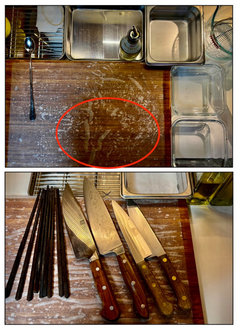
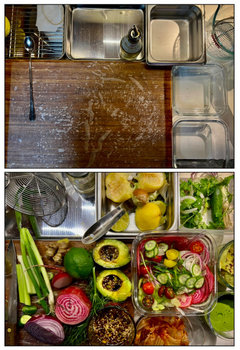
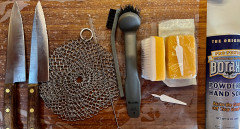
    A bench scraper, as mentioned, is the best quick restore once a month or so. I keep a couple in my mandoline drawer. I have to keep my main prep zone clean or i can't think. I give it a scrub in the sink with dish soap and bar keepers. Rinse good and let air dry. Once dry it gets a good drink of mineral oil, then covered with parchment overnight. Give my knives and chopstix a nice drink at the same time.

    The bench scraper will give it a nice hard burnished finish. Mineral oil seals the deal and prevents stains and smells like seasoning a cast iron.

    Circled is the area that gets the most knife action so a quick scrapping is just a minute or two.


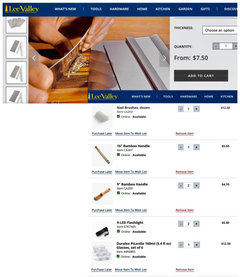
    LeeValley has the ones i use. Highly recommend the nail brushes. (that is one dozen for 12.50$)...i have one at every sink and both showers and 3 in the kitchen that have been in steady use for ten years. Always one in the dishwasher. I did buy some off amazon 5-6 years ago but not nearly as 'scrubby' as the LeeValley ones. I've had an open cart for months so just ordered finally. Found some others things we need to get free shipping.

    ...i use the brushes for scrubbing everything in the sink. Don't like cellulose type sponges that get so funky fast.


    If i spin around next to the sink i have 2 18x20 cutting boards side by side for a secondary prep for bread and projects like microgreen starts, spice mix grinding, juicing, cuisinart, yada. They get a similar tratment but not as often.

  • 2 years ago

    Thanks all. I gave the board two washes in a mild bleach solution last night and after a third this morning, I convinced myself that the smell was all but gone, the board surely sanitized, and it’s now soaking up mineral oil. Not for a week but for several hours at least.

    I suspect I just left something smelly like onion on there too long one night. It hasn’t been an ongoing problem, it just appeared and didn’t go away. Of course I know not to use it for raw meats and seafood so that was most definitely not the problem.


  • 2 years ago
    last modified: 2 years ago

    I have always used my cutting board for raw meat and never had a problem. I wash well right away and let dry throughly.

    ' 'Sanitary: Some people fear that wood, because it's porous and can absorb liquids, is unsanitary, but studies have often found the reverse—wood is able to absorb bacteria, trapping them and killing them. One study found that this can happen as quickly as three to 10 minutes after the surface of the board being contaminated with harmful bacteria, though greasy substances like chicken fat can remain on the surface of the board and continue to be a food-safety risk for many hours; washing in warm soapy water was sufficient to remove the harmful grease-borne bacteria. '

    https://www.seriouseats.com/best-cutting-boards-are-plastic-or-wood

  • 2 years ago
    last modified: 2 years ago

    "A separate board for raw meat or seafood keeps bacteria from contaminating your veggies, fruit, or other foods that require no further cooking," says Saunier. "Eventually, you'll cook your meat or seafood to a safe internal temperature as measured by a food thermometer, killing harmful bacteria. However, fresh veggies or fruit are often consumed raw and do not have a kill step. Having separate cutting boards will help reduce your risk of food poisoning."


    https://www.southernliving.com/food/kitchen-assistant/can-you-cut-meat-wood-cutting-board

  • 2 years ago
    last modified: 2 years ago

    Maybe, but you cut the vegies first, then the meat, then wash and let dry. I have a smaller plastic board for lemons and stuff, that goies in the dishwasher, but I NEVER cut meat on it. Every knife cut leaves a scratch.

    ETA: I am throwing my plastic boards away. This is only one of several articles.

    https://www.newsweek.com/you-might-want-stop-using-plastic-chopping-board-1838514

  • 2 years ago

    I have read the studies. All I can say about wood can kill microorganisms is that , I know wood, and I know how quickly wood can go rotten. I also use wood to grow mushrooms.


    " “Hardwoods, like maple, are fine-grained, and the capillary action of those grains pulls down fluid, trapping the bacteria – which are killed off as the board dries after cleaning,” says Ben Chapman, a food safety researcher at NC State. “Soft woods, like cypress, are less likely to dull the edge of your knife, but also pose a greater food safety risk,” Chapman explains. “That’s because they have larger grains, which allows the wood to split apart more easily, forming grooves where bacteria can thrive.”


    Really? If you were to build a boat, which wood would you use?


    dcarch

  • 2 years ago
    last modified: 2 years ago

    It's not just about the germs, it's the odors too, as FOAS has pointed out. If I cut an apple on my veggie board, it can pick up an onion/garlic flavor - which isn't a problem if it's going in a savory dish, but I sure don't want that taste in a dessert.

    My board is a soft wood, so it really absorbs odors. Meats leave odors as well.

  • 2 years ago

    I run my wood boards through the dishwasher occasionally. Probably not the best practice but it works for me.

  • 2 years ago
    last modified: 2 years ago

    I love wood cutting boards and have many — different sizes and for different uses.

    I also have plastic cutting boards.

    For chicken or meat, I tend to use those ubiquitous plastic cutting boards. When I’m through, I st them leabing in the stainless sink where I first wash off any debris with hot water, scrape or brush down and sometimes pour boiling water over the board. After this, I scrub them with a bit of dish detergent and rinse with very hot water. These boards can also go into the dish washer.

    For most other things, I use wooden cutting boards. I use a sharp knife and love the feel and sound of a sharp knife on a wooden board.

    I used to apply mineral oil, but no longer do this. Wood is DEAD and is not going to be ”nourished” by anything. Mineral oil is not necessary and can create a gummy mess. THEN you need a bench scraper, for sure.

    I have a very large maple board that is only used for dough. I scrape any stuck on dough with a bench scraper. Never coat with mineral oil. Wipe with damp cloth. Set aside to dry.

    Do not ever soak a wooden cutting board. It will warp and loosen the glue that’s holding the wood strips together. Absolutely death to a wooden cutting board.

    I have some of the cheap bamboo cutting boards. These are more resistant to water damage, but still, do not soak and do not put into a dishwasher. I am not in love with the bamboo boards, but they are durable and utilitarian. Because bamboo has silica in it, these boards may dull your knives, so keep that in mind. Avoid dragging or pulling a good knife blade across them. Unless you like honing your knives frequently.

    Any cutting board that retains odors after properly and sensibly cleaning, can be set out in sunlight and fresh air for a few hours. This is true for most odorous items. Then bring in and wipe or wash as is appropriate for that material.

    Here are some on my non smelly cutting boards. (as with knives, there is not usually one size or one material that suits all.


    My bread and dough and kneading board. The other side is the same but for a few rubbery nylon ”bumpers” to prevent the board from sliding.


  • 2 years ago
    last modified: 2 years ago

    "---- Because bamboo has silica in it, these boards may dull your knives, so keep that in mind. Avoid dragging or pulling a good knife blade across them. Unless you like honing your knives frequently. -----"

    This is repeated many many times on the internet by many many experts in the food world. I am not sure how correct it is.

    Silica is in every plant and animal meat. But it is in organic form and in molecular size. It is true bamboo has a great deal of silica, but it is not in the form of sand particles. I don't know how it can harm knifes.

    Sand is mostly silicon dioxide, a very hard solid. Diamond is carbon and extremely hard. The human body has a lot of carbon, but you will not find diamonds in your body.

    dcarch

  • PRO
    2 years ago

    I think your cutting board might need a good resurfacing. I know it's oiled, but that's just pointing out a lot of scarring in the wood. The oil is helping keep the wood from drying, but it can also help carry and seal in other stuff. Resurfacing will sort of exfoliate the board- like using a scraper. But you are resetting the board instead of scraping it to keep it up. Sand well, raise the grain, and sand it back out. Then oil and use again.

  • 2 years ago

    FWIW, I've never oiled a cutting board. If I did, tho, I think I'd use olive oil.

    I also have one of those pebbly glass ones, but I never use it. I do not care for the sound/feel of the metal knife on glass.

  • 2 years ago
    last modified: 2 years ago

    I didn’t read or hear that about knives dulling a bit. I just ”figured….” hahaa

    I have never handled sugarcane, although I have heard that it can be sharp and can be painful for workers who regularly handle it. It looks like it could quickly dull up a knife blade. Mabe not. Maybe all that sweetness is good for a blade. Maybe it helps keep it sharp and creates many micro-serrations.

    Lobster pot warp/rope (hemp?) that has soaked in salt water for months, year after year, then dried out looks like it would be harsh on a knife blade (cutting edge). I’ve had occasion to cut the stuff with a pocket knife. It just doesn’t cut like chicken, radish or celery. I have a bit in the garage if someone cares to do a test. (just mail me your $200 Japanese blade and I’ll take it from there and report back.)

    I wince when I see people cut down the center of a cooked hard-shell lobster. I’d use a medium-sized cleaver or a beater knife.

    A lot of people are not all that fussy about their knives.

    ETA1 – I don’t fret and will use a nice knoife on a bambood board. I have honing rods available. I used to move material off the boards with the knife, gently, but am now more inclined to angle the blade up or use the back of the blade.

    ETA2 – I love watching a cook or chef slice or chop food with a very sharp knife. Jaques Pepin seems to always have a keen new looking knife. (But, of course!)

    Yesterday I was surprised to see a YouTube chef who is very good, slice beef with what seemed like a dull blade. That effort always makes me wince.

  • 2 years ago

    I am intrigued.

    @ sleevendog do you use those nail brushes as cleaning scrubbers for dishes and cleaning sinks and showers? It seems like they wouldn't be sturdy enough to handle hard scrubbing, would they? I'm very interested in your experience with these.

  • 2 years ago

    "---- Because bamboo has silica in it, these boards may dull your knives, so keep that in mind. Avoid dragging or pulling a good knife blade across them. Unless you like honing your knives frequently. -----"

    This is repeated many many times on the internet by many many experts in the food world. I am not sure how correct it is."


    We have all come across various wood density studies and preferences for our knives and what is to soft and what is possibly harmful being to dense. I am currently using bamboo because of its size and the front overhang. Not usually recommended or end grain boards but i don't follow the reasoning. I have not found it is harmful to my knives. It initially was a temporary stand-in for testing the size. Previously it was a cheese board.


    "I don’t understand the aversion to protecting cutting boards in the manner recommended by probably every manufacturer. I understand even less, saying that IF you oiled it you’d use something like olive oil that goes rancid relatively quickly."


    True that. I agree it makes no sense. Give your board plenty of time to dry thoroughly standing on end. Give a good drink of neutral food grade non-toxic mineral oil. Is it possible that some are young and were todlers when these very good studies were done 15 years ago or my elderly parents age that have habits set in stone.


    I'm a bit obsessed with food science and microbiology. I want the 'why' on a subject. Don't tell my to do something, tell me 'why' i should do it. My father is a retired analytical chemist,... always, as a child, saying "think microscopically". When his lab replaced some equipment, he brought home a high powered micrscope.

    I follow an entertaining podcast, (to me anyway), Risky or Not link.


  • 2 years ago

    Hmm - obviously I have no experience with oiling a cutting board, so please don't assume any judgement on my part.😏


  • 2 years ago

    I use bleach on my wood boards. Bleach kills bacteria and then dissipates. What would facilitate killing bacteria would be the dryness of wood. Being porous would be helpful in drying it out. Many bacteria are killed by desiccation. There are of course, some that can survive for decades but I'm not sure about any that could contaminate food. How likely that there will be poisonous bacteria lurking deep in a wood cutting board properly cleaned and dried . . . probably slim. Plastic, on the other hand, holds moisture because it is not porous. That's why you seal food in plastic to keep it from drying out . . . that would be the issue with bacteria seeping into micro tears and cuts on a plastic cutting board.

    Knowing meat is my biggest concern, I protect the cutting surface with waxed paper or parchment paper when I am cutting meat, or immediately clean and sanitize, not giving the surface a chance to absorb bacteria. It's really the below the surface stuff that is hard to deal with on a cutting board, so the faster you clean it off, the better the odds that you won't have a problem. Some woods are acidic, they have tannins that preserve them. Most cutting boards are made of that kind of wood. The tannins also help kill bacteria because of the acidity. That's why they are used to "preserve" leather. It's harder for bacteria to break them down. Yes, wood does get rotten, but usually the rot is related to a disease or insect damage. Hard, hard acidic woods last centuries without rot, particularly when not kept in super dry or super wet conditions. Again, keeping termites away, etc.

  • 2 years ago

    Thanks for the link, sleeve. I love stuff like this.


    This one cracks me up — who would ever…


  • 2 years ago

    ^^^ oh my

  • 2 years ago
    last modified: 2 years ago

    I also have one of those pebbly glass ones,

    I have one of those. It's used as a protective area next to the range, not as a cutting board.


  • 2 years ago

    "@ sleevendog do you use those nail brushes as cleaning scrubbers for dishes and cleaning sinks and showers? It seems like they wouldn't be sturdy enough to handle hard scrubbing, would they? I'm very interested in your experience with these."


    At bathroom sinks and kitchen sink they are used to speed up handwashing. Before i send them to the dishwasher, i'll scrub down the sinks with BonAmi or BarKeeps. In the showers we use them for nail scrubs and on the handles will be for a back scrub or feets.

    The LeeValley ones are much stronger than the ones i purchased from amazon. I'm an artist always covered in paint and a gardener. I do have a few other hard scrubbers but rarely use them. Like the gunk that builds around the faucet or soap dispenser.

    Not many hand wash items but wood handle nice knives and a few lids with wooden knobs. Steak knives...

    Everyone has their own system that makes sense to them. No judgement. No land or sea proteins go near my main side cooktop vegetable prep. That happens 'across the highway' next to my sink. My seafood or meats are usually prepped ahead and in the fridge. Then in the oven or sous vide while i prep salads and vegetables.

    No way will i prep raw meats here...


    Our diet is plant based 80%. Prep and stack my prep bowls constantly removing off the cutting board. Meats are not welcome here...

    I do have various cleaning kitchen brushes for faucet crud etc. The surgeon nail brushes are not nearly as strong as LeeValley. I have few left from the pack but not much scrubbie as a mushroom brush. I did use one this morning to scrub the sink and did a fine job....waiting on my LeeValley order. The last few amazon surgeon brushes will go into the garden shed.

    (the surgeon brushes do stiffen up a bit before their death. Scrubbier than out of package.)


    We don't have dried sticky gunked-on food on dishes/platters. etc

    Dinner dishes are scraped, then into the sink with a quick rinse and soak. Dishwasher unloaded during morning coffee prep. Any soaked cups, plates into the dishwasher,...sink empty and BarKeep quick scrubbed and rinsed. Boiling hot water from the Chemex filter soak gives another sink sterilizer moment.

    Only a dozen items need hand washing in my home.


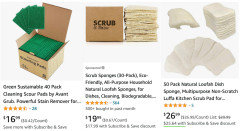
    I do have these green scrubbies cut in half so 80 count is two three years. Purchased 2020 and lasted three years. Ran out of them early last fall. Not missed them but do have them in my 'cart'. Not sure why they are called 'sustainable' being a platic porduct(?). Anywho i've considered compostable lofa.

    We did purchase a box of green scrubbeis 2020 that we just ran out of last early Fall. Cut in half but once ran out not that missed. 20 cents a week and easier cleaned in the dishwasher.

    Loofah would be a better biodegradable option.


  • 2 years ago

    They discovered olive oil in the pyramids in Egypt that wasn't rancid.

  • 2 years ago

    I admit I’ve never oiled my cutting boards. Some are over 30 years old and don’t seem to miss it.

  • 2 years ago
    last modified: 2 years ago

    I think some of the wooden cutting board or chopping block manufactures sell a refined mineral oil.

    The large board I use for pastry and breads gets ”oiled” a bit by the oil in various doughs. I don’t scour these boards and never soak them — just wipe them down with a clean damp cloth and let them dry on end. I store them on end as well. Sometimes I use a kitchen bench scraper to help removed any stubborn dough.

    Those bamboo cutting boards clean up nicely and are light in weight, very portable and widely available.

    While the feel and aesthetics of the white nylon/plastic cutting boards are wanting, they are great for cutting meats, chicken or smelly things because you can scrub them, pour boiling water over them and pop them into a dishwasher. Setting them out in sun and fresh air helps remove oders on plastics.

  • 2 years ago
    last modified: 2 years ago

    And eat the plastic from the cutting board. I just threw all of mine, plastic, in the trash. Read about all the microplastic from bottled water, also.

  • 2 years ago

    Hmm. I’d not thought much about that. Do you really think that the nylon (my boards are the white rubbery a bit nylon) gets chipped off and into the meal? And if any did, wouldn’t it just pass right though?


    I’ve twice read that when commercial bottle water is tested, the ”micro” plastic found in the water appeared to come from the pastic bottle cap (perhaps from the bit of dust after breaking to bottle cap free?)


    I can think of a much more ubiquitous and widely used likely source of plastic.

  • 2 years ago

    Of course tiny bits of plastic make their way into our food and beverages. I feel like there's no escaping it any more.

    And the recent findings were on nanoplastics, thousands of times smaller than micro. Microplastics have been found inside caves - the hypothesis is it got carried in by flood waters. They're already inside us, it's been found.

    And yes, we're surrounded by microplastics - and a lot of comes from textiles - apparel, carpet, home furnishings, etc.

  • 2 years ago
    last modified: 2 years ago

    I'm not sure what wood my chopping board is made out of. What I do know is that it is a single solid block, has been used for at least 35 years and is cleaned by scrubbing with a brush and washing up liquid, rinsing and drying above the boiler. It has never been oiled and it doesn't smell.

  • 2 years ago
    last modified: 2 years ago

    They are small enought to go through the intestional wall into the blood stream and ithen into all our organs. No wonder we have so much cancer and allergic reactions that we never had when I was growing up.

    I never knew anyone allergic to milk, peanuts, fish or anything else in the 50's and 60's. I would much rather use something natural, wood, than something chemical, plastic. We have used wood and stone for all time. Plastics are very new and they are very bad.

  • 2 years ago
    last modified: 2 years ago

    I have read that about microplastics and nanoplastics. I think about it often. I don’t know if that less brittle nylon would find itself into my gut or be as apt to break off (nano-like) and into my food. Maybe. I think that ship has sailed.

    I look around my house and environs and see lots of plastic items — bins, bottles, remotes, phone cases, tools, TV, radio, automobile, boats, gadgets, bandages cooking items and handles, plastic bags and totes; vinyl window pieces, polyurethane on pine floors, pens, clothing, sewing machines, zippers, refrigerators, lamps and switches, gardening implements and tags, packaging…. Plastic and composits are everywhere, even in glues.

    Whenever I see the destruction of a hurricane, earthquake, flooding or tornado, bombings, war, hospital waste, I think about where all that material, especially plastics, end up: oceans, beaches, soil, animals and landfills, wind-blown dust, bodies.

    Anyone have plastic fleece clothing like jackets, shirts, lined trousers, blankets, pillows?


    EDIT I think that ship has sailed.

  • 2 years ago
    last modified: 2 years ago

    Just some musings for the tail end. My father was a woodworker. He made cuttingboards, occasionally. When I was moving off campus hebought me ”roommate proof” maple cutting boards. His version of how to clean was hot water and soap, and a scrubber if needed. Air dry on edge, tilted against the tiles. Food grade mineral oil if it starts to feel dry. To him, fruit oil would be funny, because it would wash right off.

    Do you all know about the rancid salad bowl thing? Like a hundred years or more ago, a widely read national magazine (might be Saturday Evening Post, but I don't remember for sure) did a humor issue or section. One wag authored a piece sure to be sidesplittingly funny to the readers it was so exaggerated. More or less a recipe for salad. At s time when most people made their own food. I think this may also be where the thing about the pepper must be ground fresh at table by the headwaiter. Anyway, he insisted the salad must be served in a wood bowl that mustn't be washed. Ridiculous, right? I'm sure we all know the descendents of those who didn't get the joke, coddling their disgusting, rancid wood bowls.

    While I don't doubt Cindy about the ritually pure, well sealed olive oil frome ancient Egypt being fine, rancidity is from oxidation, usually exposure to air, but exposeure to light (which can happen before you buy it) can also get it going.

    When Father would hear people touting ”sanitary glass cutting board”, he'd turn purple. Even charcuterie knives would be ruined. Then the stone counter people would start offering the sink cut-out ”cutting boards”, he being a builder, so basically a boss of the trades, would lecture them about the errors of their ways and teach them words like ”display” ”presentation” ”coffeemaker stand” and the like.

    As to smells, though I never had the cutting board smell problem, but other wood, and not useful this time of year in the ridiculously snowy North, but right handy where I live: Stick it in the sun. Bleaches your sheets. Bleaches your boards.

  • 2 years ago
    last modified: 2 years ago

    plllog, neat that your father was a woodworker. Will you elaborate on the followingsection of your post?

    Then the stone counter people would start offering the sink cut-out ”cutting boards”, he being a builder, so basically a boss of the trades, would lecture them about the errors of their ways and teach them words like ”display” ”presentation” ”coffeemaker stand” and the like.

    I am tired and my synapses are boggy, but I am trying to understand thw section above.

    BTW, I need new countertop and wonder if I should get butcherblock, corian, granite soapstone, silestone or cob some tiles together. The current material in old, worn, chipped white formica, missing in places. I like wood. I would not likely ”cut” on the wood or set hot things on it.

    Years ago I scooped up a large ~ 60” long piece of butcher block, free from Craigslist, but it is not enough for all the counter, I don’t think. We also got a free section of dark green artificial stone.

    No Money. No skill. I do not have a second home on a lake :-(

    I feel, as I believe sleevendog expressed — no judgement. Do what works for you.

    And I learned from this discussion that I do not have to be concerned with any knives dulling on bamboo cutting boards (thanks dcarch and sleeve).

  • 2 years ago
    last modified: 2 years ago

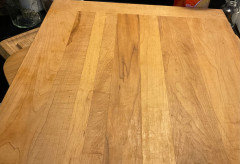
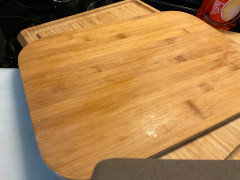
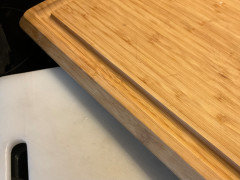
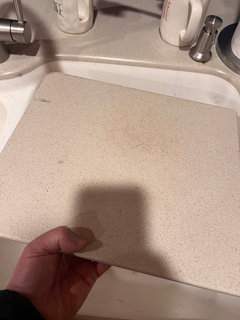
    Looks like someone cut on mine!

    Not me, I didn’t buy it and I’ve never used it, display, cutting, or otherwise. Came with the house. I was half surprised I still have it!


  • 2 years ago

    I'm not sure where you got stuck, but it was in response to the mention of a glass cutting board not used for cutting, above. Hm... Ah. Perhaps the unexpressed sticking point is that glass and stone are not okay for knives, like your bamboo has been confirmed to be? Stone counter people being the ones who fabricate your counters. If none of that is it, please tell me where your're stuck. I’m happy to answer.

    My own wood salad bowl is one he lathe turned. It holds entree salad enough for a couple dozen people, at least. It's awesome.

  • 2 years ago

    Plastic boards are also very hard on knives and because cuts are not self healing as they are on wood, they can be a massive trap for bacteria unless they are constantly sterilised. I’ve never had any problems with cutting meat on wood boards as I gi e my boards a hand wash and scrub in soap and hot water straight after using then stand them up in the dish drainer until dry. Stored on edge.

  • 2 years ago

    I have noticed that most Japanese sushi restaurants and other restaurants use plastic/rubber cutting boards.


    dcarch


  • 2 years ago

    I am confused as well - what are 'sink cut-out ”cutting boards”', and how does ' ”display” ”presentation” ”coffeemaker stand” and the like' relate to them?

    And is that a plastic cutting board, FOAS?

  • 2 years ago

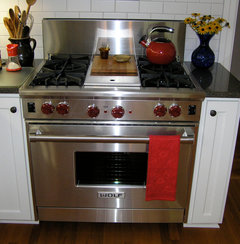
    When they fabricate the counter and cut out a hole for the sink, they make a "cutting" board out of the cut out scrap. That's what I showed. It's the same material as the counter. While it can have various uses, "cutting" should not be one of them.

  • 2 years ago

    Are they those hard plastic or a softer plastic @dcarch7 ?

  • 2 years ago
    last modified: 2 years ago

    Thank-you FOAS! Exactly that! My father was outraged by the knife killers, and was in a position to correct the guys even though he didn't know them.

    Colleen, he would never have called stone a ”board” either, but I doubt he cared if the stone guys did. So he was saying alternative things to call this (what FOAS said) including Display or Presentation tray, stone, board, etc. And a lot of people really do use them under the coffeemaker because they'd rather carry it to the sink for cleaning than scrub hubched under the cabinets or whatever, and it disappears visually because it is the counter. It's a stupid thing, like they’re doing you such a huge favor giving you a ”free board”, which you already own, and ten minutes to clean up the edge.

    BTW, I don't know the facts about plastic, but the textured nylon ones with the NSF mark do seem to self heal to the naked eye. I use one when I want to be able to put it in the dishwasher. But no matter the material, unless you're breaking down a carcass through bone, there's no need to whomp. Cut the speed as you reach the bottom, and you're cutting food, not so much the cutting board.

  • 2 years ago

    Piece of stone could be a pastry board or a cheese board ... not a cutting board. The tempered glass "cutting boards" are great giant trivets; they're also great for staging things like dredged meat, since they can be picked up and carried to the stove and can go in the sink to be washed.


    I like the composite wood fiber cutting boards. I think Epicurean is probably the most wellknown brand for them, but there are plenty of other brands now, too. They're decent for the knives and clean up well. They don't hold much odor either. I did have one that acquired a but of lingering fish smell for a bit when I was making a lot of salmon burgers, but it did wash out. (For my salmon burgers, I pretty much mince a small portion of the salmon into a paste to help hold the burger together, and salmon is pretty oily, so I can't say I was terribly surprised that it was a bit harder to get the scent out.) And now I kind-of want salmon burgers ... might have to go buy some salmon.


    I'll never understand the people who are concerned about whether their cutting board might be marked by their knives. Even after explaining that if the cuttingboard is hard enough to resist marking (such as glass) then it is dulling the knife, I've had people insist that it's not a problem. I'm sure their knives are quite dull with lots of rolled edges but there's no explaining that to them ... they probably don't bother sharpening them either. My knives haven't been sharpened in far too long, but that's just laziness on my part ... I don't want to get out the whetstone and clean up afterwards, LOL.