

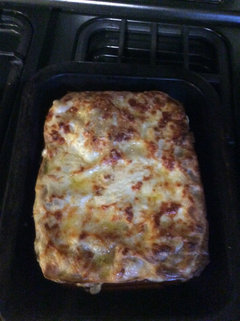
Lasagna with béchamel instead of ricotta
3 years ago
Featured Answer
Sort by:Oldest
Comments (11)
Related Discussions
Can cottage cheese sub for ricotta?
Comments (10)Linda (lyndaluu), thanks for "seconding" Malna's advice. It sounds like the cottage cheese will work and taste OK. LindaC, I'll save that list; it explains why I can handle butter but not the other stuff. Lars, I appreciate your advice. I've read your posts in the past about lactose intolerance, and I think you're right that we can handle some cheeses (especially the hard, aged types) better than milk per se. But, unlike you, I've found that I can't handle cream, either (maybe it's really the milk mixed with the cream, but I don't want to experiment!). It's not a problem at home, of course, but I've sometimes been in great "distress" immediately after a restaurant meal if I wasn't aware of milk in a brown gravy or thought I could disregard the small amount of cream in a sauce or the shredded parmesan topping on a salad. After you suffer the consequences a few times, you learn to be very cautious (I carry Lactaid tablets in my purse). I'm going to try SoyaKaas mozzarella-style substitute in my lasagna. I keep watching for other new products. There are so many lactose-intolerant people, you'd think there would be a huge market for these products, but so far, they mainly sell soy yogurt and lactose-free milk, cottage cheese, american cheese, and ice cream. I'm grateful that I can have grilled cheese and ice cream again, after years of abstaining, but I'd like to see many more types of cheeses and other products. Sue...See MoreLasagna - Can't Get the Cheese Filling Right
Comments (47)Food is so variable that I can't understand absolutes. I think it was on Top Chef recently that they featured the heretic who first did parmesan cheese five ways, incuding frico and foam, and he's now considered a king and his efforts seminal. There are somethings that are innovative and good, but called by ”wrong” names. I remember reading that Wolfgang Puck, when he first got into the frozen foods biz, ran afoul of government regulations which defined pizza as having tomato sauce. IIRC, they compromised for that particular pizza by adding sliced tomato, but eventually decided that Michelin star chefs should define their food, not regulators, so they rewrote the definition. or something like that. I think the controversy also helped by publicising that pizzas might not have tomatoes, thereby changing public expectations. The Italian woman who taught us lasagna also taught us the ragout. There's a very basic recipe with canned tomatoes (fresh can be used—they just cost more and take a lot more work— and dried herbs that is the framework. The unwritten part is dependent on season and what you can afford, plus cleaning the fridge. Maybe not peas (shudder), but pretty much any alium, brassica or umbellifer could find it's way in, as well as nightshades and squash. Sausage for the flavor, or other meat and more seasonings/herbs/spices etc., to make up for it. Over time I've learned that a green bell pepper is necessary for it to taste "right" (and oregano, of course), and that marjoram makes things taste like pizza. Otherwise, pretty mich anything goes and it ends up pretty much the same as a whole. And using the framework of what we call lasagna, the dish, I also make lasagne, the pasta, with a barbecue chicken profile, and a pumpkin one. Definitely American. Really good....See MoreUsing lasagna noodles in things other than lasagna?
Comments (12)the infamous butternut squash lasagne... Not really "different" but still, different... Butternut Squash Lasagna From epicurious.com For squash filling 1 large onion, chopped 3 tablespoons unsalted butter 3 lb butternut squash, peeled, seeded, and cut into 1/2-inch pieces 1 teaspoon minced garlic 1 teaspoon salt 1/4 teaspoon white pepper 2 tablespoons chopped fresh flat-leaf parsley 4 teaspoons chopped fresh sage 1 cup hazelnuts (4 oz), toasted, loose skins rubbed off with a kitchen towel, and coarsely chopped For sauce 1 teaspoon minced garlic 3 tablespoons unsalted butter 5 tablespoons all-purpose flour 5 cups milk 1 bay leaf (not California) 1 teaspoon salt 1/8 teaspoon white pepper For assembling lasagne 1/2 lb fresh mozzarella, coarsely grated (2 cups) 1 cup finely grated Parmigiano-Reggiano (3 oz) 12 (7- by 3 1/2-inch) sheets no-boil lasagne (1/2 lb) preparation Make filling: Cook onion in butter in a deep 12-inch heavy skillet over moderate heat, stirring occasionally, until golden, about 10 minutes. Add squash, garlic, salt, and white pepper and cook, stirring occasionally, until squash is just tender, about 15 minutes. Remove from heat and stir in parsley, sage, and nuts. Cool filling. Make sauce while squash cooks: Cook garlic in butter in a 3-quart heavy saucepan over moderately low heat, stirring, 1 minute. Whisk in flour and cook roux, whisking, 3 minutes. Add milk in a stream, whisking. Add bay leaf and bring to a boil, whisking constantly, then reduce heat and simmer, whisking occasionally, 10 minutes. Whisk in salt and white pepper and remove from heat. Discard bay leaf. (Cover surface of sauce with wax paper if not using immediately.) Assemble lasagne: Preheat oven to 425°F. Toss cheeses together. Spread 1/2 cup sauce in a buttered 13- by 9- by 2-inch glass baking dish (or other shallow 3-quart baking dish) and cover with 3 pasta sheets, leaving spaces between sheets. Spread with 2/3 cup sauce and one third of filling, then sprinkle with a heaping 1/2 cup cheese. Repeat layering 2 more times, beginning with pasta sheets and ending with cheese. Top with remaining 3 pasta sheets, remaining sauce, and remaining cheese. Tightly cover baking dish with buttered foil and bake lasagne in middle of oven 30 minutes. Remove foil and bake until golden and bubbling, 10 to 15 minutes more. Let lasagne stand 15 to 20 minutes before serving. Cooks' note (not Bizzo's)  Filling and sauce can be made 1 day ahead and kept separately, covered and chilled. Bring to room temperature before assembling. Makes 6 servings...See MoreTried and true lasagna recipe???
Comments (32)My favorite is the one on the Prince Lasagna box. 16 oz Prince® Lasagna 3 each bulk Italian sausage 1/2 lb lean ground beef 1 each garlic clove, chopped 1 Tbsp dried oregano leaves 1/2 tsp salt 1/2 cup dry red wine 24 oz pasta sauce 2 cups ricotta cheese 1 cup grated Parmesan cheese 2 each eggs 2 Tbsps parsley sprigs, finely chopped 1/4 tsp ground black pepper 16 oz mozzarella cheese, shredded 1. Cook pasta according to package directions; drain. 2. Preheat oven to 350°F. 3. In large skillet, over medium heat, brown sausage and beef; pour off fat. 4. Add garlic, oregano, salt and wine; cook and stir 5 minutes. 5. Stir in pasta sauce; simmer 15 minutes, stirring occasionally. 6. In a medium bowl combine ricotta cheese, Parmesan cheese, eggs, parsley and pepper; mix well. 7. On bottom of greased 13 x 9-inch baking dish, spread 3/4 cup meat sauce. 8. Top with half each the pasta strips, ricotta cheese mixture, meat sauce and mozzarella. 9. Repeat layering. 10. Bake uncovered 30 minutes or until bubbly. 11. Let stand 10 minutes....See More 3 years ago
 3 years ago
 3 years ago




Related Stories
HOLIDAYSFeast Your Eyes on Holiday Dishes Around the World
See traditional Christmas and New Year’s favorites from different countries, along with festive holiday table decor
Full StorySponsored

Columbus Design-Build, Kitchen & Bath Remodeling, Historic Renovations
gardengal48 (PNW Z8/9)