

Green beans vs. string beans?
6 years ago
Featured Answer
Sort by:Oldest
Comments (13)
Related Discussions
Yesterday's Harvest--String beans & Sweet Potatoes
Comments (7)Hi Christine I forgot to post the recipe for the sweet potato and potato salad that I made the other day. Remember? Two potato salad For the potatoes and dressing 2 Large potatoes (each 10 ounces) 2 large sweet potatoes (each 10 ounces) salt to taste 1/3 cup mayonnaise 2 tablespoons Dijon mustard 2 tablespoons extra virgin olive oil 2 tablespoons red wine vinegar, or more to taste 2 tablespoons chopped pitted green olives (with or without pimientos) freshly ground black pepper to taste For the salad 2 medium ribs of celery (with leaves, if possible) finely chopped 2 hard cooked eggs, coarsely chopped (optional) 3 scallions, both white and green parts, trimmed and finely chopped 1/2 cup finely chopped red onion 1/4 cup chopped fresh italian parsley (flat-leaf) parsley, plus a few sprigs for garnishing 8 pitted black olives for garnishing (optional) 1. Peel all the potatoes and cut into 3/4-inch cubes. Cook separate till barely tender with enough salted water to cover. 2. Prepare the dressing. Combine the mayonnaise and mustard in a large serving bowl and whisk until blended and smooth. Whisk in the oil, 2 tablespoons of vinegar, green olives and pepper. 3. Drain the potatoes, then stir into the dressing while still hot. Set aside to cool and absorb the dressing. 4. Prepare the salad. Stir the celery, eggs (if using), scallions, red onion, and chopped parsley gently but thoroughly into the cooled potato mixture. Correct the seasoning, adding salt or vinegar; the salad should be highly seasoned. Garnish the salad with parsley sprigs and black olives (if used). Silvia...See MoreBush Beans vs's Pole Beans
Comments (9)My own preferences are much the same as Hemnancy's; I prefer pole beans for their size, flavor, and yield... and for the enormous variation available in heirloom varieties. They require more space, but that is not an issue for me. Bush beans, however, have their advantages too... so sometimes (preferences aside) it's a question of which type is most suitable for the location & the intended purpose. It's also worth noting that beans should be considered for more than just snaps. Bush beans Advantages: - Easy to plant, require no support. - They mature more quickly. This makes them better suited for short-season areas, for late planting, and when they will be grown early or late as part of a succession planting. - Generally bear all-at-once, so good if grown for canning in large batches, especially with limited space. - Low profile, so better suited for high-wind areas. - Most popular dry beans are bush varieties. - More wax bean varieties available commercially as bush than as pole. Disadvantages: - Less suitable for kitchen gardens, where a prolonged harvest is preferable. Succession planting every few weeks can overcome this, if space is available to do so. - More vulnerable to damage by slugs and rodents. - Lower yield.* - Generally smaller pod size. - Fewer cultivars available for use as shellies. - Harvest can be uncomfortable, due to constant bending. Pole beans Advantages: - Higher yield*, sometimes enormous. - Generally larger pods as snaps, so less cutting involved for canning. - More varieties available for shellies, including most of the larger-seeded. - Prolonged harvest, good for fresh eating over a long period. Some varieties, though, will have large flushes in a relatively short period of time. - Pods are higher, making them easy to see & pick, with minimal bending. - Less damage from rodents, snails, & crawling insects. Disadvantages: - Require erecting a pole/trellis. Not too tough for a 20-foot row, but 500 feet of trellis can be a chore. - Take longer to bear, making them less suitable for short season areas. (There are, however, fast-maturing varieties like "Goldmarie" and "Early Riser"). - Except for very long-season areas, they occupy the ground for the entire season, so not suitable for succession planting. - Not good for high-wind areas, where poles & vines may be snapped. - While the over-all yield is very high, the yield-per-plant for a given period may be relatively low, so smaller daily pickings. This is only an issue where space is limited. - Few varieties commercially available for dry beans (but many heirlooms). I have also observed that many bean diseases are either caused or aggravated by soil being splashed on the leaves; bush beans seem to be more vulnerable to this. I used the (*) for yield, because with different planting strategies, either bush or pole can be high-yielding: - Pole varieties have a higher yield per plant, and often the highest yield per row foot... but much of this advantage is lost with multiple rows, because of the greater row spacing required due to shading. They are at their best if planted in a single row, at the North side of the garden. My largest yield per row by far was from a row of "Pole 191" snap beans. - Bush varieties, while yielding less per plant, can be spaced more closely... and since shade is not an issue, the rows can be closer together as well. Succession planting can also help overcome the yield gap, since it allows bush beans to time-share a given space with another crop. I think that the best bean strategy is a single row of pole beans on the North side - with a row or two of bush beans directly adjacent on the South side - so as to form one wide row. This gives the best of both worlds, in a relatively small space. Those pole beans, by the way, can include limas or yardlong beans. As for strings, I think there is little difference; there are both pole beans & bush beans, with- and without strings. However, since most breeding going on now is for bush beans, there will eventually be more stringless varieties available as bush. I don't necessarily see "stringlessness" as an advantage, since many varieties that develop strings are stringless when picked young, and have outstanding flavor. "Kentucky Wonder" is a great example of this. Most of the new bush varieties, while stringless, are of the petite style now popular in Europe... takes a lot of picking to get a basket full. No thank you. Give me the 11" pods of "Fortex", or the long pods of "Goldmarie" or "Garafal Oro", any day....See MoreGreat northern bean aka Green beans?
Comments (2)Some people call "snap beans" by an older name - "string beans". This is because at one time, most green beans had to have the strings removed before cooking. This is still the case with many varieties, including some favorites for flavor as green beans. Some varieties of common beans also develop fibrous pods when quite young. On the other hand, some beans which are great as green beans are less tasty than other varieties when used as "shelly" or dry beans. I don't know how Great Northern rates for quality as a green bean, but it is renowned as a dry bean and is probably also good as a shelly. If you're new to growing beans, it's best to try a variety noted for quality in the stage you want to eat it. Or grow one which is noted for quality at all stages. "Black Valentine" is one of these. Some people love Pinto beans as green beans even though the string must be removed. They are also good as shellies or dry beans. You can also choose whether you want to grow "common beans" as pole or bush beans and choose varieties which do well in your climate. For example, "Contender" bush bean does well in the South in spring, but develops fibrous pods if grown in cool fall weather (though still valuable as a shelly or dried bean). "Provider" and "Bountiful" do not do well in dry, hot weather, but are old favorites in New England for snap beans. Lima beans are a different species and are used only as shellies or as dried beans - the pods are not eaten. Many cowpeas (still another species) can be used as snaps, shellies or dried. But usually, "snap beans" refers to common beans....See MoreDo beans such as navy beans or kidney beans have to be staked?
Comments (7)For a reference on beans, here are a few things to think about. String Bean - old definition was any bean that had to have the strings removed as part of their preparation. String Bean - new definition is any bean that is consumed in the shuck usually by snapping them into lengths of about an inch. Pole Bean - Any bean that requires a support to grow on. You could grow a pole bean for snapping or a pole bean for green shellies or a pole bean for dried beans. Bush bean - any bean that does not require support to grow on. Bunch Bean - usually refers to a bush bean, but sometimes refers to a named variety such as Striped Bunch which is a pole bean. Runner Bean - sometimes refers to a pole bean meaning it has to have support, but also refers to the species known as runner beans. Generally speaking, true runner beans do not grow well in the deep south. Half Runner - usually refers to a bean that produces short runners up 4 feet long. The most famous of the type is the White Half Runner which has been pretty much ruined genetically by efforts to breed in disease resistance. These beans benefit from a support such as a piece of hog wire that the short runners can climb on. Interestingly, the half runner phenotype can be dated back to the days of the indians when it was one of the primary bean types grown. Cornfield Beans - refers to a bean that can be grown on corn stalks for support. These beans are usually very vigorous and tolerant of shade. There are numerous distinct varieties that are referred to as 'Cornfield Beans' to the extent that people argue over which one is the true Cornfield Bean. Butterbeans - depends on the part of the country you are in to define them, in the southeast, a butterbean is a sieva type lima. In other parts of the world, any lima bean is a butterbean. Some bush lima beans are known as butterbeans and others are called butterpeas. Are you confused yet? I grow some really old varieties of bean for pleasure and to produce seed. One of my greatest pleasures is to find a really old bean that still has ripcord strings. These beans tend to have exceptionally good flavor because they were selected to produce a bean instead of a green shuck. DarJones...See More- 6 years ago
 6 years agolast modified: 6 years ago


Related Stories
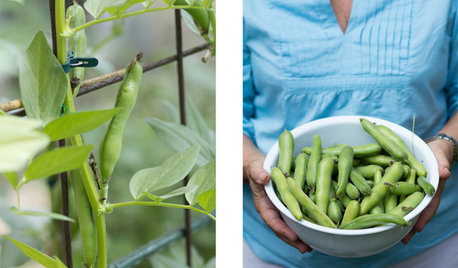
SUMMER FRUITS AND VEGETABLESSummer Crops: How to Grow Beans
Grow your own beans for amazing variety and healthy, convenient produce all summer
Full Story
DECORATING GUIDESBean There, Done That: Coffee Table Alternatives
Get creative with these ideas for salvaged and DIY pieces that will get people talking
Full Story
GARDENING GUIDESThe Art of Green Mulch
You can design a natural garden that doesn’t rely on covering your soil with wood and bark mulch
Full Story
COOL-SEASON CROPSCool-Season Vegetables: How to Grow Salad Greens
From arugula to radicchio, greens have taken a top spot on the table and in fall and winter gardens. See how to start growing them now
Full Story
KITCHEN DESIGNEasy Green: 10 Small Kitchen Changes to Make Today
Taking small steps in going green can lead to big results over time, and starting in the kitchen is a smart choice
Full Story
PLANTING IDEASPlant Your Hardscape for Unexpected Green
Nestle greenery among pavers, steps and more for a yard brimming with life and creativity
Full Story
EDIBLE GARDENS10 Edible Greens to Plant Now
Get your cool-season garden started and look forward to harvesting lettuces, kale, arugula, chard and more
Full Story
MOST POPULAREasy Green: 23 Ways to Reduce Waste at Home
Pick from this plethora of earth-friendly ideas to send less to the landfill and keep more money in your pocket
Full Story
ACCESSORIESEasy Green: Cut Electricity Use With 15 Unplugged Home Devices
Crank up the energy savings, courtesy of household items that come into power the old-fashioned way: manually
Full Story
LIFEEasy Green: Country vs. City for Ecofriendly Lifestyles
Urbanites, take heart: You've got some green advantages over your country cousins
Full Story
seagrass_gw Cape Cod