

Sous Vide Time and Temp Conundrum
6 years ago
Featured Answer
Sort by:Oldest
Comments (16)
Related Discussions
Sous Vide rocks! Thanks dcarch & FOAS
Comments (15)You can also get an egg chart (see link) to have eggs cooked exactly the same way every time to specification, it does not matter how cold/hot/big/small the eggs are. The sous vide system can be set up to do anything which will require exact temperature control, such as making yogart, hatching eggs, pasteurize eggs (for ice cream raw eggs), pasteurize milk, proofing bread, starting seeds, ---------. The steak took me about 8 hours. I like to serve steaks as hot as possible without overcooking. The sous vide method does not require resting. This is how it works: Since you cannot overcook the meat, you can take the time to prepare every other sides, then when it's time to eat, you tell everyone to sit down and fire up the cast iron skillet. I normally get the skillet to about 520F with an IR thermometer. Sear the steak about one or two minutes each side, get the house to smell real good. Perfect timing. Served hot !!! dcarch Here is a link that might be useful:...See MoreQuestions on pasteurizing eggs in a sous vide device
Comments (4)While I have yet to set up a sous vide apparatus, it is on my to do list, specifically so that I can pasteurize eggs for a couple of applications. We raise chickens and they are pampered and healthy. Still, I think pasteurization is a good idea for Caesar salad, mayonnaise, etc. I have this book, recommended by a GWer, but here is an online link (I hope). Perhaps this is your book? Too bad this link doesn't show how the 75 minute at 135 looks. Some photos here. Also, wouldn't the type and size of the egg matter? Here is a link that might be useful: Baldwin on sous vide This post was edited by kitchendetective on Fri, Apr 4, 14 at 17:42...See MoreSous Vide, take 2, 3, 4...
Comments (6)Very interesting post, FOAS. Thank you for taking the time to do the experimentations/investigations. Your efforts definitely will further everyone's knowledge in this Forum. Ultimately that is a very important part for the participation here. It is interesting that you have had mixed results. Let's look at it this way; at least it was not a total lost for you. Obviously your experience is not the same as mine. That is not to say that you have done anything wrong or you don't have good taste. Eating experience is very subjective and details for preparation can be unpredictable. I have been luckier. I have sous vided many kinds of foods. As I can remember, the biggest failure I had was with squid. My timing was wrong and the squid turned into mush. Otherwise all meats, all seafood; lobsters, clams, fish, scallops --- all were from good to fantastic. Unlike you, I had great results with shrimps, but I did my shrimps at 138 F for 25 minutes, and I was able to get very fresh shrimps, not the chemically treated ones you now find in stores. I can only suggest to you, given that fact that if you search the WEB you will realize the practice of sous vide cooking is more than just a fashion trend, that you may want to play with it a few time times before giving up. I am not going to discredit Jonathan Gold's opinion about sous vide, after all he is a Pulitzer-price winning writer. However, I do humbly disagree that a perfectly cooked piece of meat is by definition boring. No one eats a steak directly as it comes out from the cooker, there are other preparation steps before the steak is to be served. Off-topic, I noticed that Costco is now selling sous vide cookers. I must point out again that sous vide only guarantees that you will not overcook or undercook your food, but it cannot guarantee that your food will taste good. It is like having a fancy grill will not automatically give you great BBQ. I might also add that sous vide cooking for chefs is not necessarily easier than regular cooking, but that's another topic all together. dcarch...See Morehot air sous vide revisited
Comments (4)Hi Islay, fwiw the first attempts at low temp were done w/hot air. I will take a stab at enumerating the pros/cons from my limited experiments. Air pros: 1. don't need to fill with water (more of a problem with a cooler than a pot) and shlep. Also better for water conservation if you are into that, or for making your operation more portable. 2. in water the bag is there to prevent exposure to water, as it will dilute the flavors. In air you are trying to retain moisture, so you can use saran wrap, oiled parchment, probably foil, etc. Air is more flexible there. You still want it to catch the juices though, so don't put the seams on the bottom. 3. preheat is nearly instantaneous since air is low mass, I don't even bother pre-heating, just drop the food in and plug it in, though heater power is a factor in pre-heat time. Less energy spent on the heat transfer medium only to pour it down the drain. 4. doubles as a precision dehydrator. Air cons: 1. The specific heat of air is much less than water. For a given set temperature it takes longer for the heat to be absorbed by the food to attain that temperature. 2. needs more complicated control scheme as temperature can change quickly, though this is a solved (affordably) problem. 3. very few people experimenting with it, and almost every recipe is geared towards a water bath these days, so while the temperature recommendation holds, the timings are way off. 4. Longer cook times will mean more energy spent on heating the food product (lots of variables). It is an interesting experiment in thermodynamics in any event. That is probably my main motivator :) edit: this site describes the heating difference pretty well https://amazingribs.com/more-technique-and-science/grill-and-smoker-setup-and-firing/thermodynamics-cooking-and-how After all your hand is made out of meat. "Put an empty frying pan and pot of water in a 200°F oven for an hour. Open the door and stick your hand in the warm air of the oven and count how long you can hold your hand in there. Perhaps a minute? Then plunge one hand in the 200°F water and place the other hand on the frying pan. After you get back from the hospital, ponder the fact that not everything that is 200°F transfers energy at the same rate."...See More- 6 years ago
 6 years ago
- 6 years ago


Related Stories
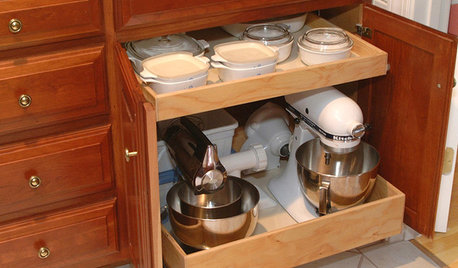
KITCHEN APPLIANCESConsidering a New Kitchen Gadget? Read This First
Save money, time and space by learning to separate the helpers from the hassles
Full Story
KITCHEN DESIGN11 Must-Haves in a Designer’s Dream Kitchen
Custom cabinets, a slab backsplash, drawer dishwashers — what’s on your wish list?
Full Story
HOME TECH4 Trends in Smart Appliances and Features at CES 2021
The Consumer Electronics Show revealed a push toward customization, integration, relaxation and cleanliness at home
Full Story

foodonastump