

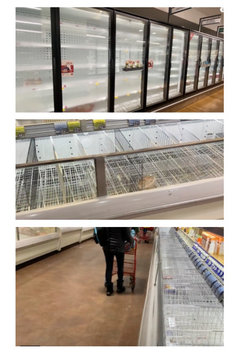
What's your take on the flour shortage?
6 years ago
Featured Answer
Sort by:Oldest
Comments (52)
 6 years ago
 6 years ago
Related Discussions
Flour is No-No What for Mustard Pickles?
Comments (23)kayskats - Yes, the "police" do show up at farmer's markets and farm stands, the state Dept of Ag can show up anytime (and have for several other vendors) to do a "surprise" inspection at your home kitchen, and yes, I do have to show my certification before I can sell at my quite small market (less than 30 vendors on any Saturday). The state also shows up to ensure that weighing scales have been calibrated within the last year, but that is another story. If you are caught selling BWB canned acidified foods when you do not have the cert. or are selling other stuff you shouldn't be (low acid, pressure canned, refrigerated, etc.), the Dept of Ag and the FDA could inflict very severe penalties on you and your market. We homegrown sellers have to follow pretty much what the rules are for commercial operations. One size fits all, US wide, but some states have lesser rules for farm stands and farmer's markets than my state does. Best to check with your Cooperative Extension office in your county and if they don't know, go on to your State Dept. of Ag. One comment one of my co-student's made was that if he didn't know what the rules were he would be safe from penalties. I don't think I'd buy anything from him, would you? Yes, please ask the sellers HOW their stuff was processed and if their kitchen was inspected, etc. We are consumers and should protect ourselves from bad stuff we might ingest. I even walk out of restaurants with a food grade less than "A". ksrogers - I think dry cured meats are regulated by another mega agency, the USDA. One of the vendors at my market raises cattle and hogs for cuts of meat he sells. He threw up his hands at the regs for slaughtering, curing, and/or freezing and now has a co-packer do it for him and THEY have to handle the USDA inspections and process filings which are really intense. >>I wouldn't go so far as to say that cured meat has no safety issues, because they do!Yes, I know, I make regular strawberry jam that is heated, but sadly it is not nearly as tasty as freezer jam. Horseradish, a low acid food, is not exactly stable and the pH acidification cannot be measured outside a food science lab according to my instructor, and that is why I can't sell it. It is not heated or pasteurized to eliminate bacterias, molds, and toxins, and "sealing" only means screwing on the cap. Refrigeration and acidification keep it stable and unable to grow the bad stuff because of refrigeration. That is also why it is sold refrigerated and you are admonished on the label to keep it refrigerated after opening. Commercial processors ship in refrigerated trucks from refrigerated manufacturing and storage facilities, and they go directly to the refrigerated section of the grocery store. That is something that can't be duplicated in a home processing environment or at an open-air market. Also, adding more vinegar doesn't necessarily make it safer because we can't measure the pH of the horseradish's vegetable interior at home, and with pH meters and test strips all we are doing is measuring the vinegar's pH. BTW - shelf stable jams and jellies are exempt from these regs because they have low water activity and a low pH. Since they are also packed at high temperatures, they are not likely to harbor harmful food borne illness organisms. Molds are the most likely bad thing to form but that is usually from not having sterilized the jars or not heating the lids enough (or, dirty hands packing them, airborne dust in a room with a fan, using overly ripe or moldy fruit, etc. etc.). I can sell as many variations of jelly and jam as I want at market. Without a cert. but with a kitchen inspection. Nancy...See MoreCorn Flour vs Brown Rice Flour
Comments (14)Oh, no! Bad sentence on my part. Southern California. We had a wonderful Syrian bakery that made brilliant pita. I still miss them. My heart breaks for what has happened there, but I've never been to Syria. You haven't said why you're eschewing "enriched flour" and don't need to, but white flour products are required by law to use vitamin enriched flour, and even most home baking white flour (bleached or unbleached) is enriched and has a little malted barley flour in it as well, which has a lot of an enzyme that's needed for rising. Unless you have a specific problem with one or more of the vitamins or the barley, the enrichment shouldn't be a problem. Maybe you're just concerned that there's white flour in there. White flour is often added to whole wheat flour to make the rise spongier. Sometimes vital wheat gluten is added to strengthen the gluten (the bran in the whole wheat can weaken or cut it). Wheat gluten can be isolated by hand by washing the wheat and kneading out the starch, and has been done for centuries, so it's not a weird industrial product. Anything that's made with white flour in the U.S. uses enriched flour. There may be some places that mill and sift their own flours that do not, but that's an extremely rare exception. Therefore, I would guarantee that the Lebanese pita are made with enriched flour. The thinner thing is probably a lack of leavening. Even in the Middle East, nowadays, the pita have leavening and are a bit spongy. That's not traditional. :) I haven't seen Kontos, and I'd guess it's an East Coast brand. I don't doubt that it's good! Whole Foods might be a better place to get 100% whole wheat, however, unless you can find a Middle Eastern or halal store where people are into the "new" kind of dietary laws (no white flour, pasture raise livestock, etc.). Maybe try stores near the colleges? College kids tend to be into better eating. Turlock is from California. I know they freeze to ship it to avoid preservatives, so you might find it there, but more likely the Whole Foods have something local. Good luck on your quest....See MoreFree bleached all purpose flour, should I take it?
Comments (16)LOL, CLBlakey, me too, because I'd give it to the local food pantry! L, I think if you are using it with whole wheat you won't notice the difference as much. I also prefer the unbleached but has used the bleached on occasion when that's what I buy by mistake or Elery picks it up, etc. As has been mentioned, a single bag will not bankrupt you nutritionally and if mixed with other items you probably won't notice that much difference. If you really think you won't use it there's always the food bank who would be glad to accept it. I'd eat the peanut butter but not a snowball's chance in ....well...you know, that I'd eat Velveeta Shells and Cheese. I'd give that to Ashley, she loves the stuff! Annie...See MoreWhite Lily Flour Self Rising Flour Biscuits
Comments (28)If you can get King Arthur flour, that works better than anything else. Buttermilk Biscuits 2 1/2 cups self rising flour (I use King Arthur) 1 teaspoon sugar 1/2 cup PLAIN Crisco (not butter) 1 cup whole milk buttermilk Preheat oven to 425*. Cut Crisco into flour with a pastry cutter or fork until well mixed. Add buttermilk and stir. Turn out onto floured surface and pat out, turn in half, flip, pat out, and turn bottom half over. Pat out and cut with biscuit cutter. Place in pan sprayed with Pam. Reform leftover dough and cut rest of biscuits. I form the last biscuit by hand. You can do them all by hand if no cutter. Bake about 10 to 15 minutes. 1. You can cut recipe in half. You can also take out of oven after they are just done, but not brown, and freeze after they are cool. 2. To use regular flour, 2 1/2 cup plain flour, 2 tablespoons baking powder, 1 teaspoon salt. 3. We like to butter our biscuits after they are cooked and do not like butter in the dough. If you want butter in the dough, use 1/2 cup unsalted butter, omit Crisco. 4. The lard you get in the grocery stores now is not the same as old fashioned lard. If you have a source for real fresh lard, you can use 1/2 cup lard instead of Crisco or butter. 5. Keep your hands well floured and also dust a small amount on top of dough and under dough as you turn. Keep a light hand, you are not kneading yeast dough. Dust the cutter with flour, also. The first biscuits after I got married in 1970, you could of used for hockey pucks, lol. He ate them anyway!...See More- 6 years ago
- 6 years ago
 6 years ago
 6 years ago
- 6 years ago
- 6 years ago
 6 years ago
 6 years ago
 6 years ago
- 6 years ago
- 6 years ago
- 6 years ago
 6 years ago
- 6 years ago
- 6 years ago
- 6 years ago
- 6 years ago
- 6 years ago
- 6 years ago
 6 years agolast modified: 6 years ago
- 6 years ago
- 6 years ago
 6 years agolast modified: 6 years ago
- 6 years ago
 6 years ago
 6 years ago
 6 years agolast modified: 6 years ago
- 6 years ago
- 6 years ago
 6 years ago
- 6 years agolast modified: 6 years ago
 6 years agolast modified: 6 years ago
- 6 years ago
- 6 years ago
- 6 years ago
- 6 years ago
- 6 years ago
- 6 years ago
 6 years ago
- 6 years ago
- 6 years ago
- 6 years agolast modified: 6 years ago
- 6 years ago
- 6 years ago
- 6 years ago
 6 years agolast modified: 6 years ago
- 6 years ago
- 6 years ago



Related Stories
INDUSTRY RESEARCHData Watch: As Labor Shortages Grow, So Do Project Wait Times
Houzz research finds average project wait times ranging from 3.5 weeks in St. Louis to 13.2 weeks in Boston
Full Story
HOUZZ CALLHouzz Call: How Are Shortages Affecting Your Home Project?
Have you noticed higher material and product prices? Experienced project delays? We want to hear about it
Full Story
LATEST NEWS FOR PROFESSIONALSHow Pros Are Handling a Shortage of Subcontractors
Pros share tips for finding quality subs and building relationships with them
Full Story
KITCHEN DESIGNKitchen of the Week: A Sophisticated Take on 1920s Cottage Style
An Illinois designer embraces her 100-year-old home’s vintage look while incorporating modern features and finishes
Full Story
INSIDE HOUZZData Watch: Confidence Rising, but Labor Shortages Worry Many Pros
The latest Houzz Renovation Barometer report shows industry pros are rosy about the market while still struggling to find skilled workers
Full Story
MATERIALSHow Lumber Shortages Are Affecting Home Builds Globally
Houzz editors around the world report on how countries are adapting to an unprecedented shortage of construction wood
Full Story
DIY PROJECTSStorage Shortage? Make an Industrial-Style Shelving Unit
Outfit your kitchen, basement or garage with handy new shelves to help keep your stuff neat and within reach
Full Story
INSIDE HOUZZData Watch: Labor Shortages Drive Up Project Costs, Slow Down Timelines
The Q3 2016 Houzz Renovation Barometer shows building professionals are feeling good about the industry, despite ongoing hiring challenges
Full Story
DOWNSIZINGSimplifying: What Items in Your Kitchen Are Just Taking Up Space?
Here are some of the cooking tools, small appliances and dishware you may not need
Full Story
MOST POPULARGet Organized: Take a 10-Day Simplification Challenge
Organizational expert Emily Ley helps us get a jump-start on our New Year’s clear-outs
Full Story
plllog