

Getting new gas range this week for CC house
6 years ago
Featured Answer
Sort by:Oldest
Comments (32)
 6 years agoLars thanked dcarch7 d c f l a s h 7 @ y a h o o . c o m
Related Discussions
Is my new gas range oven vent really supposed to heat my home?!
Comments (19)Ranges, and especially wall ovens, nowadays with electronic controls typically have a cooling fan for the control panel that exhausts a larger immediate volume of heat into the room. In any case, all the heat generated inside the oven cavity during cooking must eventually dissipate into the room, short of having a closed-circuit outdoor exhaust integral to the appliance. Gas ovens need a bit more airflow through the appliance for O2 to burn the gas compared to electric ovens....See MoreHelp with New Range-Brand, Gas or Smooth top
Comments (5)When my wife and I started looking for a replacement for our 28 year old electric coil piece of manure that was in the house when we bought it many years ago, we originally started looking in that exact price range, 800-1300. We were also (at the time) looking for resale value as we "were" planning on selling our house so we wanted the best bang for the buck and kitchens are by far the best bang for your dollar as far as resale. So we looked and looked, the best resale wise was obviously either Induction or Gas. Induction was ridiculously expensive so we dropped that from the lineup almost immediately. So a gas stove that was decent about the best we could find were the Kenmores, which BTW are made by various different manufacturers from Whirlpool, Electrolux, GE etc. depends on what model and you can figure out who made it by the first 3 numbers in the model number and compare it to a chart. We looked at all the various Kenmore models and were about to buy one that was $1300 but I looked on Garden Web and saw several people talking about a NXR range. Basically a pro style gas range for about $500 more than we were going to spend on frankly a rather cheaply made, lite duty, lite little grates, only one burner putting out decent BTUs and had a electric panel of which if it goes out the whole stove is worthless and cost several hundred to replace. So we sprung for the NXR and did so largely because we wanted our kitchen remodel to really sell the house and the NXR looks fantastic, hell of a lot better than any of the standard sub $2000 ranges. So glad that we did, now we are staying for probably at least another 5-6+ years and I am really enjoying cooking on this range, so much better than ANY of the Kenmores. My wifes best friend bought a Kenmore Elite for over $1900 and it is no where close to as nice as our NXR that we got for $1799.00 delivered to the door. It weighs in around 350# on the shipping crate which is at least 100# more than her Kenmore Elite. It is a very solid stove with heavy grates, heavy racks in the oven, excellent very nice solid brass double stack burners same ones that come on Wolf stoves and all 4 put out 15,000BTU and also go down to a very low simmer, very solid well insulated door and 100% 304 stainless on all four sides and the top. All in all well worth the extra few hundred that we were about to spend on a stove that was no where even close to as nice. It was a major stretch for us to spring for $1800 for the stove alone, but the NXR was soooooo much better and all the other pro style ranges you can pretty much add another $1000+ so those were not even an option for us. If you can't do the $1800-$2000 then probably stick with the kenmore. Here is a link that might be useful: Who makes Kenmore?...See MoreDo you own a brand new 2013 48" All Gas Wolf Range?
Comments (11)Eliza6eth, I would do as Winnetka suggests ... wait to see if you can locate a floor model of the older style AG. One poster on GW found one recently, so there may still be some out there. I would also make some calls on my own to other stores rather than relying on one dealer to find one for me. The older style Wolf AG still has the black shiny top that you aren't fond of. However, I've found that it is a snap to clean, and a final wipe with a microfiber towel gets rid of any smudges and fingerprints. The entire top comes off if you needed to soak it in the sink, but I haven't made any messes that required more than a soapy sponge to the surface. In response to your 2nd question ... is Wolf's new design a mistake for them? I tend think so, because a lot of people who would have been attracted to their old-style range are not going to appreciate the new, sealed burner model and are going to look elsewhere. Because they no longer offer that option, Wolf is going to lose out on that entire demographic that does not want sealed burners. Personally, I wouldn't want one of the newer Wolf AG ranges ... the top no longer comes apart and there are too many cracks and crevices on the cooking surface for food and liquids to fall into. The grates are gigantic! I prefer the single grates on the older version because they are easier to lift off, clean, etc. and I really like the beefy look and feel of them as opposed to the newer grates. The new style AG oven has a spark ignitor which "click, click, clicks" each time it relights, whereas the old style has the glowbar style that doesn't make any noise at all. I looked at every little thing on both the old-style and new-style Wolf's when I was shopping for a range, and IMHO, the old-style is far superior in build quality and design. I don't know if performance has been sacrificed, because I haven't cooked on the new version....See MoreHelp me choose new range - gas vs induction
Comments (26)The comments about ten-power settings got me musing on the subject and about Amy's initial question about logarithmic power controls. Here's where that lead me. Nobody really has logarithmic power controls, but there can be power settings spaced to sort of approximate a logarithmic curve -- a number of settings at the low end with only a couple of additional points needed to define the steep side of the curve for really high heat. In theory, that can be done with a ten-step power curve and some folks do find 10 power settings fine for what and how they cook. Others do not. Is anybody else here old enough to remember the GE stoves and cooktops from 50's and 60's with ten mechanical pushbuttons for heat settings? Those pushbuttons were literally "digital" controls, meaning that you punched them with one of your digits. GE sold a lot of them for a couple of decades, so some people found them adequate. Some did not. For the current digital electronic ten-step controls, others here besides loonlakecamp have reported satisfaction with a ten step set-up. Others, like me, would find them inconvenient for my cooking with, say, my pressure cookers. With only ten heat level steps, I would have to be constantly switching settings to maintain the correct pressure. Power setting "1" might be too low, setting "2" might be too high. Switch to 1 for a while until the pressure drops a little too low, switch to 2 for a while until it gets a little too high, then back to 1, etc., etc. With in-between settings, I avoid that annoyance. You don't use pressure cookers? Then maybe having in-between steps won't matter to you. This is just one example of how cooking styles can differ and how more settings can matter to one cook and not to another. Much fuss is sometimes made about the supposedly infinite adjustablity of gas burners. As a practical matter, though, we mostly try to get the burner to the same relatively few settings. Searing is pretty much searing, isn't it? If you deep fat fry, how often would you care if if the oil were at 352° instead of 350°? But maybe somebody is working with sugar syrups where, say, it might matter if a syrup is at 325° and not 360° and then maybe it matters if the induction burner only has ten settings. That said, the subject of induction power settings and controls can be more complicated than just the number of settings. The need for finding "in-between" steps for induction cooking can reflect two different aspects of ways that manufacturers design induction burner controls. One consideration is the power cycling that all induction burners use for settings of less than full power. A technical term for this is "pulse width modulation. or "PWM." It is the same kind of thing a microwave does for low heat levels---momentary pulses of power that average out at a particular heat level. With most PICs as well as some brands of induction cooktops and ranges, the PWM is pretty crude. I've seen this somewhere described as firing up the burner for a second or two of omigosh hot and then switching totally off for three or four seconds. While these pulses average out at a certain heat level the timing can be problematic for, say, the srambled eggs that Amy mentioned at the outset. Combine that kind of "low frequency" PWM with the crude power controls found on many PICs, and you could have a reason that Amy would find herself wanting steps in-between power level "1" and "2" for scambling eggs. Some full size induction ranges and cooktops work this way. I noticed a lot of pulsing at the low heat settings on the Maytag induction range I saw demoed several years ago when I was stove shopping. From past threads on PWM, I gather than Whirlpool's induction ranges and cooktops (which include Maytag and Kitchenaid brands) have used crude PWM. For searching out past threads here on this subject try a search strings like "induction + pulsing + gardenweb" and "induction + cycling + gardenweb." A few of the expensive PICs (Cooktek, Garland, Vollrath) and many full size ranges and cooktops use much higher frequency PWM. Instead switching on and off for a second or more at time, the power switches on and off many times per second. The higher frequency of switching yields much finer power control that more closely approximates a steady heat level. The other design aspect that can lead to wanting "in-between" settings is in how the engineers program the electronic controllers to space the power settings on the appliance you are using --- that's the kind of logarithmic curve I thnk Amy may been thinking about when she posed her question in the original post. . For manufacturers, the least costly controls use simple linear spacing. Setting "1" would use the PWM to average 10% power, setting "2" would be 20%, etc. Even with a high quality PWM, though, 9 or 10 linear settings may be too crude, A thing most induction users discover pretty quickly is that they do most of their cooking in the low to medium range settings. The highest setting can be used for boiling. One or two medium high settings takes care of high heat applications like searing. There seem to be three strategies for induction manufacturers to address the crudeness. One is to add half-steps between the numbered power settings. The other is to program the stove's controllers to put more steps in the low to medium range and fewer in the high ranges. The third strategey combines the first two. Without using the particular induction stove or cooktop, it can be hard to find out whether the particular unit was designed to use one or the other or some combination of them. In my own somewhat limited experience, it seems that the GE induction appliances and Electrolux's Frigidaire/Kenmore ranges seemed to use a modified-half step approach with some concentration of steps but also using half steps for finer control. The Electrolux-branded models use a slightly different approach with quarter-steps at the lower power ends and fewer steps at the high end. Miele cooktops seem to use a similar kind of mix with the option of switching on more steps. I'm not sure how BSH (which includes Bosch) handles this except that their induction appliances manuals show that half-steps are available. The Samsung freeestanding induction ranges seemed to follow the GE model (19 half steps). The reports about Samsung's ten-step "Chef Collection" model seem to conflict, some seeming to say that stepping is linear, some hinting that the settings may be skewed to the lower end. There is a yet another strategy which is the near infinite stepping of of potentiometer-like controls. These control systems seem to be very expensive so, AFAIK, they are used only for the commercial Garland/Manitowiac PICS and maybe the new Miele induction range have this. I say "maybe" for the Miele because there is nothing about it in the product literature and the display shows only whole-number settings, but a couple of posters here -- livinginseattle is the name I recall -- have reported finding that the knobs can be turned to provide fine gradations of "in-between" settings. Some folks would find that ideal. Then the question becomes: how much are you willing to spend for the "ideal" (and are there other design compromises that have to accept in order to get that ideal function for the burners?)...See More- 6 years ago
- 6 years agoLars thanked dcarch7 d c f l a s h 7 @ y a h o o . c o m
- 6 years agolast modified: 6 years ago
 6 years ago
 6 years ago
- 6 years ago
- 6 years agoLars thanked dcarch7 d c f l a s h 7 @ y a h o o . c o m
- 6 years ago
- 6 years ago
- 6 years agolast modified: 6 years agoLars thanked dcarch7 d c f l a s h 7 @ y a h o o . c o m
- 6 years ago
- 6 years ago





Related Stories
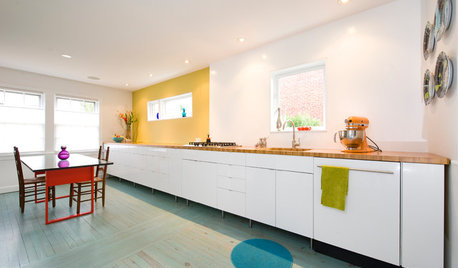
KITCHEN DESIGNKitchen of the Week: Grandma's Kitchen Gets a Modern Twist
Colorful, modern styling replaces old linoleum and an inefficient layout in this architect's inherited house in Washington, D.C.
Full Story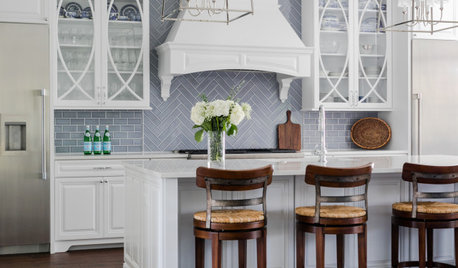
KITCHEN DESIGN10 Terrific New Ideas for Wrapped Range Hoods
See how designers use various materials and ornamentation to play up or play down a covered kitchen range hood
Full Story
MOST POPULARBudget Beach House: A Trailer Gets Ready for Summer Fun
Punchy prints and colors star in a creative approach to Jersey Shore living
Full Story
KITCHEN OF THE WEEKKitchen of the Week: A Classic Craftsman Gets a Colorful Twist
A key bump-out in the back and bold walls give a Seattle family’s galley kitchen better flow and a warm feel
Full Story
LIFEHow to Get Rid of Gnats Around the House
See swarming bugs in your plants or garden? Focus on the health of the soil and be naturally pest-free
Full Story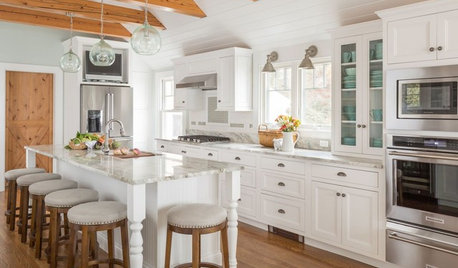
KITCHEN OF THE WEEKKitchen of the Week: A Cape Cod Gets a Beach-Cottage Reboot
Avocado green countertops and dark cupboards get tossed in favor of crisp white cabinetry and pale finishes
Full Story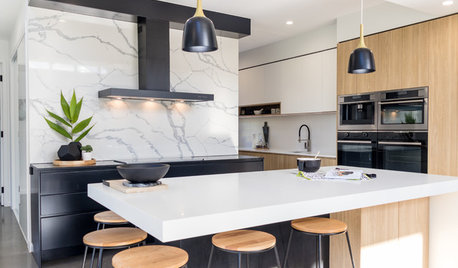
KITCHEN DESIGNHow to Get Your Range Hood Right
Get a handle on the technical specs, and then learn about fun design options for creating a beautiful kitchen feature
Full Story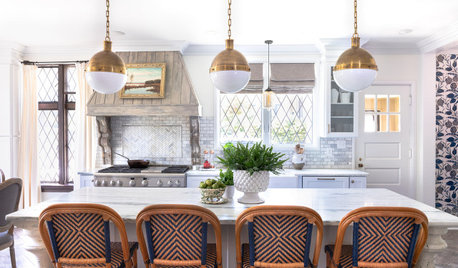
KITCHEN MAKEOVERSKitchen of the Week: Hand-Painted Range Hood and Classic Finishes
A designer puts hardworking materials, repurposed features and personal touches to work in her own charming kitchen
Full Story
COMMUNITYGet a Bird's-Eye View of America's Housing Patterns
See the big picture of how suburban developments are changing the country's landscape, with aerial photos and ideas for the future
Full Story
REMODELING GUIDESGet What You Need From the House You Have
6 ways to rethink your house and get that extra living space you need now
Full Story
sleevendog (5a NY 6aNYC NL CA)