

Did you read Where The Crawdads Sing ? Let's discuss it.
7 years ago
Featured Answer
Sort by:Oldest
Comments (26)
 7 years ago
 7 years ago
Related Discussions
I've read the FAQ's and now for my thoughts..discuss?
Comments (15)Hi Donald, welcome to the Winter Sowing Forum. *It's recommended to basically make flats of somekind out of materials at hand, put soil in them -> sow your seeds --> set flats outside in a "safe" area --> wait till spring to see what comes up.* Yep, that's basically what it is, and the nicest aspect, I think, of the method is that you get to do it your way with what you have and within the size of your own wallet. *Wouldnt it be easier to just direct sow in the soil where you want the future plants to be?* All seeds that can be WinterSown can also be Direct Sown, but they should be sown heavily because Mother Nature takes the vast majority of direct sown seeds to feed her critters and biota. Direct Sowing, also called Direct Seeding, is a traditional method for sowing seeds outdoors. It involves preparing the soil bed, sowing the seeds, and keeping them moist throughout germination. The Winter Sowing Method is better because the seeds are protected in their mini-greenhouses. When you direct sow in the ground the seeds are at the mercy of Mother Nature....they can get washed out in downpours, be eaten by critters and bug and birds, desiccate in the wind, or can rot in the soil. In a WS mini-greenhouse the seeds are in a protected environment. They get the same weather as the seeds in the ground...same temperatures, and the little slits in the lids allow both rain and melting snows to keep the soil moist and the flats watered. But they areprotected so more of the seeds will survive to germinate in Spring. The germination counts are generally astonishingly high. *My reasoning is that, if the seeds had dropped from a parent plant already in the garden, that successful germination is just as likely from "semi-natural" re-seeding as it would be if I used the recommended winter sowing method suggested in the FAQ's.* Plants which reseed in temperate climates are those recommended for Winter Sowing. *I guess to me it just seems like the recommended method over complicates the process and just adds more work, after I've spent the growing season pruning, deadheading, weeding, mulching, topdressing etc.* Just sow the flat and stash it outside on the picnic table or wherever your dog won't grab it or your snowblower won't hit it. *Again those are just my thoughts on the winter sowing process and in now way am I trying to gainsay the method recommended by others.* Don't worry about it, WS is very incredulous when you hear about it--you like to direct seed in your garden. I do both. I have a veggie garden and direct sow many of my leafy greens. Many posters do any or all of WS, DS or GUL. *I just have a terrible time trying to start seed indoors, and so I've amassed, what I consider a ALOT of seed packets, that are waiting to be planted but due to my iffy results starting seeds indoors "6 weeks before the last frost", which here in central OH could be as late as the end of April.* You've come to the right forum. Winter Sowing removes a lot of the frustration that comes with indoor germination, it's a big relief and gives you a gazillion seedlings. Nice plant list, it can all be WSed. Your yard will be a butterfly party. T PS, Did anyone tell you that Winter Sowing can be addicting?...See MoreLet's discuss solid surface countertops
Comments (69)I had a home with miles of Corian in the kitchen including an integrated sink. It did not hold up and looked and felt cheap; the stains in the sink I could not get out. In my home I have marbleized limestone in the kitchen and when my home got destroyed when the fire sprinkler pipe broke, I was able to salvage it and rebuild my kitchen. If i had not been able to salvage the countertop, I would have had to use a lessor quality countertop. I chose quartz for the bathrooms, and chose a pattern that did not try to emulate a natural stone, and I think that looks better than trying to look like stone but not pulling it off. Many of the marble patterned quartz look fake. In a rental I have 30-yr laminate that is deteriorating and am not hesitating putting in quartz. I think it will hold up just fine. I have been a landlord of about 6 homes over 30 years. I have always had good luck (knock on quartz (wink).)...See MoreLet the Games Begin! Water for Elephants discussion
Comments (43)June, please don't forget to tell us who you think Marlena was calling when she asked Jacob to wish her luck. I finally located the passage, but I had lost the context so I had to back up and reread that chapter. It didn't help me, thus I'm thinking it must allude to something even further back that didn't register with me -- unless it was, as Lydia says, someone she could contact about getting a job with Ringling Bros. Vee, re redlighting, that act of throwing nonproductive or unwanted people off the train: The word itself definitely came from circus jargon. I had to look it up to make sure. (Does anyone else think Gruen could/should have provided a glossary?) I don't know if it was done in quite so dramatic a way as Gruen describes; the sites I went to said it was done mainly when the train was going slowly, before it got up to full speed -- the people hit the ground, perhaps with a hard landing, but most were able to get up unhurt (or with minor injuries), yet there was no way they could catch up with the train and get aboard again. If bodies of maimed or dead people were littering either sides of the tracks or under the trestles, surely there would have been some questions asked by the folk who found the bodies and authorities would have been alerted. I know it was the Depression and there were things that often went unreported, but if it happened with great enough frequency, there would have been some sort of outcry -- people were people during the Depression, too, and they all weren't cowed by circumstance. My father, as a teenager in the early 1930s, did some railriding. He and his buddies would hitchhike to Chicago, then hop a train to New Orleans and then hop another for the return to Chicago. (From New Orleans, he made it to Los Angeles and on to Seattle before retracing.) They could do it legally in an empty freight car for a penny a mile, but of course many didn't have the funds. The legals would hide the illegals under clothes and blankets, but the "tosser" often managed to find them and, true to his job title, he tossed them off the train, physically. According to daddy, he was tossed off a few times himself. Daddy referred to it as redlighting, so the circus phrase was in the vernacular at the time. I didn't get sappy about the animals in Gruen's story as much as I did about Camel and Walter being thrown off the train while it was on the trestle. Maybe such things happened, maybe they didn't -- I'll allow Gruen license, anyway, although I wonder why she thought it was necessary to kill them off. But that poor little dog, Queenie, without Walter... And what makes it particularly affecting to me was the earlier scene when Queenie was lost and Walter would have missed the train to look for her, if Jacob hadn't physically thrown Walter onto the moving train. I hate being manipulated by a writer with poignant animal scenes, but I have to admit Gruen pulled a good 'un on me....See MoreIt's June ... What are you reading?
Comments (107)My DD and S-in-L took a 'break' to NYC earlier in the year and brought me back a copy of 97 Orchard 'an edible history of 5 immigrant families in one New York Tenement' by Jane Ziegelman. The sort of book you can pop into and out of now and again. I'm only about halfway through but finding out much about the Jewish community in the Lower East Side and how their eating patterns were formed by a mixture of where they had come from in Europe and the American traditions they met once they had crossed the Atlantic. Of course what Ms Ziegelman knows about the actual inhabitants of this neighbourhood has been gleaned from census returns, rate books etc. These people didn't leave memoirs, write notes or recipes and as soon as the husbands got a better paying job they upped sticks and moved to a more prosperous area. So the families were always at the 'bottom of the honest heap' It appears that many of the Jewish community were eager to 'conform' to US working practices, some of them changed their Sabbath to a Sunday and started cooking shell fish and pig/pork, in its many forms. Much info on German/Polish/ Lithuanian bread making, but only a little about the Irish influence, possibly because it was not much different from what was being eaten in England and therefore by the earlier 'settlers' to the City. The only negative thing about the book is the very pale ink used and the close small print. It makes reading for long rather a chore!...See More- 7 years agolast modified: 7 years ago
 7 years ago
- 7 years ago
- 7 years ago
- 7 years ago
 7 years ago
- 7 years ago
- 7 years ago
- 7 years ago
 7 years agolast modified: 7 years ago
- 7 years agolast modified: 7 years ago
- 7 years ago
- 7 years agolast modified: 7 years ago
- 7 years ago
- 7 years agolast modified: 7 years ago
- 7 years ago
- 7 years ago
- 7 years ago
- 4 years ago
- 4 years ago
- 4 years ago
- 4 years ago
- 4 years ago

Related Stories

HOMES AROUND THE WORLDWorld of Design: 11 Book Lovers and Where They Like to Read
Bibliophiles across the globe reveal their top books and favorite reading spots, from a 2-story library to an artfully curated book nook
Full Story
LIFEHouzz Call: Where (and What) Are You Reading This Summer?
Whether you favor contemporary, classic or beach reads, do the long and lazy days of summer bring out the lit lover in you?
Full Story
ARCHITECTURERoots of Style: Where Did Your House Get Its Look?
Explore the role of architectural fashions in current designs through 5 home styles that bridge past and present
Full Story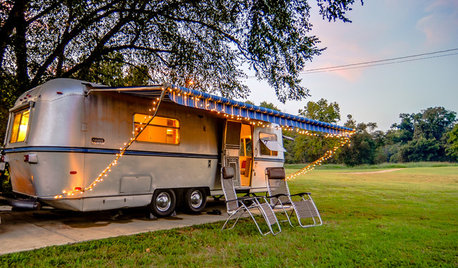
HOUZZ CALLWhere Did You Stay During Your Remodel?
Did you live through the noise and dust during your project, rent a place or camp in your backyard? Tell us your story
Full Story
REMODELING GUIDESWhere to Splurge, Where to Save in Your Remodel
Learn how to balance your budget and set priorities to get the home features you want with the least compromise
Full Story
DECORATING GUIDESWhere to Splurge and Where to Save When Decorating
Get a designer’s advice on where to invest in durable essentials and focal pieces for your home, and where to economize
Full Story
LANDSCAPE DESIGNWhere to Save Money on a Landscape Renovation
These 10 cost-saving ideas from professionals can help you stretch your budget without sacrificing style or quality
Full Story
DOORSLet's Walk Through the Latest Door Trends
The functional feature has been getting a dose of flexibility, creativity and glamorous detail
Full Story
HOUZZ CALLEver Found or Left a Note in the Wall the Way This Couple Did?
The remodeling couple whose note from previous homeowners went viral tell us about their fun find. What’s yours?
Full Story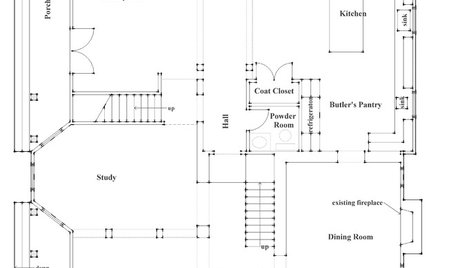
REMODELING GUIDESHow to Read a Floor Plan
If a floor plan's myriad lines and arcs have you seeing spots, this easy-to-understand guide is right up your alley
Full Story
kathy_t