

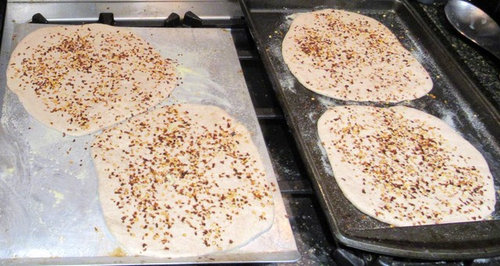
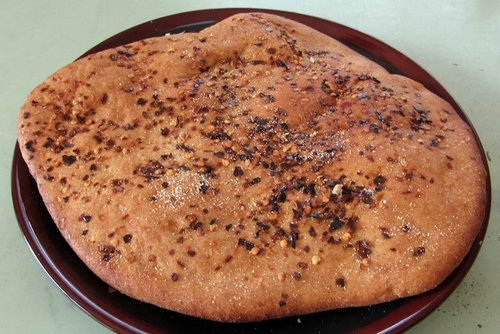
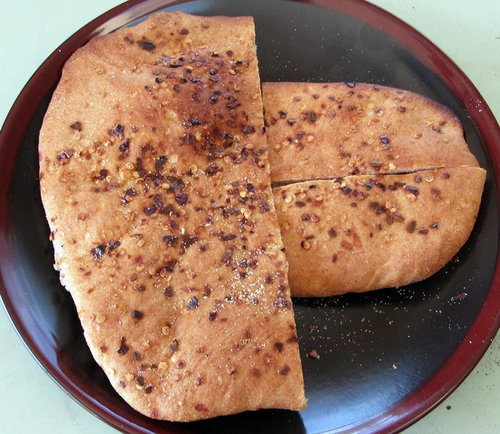
Pita bread from "Beard on Bread"
7 years ago
Featured Answer
Sort by:Oldest
Comments (15)
Related Discussions
The mystery of pita
Comments (10)Hi Lars, pita bread is pretty easy to make (other than the bother of forming the individual breads and taking them in and out of the oven instead of putting in one or two big loaves. I usually use my bread machine on quick dough cycle to mix the dough. He says to put the yeast in the water to dissolve, but I just load my bread machine as usual putting in the liquids first then the flours and then the yeast and salt. I sort of use a recipe from Secrets of a Jewish Baker by George Greenstein. 2 cups warm water 2 packages active dry yeast (I use about 2 Tbsp instant dry yeast) 4 Tbsp vegetable oil 2 cups whole wheat flour (he says preferably stone ground, I use white whole wheat) 3 to 4 cups bread flour 2 tsp salt Pretty much standard bread making to form the dough - mix the ingredients together using 3 cups of bread flour. Knead and add more bread flour 1/4 cup at a time if the dough is sticky - you want a soft but not sticky dough. Knead until smooth and elastic. He says transfer the dough to an oiled bowl and turn to coat then cover with plastic wrap or a damp towel until doubled in volume (45 to 60 minutes). I just let mine rise in the bread machine and leave it for more like 20 minutes. While the dough is rising, I set up the oven with a baking stone and turn the oven on to 500 degrees F to get it well preheated. Punch down. Divide into 12 equal pieces and shape into balls. I'm often in a hurry doing this. Last time I was a bit more careful in shaping them with a good cloak and I think that may be why they puffed so well. He says cover and allow to rest 15 minutes. I don't wait that long. Perhaps 5-10 minutes after forming the last ball I start rolling the first one I formed. Roll each ball into a 6-inch circle. I find this is easiest to work on several at a time by rolling each one out until it starts getting stubborn springing back then letting it rest while working on the next one and the next - then going back to finish rolling the first one. Then I set them aside to work on forming the next 3 - when they are rolled out, put the first 3 in the oven. set the prior set of three aside and work on another 3 keeping an eye on the oven. Don't open the oven door until they have puffed (or you have given up hope of them puffing and they are starting to brown slightly) - he says 10 minutes, but I think it takes less time than that.. Then take them out and put the next ones in. I line a basket with a couple of big flour sack towels to keep the baked pita in - it keeps enough moisture but not too much moisture in so they are soft and nice. Once they are cool, I store in plastic bags if they aren't going to be used right away. I got some teff flour to try making injera but I haven't gotten around to it. The recipes I've seen for it call for natural fermentation of the batter - mixing the teff flour and water and leaving it to stand and stirring once a day for several days to ferment. I've had it at an Ethiopian restaurant and it is pretty different from regular bread - sour and a bit rubbery but in a good way. Darch, I've never heard of making pita bread in a skillet - I always make it in the oven on a bread stone. Annie - I'm wondering if I'll go back to 2/3 puffing next time or if there is something I've learned so my success will be repeatable. :^)...See MoreHelp with pita appetizer
Comments (9)I dunno, the package says pita bread and it is hollow with two sides, but very thin. This is the type of pita they sell at the Syrian bakery where I live. I have seen something called "pocketless pita" in the grocery store, which seems like an oxymoron to me, but this is not that. If it was pocketless pita I wouldn't be so worried about it flopping over when cut. I almost always make baked pita chips with dip for parties and no one ever eats it, but I think it is because of the set up and the way I serve it. I usually put a basket of baked chips and dip on the coffee table in the center of the room. I'm not shy about cozying up to the table and eating away, but apparently my guest are, lol! This time I think I am going to take some advice from here and season the pitas and then put them on little trays next to all the seats, (I have enough TV trays to do this) along with some of them having a dollop of spinach artichoke dip already on them. That way folks can just pick them up and eat them. I like the idea of spinach dip because it is a "green" which is something lucky to have at New Years and also looks festive if I mix in some roasted red peppers. I make my spinach dip with mostly tofu so it won't be too cheesy. I'm also serving a bean salad much like "Texas caviar" but made with blackeyed peas. That I think I'll serve in endive spears. So the two will go well together. The main meal will be ham, scalloped potatoes (BF said our guests just finished off a big pan of lasagne at home so that has been switched out), green beans almondine and apple pie for dessert. Thanks for the help and suggestions. I'll report back on how it goes. Wish I could take pics but my camera is broken and gone for good I think. Here is a link that might be useful: Chow.com hummus pita chips appetizer...See MoreLooking for a different kind of persimmon bread recipe
Comments (8)Thanks for the suggestions. Unfortunately they're not what I'm hoping may exist somewhere (perhaps it doesn't). Compumom, the Beard recipe I modified was the one for apricot bread in Beard on Bread, substituting persimmons for the apricots and their soaking water, as I described in my original post. I've made the Beard persimmon bread recipe you reference as well, reducing the sugar and using half oil half butter in place of the butter: the results were excellent, but too sweet and too fat for my current taste. Irisgal, your recipe is sweeter than what I want. Perhaps fruit breads require that much sugar, or almost: I know sugar can be cut to 3/4 cup, because I often do that myself, but don't know if can be reduced to 1/4 cup as I attempted, and which didn't work. I like a fruit bread for breakfast or as a snack, but since I had flu almost a year ago, my already moderate taste for sweetness has diminished almost to zero. For the last few years even plain apples have been borderline too sweet. Hence my interest in a bread with little added sugar....See MoreHow do you do your bread making?
Comments (13)Thanks for all the answers, folks: I'm glad to hear from other bakers! Of all the breads I hear about here, plllog's are the ones that speak to me most. But, although, if I really set about it with determination and a decent financial investment, I might be able to get the tools and supplies necessary to make bread as I see described here, I'm not willing to do that. I live in the country in Italy, and 98% of my groceries come from our small local supermarket. There is no Costco. No Whole Foods. I have no store that offers rye flour, grain berries, molasses, bran, wheat germ, reasonably priced oatmeal, or a host of other ingredients for baking standard in the U.S. I don't like to drive, I don't like to run around, I'm reluctant to add to our terrible air pollution, and gas costs about $7 a gallon. Add to this the absolutely horrible dis-service offered by our post office-affiliated package delivery company, which, after my last traumatic experience, caused me to swear that I would never again order by mail anything that would have to be delivered through them (there are other couriers, if one has a choice). So I work with what I have. This suits me, from a philosophical and practical standpoint, and while it's likely possible to make better bread, mine makes me happy. I've gotten used to the fresh yeast, which is reliable, and I have a fair variety of recipes I've worked out. The last one was potato and buckwheat (I was able to find buckwheat flour again, thank goodness!) and it turned out really tasty. That one was majority whole grain, simply because I had run out of white, and that improved it. Plllog's comments make me think, again, about how much I could learn about bread baking. The "soaker" is new to me. Who knows, this may stimulate me to some modest experimentation. Like Annie, if I want substantial nourishing bread, I have to make it myself. The Italian bread is good with a bowl of beans and broth but it just doesn't work as standalone food. Add to this that Italians don't really eat breakfast, so there's not much of an offering of sturdy food for the start of the day. I think my tolerance of grain-based foods has diminished as I've grown older, and it may be that baking with a sponge, and adding a variety of ingredients improves the digestibility of my breads. My diet is relatively low in cereals--I eat them regularly, but in much smaller amounts than when I was younger--and I mostly eat bread as the centerpiece of breakfast. It powers me up! in the most satisfactory way. Today is the potato and buckwheat bread--we're on our last loaf; I'll have to make more. There's a non-sweet almond bread in the freezer, made with milk, olive oil, and lots of almonds. If it gets cold enough I might even want to try a sweet bread. I made one last year with raisins, fennel, and orange juice and peel that I remember as being good. The basic dough of that one was similar to that of the almond bread, made with milk and oil. The loaves made with fats don't need butter. All my breads are part whole-grain, usually one third, though I may try upping that in some cases....See More- 7 years agolast modified: 7 years ago
 7 years ago
- 7 years agolast modified: 7 years ago
- 7 years agolast modified: 7 years ago
- 7 years ago
- 7 years agolast modified: 7 years ago
- 7 years ago




Related Stories

FUN HOUZZDon’t Be a Stickybeak — and Other Home-Related Lingo From Abroad
Need to hire a contractor or buy a certain piece of furniture in the U.K. or Australia? Keep this guide at hand
Full Story
KITCHEN DESIGNCreate Your Own Checklist for a Well-Stocked Kitchen
Personalize the kitchen with your own must-haves from our list of top cooking tools, small appliances, pots, pans and more
Full Story
PETSThe Best of My Houzz: 50 Design-Loving Pets
Share in the animal love with snapshots of adorable furry friends from our My Houzz series
Full Story
DECORATING GUIDES5 Decor Trends to Try — and 5 to Rethink
Some style trends are worth jumping onboard. Others you may want to let fade from your memory
Full Story
LIGHTINGA Lighting Pro’s 5 Tips for Buying LED Bulbs
Make a smarter choice and improve the look of your home after dark with these guidelines from a lighting designer
Full Story
LIVING ROOMSHow to Convert Your Wood-Burning Fireplace
Learn about inserts and other options for switching your fireplace from wood to gas or electric
Full Story
LIFESimple Pleasures: Indulging in Teatime
Get out the china cups and cream-slathered scones. Tea with treats can make even an uneventful day feel extravagant
Full Story
KITCHEN DESIGNHouzz Call: Tell Us About Your First Kitchen
Great or godforsaken? Ragtag or refined? We want to hear about your younger self’s cooking space
Full Story
GARDENING GUIDESInvite Mining Bees to Your Garden by Planting Their Favorite Plants
Look for mining bees (Andrena) pollinating woodland wildflowers in U.S. gardens this spring
Full Story
HOUZZ CALLShare Your Sheltering-in-Place Accomplishments
Let’s celebrate small victories and say how we’ve managed to pass the time at home
Full Story
agmss15