

Feeding Fruits, Nuts, Dried Meal Worms and Premium Seeds to Birds
7 years ago
Featured Answer
Sort by:Oldest
Comments (7)
 7 years ago
Related Discussions
alternatives to store-bought chicken feed
Comments (37)Here in W. WA, 50lbs of oyster shell costs $12, and it’s very stable, not subject to problems of dampness, not susceptible to aging. Cheap insurance. Calcium in the soil is good, but it often isn’t enough for a hen to produce 200+ eggs per year. I live in a high-rainfall area, and it leaches calcium from the soil badly, so without adding lime in fall, grass and crops will be calcium-deficient. Get hold of Gene Logsdon’s book “Small-scale Grain Raising” for a LOT of info on growing smaller amounts of grains at home, for your own use and your livestock. Greens: alfalfa, clover, cowpeas, field peas, kale, chard and other people greens. Whole dried corn isn’t great for chickens unless they have an adequate source of grit. Otherwise, they will eat it, but they can’t break it down enough to receive much nutrition from it. Fresh or cooked corn is okay. Seeds: cowpeas, English peas (plus tendrils and flowers), flax seed, pigeon pea. Not beans unless they’re cooked. Grow sunflowers and let them pick the heads clean. Some grains to consider for poultry: buckwheat, amaranth, barley, wheat (including the old wheats: kamut, emmer, einkorn), millet, oats (on the stem or rolled), quinoa, rye, sorghum (don’t use for sprouts), spelt, teff, triticale. Many of these grains can be harvested by cutting the stalks or stems, and bundling them together, and hanging them in a warm, dry place. But beware of mice. If you miss some, or even if you don’t want to harvest it, you can knock the plants down and let the chickens in to the self-serve buffet. While eating these high-quality feeds, the chickens will help till in the cover crops with their scratching, improving the soil with both plant residues and their droppings. Comfrey has quite a bit of protein and minerals, some chickens will eat it, some won’t. Cooked cull potatoes (no green parts), pumpkins, squashes, sweet potatoes can help to fill them up. You might even consider growing some mangels or fodder beets for them – they’re nutritious, and can be nailed or clamped to a post for pecking at, or grated. All these crops store well in the proper conditions. Wild nuts, acorns, black walnuts, etc, can be smashed with a hammer on a rock or brick Any berry you can eat, chickens can eat. Consider planting some just for them: mulberries, aronia (they prefer black over red), currents, bilberries, elderberries, saskatoon/serviceberry, sea-buckthorn or huckleberries. Protect the roots from those big, scratching feet with some large rocks or wire mesh, and you can grow them where they can harvest them on their own. Run them under your fruit trees to eat the fallen fruits and insects. If you live near a beach, collect some fresh seaweed and bring it home to them. Rinse it off and nail it to a post. There are thousands of varieties of kelp and seaweed and none are poisonous. You can even dry it for extended storage. Grow duckweed in a kid’s wading pool. Scoop out part of it and give to the chickens (or ducks), let the rest grow a day or two and then scoop out some more. It multiplies very fast. Soybeans must be cooked or roasted for any creature to eat, including us, or it causes bleeding of the stomach. I wouldn’t recommend genetically-modified kinds (about 90% of the U.S. crop) for any creature. Grow your own earthworms, nightcrawlers, mealworms or black soldier fly larvae, but don't let them be more than 25% of the diet. Black Soldier Fly larvae contain about 42% protein, 35% fat, 5% calcium, 19 amino acids, and 13 minerals, a real powerhouse of nutrition. They produce much faster than earthworms. They can quickly reduce 100 lbs of garbage or manure down to 5 lbs, which could be composted or continue finishing via earthworms. They can be frozen in containers for winter feeding. Boil those cracked, dirty eggs. Cool, then just chop them in quarters (shell and all) and toss them to the girls. The birds don’t seem to associate eating the shells with shell-eating of raw eggs. If you’ve got a grocery store, farmers market, juice bar or restaurant nearby, ask for their produce waste (lettuce trimmings, juice pulp, etc). Use chickens to clean up after feeding grain to larger livestock and to pick eggs and parasites out of the manure. It is recommended that you don’t feed chickens avocado skins or pits, rhubarb, citrus, salt, green potato skins, garlic or onions (causes Heinz anemia) or uncooked beans (contains toxic hemaglutin). But they aren’t likely to eat them unless they’re starving, anyway. Don’t go crazy trying to poison-proof your property for your animals. Pat Coleby, Australia’s expert on natural health for animals, says that if animals are getting a good diet, they won’t overeat on toxic plants. Yes, they may take a taste or two, but she says that seems to fall into the “medicinal” category. The creatures know what they can eat and what they can’t. Farmers extol the horrors of tansy, but only starving cattle will eat it, well-fed cattle won’t. And I’ve found that she is right. I have quite a few poisonous plants around, and my girls may nibble a bit, but they don’t overload....See MoreUsing Dried Molasses in the Garden
Comments (22)Jill, You're welcome. Dried molasses is one of those things that sounds "odd" until you understand how it works to improve microbial life in the soil, isn't it? I think the molasses sold as a cattle supplement could work as long as you know they haven't addded anything to it that would be bad for your soil or for stuff grown in that soil. From what I understand, when sugar beets or sugar cane are processed to make sugar, sugar is the primary product they're after. So, after they've made the sugar, the leftover syrupy stuff is made into molasses for human consumption and for use in the garden. Then, the lower quality stuff that is left over from that process is turned into cattle feed. Unless something peculiar is added to it for the cattle, I don't know why it wouldn't work to stimulate microbial activity in the soil too. I'm less certain about the corn meal sold as cattle feed. Do you know if it is labeled as "corn meal" or as corn gluten meal" because I think it makes a difference. Corn gluten meal is the one used on the soil. How wonderful that you getting some ripe tomatoes! That is when it really feels like summer! And your daughter sounds like she's on the road to becoming a gardener herself! One funny thing about SunGold is that a lot of people who grow it the first time will complain that it doesn't taste that great, and then all of us who grow it every year are saying "What????" After a while, we figured out that a lot of newbies were harvesting it too early....as soon as it went from green to gold and weren't waiting for it to turn that distinctive golden-orange. So, clearly your daughter knew to wait for the Sungolds to get to the "yummy" stage which makes her a pretty smart cookie! I have tons of tomatoes on the plants, and it is a good thing, because "cool and rainy" are a distant memory here. Since our temps are in the danger zone, and are cranking up even higher this week, I probably won't get much additional fruit set on the plants that produce large tomatoes. If I can keep the cherry, currant, grape and paste types healthy, though, they'll set fruit for months yet. I did a walk-through of every row last night, and I have a handful of plants that look really bad. One of them is Wapisipicon Peach, which has never looked very good--just stayed wispy and wimpy and off-colored the whole time, literally from the day it was transplanted into the garden. It wilted and died over a 3 to 4 day period, so I'll take it out today. Two others that just look really bad and have had early blight for weeks are Caspian Pink and Valena Pink. Both of them are about 5' tall and the early blight has just traveled from bottom to top of the plant very rapidly. I've been trying to baby them along, but think I'll take them out today as they are getting worse and not better. The Valena Pink has two huge tomatoes that must weigh a pound-and-a-half or two. They are some of the largest tomatoes I've ever had on a plant. Those two are far enough along that I can pick them now and I think they will ripen. There are about a half-dozen smaller ones that won't though. Caspian Pink often looks really bad but outgrows the blight most years, but I don't think it will this year. Considering I have 140 plants, taking out a couple is no big deal. I do everything I can to avoid foliar diseases, except I don't spray with a fungicide as a preventive measure, and this is actually the best year ever. Usually I have blight on quite a few of them, so only having a bad case of it on three of them is not too bad. Long ago, I had to give up on the idea of having "beautiful" plants and settle for plants that produce ripe tomatoes! However, this year a lot of them do look pretty beautiful. I guess it is hard for early blight to grow and spread when there is no moisture. : ) Keep looking on the bright side.....because the weather has been wicked this year and you can't let it get you down. I am sorry you aren't going to have a good spring corn crop. Mine went in so late due to the late freezes that I don't know if I am going to get good ears or not. The corn itself looks great and has just tasseled, but with these high temperatures, the pollen may be sterile. I guess time will tell. Sorry about your pumpkins and okra too.....thank God for the fall garden! For fall corn, I think I am going to grow shoepeg corn ("Country Gentleman") because it is DH's and DS's favorite corn. I have "Seredipity" for spring corn and will just keep my fingers crossed that it pollinates before the heat gets too bad. M okra is making a slow recovery from being nibbled to the ground by the deer. About 8 plants came back although the others died. I should get okra from those 8, but have replanted more to replace the ones that didn't survive. One thing about fall gardening that I love (other than the fact that we get a "second chance" with crops that underperformed) is that a lot of the pests' life cycles are geared towards spring and summer crops. I never have as much of a pest problem on fall crops as on spring ones. And, now that I have a fence that truly seems to be deer-proof, I can grow more cool-season crops in the fall. Our deer have always preferred all the cool-season crops to the warm-season ones, especially cabbage and broccoli. Sweet potatoes love heat, so maybe it has been too cool for them to grow and maybe they will kick into gear now that more summer heat has arrived. With all the rain some of you have had, especially in your part of the state, I am amazed you have any garden left at all. I remember last year when my garden stayed wet for weeks and weeks, and even in the raised beds the moisture levels stayed incredibly high, and everything suffered greatly. To think y'all are having that kind of mositure again is mind-boggling. It is hard (but not impossible) to give peppers too much moisure (or soil that is too rich). Are your peppers off-color and dropping leaves? That probably would be too much moisture OR a nitrogen deficiency because the water-clogged roots can't take up nutrients because they are so full of water. If your tomatoes and peppers are in beds with identical drainage, the peppers "ought to" thrive if the tomatoes are thriving. Of course, your tomato plants probably are much larger than the pepper plants, so they can and do use more moisture. So, thinking about it in those terms, I can see why the peppers might be suffering. Last year I just kept my peppers in containers all summer and had a really good harvest and I don't think they would have done well here in last year's moisture. Too hot and dry....too cool and wet....too much this, and too little that. I'd like to have one year, just one year, with AVERAGE temperatures and AVERAGE rainfall. Instead, we seem to swing from one extreme to another, which IS (unfortunately) normal for us. At least we aren't in poor, flooded Iowa or in the San Francisco area where they are having temps in the 100s to 110s instead of their usual 70s and low 80s. A lot of California gardeners on the Tomato Forum have been begging for "hot weather plant tips" and, as you know from living here, there's not a lot you can do about the heat except hope it cools off. Our weather may be odd, but it still is pretty much what we and our gardens are used to having. Dawn...See MoreToo warm for suet, feed chickadees what??
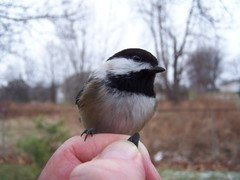
Comments (18)LOL Tsuga. I think with the warmer weather we were having I was getting overzealous. I even started painting my garage, yet to be finished. I've been feeding suet all winter. In the past month, I've seen my first downy woodpecker as mentioned earlier, and another unidentified bird...same size as a sparrow, almost looks like a sparrow at a distance, but a closer look shows a muted red on its head and neck region, and when they spread their wings you can see a red spot on their back. Not bright red like a cardinal, a soft muted red. I've never seen them before. In one glance, I have robins, cardinals, juncos, the unidentified bird, chickadees, and usual sparrows in my yard. Tons of activity. They seem to be enjoying the new evergreen thuja green giant I planted last year too. I just purchased some black oil sunflower last night, have to figure out where I'm going to put it. I read the seeds inhibit plant growth....See Moreare dried mealworms a waste of money?
Comments (36)Dogmom- love your Bluebird pics! Really good! I'll tell you that it will be hard for bluebirds to have a successful nesting experience if you have a lot of house sparrows & house wrens nesting with you. You know by law that you are allowed to remove HOSP nests, eggs, & young. We're even allowed to dispose of HOSP because they have caused such problems for our native cavity-nesting birds. Otherwise, they'll keep bluebirds or others from nesting or throw eggs out, kill babies & kill parents if they trap them in the box. If you're not willing to keep HOSP from nesting in your yard, the only thing you can do is put up a sparrow spooker after the bluebird (or other) lays their 1st egg. Since you have HOWR too, you should put up a wren guard after 1st egg is laid. Otherwise, the others won't have a chance to nest with you. Also, the only sized opening that will keep a HOSP out is 1 & 1/8, which is the size for Chickadees. Some birds won't nest in boxes with smaller entrances. Most of the time with Chickadees, you have to start out with the standard 1 & 1/2 & put a hole reducer on after the 1st egg is laid. Then, they'll usually accept it....See More 7 years ago
- 7 years ago
 7 years ago
- 7 years ago
- 7 years ago
Related Stories
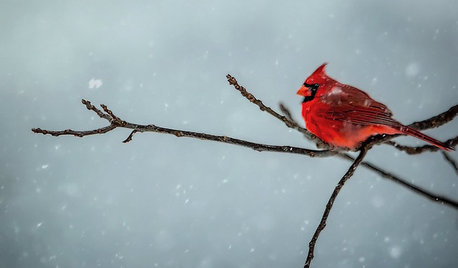
GARDENING GUIDESBackyard Birds: Northern Cardinals in the Snow, and Other Red Birds
Brilliant crimson feathers make these friends stand out in a crowd
Full Story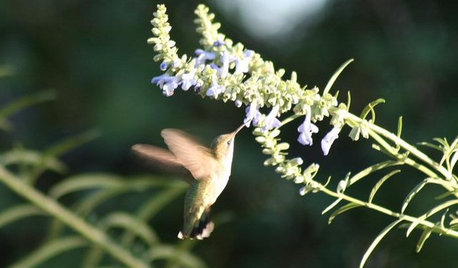
GARDENING FOR BUTTERFLIESA Quick-Start Guide to Bird-Watching for Fun and Learning
Set out some seed and grab your field guide. Bird-watching is an easy, entertaining and educational activity for the whole family
Full Story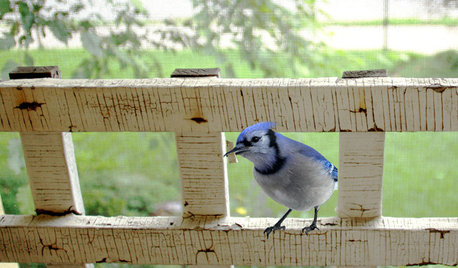
GARDENING FOR BIRDSBackyard Birds: Meet Some Clever and Curious Jays
Boisterous jays provide plenty of backyard bird-watching in winter. Here’s how to identify all the varieties and welcome them into your yard
Full Story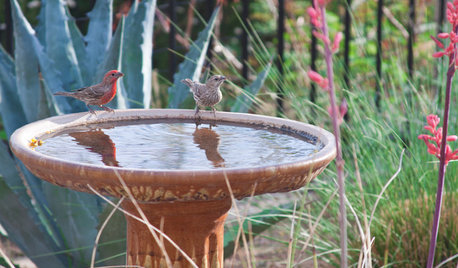
GARDENING GUIDESMake Your Garden a Haven for Backyard Birds
Create a bird-friendly habitat in your yard with food, water and shelter
Full Story
COMMUNITYGet a Bird's-Eye View of America's Housing Patterns
See the big picture of how suburban developments are changing the country's landscape, with aerial photos and ideas for the future
Full Story
LANDSCAPE DESIGNDitch the Ordinary Ditch: Create a Realistic Dry Creek Bed
Here’s how to turn your water runoff system into an eye-catching accent for your landscape
Full Story
GARDENING AND LANDSCAPINGHow to Attract Birds to Your Garden
From habitats to feeders, simple tips to help your yard take flight
Full Story
WINTER GARDENING10 Native Wildflowers to Beautify Your Winter Garden
They stand strong in wind, feed wildlife and are easy to grow. But you may want to add these plants for their looks alone
Full Story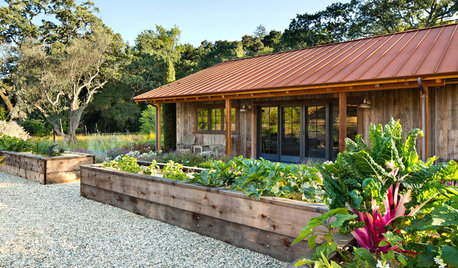
EDIBLE GARDENSHow to Grow Your Own Sweet Summer Crops
This guide will help any gardener get started on growing the freshest warm-season veggies and berries for summer
Full Story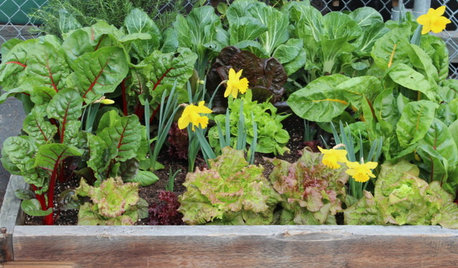
FARM YOUR YARDGrow a Kitchen Garden in 16 Square Feet
Got a sunny 4-by-4 space? You can make meals more interesting with your own vegetables and herbs
Full StorySponsored
More Discussions
Blue Onblue