

Hurricane Season is Over, Now Re-stocking Freezer...
7 years ago
Featured Answer
Sort by:Oldest
Comments (7)
 7 years ago
 7 years ago
Related Discussions
With hurricane season upon us are you ready?
Comments (10)I'm always ready. Alicia made me paranoid as hell! I KNEW the house was going to blow away any second. For years everyone laughed at me and my evacuation paranoia, then came Katrina and Rita. Of course, I still don't know why people in Sugarland and Huntsville ran off, that's where we GO! And some idiot from the USMS, said on Good Morning America last week, part of the problem was people going so far, that you didn't need to evacuate to Dallas! Well, duh! Like we WANTED to? There were no hotels, no campgrounds, no restaurants, grocery stores, gas stations, etc. open so you had NO choice! My plan is like always, if we get enough notice then run away. If we don't then hunker down and hope for the best. I have enough food for a month, us and the animals, lots of water containers to be filled, emergency lighting, medical supplies, wind up radio,extra film, extra bullets, etc. Off to buy a generator tomorrow. We have the boards all cut for the windows. The chain saws are sharpened. Alicia was a cold front on Monday, a tropical depression on Tuesday, tropical storm on Wednesday, on Friday we got hit with a category 2 or 3(the controversy rages) and it was NOT ever predicted to hit Galveston or to grow as large as it did. So evacuating is not always an option. Rita and Katrina were rare in that we had about 5 days to watch and prepare. In the Gulf we breed our own storms and sometimes, like Alicia, there is less than 24 hours notice. Tally HO!...See MoreHappy Day! Bought freezer, now to organize!?!
Comments (18)Cathy, I got your email but was unable to reply to it, and so I sent you an email from here so that you can reply to that with an attachment. Thanks! Dcarch, I have been collecting thermal bags for some time now, and so I have quite a collection already. I saved all the ones that Kevin brought back from Seattle when he bought the salmon, lobster, and crab. I also have gel packs that are supposed to substitute for ice packs after oral surgery, and I keep those in the freezer as well. I am planning on storing stuff in the new freezer that I will not need in case of power outage, so that I will not have to open the freezer door. Although I am storing water in there, I would remove that only as a last resort, and it's always better to have more water than necessary. We have a storage container that holds several gallons of drinking water, which is way more than we will need, and we have the hot tub, which has water that can be used for cleaning, if necessary. Oh, and I will also be storing my ice cream innards, which should also help retain cold in case of power outage. I'm going to have to sort through what I already have in the two freezer compartments that I already had. I am going to be very happy to have open space in the freezer in the kitchen again - it filled up very fast, and I need the open space for chilling things from time to time, such as chocolate molds, bowls & beaters for whipped cream, butter for pie crusts, etc. I probably will buy extra butter just to store in the freezer now. I'm going to keep flours in the kitchen freezer, and I will probably put them in plastic mayo jars. I guess they would be okay in glass containers, however. One of my main plans for the freezer was to store more vegetables so that I can eat more of those, as part of a diet plan. I also will store more fruit and eat more of that. I forgot to mention earlier (in my very long post) that Kevin and I had planned to go to the Lebanese market on Venice Blvd just down the street from Best Buy after appliance shopping, but since we had the freezer on the truck, we decided to go straight home. We managed to get the freezer unloaded and installed in the garage much more quickly than I expected and had time to go back to the Lebanese market, which has very cheap produce plus Middle Eastern specialty products. I bought a large container of Za'Atar (now I won't have to make my own) plus some garbanzo flour, fresh dill in bulk, some carob molasses, falafel seasoning mix (may not need that), more Tahini (They have a huge selection of that), and some Jallab Syrup (made with date molasses and rose flavour--their spelling), which I was unsure about and still am. I does have a strong rose flavor/fragrance but I can also taste the date flavor. I think I might like it better without the roses, but I also might get used to it. We had it on pancakes this morning. I'm going to finish making the falafel this afternoon, and I want to freeze some of the dill. I was thinking I might want to store the dill in lemon juice with some garlic, since I generally add those to dill when I use it. I also need to plan what containers to use for the freezer, and I am thinking I want to get some plastic bottles for hot sauce. I have a lot of plastic containers that I'm not using, but I thought I would save those for leftovers. I like the idea of storing index cards in freezer bags!! I'm definitely going to do that! I have a feeling that the seafood section of my freezer is going to get the most use, but I will also be on the lookout for a cheap turkey. It's going to be nice to be able to shop and not worry about freezer storage space - at least for now. I'm hoping also to be able to cut down on trips to the market. Lars...See MoreWill Hurricane Sandy cause people to re-think too small?
Comments (19)ERF Cracking up about the Resale Pearl clutchers. They would choke themselves looking into our house. I have not been to the other posts about preparation. I used to can so much of our foods. 200 to 300 quarts or more a year. Plus what I froze and we used to run two freezers. Now it does cost a lot more to do the canning and we would get tired of all of it and then later I would have to toss some of it. All that work. Sigh. Like you we have a gas stove. Ours is outside and needs to be run outside for safety but we have the covered porch. I do not think we would ever consider not having a kitchen if we were even thinking of moving. I am too much of a cook it at home person. We have a small expensive cafe here in town and did take out one time in four years when we were into our move and I had spent the last day at the sold house cleaning for over 8 hours and I was hungry and exhausted and not really set up here to cook much yet.We had been here three days. If we want eat out we eat it out. I have made lots of jerkey in my husbands hunting time. That will preserve meat for a long time. Should the electricity go out it can be done on top of the porch stove to save the frozen meat. Not as easy as using the dehydrator. I do believe people need to be prepared for at least a month with some things extending further. We were fortunate friends offered us their homes when we were flooded. We were out of our house 2 months while we were doing repairs, the temps had dropped to zero and below. And we had no heat at the house until we had a wall to hang the heater back on and our geothermal heat was lost in the flood until we could get the pipes back in to bring the hot water from the hot spring but first we had to get a new septic tank and lines approved and back in not to mention the foundation back under the house. I do not understand people wanting huge kitchens when they do not even cook. Worse I can not imagine not having at least a sensible kitchen. Our kitchen is 11 foot by 12 1/2 foot with lots of counter and yet I do 90% of my kitchen cooking work on a three foot wide counter. I have had much smaller kitchens and always made them work. We could have a much smaller kitchen but then I loose some of the storage space for the bulk items we do buy....See MoreRe-pot now, or later?
Comments (13)the difference between gal in the cool rainy PNW .. is that her location really doesnt know what a midwest 100 degree July/august summer might be ... and they can get away with a lot of things i might never get away with ... especially on a larger property where you might have many things to attend to .. and forget about something ... its not really that one or the other of us is right or wrong .... imo ... its just.. location.. location.. location ... if this is your one babe.. and you will be fondling it every evening.. and can perfect care ... do whatever you want ... but 2 thumbs up for gal spotting that a specimen of this size.. most likely wont have severe root issues ... it just hasnt been in the pot long enough ... usually ... besides.. i was leaning towards giving a newb bulletproof info ... as compared to what someone with 200 years experience might do ... lol .... werent you in grad school with darwin, gal?? .... forgive me ... lol ... ken...See More- 7 years ago
- 7 years ago
 7 years agolast modified: 7 years ago
- 7 years ago
Related Stories
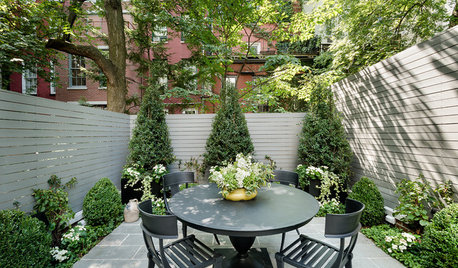
PATIOSTrending Now: What We’re Seeing in the Popular New Patio Photos
‘Bring the indoors out’ is the new ‘bring the outdoors in’
Full Story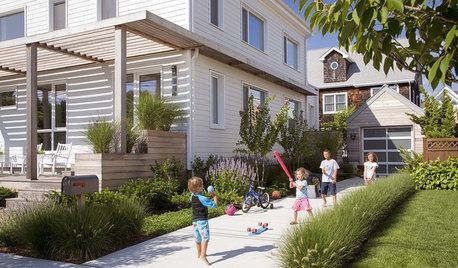
HOUZZ TOURSHouzz Tour: Ready for Hurricane Season on the Jersey Shore
This family home was designed to stand up to storms. See how the architects built resilience into the design
Full Story
REMODELING GUIDES11 Ways to Hurricane-Proof Your House
From smaller tasks you can do right now to bigger renovation projects, these strategies can help keep you high and dry at home
Full Story
FUN HOUZZ14 Things You Need to Start Doing Now for Your Spouse’s Sake
You have no idea how annoying your habits at home can be. We’re here to tell you
Full Story
HEALTHY HOMEHealthy Home Tips for Cold and Flu Season
Put these 10 home habits into practice now and stand a better chance of avoiding a nasty bug this year
Full Story
HOLIDAYS10 Things to Do Early for an Easier Holiday Season
Make a gift list and check supplies twice, then ensure that the house looks nice, and buy travel tickets if you’re leaving town
Full Story
ARCHITECTUREHouzz TV: Christmas in Chicago Will Make You Want to Move There Now
See Millennium Park, historic brownstones and other architectural landmarks lit up for the holiday season
Full Story
DREAM SPACES17 Bedrooms That Will Make You Feel You’re Still on Vacation
Take a moment to daydream a little before summer is over
Full Story
HOLIDAYS8 Ways to Organize Your Home This Holiday Season
Declutter and organize your holiday supplies for the future to create a more peaceful home right now
Full Story
EDIBLE GARDENS10 Edible Greens to Plant Now
Get your cool-season garden started and look forward to harvesting lettuces, kale, arugula, chard and more
Full Story
annie1992