

Who uses a food dehydrator?
8 years ago
last modified: 8 years ago
Featured Answer
Sort by:Oldest
Comments (47)
 8 years agolast modified: 8 years ago
Related Discussions
WANTED: A Bosch Mixer...commerical food dehydrator and squeezo
Comments (0)machine. Anyone have one? I could buy it or trade even up for perennials. I am fair and honest. Or even do 1/2 and 1/2.I just thought there might be folks who don't use theirs anymore. Thank you! Sandy...See MoreWhat foods do you dehydrate?
Comments (17)plllog- It sounds like you are describing freeze-dried food, which unfortunately, CAN'T be duplicated in a dehydrator. Freeze-drying is a commercial technique that forms a vacuum while the food is freezing. Stored properly, freeze-dried food has a much longer shelf-life than home-dehydrated, and freeze-dried foods are much higher in nutrients than those made at home, and freeze-dried foods rehydrate in a fraction of the time as home-dried foods. I store and use both home-dehydrated and freeze-dried. jennieboyer, Home\-dehydrated foods need to be used fairly quickly because they don't have any preservatives, and the nutrients degrade quickly \- even if they still "look" fine, and may even taste fine, after years on your shelves. Recommended storage times for home\-dried foods range from 4\-months to one year because the quality is affected by oxygen, temperature, and light. Most dried fruits can be stored for one year at 60\-degrees F, or six months at 80\-degrees F. (room temperature is considered 70\-degrees F.). The cooler the storage temperature, the longer the shelf\-life, and this is true for all stored foods. For each 10\-degrees above room temperature (70\-degrees F) the faster food degrades (nutrients are lost, color and texture may change). Because home\-dehydrated vegetables don't have as much natural (or added) sugar as fruit does, vegetables have about half the shelf\-life of fruits. I consider home\-dehydrated foods pantry foods which need to be rotated and used quickly. Unless you are 100% sure a home\-dehydrated food has 10% moisture or less, don't vacuum\-seal it because if any bacteria is present, it could potentially grow into a toxin \- even in the oxygen\-free container. In order to know the amount of moisture, you have to weigh the food before and after dehydrating. For more specific information on the subject, I suggest getting the book "How To Dry Foods" by Deanna DeLong. You can often find this book at the library and used book stores. As a general rule fruits dried at home normally have about 80% of their moisture removed and vegetables \- 90%. Only a small percentage of foods dehydrated are done until they are crispy dry. I do crispy apples for snacks (which store longer), and leathery apples for cooking/baking, which get used quickly. In my case, unless the dehydrated food is being used, they are stored in a dark, cool, food storage room in the basement. I always try to store enough apple slices for a year, but that's the only item I plan on doing that. Even foods that seem bone dry can still have some moisture in it. Each time you open a container of dehydrated foods, it will reabsorb moisture from the air, so make sure you don't leave the lid off a container any longer than needed, and use more small containers (pint and quart jars). The same problem of reabsorption occurs after the dehydrated food is done drying. Once the food is dry, allow it to come to room temperature, then place it in a container/s and be sure to condition it (an important step many people skip and find they have moldy food) before placing it in storage. If you pack warm food into a jar, moisture will continue to be expelled from the warm food and can be trapped in the jar, causing the food to mold. I would avoid using a timed dehydrator because it is possible for the food to sit for a long period of time after the timer has gone off, and it will most certainly have reabsorbed a lot of moisture, especially in a place where there is high humidity. I typically don't store home\-dried foods in large batches \- especially potatoes which are notorious for molding. Crispy apples destined for snacking I place in a snack\-size zip\-lock bag, then place the bags of apple slices in a quart jar. This way each time the jar is opened there is less chance any of the apple slices will reabsorb moisture from the air. There is an alternative method called dehydrofreezing where only about 70% of the moisture is removed, however, these foods MUST be stored in the freezer to prevent microbial growth. There are some advantages to dehydrofreezing \- the food has better flavor and color than traditional drying, and they reconstitute in about half the time it takes for traditionally dried foods. They also take up less space in the freezer than fresh\-frozen food. If you don't have plastic fruit leather sheets you can use plastic wrap to cover the trays, or you could try a produce bag with some cutting required to make it cover the round trays (both will require some over\-lapping). Caution \-\-\- do NOT place the food on the printed side of the bags because the ink is NOT food\-grade. I will also bet once you use a plastic bag or plastic wrap for this process, you will find the stiff plastic fruit leather sheets much easier to use and well worth the money. \-Grainlady...See MoreFood Dehydrator
Comments (15)We buy mushrooms when they are super cheap (Aldi) in July most years, and dehydrate them for winter stews, soups, rice dishes, stir-fries, Italian type sauces, and casseroles. Unfortunately, we did not find any cheap mushrooms this year. We chop, de-seed, and dry more thin-walled sweet banana peppers than you could imagine. Same uses as above. We also dehydrate tree fruits-- plums and nectarines being our favorite, but also and apples. Apricots are fantastic dried, but so far we haven't gotten enough from our trees to do that. We dehydrate fruit sauces to make fruit leather. There's a small jar of dried cranberries in the pantry; I thought we'd have used it since Christmas, but I guess we forget about it when we bake something they could be added to. A few years ago we made a lot of fruit leather with foraged autumn olives. There aren't any herbs that we like to dry, as I think they dry with more flavor at room temps, even if it takes much longer. We have dried our favorite Italian green beans. Those are a hoot. They come out looking like spinach noodles. We chop, de-seed, and dry more thin-walled sweet banana peppers than you could imagine. We used to do beef jerky, but "some of us" found we ate way too much of it way too fast. Ahem. I was thinking of cutting up some of our homemade jellies into little cubes to see if we could dry them into gummy candies. Maybe at the lowest temp setting? I think our adjustable dehydrator goes down to 90 or 95 Fahrenheit. Oh, that is my tip if you think you might want to do a lot with a dehydrator: choose a temperature adjustable one....See MoreLooking for food dehydrator recommendations.
Comments (24)I'll add in too about time and temp. It can depend on what kind of unit you use, and also what the humidity is. Not a huge amount of difference, but enough sometimes. My units run 95-160. 160 is for meats. Jerky of course. But I also do some lean lunchmeat- can make good crumbles like bacon bits in soups and such. I do smoked fish too- smoked sturgeon dehydrates super crisp to honey salmon is fridge store only. Great for soups, and the sturgeon is killer with onions in a cream cheese and egg smear. Chicken or turkey breast as fat free as possible is good- I make a killer enchilada pulled chicken that dries up and is a "secret ingredient" in layered dips, cheesy soups, baked potato topper.. The majority of the rest of what I do is at 145. Citrus I do more around 135 because it can really discolor- still great to use, just not pretty. I do use the 95 temp too- this is nice for if stuff isn't quite done, or needs a flip and slower dry to finish overnight. The lower degree range there is good :) I don't just dehydrate my harvests, I also do it with sales. When citrus is on sale, I dry it. Frozen corn and peas, ditto. This morning I pulled off a batch each of sale white corn and sale peas from the dehydrators- 72 oz frozen dries down into less than a quart jar dried. And cooking with it. Wow, I do a lot of cooking with the stuff. Probably better for another thread since this one is for dehydrators themselves. But it is a learning curve to an extent....See More 8 years ago
 8 years agolast modified: 8 years ago
- 8 years ago
- 8 years ago
- 8 years ago
- 8 years ago
 8 years agolast modified: 8 years ago
- 8 years agolast modified: 8 years ago
- 8 years ago
- 8 years ago
- 8 years ago
- 8 years ago
- 8 years ago
- 8 years agobossyvossy thanked dcarch7 d c f l a s h 7 @ y a h o o . c o m
- 8 years ago
- 8 years ago
- 8 years ago
- 8 years ago
 8 years ago
 PRO8 years ago
 8 years ago
- PRO8 years ago
- 8 years ago
 8 years ago
 8 years ago
- 8 years ago
- 8 years ago
- 8 years ago
- 8 years ago
- 8 years ago
- 8 years ago
- 8 years ago
- 8 years ago
- 8 years ago
- 8 years ago




Related Stories
KITCHEN DESIGNKitchen of the Week: Small, Creatively Used Kitchen
A food blogger whips up recipes out of a tiny Oklahoma kitchen — and sometimes spills over to the dining room table
Full Story
The New Simplicity: Today's Style for Food and Home
Make yourself at home with a more relaxed style at the table — and in interior design
Full Story0
KITCHEN DESIGNKitchen Counters: Try an Integrated Cutting Board for Easy Food Prep
Keep knife marks in their place and make dicing and slicing more convenient with an integrated butcher block or cutting board
Full Story
KITCHEN STORAGEKitchen Storage Hacks to Make Use of Every Space
Cupboards full? Try these kitchen ideas for working more valuable storage into your cooking space
Full Story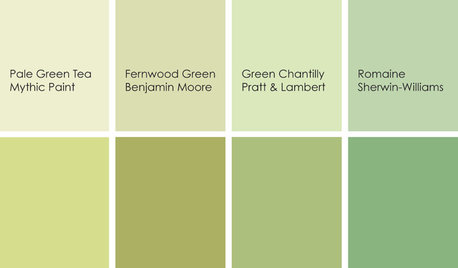
KITCHEN DESIGNCooking With Color: When to Use Green in the Kitchen
Consider a taste of Romaine or Pale Green Tea to make your kitchen walls or cabinets the freshest ones around
Full Story
KITCHEN DESIGNHome Above the Range: Smart Uses for Cooktop Space
With pot fillers, shelves, racks and more, you can get the most function out of the space above your kitchen range
Full Story
HOUZZ TOURSMy Houzz: Mixed-Use Oregon Home Serves and Charms
Home, restaurant, garden, rental cabin — and it gives back to the community too. This multitasking home is a wonder in more ways than one
Full Story
CHRISTMAS11 New Uses for Old-School Christmas Ornaments
Been there, done that with the tree? Have an embarrassment of extra ornaments? Try these beautifully creative decorations this Christmas
Full Story
KITCHEN DESIGNPhoto Styling the Kitchen with Food
Want to show off your kitchen? Add some instant culinary color
Full Story
SMALL SPACESCottages: The Comfort Food of Architecture
Soul satisfying and as snug as a favorite sweater, a cottage knows how to roll out the welcome mat
Full Story
beesneeds