

Maximizing leeks.
8 years ago
Featured Answer
Sort by:Oldest
Comments (11)
 8 years ago
Related Discussions
guardsman onion seed sowing
Comments (5)You can't separate plants grown in rock wool since they quickly incorporate the wool cube right into the roots and base of the plant. One reason why onions and other root crops aren't commonly considered a rock wool crop since you have to sacrifice part of the edible root to get rid of the wool cube.. Are clusters bad? If you plan to harvest and use them as scallions, yes. If you don't care if they look like bulbs of garlic or shallots and are willing to sacrifice the immature ones attached around the core, fine. Dave...See MoreIdeal air temperatures....
Comments (7)From digdirt.... "Now if growing in a greenhouse, yes that info is available because gh growers can control the air temps inside the structure."........... Yea I was thinking about ways to have an ideal air temp when growing indoors and in a greenhouse from sprout to transplanting time to see if they grow healthier and better before transplant time....I currently have lists of a general idea of the height in the greenhouse to put the plants ....low to the ground for cold and higher up for hot. Thank you for the response digdirt and now thanks to you I am looking up soil temp control :). To Slimy_Okra...thanks for the temps! Thanks theforgottenone for this message... "Unless you're able to manipulate the temperature of the air and keep it consistent at all times there is really no reason to aim for an "ideal" anything. It's just not possible. Especially outside. Even day and night temperatures can fluctuate 20 or more degrees. So what's "ideal" during the day won't be "ideal" at night. You can influence air temps to an extent by growing under cover when it's chilly and by using shade cloth when it's warm (somewhat) but for the most part you're at the mercy of Mother Nature. As long as a crop is withing the range of low temp and high temp they will grow just fine."... I sort of have a response to this....My greenhouse has about 7 to 8 different heights and I am trying to order my plants by temperature. .I was thinking about your response and I think the reason why I am looking for an ideal temp is because I am thinking about having the veggies at the correct height in order to have an ideal temp when the sun is out in the day. I was thinking this would maximize growing. Also for the nighttime thing I have a clear water aquirium and a ton of clear used milk bottles and soda bottles on the upper part of the green house where it gets above 100F...then at night when the heat stored in the water dissipates I have a minifan that blows the dissipated air down a vent into bricks on the floor of the greenhouse which keeps the temperatures much higher at the night. I am going to try a ton of science experiments...just don't know what they are yet :) I guess right now if nothing else then I would like a confirmation that the order am putting the veggies in from to coldest to hottest loving plants is accurate (or close to accurate) Here is the order again(and also on my flag cold-to-hot measurement picture).... Coldest …. 1. Kale(pretty sure kale is one of the coldest if not the coldest)....I have this as a starting point in the center of the blue cross in the hot red Norwegian flag.......then it goes to the all blue, cold Greek flag starting with Spinach 2. Spinach(yellow and orange “Green Hornet” symbol...yellow and orange due to spinach goes well with high acidity tropical fruits in green smoothies...Green Hornet symbol is a double K...meaning high vitamin K content....which leafy greens have) 3. Leeks....I know that Leeks are very cold hardy but I am not sure if I should put leeks at the number 3 cold since leeks seem to have a large temperature range and the ideal soil and air temp may put leeks higher on this list....maybe somewhere from 4 to 6...idk(green and blue heart symbol.....heart for the allium family...as garlic is heart and soul of culinary science....I don't know if I got this right but for some reason I associated leeks with high water content and that's why I have the green and blue....do growing leeks like a lot of water?) 4. Turnip....Another large temperature range yet cold hardy veggie so I am not sure if number 4 would be the best place for Turnips( V for brassica family...V shape cause Kale is a brassica and has rigid V like edges(except for dinosaur kale).....symbol is red and white because Turnips are white and purplish-red) 5. Radish....From what I have researched I think radish has the largest temperature range yet..(Half of a triangle for taproots....red symbol due to the color of the radish....) 6. Head Lettuce(I have buttercrunch)...from what I have research this veggie seems to be the logical next one in order (single K for less vitemin K content but still a leafy green....yellow and green color....yellow for the color of butter) 7. Swiss Chard....next one in line I think?....(Double “green arrow” K...red and white..the color of the swiss flag) 8. Arugula....I really don't know about arugula haven't found much temp info on arugula....(single K for less vit K....black and green....black for pepper since arugula has a peppery flavor to it) 9. Romaine Lettuce....number 9 maybe? ….(single K for less vit K....red and yellow...the color of the Roman flag) 10. Parsley....or Peas or Broccoli or Brussel Sprouts idk...haven't done much herb temperature research yet...(H for low temp herbs....orange and green color...orange because I use parsley on my orange salmon recipe) 11. Cilantro...or Peas or Broccoli or Brussel Sprouts idk..haven't done much herb temperature research yet...(H for low temp herbs...white and red...the color of salsa! Which cilantro is good in) 12. Broccoli...or Brussel Sprouts or Peas?...(V for Brassicas....yellow and green symbol..reason: When brocolli flowers, it's yellow) 13. Brussel Sprouts? (V for Brassicas....yellow and blue symbol..reason: the flag color of Brussels city is yellow and blue) 14. Peas?....(half moon for peas.....half moon all green...cause it looks like a fricken pea...look at the sunglasses) 15. Dill?....put this next since dill is a large temperature range herb....(double H for warm and hot temperature herbs....green and white....the color of pickles + the color of most pickle lids(white)) 16. Basil...next just because I have no idea the order basill should be in...(single H...red and green...red due to basil being a good pizza sauce addition.) 17. Thyme...next just because I have no idea the order basill should be in...(single H...black and white...image of a black hole which has TIME altering properties) 18. Oregano....warmer weather herb....double H for warm and hot temperature herbs...red and green: red because oregano is a good pizza sauce addition) 19. Tomato.....(Circle symbol for fruits- red filled in circle with with white background looks like a slicing tomato)) 20. Cherry Tomato....(Circle symbol for fruits �" purple and red circular symbol...Purple is the color of the stem of a cherry tomato 21. cucumber?.........or beans?...not sure which one requires hotter avg. temps(double Circle symbol for elongated fruits....double circle with Green outer shell + white inner shell representative of colors of cucumber.) 22. beans? Or cucumber...not sure which one requires hotter avg. temps(Crescent moon for beans, nuts,a nd seeds....Green with white background looks like a bean) 23. Peppers(Bell, then jalapeno, then serrano, then cayenne, then habenero)(X, XX, XXX symbols representation for peppers...green single X for bell pepper(color of bell pepper)...green double X for jalapaneo(color of jalapeno)...and so on) 24. Okra?....or melons?....not sure which one...according to slimy okra...this should be last..but other sources have some melons that require hotter temps than Okra(green star for color and shape of Okra)... 25. Canteloupe.....or Okra... according to slimy okra...this should be 2nd to last (Circle symbol for fruits...white inner shell + orange outer shell looks like cantelope) 26. Watermelon.....(circle symbol for fruits........ green outer shell + red inner shell looks like water melon) ???....Cauliflower....not in there yet...but I think it would somewhere between 13- brussel sprouts and 19.. cherry tomatoes) Well thanks for all the advice and help everyone and if you have any temp or order info...or any other info...message back!!...See MoreAn interesting article, and quite long
Comments (14)and here is a quite interesting and complementary piece: [Date Prev][Date Next][Thread Prev][Thread Next][Date Index][Thread Index] Cultivating diversity underground for better yields above - http://www.newfarm.org/depts/NFfield_trials/0903/daviddouds.shtml * To: lfl@intrex.net * Subject: Cultivating diversity underground for better yields above - http://www.newfarm.org/depts/NFfield_trials/0903/daviddouds.shtml * From: "Lawrence F. London, Jr." * Date: Mon, 12 Apr 2004 23:24:01 -0700 * Delivered-to: lfl@intrex.net * Organization: http://market-farming.com -- Venaura Farm * User-agent: Mozilla/5.0 (Windows; U; Windows NT 5.0; en-US; rv:1.5) Gecko/20031007 http://www.newfarm.org/depts/NFfield_trials/0903/daviddouds.shtml Cultivating diversity underground for better yields above Research at The Rodale Institute® demonstrates how sustainable farming practices can boost yields by nurturing beneficial soil fungi. By Laura Sayre About this series: As some of you may know, The Rodale Institute®, which publishes The New Farm®, is home to the longest running field trials in the country comparing organic and conventional systems of farming called The Rodale Institute Farming Systems Trial® (FST). The data from that 23 years of research is a real treasure trove of insight into the economic, ecological and agronomic benefits of organic farming. In addition to this long-running Farming Systems Trial, we have a variety of other research in progress at The Institute. David Douds, as youll read in this story, has been studying soil fungi here at The Institutes research farm for 15 years. Were engaged in no-till research, weed research, compost tea research, composting research, water quality research, and much more. Until now, much of the light were generating here on our research farm has been hidden under the proverbial barrel, but were taking off the barrel and busting it up for firewood. Were going let the light of the amazing research being done here shine on farmers, consumers and environmental activities. Over the next year well be running a series of stories, about one a month, on the significance of our research ... and its practical applications. That includes a few stories on equipment constructiona front-mounted roller for no-till, and a compost turner converted from a junked 18-wheeler. So sit tight, and be prepared to be amazed, starting with David Douds discoveries about how you can increase vegetable yields by 50 percent using homemade fungal inoculants. Enjoy, Chris Hill Executive Editor p.s. Interested in hearing more about how you can take part in the mycorrhizae revolution? Click here and let us know. Send your name, phone number and e-mail address with your note so we can follow-up with you. "Overall, Douds work suggests that a small amount of mixed MF inoculant can be substituted for a large amount of fertilizer--with no loss of yield, greatly reduced environmental impact, and lower production costs." Home-grown mycorrhizal inoculum can be produced at a fraction of the cost of purchasing commercial mixes. "I've done some preliminary calculations," says Douds. "The on-farm system produces 100 million propagules for approximately $50, not counting the cost of the farmer's labor, which is fairly minimal. To purchase 100 million propagules as listed on the bag of some commercial mixes would cost anywhere from $8,000 to $40,000." FACT SHEET: Mycorrhizae Above: USDA soil microbiologist David Douds with a carrot root-mycorrhizal fungi culture. Under the leadership of Dr. Douds, field trials have shown yield gains of as much as 50% in the presence of healthy mycorrhizae populations. Now Douds is developing a practical, low-cost method for on-farm production of mycorrhizal soil innoculant, promising higher yields with lower nutrient inputs. (Photo by Peggy Greb, courtesy of the Agricultural Research Service Photo Unit.) September 29, 2003: You've read the amazing facts and figures: one teaspoon of healthy topsoil can contain millions of individual microorganisms, all playing a part in the functioning of the soil ecosystem. But how much do you really know about the action of those diverse species and how to maximize their presence in your own fields? Ongoing research at The Rodale Institute® sheds light on one important component of the soil community--mycorrhizal fungi--and its impact on agricultural production. Under the leadership of Dr. David Douds, a soil microbiologist with the USDA's Agricultural Research Service, field trials have shown yield gains of as much as 50% in the presence of healthy mycorrhizae populations. Now Douds is developing a practical, low-cost method for on-farm production of mycorrhizal soil inoculant, promising higher yields with lower nutrient inputs. A mycorrhizal primer Mycorrhizae are soil-dwelling fungi that live in and around the roots of plants ('myco-rrhizae' means 'fungus-root'). The fungi and the plants form mutually beneficial associations in which the fungi receive carbohydrates from the plants and the plants receive nutrients and other benefits from the fungi. Since the first mycorrhizae species were described by a German botanist in the 1880s, researchers have discovered that approximately 80% of all land plants form mycorrhizal associations. The relationship is so widespread, in fact, that it is sometimes referred to as 'the Universal Symbiosis,' and is believed to have played a key role in the evolutionary transition from aquatic to terrestrial plant forms. Today, scientists divide mycorrhizae into two major types: endomycorrhizae, which penetrate and colonize plant roots, and ectomycorrhizae, which form sheaths around plant roots. Whereas ectomycorrhizal relationships tend to be highly specialized--with some 6000 fungal species worldwide associated with tree species of the oak, beech, and pine families, among others--endomycorrhizal associations are more generalized as well as more widespread, with fewer than 150 fungal species opportunistically colonizing the roots of the vast majority of terrestrial plant families. Ectomycorrhizal inoculants are already widely used in commercial forestry, but the possibility of developing endomycorrhizal inoculants for production agriculture is a more recent idea. "These are beneficial soil fungi that colonize the roots of plants and help them take up phosphorus" and other immobile soil nutrients, such as zinc and copper, Douds explains. "The fungus colonizes the root and it also grows out into the soil; the part of the fungus that's in the soil acts as an extension of the root system, to explore a greater volume of soil and take up nutrients and bring them back into the root." In addition to facilitating nutrient uptake, some mycorrhizae secrete a gluey substance, called glomalin, which helps develop soil structure and soil aggregation; others may help plants fight disease. Yet because endomycorrhizae are 'obligate symbionts'--they must have living plant roots to colonize in order to complete their life cycle--their numbers will decline under conventional agricultural monocultures, which have living crop covers fewer months of the year than organic rotations. The drop in yields typically seen after the first year of cultivation on virgin prairie or forest soils is probably attributable in part to the loss of native mycorrhizae, Douds says. Fifteen years of research prove benefits of fungi Douds has been conducting research in collaboration with The Rodale Institute since 1989, his first year at the Agricultural Research Service's Eastern Regional Research Center in Wyndmoor, on the outskirts of Philadelphia. "Some employees of The Institute farm came down to our research center as part of a kind of an interagency show-and-tell about research programs and facilities and what all we could do to help each other," Douds recalls. "Rhonda Janke"--The Institute's research agronomist at the time--"gave a presentation about The Rodale Institute Farming Systems Trial," a side-by-side comparison of organic and conventional production systems. Douds recognized it as a great opportunity to study endomycorrhizal associations. "Later that year I started sampling, and right off learned that [the soils under] the conventional farming systems had fewer mycorrhizal fungi than the soils under the low-input farming systems. So right away we all got excited and we branched out from there." Since that first season, Douds' work at The Rodale Institutes 333-acre experimental farm has progressed in three overlapping phases: In the first phase, from 1989 to 1995, Douds and his team surveyed native mycorrhizal fungi (MF) populations at Rodale and examined the impact of different agricultural practices--including tillage regimes, crop rotations, and soil amendments--on those populations. The second phase, which is still ongoing, looks at the utilization of MF by crop plants, comparing yields in the presence and absence of different MF species. The third phase seeks to apply those findings by devising a simple, on-farm MF inoculum production system, so that farmers can harness the benefits of endomycorrhizae without spending lots of money on commercial mixes. (Commercial products already on the market include Bio/Organics Endomycorrhizal Inoculant [$79.95 for 3 lbs, labeled to treat 500 plants], Plant Success Mycorrhizae Tablets [$19.95 for 100 tablets, labeled to treat 50 plants up to 1 ft tall], and Earthroots VAM Fungi by First Fruits LLC [$15 for 3 lbs, labeled to treat 200 seedlings].) On-farm production of mycorrhizal inoculant in test enclosures at The Rodale Institutes farm. Douds chose bahiagrass as a host plant "because it's a tropical grass and the first frost will kill the shoot growth"--so it won't escape to become a new local weed and won't harbor any pests or pathogens that might affect either resident crops or northern native grasses. Agronomic practices that boostor depress mycorrhizal levels Although the first phase of Douds's research found larger and more diverse MF populations in organically-managed soils than in conventionally-managed ones, it also revealed how specific agronomic practices can boost or depress MF levels. "Over-wintering cover crops. . . are very beneficial to mycorrhizal fungi," Douds notes, whereas "tillage disrupts the mycorrhizal fungi in the soil and serves to decrease the initial colonization of the plants." Based on these findings, Douds emphasizes that all farmers, organic or conventional, can take steps to nurture the MF already present in their fields: reduce tillage, he says, use fungicides sparingly, and--most important--maximize cover cropping. "Over-wintering cover crops give the MF a host plant to colonize when there's no cash crop growing on the soil," Douds explains. In the coldest part of the year the MF go dormant, but during warm spells in early spring and late fall, the MF will try to grow, and can exhaust their reserves if they find no plant hosts. "During these periods. . . the fungus is still respiring, it's still burning up its carbohydrate storage in the spores, it's burning up the lipids that were stored," leaving it "less viable when the time comes finally for the crop plant to be present." A cover crop or even just a weedy fallow will maintain healthy MF populations, which can then benefit the cash crop coming on to the field. Crop rotations are another factor to consider, since a handful of crop species belong to plant families that do not form mycorrhizal associations (said to be 'non-mycotrophic'), including the Brassicaceae (rape, broccoli, cabbage, turnips, etc), the Chenopodiaceae (beets, spinach), and the Polygonaceae (buckwheat). Not only will these crops not benefit from the presence of MF, but MF levels in the soil will be depressed after these crops are grown, potentially showing an effect on any mycotrophic crops which follow. Potatoes and peppers inoculated with mycorrhizae get yield boosts of up to 50 percent! In the second phase of his research, looking at the impact of MF on crop yields, Douds began inoculating plants in the greenhouse and then tracking their performance in the field. "We had some plants that were inoculated with a control mix with no inoculum, another one inoculated with a mix of mycorrhizal fungi, and another inoculated with just one species commonly present in commercial inoculum," Douds explains. "We transplanted them into the Compost Utilization Trial,"--another ongoing experiment at The Rodale Institute--"and we found over the course of the 3-year experiment that the mixture of mycorrhizal fungi increased the yield of marketable-sized peppers up to a maximum of 34% over the control. Last year we tried inoculating potatoes, and we got up to a 50% increase over the controls." David Douds and a research intern dig potatoes in this season's mycorrhizal test plot at the Rodale Experimental Farm. In last year's trials, potatoes grown with mycorrhizal fungi showed yield increases of as much as 50%. Other crops known to respond dramatically to mycorrhizal colonization include citrus, onion, and strawberries. This year they are repeating the potato trial, measuring yields under four different treatments: one with no added MF; one with a commercially available MF; one with a mixed MF inoculant grown in a leaf compost and vermiculite medium; and one with a mixed MF inoculant grown in a dairy manure compost and vermiculite medium. Overall, this work suggests that a small amount of mixed MF inoculant can be substituted for a large amount of fertilizer--with no loss of yield, greatly reduced environmental impact, and lower production costs. One unexpected finding of Douds' work at Rodale "is that mycorrhizae can be used to increase the yield of crops even in soils that are very high in phosphorous." Some of the soils at the Rodale Farm which have been heavily composted, Douds notes, "have available P in excess of 300 parts/million"--well above the level at which mycorrhizal responses are typically seen, around 20-50 ppm available P. "The generalization would be that P as high as 300 would be a situation in which the plant can take up all the P that it needs by itself without relying on the mycorrhizal fungi." Douds believes that at high nutrient levels, some of the other benefits of MF--enhanced disease resistance, improved soil aggregation and better water relations--could be showing an effect. Build your own on-farm inoculum production system The third phase of Douds' research at Rodale Farm focuses on developing an inexpensive, practicable system for on-farm production of mycorrhizae inoculant. As obligate symbionts, endomycorrhizae have so far resisted attempts to create what scientists call axenic (or isolated, single-species) cultures--they can only be grown in the presence of a host plant. Douds' system works within this constraint, using bahiagrass (Paspalum notatum), a tropical grass native to the southeastern US, as a host. A myccorhizae factory: The basic procedure is for the farmer to construct a simple enclosure out of landscape fabric, fill it with a mixture of compost and vermiculite, and then transplant pre-colonized bahiagrass seedlings into the mixture. Over the course of the growing season the bahiagrass spreads within the enclosure and the mycorrhizal fungi spread and reproduce along with it. When the grass dies back in the winter, the farmer is left with a concentrated mycorrhizal inoculant that can be incorporated into his or her potting mix when starting seedlings in the greenhouse the following spring. The basic procedure is for the farmer to construct a simple enclosure out of landscape fabric (75 cm square and 20 cm high), fill it with a mixture of compost and vermiculite, and then transplant pre-colonized bahiagrass seedlings into the mixture. Over the course of the growing season the bahiagrass spreads within the enclosure and the mycorrhizal fungi spread and reproduce along with it. When the grass dies back in the winter, the farmer is left with a concentrated mycorrhizal inoculant that can be incorporated into his or her potting mix when starting seedlings in the greenhouse the following spring. This year, Douds gave inoculated bahiagrass seedlings and other materials to a few Pennsylvania farmers to see how the method fares in the real-life conditions of farming. Meanwhile, Douds has 12 soil enclosures growing at the Rodale Farm in an experimental grid designed to identify optimum growth media. Douds chose three different kinds of compost--yard-clippings compost, controlled microbial compost, and dairy manure-leaf compost--and then diluted each kind with vermiculite at four different ratios, ranging from 1 part compost:2 parts vermiculite, down to 1 part compost:49 parts vermiculite. Each soil enclosure, finally, has nine separate sections, three with no inoculant and three each with two different mixtures of MF. At the end of the season, says Douds, "we'll sample the mixtures from within each enclosure, quantify the inoculum production, and then hopefully develop a prediction formula, where the optimum ratio [of compost to vermiculite] is a function" of the nutrient analysis and other properties of the compost. All the farmer will need to do, then, is get the nutrient analysis of his or her compost, plug it in to the formula, and find the optimal ratio of compost to vermiculite to use for his or her farm. "On-farm methods have several advantages over commercial inoculants," Douds explains. In the first place, whereas commercial formulae typically only contain a single MF species (frequently Glomus intraradices), Douds' method yields a diverse inoculum containing many MF species. This is crucial because MF show significant 'functional diversity'--"some are good at holding the soil together, some are good at gathering nutrients," others help fight disease. A second, related advantage is that by mixing in some soil from a nearby woodland, prairie, or hedgerow, the farmer can use Douds's system "to produce the native or indigenous strains of mycorrhizal fungi. . . the ones that are already adapted to his [or her] particular soil conditions." This could be especially important on problem soils, such as those with high aluminum, say, or high or low pH, where commercially-produced fungi may not survive. Growing fungi in real life: David Douds with one of his on-farm mycorrhizal fungi production systems at Shenk's Berry Farm in Lititz, PA. John Shenk, the cooperating farmer, grows 5 acres of strawberries, 3 acres of raspberries, and 10 acres of mixed vegetables in a low-input system, selling on-farm and at the Clark Park Farmers Market in Philadelphia. "We try to farm thoughtfully," says Shenk. "And do lots of reading and research to keep improving our farming methods." Next season, Shenk will incorporate the soil from the enclosure into his greenhouse potting mix. Last but not least, home-grown mycorrhizal inoculum can be produced at a fraction of the cost of purchasing commercial mixes. "I've done some preliminary calculations," says Douds. "The on-farm system produces 100 million propagules [in a single enclosure] for approximately $50, not counting the cost of the farmer's labor, which is fairly minimal. To purchase 100 million propagules as listed on the bag of some commercial mixes would cost anywhere from $8,000 to $40,000." Commercial inoculants are sold in a peat- or vermiculite-based medium, so purchasers have to buy (and pay to have shipped) a large volume of material to get a small number of viable MF propagules--another reason it makes more sense to grow your own. At the moment, Douds' system (like commercial MF inoculant) is suitable for two types of farms: vegetable growers on any scale who produce their own seedlings and can mix the inoculum into their potting mix; and smaller, labor-intensive farms or urban gardens where "the inoculum can be incorporated by hand, directly into the planting furrow or planting hole." Farmers growing field crops on a large scale can only take advantage of MF inoculants if they want to try them out in a relatively small area. "Delivery of MF inoculum to the field is a problem," acknowledges Douds. "Commercial companies are working on this for their particular inocula." He smiles. We can only hope that he will be too. OPX e-letters to the e-editors news & research columnists gleanings 1000 stories talking shop certification the pig page this farm life newsletters mid-atlantic marketing new farm japan FARM LOCATOR PRESS ROOM Farmers: Is organic certification worth it? CAST YOUR VOTE NOW Stay Up-to-Date Sign up for our Newsletter NewFarm.org changes daily! Don't miss out on the latest interactive features, columns and news. Sign up now for our monthly e-newsletter and stay connected. ACTION ALERTS Save foundation seed stocks from GM contamination Support Saskatchewan farmers in efforts to block GM wheat Raise your voice against factory hog operations Share Your Stories Are you a farmer? A consumer? Whatever story you have to tell, let it be an inspiration to others. Share it with us now... T H E N E W F A R M R E G E N E R A T I V E A G R I C U L T U R E W O R L D W I D E ©2004 The Rodale Institute® PRIVACY POLICY Design: www.homeworkdesign.com Check out our other sites: The Rodale Institute® Kidsregen.org -- L.F.London lfl@intrex.net http://market-farming.com http://www.ibiblio.org/ecolandtech * Prev by Date: Re: [compost_tea] numbers * Next by Date: [compost_tea] compost tea additives and NOSB * Previous by thread: Re: [compost_tea] numbers * Next by thread: [compost_tea] compost tea additives and NOSB * Index(es): o Date o Thread...See Moreplanting garlic from cloves?
Comments (3)Chris, there's always a way to grow what you want. Growing up in Brooklyn, we grew herbs and veggies in flowerpots on the fire escape. When we moved to Queens I had a small patch (smaller than your current one) that was mine, for veggies. When we lived in Illinois I had a garden that was only 20 x 20 feet, not much bigger than yours. But you'd be surprised what you can grow in a space like that. Give some thought to intensive growing techniques and companion planting and you'll maximize the use of that space. I don't think I would grow both Shvelisi and Music. One or the other of those. On average, hardneck varieties produce about 60 cloves per pound. So you might take that into account for planning purposes. Given your space, I would think in terms of block planting, rather than row planting. And follow up the garlic with something like bush beans or brassicas....See More 8 years ago
- 8 years ago
- 8 years ago
 8 years ago
- 8 years ago
 8 years ago
- 8 years ago
- 8 years ago
- 8 years ago
Related Stories

BUDGET DECORATING8 Cost-Effective Ways to Get a High-End Look
Don’t discount that expensive material yet. By using a small amount in a strategic way, you can get a luxurious look without the expense
Full Story
DECLUTTERINGFoolproof Ways to Declutter Your Kitchen
If you find yourself fumbling through cupboards to find what you’re looking for, it’s time to take action with these simple steps
Full Story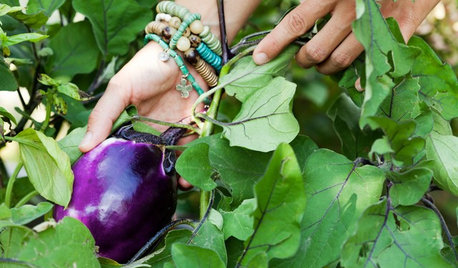
EDIBLE GARDENSHouzz Call: What Did You Grow This Summer?
Let’s celebrate the homegrown fruits and vegetables of the season. Post your pictures and tell us about your harvest
Full Story
REMODELING GUIDESWhich Window for Your World?
The view and fresh air from your windows make a huge impact on the experience of being in your house
Full Story
KITCHEN DESIGN8 Kitchen Organizing Ideas for Messy Cooks
Not the clean-as-you-go type? Not to worry. These strategies will help keep your kitchen looking tidy no matter what your cooking style is
Full Story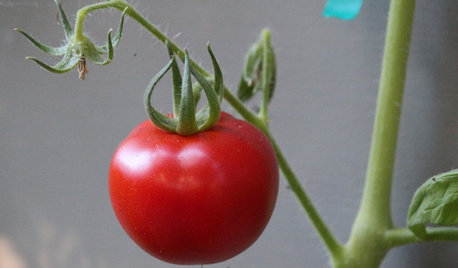
FARM YOUR YARDIf You Have Room for Only One Summer Crop ...
Get an edible that’s long on flavor even if you’re short on space, with a long-time gardener’s favorite picks
Full Story
GREEN BUILDINGHouzz Tour: An Innovative Home Shows What It’s Made Of
Homeowners design their Washington, D.C., residence with sustainability in mind and to accommodate them as they get older
Full Story
FARM YOUR YARDHouzz Call: Home Farmers, Show Us Your Edible Gardens
We want to see where your tomatoes, summer squashes and beautiful berries are growing this summer
Full Story
KITCHEN DESIGNPros Share 6 Must-Have Kitchen Design Features
Design and remodeling pros recommend focusing on these areas to create a functional and stylish kitchen
Full Story
GARDENING GUIDES12 Tips to Help You Start an Edible Garden
Get on your way to growing your own vegetables with a raised bed or a few containers on the patio
Full Story

writersblock (9b/10a)