

Ann T bread help
8 years ago
Featured Answer
Sort by:Oldest
Comments (22)
 8 years agolast modified: 8 years ago
- 8 years agolast modified: 8 years ago
Related Discussions
Ann T---- Bread questions
Comments (5)Lisa, this is my favourite starter. It is a pure starter, made from just rye flour and water. Nothing else. Once you get it going and it is easy to keep. YOu just have to feed it occasionally. Once you get your starter active, you use it to make a biga or a levain and that is what you add to the French baguette recipe rather than yeast. For the Biga, I just add 2 ounces of starter to 1 1/2 cups of flour and a cup of water and let it develop overnight. Home Cookin Chapter: Recipes From Thibeault's Table Sourdough starter - Amy's bread =============================== copied from: http://countrylife.net/pages/recipes/672.html Amy Scherber's Sourdough Starter RYE STARTER From AMY'S BREAD, copyrighted. Amy's bread This starter is begun with rye flour because rye just LOVES to ferment and is an easier starter to get going than a wheat starter. When I first made it, it had a bubble or two within a couple hours. The procedure is to start it with rye flour, then transform it by changing what you feed it. The original rye will dilute to nothing over time and you'll end up with a white flour (or whatever other grain you choose, it could be whole wheat or pumpermickel, or you could leave it as a rye starter) and water based starter, but it had the advantage of beginning it's life from highly fermentable rye flour. Start it with organic rye flour and spring water. Once you have it going well you can switch to all-purpose white (or other) flour as you choose. The use of spring water is recommended for maintenance, however, as tap water may contain elements (such as chlorine) which may be detrimental to the health of your starter. I also recommend that you use a container that you can mark the volume levels of starter each time, so that you will know when it has doubled. Use a marking pen or tape or any other means to indicate on the container the starter levels each time you feed. Phase 1 - Combine 2 oz organic rye flour (room temp) with 4 oz spring water in a clear container. The batter should be about the consistency of very thick pancake batter, add more water or flour if necessary. Cover & let it sit for 36 - 48 hours at 75 - 77 degrees (a little cooler is okay but over 80 you will incubate the wrong kind of bacteria and your culture will have an unpleasant bitter taste). You should start to see tiny bubbles forming after about 24 hours. By the time it has doubled, there will be a noticeable network of small bubbles throughout the batter & it will be foaming & bubbling on top. (If the batter has not doubled within 48 hours, feed with 2 oz water & 2 oz flour (add more of either if necessary for the consistency) and let it sit another 24 hours or until you see some definite activity.) Phase 2 - Stir the culture down, notice how soupy it's become. The batter should have a noticeable sour smell & a mildly tangy taste at this point. Add 2 oz water & 2 oz flour and stir vigorously until well-combined. Let it sit for 12 hours. It should be showing a fair amount of activity at this point. You should see lots of foaming & bubbling through the sides as well as on the top. Don't be concerned if the culture deflates & loses volume. This means the yeast has exhausted its food supply, but it will continue to increase in acidity. Don't worry if your culture isn't dramatically active yet. As long as there is some noticeable activity going on and the mixture smells & tastes sour, you're on the right track. Phase 3 - The culture should now have a pronounced, sour, fruity taste and smell, it should not taste musty or bitter (if it does, discard and start again, paying close attention to the temp of the culture at all times). Now you can start "transforming" it into a white (or other) flour based starter. Use 6 oz of the starter, add 3 oz water & 3 oz flour, stir vigorously. Let it sit for 12 hrs at 75 - 77 degrees F. Refresh it again, setting up a maintenance level of 12 oz of starter. This will be your "mother" starter that you use to build the sourdough starters/sponges needed in individual recipes. Each time you take part of the mother out to build a starter, you must refresh it with equal weights of flour and water to bring it back up to its maintenance level. To maintain - Use 6 oz of the mother culture (discard the rest), add 3 oz water & 3 oz flour, stir vigorously, let it sit at room temp until doubled in volume. A strong mother will double in 8-12 hours. If yours doesn't do that, let it continue to sit out until it has a nice tangy taste and smell; discard all but 6 oz and repeat this procedure. Repeat this procedure as many times as necessary until the mother doubles within 8-12 hrs. It may take several days. Don't get discouraged, it's worth the effort. To use for recipes - Combine 1/2 c (5 oz) Mother from the refrigerator, add 3 oz flour and 2.5 oz warm water (85 - 90 degrees). The mixture will be stiffer than the mother. Let it sit, covered, until doubled in volume (if it doesn't do so go back to maintenance procedure). When the starter has doubled, it is ready to use in a recipe. Measure the amount needed and discard any that remains....See MoreAnnT's amazing bread pudding
Comments (22)As Cookie mentioned Bread And Butter Pudding is a very forgiveable recipe. I like to have a little custard ribboned through the bread so I use less bread or increase the custard if I am making it for a crowd. Sometimes I cut the crusts off and sometimes I don't. Other times I leave the slices whole, butter and layer and sometimes I butter the bread and then cut it into cubes before tossing with the custard. You can use just about any bread you want. Regular White, French, Italian, raisin, etc... I've made it using a Chocolate bread too and instead of the caramel sauce I served it with a cream anglaise sauce. I've also used leftover gingerbread cake and a spice cake to make this pudding. It was amazing with the caramel sauce....See MoreQuestion about AnnT's Bread Pudding
Comments (4)I usually make it with homemade Italian or French because that is what I usually have around. And I do prefer it made with a white bread. But I also make it out of gingerbread or spicy loaf cake or even a chocolate bread. Just about any bread will work. I don't add raisins or other dried fruit, but it you like raisins or currants just add them. Nancy, Actually, even grocery store white will work. The bread totally absorbs the egg custard and holds up well in bread and butter putting. My mom wasn't a very good cook, but she made a great Bread and Butter pudding and all she ever used was grocery store bread. Ann...See MoreAnn T's chickpea flat bread
Comments (8)Sleevendog, no it is a different recipe. I use chickpeas, not chickpea flour. A google search using Thibeault's Table will bring up all the recipes I've posted to the blog. Was the naan baked on your wood stove? I love Naan bread, but I'm always a little disappointed in homemade Naan. Never quite tastes the same as naan baked in a tandoori oven. Chickpea Flatbread Source: Souvlaki for the Soul 1 cup of all-purpose flour 1 cup of wholewheat flour 1/2 of a 540mL/18oz can of chickpeas (garbanzos) along with some of the liquid from the can 1/2 to 3/4 a cup of warm water 1/4 cup of olive oil 1 teaspoon of cumin 1 teaspoon of turmeric 1 teaspoon of cayenne pepper (Omitted) 1/2 a teaspoon of salt Edited: Note: This recipe can be cut in half, by leaving out the Wholewheat flour and using just one cup of all-purpose flour, and reducing other ingredients by half. Place the flour and spices in the bowl of a food processor. Add the chickpeas and some of their juice from the can, the olive oil along with some of the warm water. Process until the dough comes together and a ball forms. The dough should be soft. Add more water if necessary. Process for approximately 60 seconds. Wrap dough in plastic wrap and set a side to rest for at least 30 minutes. Divide dough into balls about the size of a golf ball. Roll each ball into a circle approximately 6 to 8 inches. Cook the on a cast iron griddle or skillet. When the bread starts to get little brown spots and puff up ( 15 to 20 seconds), turn over and cook on the other side. Wrap in a towel or a tortilla warmer to keep warm while remaining flatbreads are baked. Here is a link that might be useful: Link...See More 8 years ago
 8 years ago
- 8 years ago
 8 years agolast modified: 8 years ago
- 8 years ago
- 8 years agolast modified: 8 years ago
 8 years agolast modified: 8 years ago
- 8 years ago
- 8 years agolast modified: 8 years ago
- 8 years agolast modified: 8 years ago
- 8 years ago
- 8 years agolast modified: 8 years ago
- 8 years ago
- 8 years ago
 8 years agolast modified: 8 years ago
- 8 years ago
- 8 years ago
- 8 years ago
- 8 years ago
Related Stories
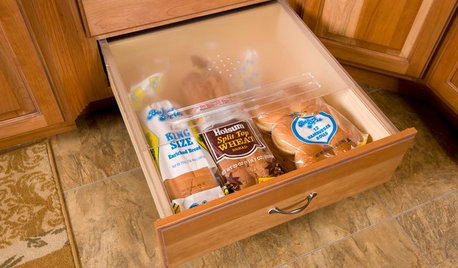
DESIGN POPBakers’ Home Storage Tips for Sliced Bread’s 90th Birthday
In honor of the bread slicer’s debut in 1928, we offer the best bread storage tips since, well ... you get it
Full Story
SELLING YOUR HOUSE10 Low-Cost Tweaks to Help Your Home Sell
Put these inexpensive but invaluable fixes on your to-do list before you put your home on the market
Full Story
HOUZZ TOURSHouzz Tour: Lovingly Resurrecting a Historic Queen Anne
Dedication and a keen eye turn a neglected eyesore into the jewel of its Atlanta neighborhood
Full Story
HOUZZ TOURSMy Houzz: DIY Love Reforms a Dated Cape Ann Home
Handmade touches and classic neutrals transform a dark Massachusetts house into a beautiful home fit for a family
Full Story
HOUZZ TOURSMy Houzz: Honoring the Past in an 1891 Queen Anne
Antiques and respectful renovations give a home in Oregon old-world charm and modern-day comforts
Full Story
DISASTER PREP & RECOVERYHurricane Harvey: How You Can Help
Want to donate or volunteer to aid victims of the storm? Here are groups assisting with disaster relief and recovery
Full Story
SELLING YOUR HOUSEThe Real Scents That Will Help Sell Your House
Ditch the potpourri and baked cookies. Follow these guidelines on scents to use and avoid to help sell your home
Full Story
REMODELING GUIDESMajor Remodel: Restoring a Queen Anne to Glory
Misguided 1970s changes marred this Victorian-era home in Portland, until a dedicated family moved in
Full Story
MOST POPULAR9 Real Ways You Can Help After a House Fire
Suggestions from someone who lost her home to fire — and experienced the staggering generosity of community
Full Story
SELLING YOUR HOUSEHelp for Selling Your Home Faster — and Maybe for More
Prep your home properly before you put it on the market. Learn what tasks are worth the money and the best pros for the jobs
Full Story

2ManyDiversions