

Ann T. and others...
8 years ago
Featured Answer
Sort by:Oldest
Comments (16)
Related Discussions
RRD - Decting the mite - Question for Ann or others
Comments (3)But the obvious doesn't apply to eriophyid mites. In spring, according to Jim Amrine, it's often hard to find them. He has a patch of roses near his office with RRD and he can pretty much find them there in small numbers, year round. That's where I first saw them. Where they are, most often is on a stem, just near and above the leaf axil after you pull off a leaf. They are very close to transparent. So incident light is a necessity. Incident light is a clear white light (we've used those nasty little, get very hot desk lamps, but they burn out too soon). You want one to the right of the microscope and one opposite it, on the left. (The best lights would be fibre optics and they are easy to manipulate, but the ones we priced were too much.) Start by looking at aphids. To get an idea of size, look to the aphids' legs. Now focus on the part of the leg that the aphid steps on. Now it's in that size range that the eriophyid mites are. On a mature leaf of any kind, you are going to see lots of other critters, carcasses left from their being eaten and instars which are the intermediate stages between eggs and the mature mites and thrips and aphids and all the other things. One of the neatest instars I've ever seen was what was in the size range of an eriophyid (but NOT an eriophyid instar) but the shape of a square pillow, with two legs at each of the four corners. To see the presumed RRD vector, come August take the outer ten inches of a multiflora stem and look at the leaf axils of the third and fourth leaves down from the growing tip. That's where the scientists did their mite counts. IF it's wet and cold, wait for the temps to get hot and dry...that seems to spur populations. (and to the first question, yes, they use high holding hairspray to stick the mites to their substrate.)...See MoreKelly Ann photos and others
Comments (16)Thanks everyone for the compliments- I wish I could have you all over for a picnic- wish we weren't so far from each other! Sandyseeds- Crepe Myrtle is a favorite and well loved standard shrub / tree here in NC. It lines the streets and cul de sacs everywhere. Mine smells like vanilla, so does the white variety. I do not know what the name is of this little purple guy- I rescued him from a dry stony lawn when he was 2 feet tall, 3 yrs ago. Actually- I really don't like Tabu- my sister had it when we were young- too strong. I just bought vanilla coconut body spray from bath and body works- keep it in the fridge and spritz it on when I come in from the heat. Refreshing! I also have a sweetly scented blooming Hawaiian white flowering ginger, and my Gardenia is in full flush- I can smell it right now coming in through the window. They love cool nights- and it's been in the low 60's lately. Glad everyone enjoyed! kasha77...See MoreFor Ann T or Linda C, or other cooks
Comments (16)Ann T, I never even considered whether or not there would be internet access in "the Great Beyond"! However, I can assure you that I am still alive and kicking, in spite of making chicken stock with skin for several decades. Funny, I don't like chicken skin and I've always peeled it off the chicken and fed it to the dog or put it into my stock bag in the freezer but when I make stock, the skin always goes in. As Rachelellen mentioned, roasted chicken skin gives a nice flavor too, so if I roast a chicken, all that skin goes into he stock bag, along with the carcass, and it's frozen until I make stock I do tend to be somewhat careful about what I eat, most here know that I raise grass fed organic beef, can my own homegrown organic vegetables, etc. Frankly, though, if most people really considered how commercially available chickens are raised and all the chemicals pumped into them, they'd probably stop eating them altogether, not just the skin. As for the skin cancer thing, I'm not sure eating chicken skin is a health issue, other than the fat content. I do think all the antibiotics and hormones fed to the birds, the extremely unhealthy living conditions they endure and all the chemicals used in processing are far bigger health issues. Annie...See MoreAnne_ct and others: Best tick (and insect) repellents
Comments (25)Roxanna, just so you know....there isn't any pesticide that takes care of only the ticks. As a matter of fact, the ticks are pretty darned tough. The person you spoke to was either lying or misinformed. I would suspect the latter, if he was just the applicator. The comment about using 'only ten ounces for a hundred gallons of water' is a smoke screen.....a meaningless response that sounds good to the customer. The dilution rate depends upon the concentration of the active ingredient. I promise you, the rate that you were quoted was exactly what is needed to get the job done. It may very well have been 10 oz./100 gal.....or half that! The only thing that counts is what comes out of the hose and that will always be just what it takes to kill ticks, the tough guys. The non-target animals....the butterflies, lightning bugs and their beneficial larvae, bees, any insect, as a matter of fact, frogs, toads, lizards, and salamanders are all very sensitive. They came at peak bee activity time, judging by the time of your post. Bees end up taking it back to the hive. Grrrr, that's a cardinal rule for pesticide application: avoid spraying when bees are active. Cats, because they clean themselves, are probably the mammal most likely to be affected....other than those individuals who are very old, ill, immune deficient, very young, taking medications that affect the liver, and more. Pyrethroids have been found in milk. Alisande, the unmarked vans are hilarious....See More 8 years agolizbeth-gardener thanked dcarch7 d c f l a s h 7 @ y a h o o . c o m
 8 years agolast modified: 8 years ago
 8 years ago
- 8 years agolast modified: 8 years ago


Related Stories

ARCHITECTUREAmerican Home Styles: The Queen Anne
The Queen Anne's wide porch, gable and tower were welcome additions to the neighborhood
Full Story
HOUZZ TOURSHouzz Tour: Lovingly Resurrecting a Historic Queen Anne
Dedication and a keen eye turn a neglected eyesore into the jewel of its Atlanta neighborhood
Full Story
HOUZZ TOURSMy Houzz: DIY Love Reforms a Dated Cape Ann Home
Handmade touches and classic neutrals transform a dark Massachusetts house into a beautiful home fit for a family
Full Story
MY HOUZZMy Houzz: Remodeling Dreams Come True in a Queen Anne Victorian
The owners of an 1892 Northern California home overhaul their kitchen and freshen up their living spaces inside and out
Full Story
REMODELING GUIDESMajor Remodel: Restoring a Queen Anne to Glory
Misguided 1970s changes marred this Victorian-era home in Portland, until a dedicated family moved in
Full Story
HOUZZ TOURSMy Houzz: Honoring the Past in an 1891 Queen Anne
Antiques and respectful renovations give a home in Oregon old-world charm and modern-day comforts
Full Story
LIFEYou Said It: ‘Know Thyself’ and Other Houzz Quotables
Design advice, inspiration and observations that struck a chord this week
Full Story
ARCHITECTURERoots of Style: Queen Anne Homes Present Regal Details
Complex facades with bay windows, multiple shingle patterns and even towers make these Victorian-era homes a sight to behold
Full Story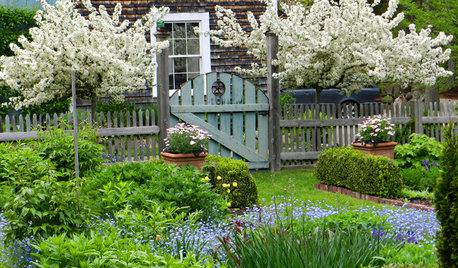
LANDSCAPE DESIGNA Gorgeous Farmhouse Garden on Cape Ann Comes Into Bloom
Tour a Massachusetts landscape designer’s private yard, crafted over two decades for year-round beauty and interest
Full Story
HOUZZ TOURSHouzz Tour: The Remaking of a Queen Anne in Boston
A thorough overhaul with soothing hues and modern-day touches celebrates this home’s Victorian roots
Full StorySponsored

User