

Container for Refrigerator Storage of Bread Dough - avoiding plastic
8 years ago
Featured Answer
Sort by:Oldest
Comments (16)
 8 years ago
Related Discussions
Making Artisan bread with sour dough sponge?
Comments (11)Here is a recipe I found on a blog site (link is below). She has experimented using sourdough starter in addition to the master recipe. Recipes using sourdough starter may be in the next book that Zoe and Jeff are working on. Another site suggested adding 1 c of starter to the basic recipe. Hope this helps. Shelley The Master Recipe: Artisan Free Form Loaf. From Artisan Bread in Five Minutes a Day: The Discovery that Revolutionizes Home Baking by Jeff Hertzberg and Zoe Francois (Thomas Dunne Books, 2007). Copyright 2007 by Jeff Hertzberg and Zoe Francois. Makes four 1 pound loaves. Note: This recipe must be prepared in advance. 3 cups (720g) lukewarm water 1-1/2 tablespoons (4 1/2 teaspoon) granulated yeast (about 1-1/2 packets) 1-1/2 teaspoons kosher salt (or 3 teaspoons table salt) 6-1/2 cups (940g) unbleached flour, plus extra for dusting dough optional 200g of well fed sourdough starter Cornmeal for the peel (or leave on baking paper) In a large plastic resealable container, mix yeast and salt into 3 cups lukewarm (about 100 degrees) water.(make sure you follow this step. When I skipped it I found a ribbon of undisolved yeast). Using a large spoon, stir in flour, mixing until mixture is uniformly moist with no dry patches. Do not knead. Dough will be wet and loose enough to conform to shape of plastic container. Cover, but not with an airtight lid. (I mix mine in a bowl and then put in a lightly oiled 4.75l decor brand container). Let dough rise at room temperature, until dough begins to flatten on top or collapse, at least 2 hours (takes an hour in Darwin) and up to 5 hours. (At this point, dough can be refrigerated up to 2 weeks; refrigerated dough is easier to work with than room-temperature dough, so the authors recommend that first-time bakers refrigerate dough overnight or at least 3 hours.) When ready to bake, sprinkle cornmeal on a pizza peel. Place a broiler pan on bottom rack of oven. Place baking stone on middle rack and repeat oven to 450 degrees, preheating baking stone for at least 20 minutes. Sprinkle a little flour on dough and on your hands. Pull dough up and, using a serrated knife, cut off a grapefruit-size piece (about 1 pound). Working for 30 to 60 seconds (and adding flour as needed to prevent dough from sticking to hands; most dusting flour will fall off, its not intended to be incorporated into dough), turn dough in hands, gently stretching surface of dough, rotating ball a quarter-turn as you go, creating a rounded top and a bunched bottom. Place shaped dough on prepared pizza peel and let rest, uncovered, for 40 minutes. Repeat with remaining dough or refrigerate it in lidded container. (Even one dayÂs storage improves flavor and texture of bread. Dough can also be frozen in 1-pound portions in airtight containers and defrosted overnight in refrigerator prior to baking day.) Dust dough with flour. Using a serrated knife, slash top of dough in three parallel, ¼-inch deep cuts (or in a tic-tac-toe pattern). Slide dough onto preheated baking stone. Pour 1 cup hot tap water into broiler pan and quickly close oven door to trap steam. Bake until crust is well-browned and firm to the touch, about 30 minutes. Remove from oven to a wire rack and cool completely. http://andreainthekitchen.wordpress.com/2008/05/20/artisan-bread-in-five-minutes-a-day-master-recipe/...See MoreCan I keep rich bread dough in fridge?
Comments (5)I bet this recipe will do very well in the refrigerator. I would spray a sheet of plastic wrap with vegetable spray and tuck it over the dough to help maintain the moisture in the dough. Another way to keep moisture in is to place the dough inside a 2-gallon zip-lock bag and press out as much air from the bag as possible before closing it. If you find the dough gets a little dry, add some mashed potatoes (or potato flakes) to the recipe, and I think you will be good to go. In "The Baking Book" the author and microbiologiest, Lloyd M. Moxon, who specializes in yeast biochemistry explains why. "Mashed potatoes - or any pureed vegetable - is vital for refrigerator doughs because it preserves moisture in the dry climate of the refrigerator." Adding mashed potatoes was quite common for refrigerator recipes - Betty Crocker's Refrigerator Bread Recipe is a classic, and it includes mashed potatoes. What happens to refrigerated dough... Retarding dough in the refrigerator has a few up-sides. The bacteria will produce some tasty acids so the flavor is enhanced. While the yeast is dormant and no longer consuming the sugars, the bacteria feeds on them and you'll get more complex flavors. Chilling the dough will probably result in a slightly more open texture. But on the down-side, it also may reduce the ovenspring and the loaf volume. There is "trick" I found in "CookWise" by Shirley O. Corriher, you can do if you find the loaf volume is smaller than normal and would like more volume. After chilling the dough, you can dissolve a little yeast (1/2 t.) in a few tablespoons of warm water and knead this into the dough before shaping. Another thing you may notice, the bread won't be as dark brown and the whole wheat flavor more mild. That's a characteristic from the long hydration time. Let us know how it goes.... -Grainlady...See MoreFor Bread..Counter, Breadbox or Refrigerator?
Comments (30)Baked goods that don't start to grow mold in 48 hours at room temps must have a lot of preservatives in them. (You may only *see* the mold a little later.) A little mold might be good for us, but the preservatives aren't! Baked goods go into the freezer at my house: Bread, dinner rolls, muffins. Three weeks ago I did a Costco run for two loaves of their rosemary bread and a dozen giant muffins. Now I need more bread, but have six muffins left in the freezer. (One-third of a muffin is plenty for each of us.) I'd have to be running to the grocery constantly -- and paying more -- if I didn't buy and freeze. IMO the frozen muffins are even better than fresh after 30 sec. in the M/W....See MoreCan you freeze cookie dough containing ground nuts?
Comments (8)Thank you all! My cookies are Swedish, too, colleenoz! All the cookies I make for Christmas are either Swedish or Danish, handed down from my Danish grandmother (who married a Swede). Your recipe is probably just like mine. With equal amounts finely ground nuts and flour, they break apart in your mouth in a flurry of tender texture and flavor. For the first time ever, we had problems with the recipe, which is why they didn’t all get baked. We didn’t know whether to blame the new oven (which was a problem for pretty much everything) or a difference in the dough. I think maybe both. Instead of the normal 20 minutes at 350 to get slightly brown on the bottom, they took 40 minutes plus. Then, they shattered when trying to roll them in powdered sugar. I’m not good at analyzing a problem and knowing how to fix it. We used to buy the pecans pre-ground. The nut store we bought them at went out of business. We bought a 3 lb bag of whole pecans and ground them ourselves in the food processor. Last year went fine. This year the dough seemed too moist. We had a problem even forming the balls, then they shattered as I wrote above. I was in the process of adding more flour to compensate, and doing test bakes, when I decided it was time to pull the plug and stop baking. I think the pecans must have been very fresh, and were too moist. We ground them a couple of days ahead and I should have turned them and let them dry a bit, instead of covering the bowl. I noticed the ground pecans were moist, but I didn’t do anything with the knowledge. The pecan meal I used to buy pre-ground was much drier. Either that or leave out the 3 T of water the recipe calls for....See More- 8 years ago
- 8 years ago
- 8 years ago
- 8 years ago
 8 years ago
- 8 years ago
 8 years agolast modified: 8 years ago
- 8 years ago
- 8 years ago
 8 years ago
- 8 years ago
Related Stories
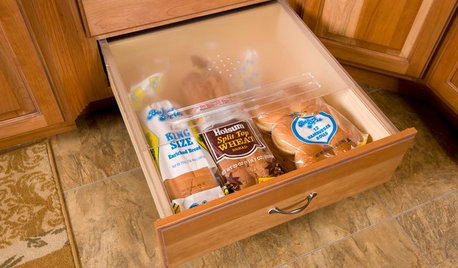
DESIGN POPBakers’ Home Storage Tips for Sliced Bread’s 90th Birthday
In honor of the bread slicer’s debut in 1928, we offer the best bread storage tips since, well ... you get it
Full Story
ORGANIZING5 Storage Container Materials to Consider for Sustainability
These earth-friendly materials can help you get organized
Full Story
ORGANIZINGWhen and How to Use Storage Containers to Organize Your Things
A professional organizer shares tips on how to categorize items and which containers are best for storing things
Full Story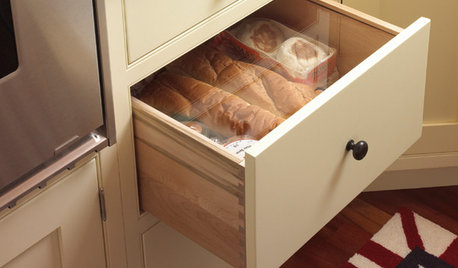
KITCHEN DESIGNKitchen Ideas for Bread Lovers
Any way you slice it, a kitchen designed with bread in mind conveys warmth and homeyness
Full Story
KITCHEN DESIGNPlain-Sight Storage for the Kitchen Stuff You Use Most
Turn essential cookware, tools and even spices into design assets by displaying them out in the open
Full Story
KITCHEN STORAGEFoolproof Storage Solutions for Corner Kitchen Cabinets
Consider Lazy Susans, pullouts and more to maximize storage
Full Story
KITCHEN DESIGN9 Ways to Avoid Kitchen Traffic Jams
Rubbing elbows with chefs isn't always a boon. Consider circulation pathways for a kitchen that lets everyone work in comfort
Full Story
MOST POPULARThe 15 Most Popular Kitchen Storage Ideas on Houzz
Solve common kitchen dilemmas in style with custom and ready-made organizers, drawers, shelves and more
Full Story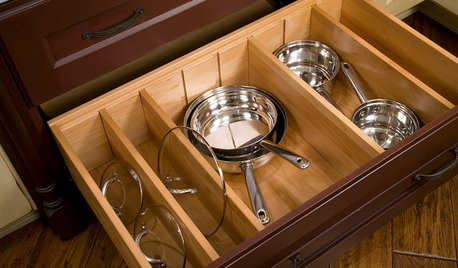
MOST POPULARA Professional Organizer Shares Her Top 6 Storage Products
Drawer dividers and undersink trash cans are among a pro’s go-tos for getting organized in the kitchen and elsewhere
Full Story
KITCHEN STORAGE13 Popular Kitchen Storage Ideas and What They Cost
Corner drawers, appliance garages, platter storage and in-counter knife slots are a few details you may not want to leave out
Full Story


Marilyn Sue