

Whole Wheat (continued)
10 years ago

Featured Answer
Sort by:Oldest
Comments (9)
 10 years ago
 10 years agolast modified: 10 years ago
Related Discussions
Whole Wheat No Knead Bread
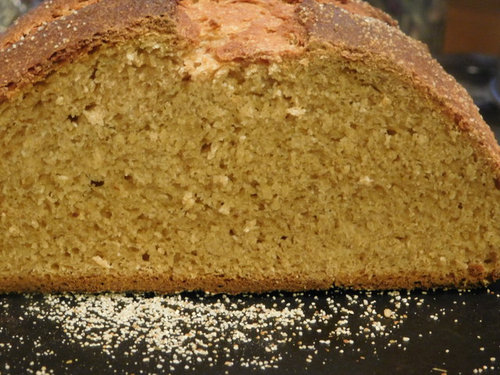
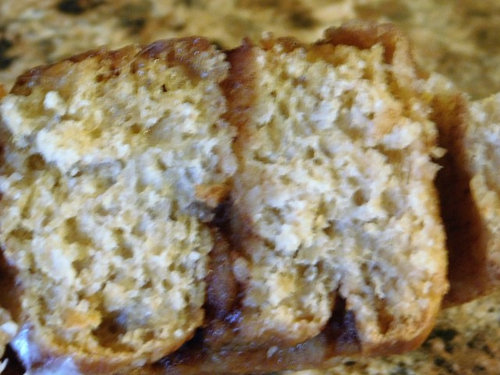
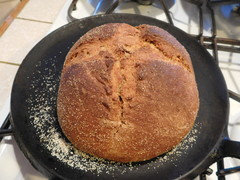
Comments (10)ohiomom - Not having made the recipe you posted, but comparing it to the Pillsbury recipe, I'd certainly try it at a lower temperature. You might lower it by 25°F and check the results, then lower it another 25°F the next time, etc., until you get the results you want. I probably wouldn't lower it below 350°F. You'd also want to test the loaf for doneness by using an instant read thermometer - between 190-200°F. The loaves in the Pillsbury book look like traditional, high-rising, domed top loaves. Your loaf looks like it has a nice crumb, but it also looks like it didn't rise properly or deflated from over-proofing, perhaps due to the adjustment of the salt. In your recipe, I think I'd use at least 2 to 2-1/2 t. of salt for that amount of flour/yeast. I believe the minimum "average" amount of salt in yeast breads is 1/3 t. per 1 cup of flour. When you divide that much sodium per serving, it's actually very little sodium per 1-ounce slice of bread. Salt adds a lot of flavor, but if you're like me, I've eliminated a lot of dietary sodium, so less is best for my tastebuds. "Old" recipes do tend call for more salt than I typically use, and I adjust them according to my tastebuds. The rule of thumb is, when you adjust the salt in a yeast bread recipe, adjust the yeast by an equal amount. For instance, if you reduce the salt by 50%, then adjust the yeast by that much as well. But as with all "rules" concerning breadmaking, there is always a way to break the rules and breadmaking is all about contridictions. There are many ways and techniques to make bread, and bread is quite individual. How many of us have made a loaf of bread and accidently left the salt out of it entirely, and still got a loaf of bread.... Salt has these functions in yeast breads, so if you reduce or increase salt, you may affect these things from the science perspective. 1. tightens gluten 2. enhances flavor 3. slows yeast activity 4. controls bacterial growth For those of you who lack a pilot light to warm your oven for proofing dough, check the temperature of your oven with a thermometer (with the door closed, light on, and 20 minutes to warm up). I've noted in my oven it stays a perfect 80-85°F - in the farthest corner away from the light. It's too warm close to the light or in the middle of the oven. But to contradict bread "rules" again, dough rises just fine at much colder temperatures, it just takes longer than when using an optimum temperature and optimum humidity. Cold rises actually contribute a lot of flavor to bread. -Grainlady...See MoreWhole-wheat or whole-grain yeast rolls?
Comments (2)Just make your regular yeast rolls and substitute some whole wheat flour for about half the white flour. But I wouldn't worry...Wheat rolls are better fora diabetic...but they are not a really good thing to eat. The thing to remember about a diabetic diet...is it's not all 'white carbs" but things with a low gylcemic index...t.hose things that take longer to turn to sugar.... Whole wheat is better than white bread....but it's still carbohydrate. Don't worry about it...put some rye crisp or rye bread on the table if you think he will miss it....See MoreSubstituting AP Flour for Whole Wheat Flour
Comments (4)Muffins just came out of the oven and we like them! It is my first time ever to taste Morning Glory Muffins. With my substitutions, they should probably be called Not-Quite Morning Glory Muffins. Not only did I substitute the flour, but I had to substitute the oil too. I’m almost out of canola oil. I had enough coconut oil to get close to 3/4 cup, so I used that and topped it off with a dab of canola oil to equal 3/4 cup. The recipe called for orange zest. I’m out of oranges, so I added 1 Tblsp of Cointreau. I also omitted the nuts. Although I have nuts in the freezer, I don’t really care for them. So now that forlorn little apple that has been setting on the counter longer than I’m willing to admit has been put to good use. btw, it was a substitution also. The recipe calls for Granny Smith, but I used Honeycrisp. Plllog, thanks for the tip, but no unsweetened bran cereal in the house....See MoreTartine sourdough with more whole wheat
Comments (5)Yes. Water and flour, set aside for about 8 hours. Then add the levain, let it rest so the yeast can gorge and burp, and water/salt, the way you're accustomed. The long soak won't harm the white and it should make it easier to handle the whole lot. The gluten will start to develop, and should give you a stronger loaf. You might want to put the whole wheat in first, stir with water, then add the white, just to make sure the ww gets a good crack at the water from the start. When you first mix in the water, the dough might seem really dry and crumbly. It's fine. Cover the bowl and let it set, and it should be damp all the way through after the given time. The vitamin c helps as a dough conditioner and combats the antinutrients in whole wheat. I got a small jar of vitamin c powder/crystals at Whole Foods which might last forever, but you can just pulverize a vitamin c tablet or open a capsule. About 1/8 tsp. per loaf or pound. I highly recommend it. I'd say good luck, but you know how to bake bread and don't need luck. :)...See More- 10 years ago
- 10 years ago
- 10 years ago
- 10 years ago
- 10 years ago
- 10 years ago

Related Stories

ARCHITECTURERoots of Style: French Eclectic Design Continues to Charm
Hip roofs, towers, quoins ... if your house includes architectural elements like these, you might trace its design lineage to France
Full Story
REMODELING GUIDES10 Tips to Maximize Your Whole-House Remodel
Cover all the bases now to ensure many years of satisfaction with your full renovation, second-story addition or bump-out
Full Story
DECLUTTERING5 Ways to Jump-Start a Whole-House Decluttering Effort
If the piles of paperwork and jampacked closets have you feeling like a deer in the headlights, take a deep breath and a baby step
Full Story
TRANSITIONAL HOMESHouzz Tour: Room for the Whole Gang in This Cape Cod Home
As homeowners transition to being empty nesters, they expand their summer house to serve extended family year-round
Full Story
HOUZZ TOURSHouzz Tour: Whole-House Remodeling Suits a Historic Colonial
Extensive renovations, including additions, update a 1918 Georgia home for modern life while respecting its history
Full Story
Houzz Products: Get a Whole New Look — Without New Furniture
With a fresh-looking decor trio (rug, light fixture, wall covering), they won’t even notice that same-old sofa
Full Story
HOLIDAYSA Thanksgiving Tradition to Last the Whole Year
Looking for a thoughtful yet simple way to capture your family's gratitude? Grab a jar and paper
Full Story
ROOM OF THE DAYRoom of the Day: A Design That Works for the Whole Family
A new kids’ space in the basement enables a young family to give their family room some grown-up style
Full Story
UNIVERSAL DESIGN12 Must-Haves for Aging in Place
Design a home that will continue to be accessible, safe and stylish as the years go by
Full Story
SMALL KITCHENSKitchen of the Week: A Small Galley With Maximum Style and Efficiency
An architect makes the most of her family’s modest kitchen, creating a continuous flow with the rest of the living space
Full Story

shambo