Houzz Logo Print
emerogork2

Home rendered lard question

10 years ago

I have made many a pie crust using store bought lard in that green box.... I freeze the lard and then grate it using a cheese shredder then mix it with the flour.

This time, I want to use home rendered lard. The butcher gave me 4 lbs of pork fat that boiled out to about 1 lb of lard.

The problem is that it is not as hard, even if I freeze it, as the store bought (hydrogenated) lard. Is there a different method to make the pie dough this way?


Comments (46)

  • 10 years ago
    last modified: 10 years ago

    Nope....just use as you use that bad hydrogenated stuff. Great for pie crusts!
    I use 1/3 cup lard to every cup of flour....pinch of salt and about 3 T water to make it hang together.

  • 10 years ago

    My recipe is 1 lb lard, 6 cups flour, 1 cup cold water, 1 tsp salt. It used to make 2 pies but since I am trending to thicker crusts, it is down to two.

    My concern is that the home rendered lard is soft and may make the flour more like mud instead of little pellets before I add the water. I guess I will be freezing the flour along with the lard so that when I mix them, it will keep it separated until I add the water.


  • Related Discussions

    Lard, tell me what I need to know.

    Q

    Comments (32)
    The sausage place was wonderful. The person who helped us was very knowledgable. No lard or pork belly available today. Bought 20 german bratwurst. Went to a nearby Wegmans that is more "international" than the Wegmans that I usually go to. After way too much time standing in Wegmans trying to make a decision.... I purchased Morrell Snow cap lard. It does say "with hydrogenated lard bht and bha added to help protect flavor". I'm going to try it with the idea of going back to the sausage place to get pure lard when they have it available. For this weekend, If the crullers don't come out with the Morrel lard I will use crisco. I will try them again with pure lard when I get it. Many of you make rendering lard look easy but I need to make sure I don't run out of time with hosting two parties this weekend. Thank you all for the help! On a side note, I dropped off my grandmothers cookbook at a binding repair shop. The cover is completely off. They are going to put on a new cover trying to make it look as much as the original as possible. Kinda of sad to replace the original cover but its the only way to make the book usable.
    ...See More

    KAW...rendering lard..why I love old skillets..

    Q

    Comments (28)
    Yum.. All these posts are making me hungry! Caryscot... I just posted a link to the vodka pie crust recipe on the Thanksgiving thread for Oldbat2be. Anyone interested can call a butcher shop and ask them to save you the leaf fat. I understand that's the best to use for rendering. Good lard from well raised hogs is sooo much better than all this vegetable oil. I've read where canola and corn oil and such go rancid AS you are digesting (or trying to anyway) them. That is if they aren't already rancid by the time you use them. They are polyunsaturated and very unstable. Lard, coconut oil, tallow, palm shortening... very stable, long shelf life and full of nutrients. The veil is starting to be pulled back on the processed food industry and it's 'phude' products. Long overdue, IMO. Glad to see all the real food people on GW!
    ...See More

    Making pastry with home rendered lard

    Q

    Comments (12)
    Madonna, for you I'll also pray for no snow, so you can get to your DH without any driving issues. Dave, my mechanic/son-in-law assures me that if your vehicle runs OK, just ignore the light until you can conveniently deal with it. It can be anything from the gas tank cap not being on tight to a loose wire in the radio. If it runs OK, just go see DH and get to the Jeep repair when you can. I was hoping you would get to go south, but with DH in the hospital, I guess that's on hold. (sigh) You'll both be in my prayers, stay strong, I'll be thinking of you. I really like the Nathan's Never Fail pastry recipe, but that other poster was having such an issue with home rendered lard that I decided to haul out the most basic recipe I had, one that specifically called for lard, and use it. The recipe actually made enough for three crusts, as I tend to roll my pastry somewhat thin, so I have an extra in the fridge right now. Maybe coconut cream... LindaC, you're right, I'm not worried about my driving, I'm worried about everyone else's, snow or not. And don't even get me started on those people who need to be talking on the phone or texting while driving, and can't even get through the pharmacy drive-thru without holding up the line behind them because they're busy texting instead of watching where they're driving! As for the pie crust, I usually don't measure the fat very carefully, I plop it in. About half a pint jar of lard in the fridge? That's probably a cup, or at least it's close enough, LOL. I remember Grandma used to use a two cup measure, add a cup of water then fill with lard to the 2 cup line. She'd then use some of the water for the crust, and didn't have a greasy measuring cup to wash because the fat floated in the water, so I know she was more careful than me! Annie
    ...See More

    Rendering Lard

    Q

    Comments (22)
    Sure, Artemis, here it is: Jalapeno and Cracklin' Cornbread 1 cup cornmeal 1 teaspoon salt 1/2 teaspoon baking soda 1 tablespoon butter or lard or bacon grease 1 cup pork cracklings (fried pork skins) 1 egg 1 jalapeno pepper, seeded and minced 1 cup buttermilk 1 cup shredded cheddar cheese (optional) Preheat an oven to 425 degrees. Stir together the cornmeal, salt, and baking soda; set aside. Place the butter/lard/bacon grease into a 9 inch cast iron skillet, and place into the oven until the skillet is hot and the shortening has melted. Meanwhile, beat the egg in a bowl along with the jalapeno pepper and buttermilk; stir in the cracklings. Stir in the cornmeal mixture until moistened, add cheese and stir, then pour the batter into the preheated skillet. Bake in the preheated oven until the top of the cornbread is brown, and it feels firm to the touch, 30 to 40 minutes. Turn out onto a serving plate and cut into wedges; serve immediately. Sometimes I add the cheese, sometimes not. I also like to melt a little lard, add some chopped onion, maybe 1/4 cup, along with the jalapeno, saute until it's starting to brown and use that. I've added a can of chopped green chilies instead of the jalapeno when I didn't have anything else. I've crumbled some bacon in instead of the cracklins. It's very forgiving, LOL. I see that most of the recipes call for boiling the cracklins and I'm not sure why, maybe homemade ones are different than commercial ones? I like the nice crunchy pieces in the cornbread for texture, so I never boil mine.
    ...See More
  • 10 years ago

    I wonder if you have some water in your lard?...The proportions of 1 pound to 6 cups of flour is what I use....but I do a smaller scale...like a single crust at a time! LOL!
    Do you cut in the fat to the flour for your crust? or use a mixer?
    I think if you cut it in....you will be fine just with very cold lard.....anyhow it has always worked for me.

  • 10 years ago

    I agree, my home rendered lard is very hard when I take it out of the freezer, and still pretty solid when I take it from the refrigerator. I just use a pastry cutter to cut it into the flour, but Grandma used a fork, sometimes two butter knives but that took dexterity I never had.

    My lard cuts into the flour and leaves small crumbly pieces, just like butter or shortening.

    Did you use water when you rendered the lard? If so, LindaC may be right, but I'd think the fat and water would separate upon storage, so it wouldn't be mixed in.

    Annie

  • 10 years ago

    I bought lard from a local Mennonite farmer. I keep it in the freezer, then in the frig. It's very cold, comes out in chunks when I use my knife. I use 3/4 butter and 1/4 lard in my pie crust.

  • 10 years ago

    I tried butter once but the water content prevented the flaky crust I want.


  • 10 years ago

    I guess the method I developed only works for hydrogenated lard from the green (blue?) box. The home rendered lard became slimy too fast and I did end up with a ball of mud. I actually had to add more flour to get it right.

    I am sure that no water was in the lard as it separated over night. I then froze it into 1/4 lb sticks using butter wrappers. I then use a cheese shredder to get thin strips right into the flour. From there I mix the two a bit, refrigerate, then ass 1 c of ice water.

    The home rendered became slimy too fast. There was a lot more clean up then when using store bought lard. As I said, my technique was developed using the store bought lard and maybe I need a different approach.

    Unless this crust turns out better, I doubt I am going to render my own again. Too long to render, too much odor, and too slimy when trying to use it.


  • 10 years ago

    Hmm. Maybe it IS your technique, as I know Ann T makes her pie crusts with 100% butter and it's very flakey, she doesn't seem to have that problem.

    My pie crusts are never slimy and the lard didn't have a noticeable odor. The lard was pure enough to read through when liquid and white when solid. The pie crust was flakey and tender. I can see that the lard may have softened faster than the hydrogenated stuff, that's why they hydrogenate it. It's much worse for you, of course, but storage is simpler for the producers.

    For me clean up is the same, I use a pastry blender no matter the fat, a cup for water and a bowl for mixing. What made clean up harder? I'd think you'd have the same utensils no matter which fat you chose.

    It didn't take that long to render the lard, either. I ground the fat with the meat grinder on the KitchenAid and put it in the crockpot, then went away until it was all melted, ladled it through the filters I have for my Chemex coffee pot and froze in pint jars.

    Ah, but different people like different things. I know several people here swear by that pie crust that contains vodka and gets made in the food processor and that was just one horrible gloppy mess for me. To each their own. Pie crust isn't exactly health food, LOL, but I'm opting for the healthiest fat I can use, which happens to be home rendered lard from my pastured pigs. I may take a page from Ann T's book, though, and add some butter for the flavor. Plus, I love working with dough made with lard, it's more elastic and easier for me to handle without tearing or sticking.

    Annie


  • 10 years ago

    I agree....your problem is your technique not the lard.
    I make all butter crust...all lard...or a mix. sometimes I make the vodka in the crust....sometimes if I am in a real rush I will use the cuisinart....but again it's a matter of technique.....a fast hand on the pulse button. 2 seconds too much and it's glue.
    I have a dear friend....a good old, honest to God, can make anything cook....but she can't make a pie crust to save her soul. Liz, I said, nothing to it. I'll come over next week and we will make pies until you get it right.....but I think she was genetically unable to make a pie crust. LOL! They got tough, and tore, shrank and wouldn't seal on the edges and generally were disaster.

  • 10 years ago

    To my knowledge is to mix pieces of lard with flour before adding any water. Is not butter largely water? It obviously works as many have indicated. Someday I will try it and right now, home rendered is low on the totem pole if for nothing else than the slimy mess.

    Right now, the dough is resting in the refrigerator. I will try it sometime this weekend. If it is worth the effort in flavor and flakiness then I will consider developing a technique for it. I will watch for suggestions here.

    Simply put, for me using frozen commercial lard, I use a cheese shredder (1/4" holes on the grater) directly into chilled flour, mix a little bit, and then add the water. Very easy, low mess but that is probably only because the frozen lard is more solid than home rendered lard.

    I have heard that the hydrogenated lard loses its offensive problems when it is cooked at 425 degrees.


  • 10 years ago

    I think if butter was mainly water, there wouldn't be so many calories in it. Sigh!

    I only use butter in pastry. It's never slimy. My recipe is :

    240g flour

    190g butter

    Whizz in food processor

    Add 60g creme fraiche/yogurt or cream.

    Roll out. Very melty in the mouth.

  • 10 years ago

    Do you have any different technique that you use for each one?

    Some research:
    Butter is about 7 calories/gram and averages at 14.5% water.
    Clarified butter is about 9 calories/gram.
    Lard is about 9 calories/gram, apparently there is no difference if it is hydrogenated or not..


  • 10 years ago

    Well, it's not the calories that make hydrogenated lard unhealthy. It's the trans fats!

  • 10 years ago

    Admittedly, I know little about trans fats but research shows that lard, even hydrogenated if there is a connection, has none.

    Butter contains 3.7g / stick. Is that much?


  • 10 years ago

    From what I've read, there are very tiny amounts of trans fats in butter that are naturally occurring. The same can't be said for margarine.

    We are now told that butter isn't bad for us.

  • 10 years ago

    Partially hydrogenated lard Does contain an unhealthy amount of trans fats. And if you renedered the lard by boiling and skimmed the lard from the top of the wter...it will contain water, just as butter contains some water. That's why your pie crust is slimy....you are adding too much water.

  • 10 years ago
    last modified: 10 years ago

    Islay, your recipe using yogurt sounds intriguing. I might try that next time; is it easy to roll out? Does it make 2 crusts?

  • 10 years ago

    And if you renedered the lard by boiling and skimmed the lard from
    the top of the water...it will contain water, just as butter contains
    some water. That's why your pie crust is slimy....you are adding too
    much water."

    I was figuring that it was slimy because it did not contain the hydrogenation that solidifies it. It was slimy because it was melting I guess the next time I render my own fat, I will have to sustain the lard at 230 degrees to evaporate the water.

    Do you think that will make any effect?

    I doubt that the water in butter has any similar origin as this water you say is in home rendered lard. I am going to have to read up on that one....


  • 10 years ago

    I tried rendering lard with added water, but found that you had to let the water evaporate before the lard was ready for storage. So I stopped adding water or cooking it stove top, as even slight browning adds a "porky" flavor. I run it through the grinder, put it in a crockpot on low and let it melt slowly, then filter it. I use no added water at all. My on-line research says that butter is 15 to 20% water, which is actually supposed to add flakiness to a pie crust, as the water evaporates and leaves those pockets which causes flakiness.

    Store purchased lard not only has transfats and is hydrogenated, a process which adds hydrogen and helps keep the lard stable. However, it makes it even worse for your cholesterol level. Plus commercial lard is bleached, has added preservatives, BHT, things I just don't want to eat.

    I think the grating of frozen fat into the flour is a good idea, but I don't think the lard will stay frozen for long, you'll have to change your technique to make it work, probably.

    Annie

  • 10 years ago

    "I think the grating of frozen fat into the flour is a good idea, but I
    don't think the lard will stay frozen for long"

    It did not and it was real slimy before I finished. I do not get this result from the commercial lard due to being partially hydrogenated. This is how I developed my technique that apparently does not work for home rendered lard.

    "You'll have to change
    your technique to make it work, probably."

    Yep. with the thoughts presented here, I am going to try it again. I can think of a few ways.

    1) Try boiling it again then let it separate. Draw off the water then heat the lard on low to evaporate the rest of the water.

    2) How about using a double boiler? heat the water but keep the fat in a separate container that doesn't have any water.

    3) How about baking it at 200 covered without any water.

    4) other?

    These should prove that what I have in fact does contain water.
    It is going to take some convincing.

    I just discovered that I still have almost a pound of duck fat.
    Ponder that one....


  • 10 years ago

    emerogork, my instructions say to bake at 225F for 30 minutes to an hour. Skim the pieces from the top, filter the fat and store. That's with fresh fat, not lard that was rendered prior, but if it works with the fresh stuff, it should work for a "re-rendering".

    Good luck!

    Annie

  • 10 years ago
    last modified: 10 years ago

    Butter can contain a high water content. For instance, Publix store brand butter has way more water in it than a premium butter like President or even Cabot. It's one the main reasons it's so much cheaper.

    But since you have this problem with both butter and lard, I would agree with everyone else that it's most likely technique.

  • 10 years ago

    It's been years since I had a whole hog butchered, but I rendered the lard on the stovetop in a cast iron Dutch oven....VERY slowly....no water.
    And then there is schmaltz....never made a crust with it, but I hear it's delicious even if very hard to handle and even lower in unsaturated fats than lard.

  • 10 years ago

    There seems to have been some mixing of terms. Hydration (adding water) and Hydrogenation which is adding/mixing hydrogen to stabilize and prevent melting at room temperature.

    It makes for a lighter pastry because hydrogen is lighter than air.

  • 10 years ago

    I am by no means a perfect crust maker but I love butter in pastry. I figure I make a half dozen or so pies a year so it isn't too awful for me. I also grate the butter into the flour.

    I finally tried the vodka recipe at Christmas - the dough was much stickier/slimier. The result was different than my usual crust. Softer, still flaky and slightly puffed. I liked the top crust better but the bottom was a bit mushy.

    I only used a lard crust once. I helped a neighbor make a phenomenal number of a traditional italian Christmas cookie. It was fishshaped and stuffed with dried fruit. Mostly I remember we made soo many, it took soo long and he was not sure whether there were enough for his family. Lol.

    My sister just butchered two small pigs. I am buying a quarter. Maybe I will try rendering the lard. I know last time my mom and sister were trying to get rid of the fat.

  • 10 years ago

    :) May I please butt in and ask a butchering/lard question? I am about to cut/process 1/2 a hog. I generally do my own twice a year, but have never kept all the fat (just enough to make +++ suet cakes for the birds). For rendering lard for pies etc, , do you use fat from *all* parts of the animal or just the leaf fat? I skin rather than dip & scrape the hogs, so have the option of cutting away as much fat as I want from roasts/cuts etc.

    Thanks! Dawn

  • 10 years ago

    I envy you, you have access to the caul fat. It is a net like layer of fat around the internal organs. It is perfect replacement for string to hold a roast together.

    Please tell me that you don't (or will not now) just discard or render that part....
    The only way I can get it is to pay for a box 50lbs and that is just too much...

  • 10 years ago

    Hydrogenation is not "mixing hydrogen with the fat" it is creating a different molecule of the fat by exposing the fat to hydrogen in the presence of a catalyst. There is no "lighter than air" hydrogen in crisco.
    IF it makes a lighter pastry, and many would argue that it doesn't it's because hydrogenated fat is solid at room temp and will stay in larger pieces rather than mixing closely with the flour.

  • 10 years ago

    Hydrogenation is not "mixing hydrogen with the fat" it is creating a
    different molecule of the fat by exposing the fat to hydrogen in the
    presence of a catalyst.

    Minor point, a very minor one. My focus was that it is not water...
    By definition, it is still mixing.


    There is no "lighter than air" hydrogen in
    crisco.

    hehehe, fell for that one, didn't you?


  • 10 years ago
    last modified: 10 years ago

    Dawn, I keep the "leaf lard", which is around the kidneys, and render that separately, and label it separately. It makes the best pastry and is nearly flavorless.

    I do use fat from the carcass, which I render separately. It still makes pretty good pastry, far better than Crisco ever did, IMO, but I also use it for frying. Lard has an extremely high smoke point, so I can use it stovetop at high heat. I also use it for biscuits, when they are going to be covered with pork sausage gravy, since the flavor is completely lost under that pork/sage mixture.

    I am well aware of the difference between hydration (adding water) and hydrogenation (to make fat more shelf stable and inhibits lard from going rancid as quickly). It seems that OP really doesn't like working with lard. If you prefer shortening, I'd go back to it. (shrug) Pie crust certainly isn't a health food, LOL, no matter what substance you use as the fat component.

    Annie

  • 10 years ago

    "It seems that OP really doesn't like working with lard."

    Makes me smile a bit.. I have never used anything other than lard for my pie crust. The new adventure was with using home rendered lard as opposed to the store bought bricks that my mother always used. My first effort was a bit of an adventure I'd say.

    I am now rendering 4 lbs of trimmed fat at 200 degrees covered in the oven (no added water but I did add some rendered duck fat to prevent the pork from sticking..

    The dough made from that first effort has begin to redeem itself. It came out of the refrigerator and rolled much easier. It is softer and transferred to the pie dish easily. Each of these are a plus over the commercial lard.

    The proof will be in the eating though....
    It will come out of the oven in about 45 minutes.


  • 10 years ago

    Well, I guess I'm still somewhat confused. It's clear that you like working with store bought lard and are not as happy with the stuff you render yourself. Why are you switching? Because of the artificial stuff in store bought lard? Availability? Cost? It seems that your opinion of home rendered lard is negative, at least your first impression. So why change?

    I'm at least glad that your dough became easier to handle. That's where I differ from nearly everyone else. I find chilled dough impossible to work with, so I always roll it immediately after mixing. I also tried the "roll it out on a Silpat so you don't have to add flour". Ahem. That was the biggest fiasco of my many kitchen fiascos, and I've had a lot of them. I finally just threw that dough away and started over.

    I will admit the mistake of calling your store bought lard "shortening". It's not, of course, but I lump it all together in my mind.

    Annie


  • 10 years ago

    "Why are you switching?"
    Not necessarily switching, more so exploring.

    I think the dough was soft because I still had a large water content in the lard.
    The pie made with that lard was quite good.

    The latest effort, oven rendering, is hardening in the refrigerator, soon to be frozen, when I will chop it into sticks and make the next batch of dough. Out of three lbs of trimmed fat, I netted a bit over two lbs of lard.

    You might check into "The Fresh Loaf" web site to see my trail of comments as I explored Pizza Dough!

    It is all in the discovery.


  • 10 years ago

    Ah, now THAT I understand. It's the same reason that my kids ask me why I keep trying different chocolate chip cookie/lasagna/whatever recipes when mine is already "perfect". Well, because there might be a better one, and I wouldn't know if I didn't try. Plus, the experiments are (mostly) edible. (grin)

    Good luck with the lard. I've visited "The Fresh Loaf", but I'm easily distracted and more than slightly hyper-active (something I've never outgrown in spite of being 60) and so when the threads get very lengthy I lose interest, or I click on a link, which takes me to a blog where I have to read about the entire life of someone before I can find the recipe. Which is seldom there, incidentally, because they got it from somewhere else. (sigh)

    Of course the pie was good. How could PIE be bad? (That was a rhetorical question, and requires no answer, LOL)

    Annie

  • 10 years ago

    I recall my mother doing a taste test on chocolate cake mixes. As kids we loved it. The store brand won.....

  • 10 years ago

    Does home rendered lard ever harden or do I have to add some hydrogen to it?

    Right now I have it in the freezer and it is mostly hard enough to grate.


  • 10 years ago
    last modified: 10 years ago

    Home rendered lard is definitely not hard at room temperature, although it isn't liquid. If grated I think it may thaw so quickly that you couldn't grate it fast enough to stay frozen. Maybe if you grated the lard, then froze the grated pieces. You'd probably have to also freeze the grater and the container you grated onto/into. I think it would be easier to just cut in the larger pieces, but then again, you could grate it all and then portion grated shreds into usable amounts, then just dump the frozen shreds into your dry mixture, perhaps negating the melt factor.

    Good luck. Next time I see a package of hydrogen at the grocery, I'll be sure to pick some up. (grin) It's probably there, right next to the lard.

    Annie

  • 10 years ago

    Packaged hydrogen lol, you gals are funny :)

    Thanks for the advice all, re: saving the fat question! I have the hog cut up, roasts & chops packaged, and now ready to grind for sausage (and ground pork - love it!)

    Have a great day all! It's finally a balmy +1 , here on the Manitoba prairies

  • 10 years ago

    "Home rendered lard is definitely not hard at room temperature, although
    it isn't liquid. If grated I think it may thaw so quickly that you
    couldn't grate it fast enough to stay frozen."

    I guess I have to give up the idea of grating lard if it is to be home rendered. It made the brick lard so easy to incorporate into the flour. Maybe I can still use it if I use butter.

    Do I have to resort to the two knives technique or is there a good way to get nice globs of lard with the dry flour?

    I will try my next crust using my Perfect Whipped Cream method. Use thick glass bowls and freeze the flour and lard. I have a larger bowl that gets filled with chipped ice and set the frozen bowl into it. It is a bit strange to mix in a floating bowl but it is worth it.

    "Good luck. Next time I see a package of hydrogen at the grocery, I'll be
    sure to pick some up. (grin) It's probably there, right next to the
    lard."

    Nope, wrong location. It is near the canned whipped cream. Look for a blue label.


  • 10 years ago

    "Thanks for the advice all, re: saving the fat question! I have the hog
    cut up, roasts & chops packaged, and now ready to grind for sausage
    (and ground pork - love it!)"

    Do you use the caul fat? I cannot get any unless I purchase a 20lb box of it. Well, maybe 10 but it is still too much and too expensive.

    I am at a freezing 32 degrees (: here and we had about 250 snow flakes that fell.


  • 10 years ago

    Here in Northern/Western Michigan it's a balmy 12F, going to be up to 30 or so tomorrow. Far warmer than that storm last week when it was 7F with 30-35 MPH winds. Monday was the day, of course, we had scheduled beef processing. My usual guy, Dallas, had a hip replaced, so his much younger replacement came out and did the on-farm slaughter. He was younger and faster than Dallas, but by the time we got everything prepped for him, he did his work, we hauled the quartered beef to Wendell for packaging and got back home it was a 7 hour day spent mostly outside in wind chills of somewhere around 20 below zero. In spite of my three pairs of socks, my LLBean "guaranteed warm to 20 below" boots, long underwear and three pairs of pants, plus hat/coat/scarf/etc, I was cold. I didn't warm up until the next day! We've got maybe 2 feet of snow on the ground but it's been the light fluffy stuff that's easy to shovel, although it blows and drifts over the roads at the slightest provocation.

    Annie

  • 10 years ago

    Temperature is just right to make your pie crusts outside on the picnic table. That should firm up the lard, yes?


  • 10 years ago

    LOL, emerogork, now that's a thought. I could shovel off that table and it would be just right, as long as I got all the goose poop off it. Those darned things were everywhere this fall, by the dozens. The neighbors have a B&B called Inn at the Rustic Gate. They say they're gonna call it Goose Poop Acres instead. I told them I was naming mine either Ranchito Costalotta or Spendabuck Farms!

    But I have little luck with cold pastry, as I mentioned above. I can roll it at room temperature, right after I mix it, but put it in the refrigerator for an hour and it's impossible for me.

    Annie

  • 10 years ago

    I'm with annie1992. I cannot for the life of me handle pastry dough (or sugar cookie dough!) that's been chilled. I have to roll it out as soon as it's mixed.

    Cooler here today (-8). I have to mix +++ lbs sausage meat, but all the taste testing should warm me up! Plan to make: dinner sausage, garlic, sweet Italian and have a try at a 5 pepper sausage...

  • 10 years ago
    last modified: 10 years ago

    Yum, Dawn, that all sounds delicious. Elery and I usually make a sweet Italian every year, and we never have enough.

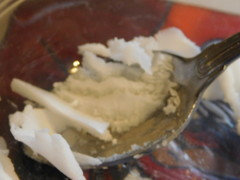
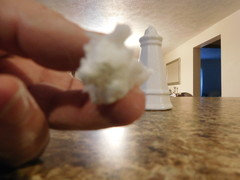
    Just because of this thread, I dragged out a pint of home rendered lard I had in the refrigerator. It was not frozen. It was still firm enough that I had to cut it into pieces to get it out of the jar. Left on the counter next to a piece of butter from the same refrigerator, the butter was far softer than the lard after one hour on the kitchen counter.

    I did make some pie crust for beef pot pie, so I'll make a new thread, as this one is getting long. This is what the lard looked like right out of the refrigerator. I couldn't scoop a spoonful, it broke off in shards. Even after an hour on the counter, I could pick up a chunk with my fingers.


    My pie crust was neither slimy nor wet and it rolled out easily without tearing. It was flakey, both top and bottom crust, when made into a beef pot pie.

    I'll start another thread with pictures of the technique and the finished product, so that the OP can see where there may be a difference in her lard and her finished product, or how it may differ from mine. Hydrogen not included, of course. (grin)

    Annie