

What to do with old flour and rancid nuts
10 years ago
Featured Answer
Sort by:Oldest
Comments (13)
 10 years ago
 10 years agolast modified: 10 years ago
Related Discussions
What do I need to know about WHITE whole wheat flour?
Comments (26)Kari & Clare - Kari - My sources for wheat: 1. locally grown hard winter red and white wheat (free or very cheap, but usually NOT chemical-free or organic) 2. Heartland Mill, Marienthal, KS - organic grains 3. Bob's Red Mill - soft white wheat (and other grains) 4. Wal-Mart - Hard Spring White Wheat - Prairie Gold (from Wheat Montana - chemical-free) - they also carry hard red wheat Bronze Chief. Wal-Mart has only recently started carrying Wheat Montana wheat around here - $5 for 25-pounds. Mills: 1. (A very old) Whisper Mill - which is an electric impact mill (now known as a Wonder Mill) - this mills most grains/seeds/beans into a very fine flour - fine flour = fine bread, coarse flour = coarse bread. 2. Marga Mulino Flaker Mill - for cracked grain, flakes, and coarse farina (for cooked cereal) 3. Corona Corn Mill - for coarsely milled grain and corn meal. 4. Porkert Seed Grinder - for small seeds, such as amaranth, poppy seeds, teff, etc. 5. Bosch Coffee/Spice - for milling flaxmeal. 6. Family Grain Mill - a hand mill, that also has an electric-powered motor to run it as well, that has a lot of attachments available for other uses (meat grinders, flakers, etc.). This is my back-up mill. You have to mill the flour twice to get a reasonably fine grind of flour. Source for recipes: I suggest you start by substituting unbleached/bleached flour in your favorite recipes with a portion of wholegrain flour. There are all kinds of books out there on whole wheat baking. I have a collection of 28 beans, seeds, and grains that I use milled and whole - included in that, several types of wheat. I develop many of my own recipes because I use really "odd" ingredients, including gluten-free baking. Here's a few books I like from the large selection in my library: RECIPES FROM THE OLD MILL (Baking with Whole Grains) by Sarah E. Myers and Mary Beth Lind WHOLE WHEAT COOKERY (Treasures from the Wheat Bin) by Howard and Anna Ruth Beck THE AMAZING WHEAT BOOK by LeArta Moulton THE SPLENDID GRAIN (all kinds of seeds and grains) by Rebecca Wood WHEAT COOKIN' MADE EASY by Pam Crockett --------------- Clare - Wheat comes in HARD (strong/high-gluten) and SOFT (weak/low-gluten) varieties. Whole Wheat Pastry Flour is milled from (low-gluten) soft red wheat, just like you thought. It's best used just as you described - in baked goods where you don't want a lot of gluten development - for the most part, anything other than yeast breads. Low-gluten bleached flour would include White Lily and Martha White - which are great for quick breads, pastry, etc. I purchase soft white wheat berries from Bob's Red Mill to mill into whole wheat pastry flour. I also use freshly-milled spelt and some rye, barley, and triticale for baked goods that need low-gluten flour, as an alternative to soft wheat flour. All wheat has a protein level that determins if the grain is hard or soft. Even in the same field you'll find protein (gluten) level differences from one side of the field to the other. If a portion of the field is shaded(usually at the edge of the field) and/or there's a low place in the field that retains water after a rain, the wheat that receives a lot of water/shade will usually have a low-protein count. Even though hard wheat may have been planted, the protein level is also determined by the amount of rainfall, and other factors. Soft wheats are characteristicly plump (a lot of endosperm), while hard wheat varieties (especially winter wheat) is small, wrinkled, and very hard when you bite it. When soft whole wheat is milled, the flour is exactly that - very soft to the touch. Hard whole wheat is much 'grittier' - due to the higher percentage of bran to endosperm ratio. All bleached/unbleached flour is milled from a combination of wheat protein levels to formulate the amount of protein for the type of flour needed. High-protein wheat is used for yeast breads, a combination of hard and soft wheat is milled for all-purpose flour, and pastry flour is milled from soft wheat. There are also fields of extremely high protein wheats (15% or more), but they are mixed with lower protein wheat to make flour. I've used some wheat that was 16% protein, and it took forever (lots of kneading and a very long fermentation) to develop the gluten in bread - 12-13% protein level is much better for yeast bread. Too much gluten will make a tough loaf of bread. The highest protein level wheat is durum wheat. Unlike hard red and white wheat varieties which are used for yeast breads, durum wheat is used in pasta. I mill durum for whole wheat pasta - NOT red or white varieties of wheat. Commercial whole wheat pasta is made with wholegrain durum wheat. The elements in wheat protein that we call "gluten" are actually a gluten group - GLUTENINS and GLIADINS. Glutenins provide the elasticity quality that allows bread dough to expand. Gliadins contribute to the viscosity and extensibility of bread dough. Red and white wheat varieties have a dominance of GLUTENINS and less GLIADINS. Durum wheat has a dominance of GLIADINS and less GLUTENINS. Therefore, even though durum wheat has a high protein level, it's unsuited for bread making, due to the type of protein. -Grainlady...See Morewhat's with these rancid pecans???
Comments (13)We use a lot of nuts in food preparation and as snack food around here. I buy new crop nuts from a producer, when possible, but also get the 2-pound bags from Sam's club. I also stock-up on in-shell nuts after the holidays (when the price is reduced) - they are usually new crop and fairly "fresh". They keep best stored in the freezer. Hubby will (mindlessly) shell/clean nuts for me while watching sports on TV on the weekend, and I vacuum-seal them in FoodSaver bags and store in the freezer. This helps keep them fresh longer. The absense of air will keep the oil in the nuts from going rancid. I avoid storing out-of-the-shell nut meats at room temperature. That's just an invitation for them to go rancid. One step I do with out-of-shell nut meats that makes them easier to digest is to soak and dehydrate them. Source: "Nourishing Traditions" by Sally Fallon and Mary G. Enig, Ph.D. CRISPY NUTS 4 cups nuts 1 T. sea salt filtered water to cover Soak nuts for at least 7 hours, or overnight. This partially sprouts the nut and reduces the enzyme inhibitors that make nuts hard to digest. Drain in a colander. Spread on a baking pan and bake in a warm oven (no more than 150°F) until completely crisp and dry. (Note: I use my dehydrator for this.) Once completely dry - 12 to 24 hours, allow to come to room temperature and then vacuum seal in bags, canisters or jars. ------------------ Crispy nuts can be used just like fresh nuts. They can be toasted, if you wish. Personally, we like soaked and dehydrated nuts much better than fresh nuts. -Grainlady...See MorePie- out of AP flour, but have cake flour and bread flour
Comments (7)If you decide to use bread flour, one of the tips for using high-protein flour is to add a little more fat - above the amount called for in the recipe. Where the additional fat coats the flour, it blocks the water from being absorbed, so it also reduces the amount of gluten that is developed. Be sure to keep mixing to a bare minimum. You could also use a blend of bread and cake flour and use the regular amount of fat in the recipe. I disagree with Linda about the protein content being "miniscule". There are more baking "mistakes" made by using the incorrect flour. High-protein flour gives you tough pastry, cookies, and cakes..... Hydration will be completely incorrect - as the chart below will show. Information from "CookWise" by Shirley O. Chorriher: Cake flour - 8 g. of protein per cup National Brand (Gold Medal, Pillsbury) Bleached All-Purpose - 9-10 g. of protein/cup National Brand Unbleached All-Purpose - 12+ g. protein per cup Northern Unbleached All-Purpose (King Arthur) - 13 g. protein per cup Bread Flour - 13-14 g. protein per cup ~~~~~~~~~~~~~~~~~~~~~~~~~~~~~~~~~~~~~~~~ The water absorption capacity of white flours for 1-cup of water to form a sticky dough ball in a food processor: 14 g. protein Bread Flour - 2-cups (packed) + 1 T. 13 g. protein Unbleached Flour - 2-cups (packed) + 2 T. water 12 g. protein All-purpose Flour - 2-1/4 c. 11 g. protein All-purpose Flour - 2-1/3 c. + 1 T. 10 g. protein All-purpose Flour - 2-1/2 c. 9 g. protein Southern All-purpose - 2-1/2 c. + 2 T. 8 g. cake flour - 2-3/4 c. -Grainlady...See MoreWhite Lily Flour Self Rising Flour Biscuits
Comments (28)If you can get King Arthur flour, that works better than anything else. Buttermilk Biscuits 2 1/2 cups self rising flour (I use King Arthur) 1 teaspoon sugar 1/2 cup PLAIN Crisco (not butter) 1 cup whole milk buttermilk Preheat oven to 425*. Cut Crisco into flour with a pastry cutter or fork until well mixed. Add buttermilk and stir. Turn out onto floured surface and pat out, turn in half, flip, pat out, and turn bottom half over. Pat out and cut with biscuit cutter. Place in pan sprayed with Pam. Reform leftover dough and cut rest of biscuits. I form the last biscuit by hand. You can do them all by hand if no cutter. Bake about 10 to 15 minutes. 1. You can cut recipe in half. You can also take out of oven after they are just done, but not brown, and freeze after they are cool. 2. To use regular flour, 2 1/2 cup plain flour, 2 tablespoons baking powder, 1 teaspoon salt. 3. We like to butter our biscuits after they are cooked and do not like butter in the dough. If you want butter in the dough, use 1/2 cup unsalted butter, omit Crisco. 4. The lard you get in the grocery stores now is not the same as old fashioned lard. If you have a source for real fresh lard, you can use 1/2 cup lard instead of Crisco or butter. 5. Keep your hands well floured and also dust a small amount on top of dough and under dough as you turn. Keep a light hand, you are not kneading yeast dough. Dust the cutter with flour, also. The first biscuits after I got married in 1970, you could of used for hockey pucks, lol. He ate them anyway!...See More 10 years ago
 10 years ago
 10 years ago
 10 years ago
 10 years ago
- 10 years ago
- 10 years ago
- 10 years ago
- 10 years ago
- 10 years ago

Related Stories
KITCHEN DESIGNHouzz Call: What’s Cooking in Your Kitchen?
Most of us turn to recipes, videos and culinary shows when we cook. Where do you set your cookbook, tablet or TV screen?
Full Story
ORGANIZINGStorage Tricks for Those Who Love Their Stuff
Get ideas for clearing the decks without getting rid of all the lovely things you want to keep around
Full Story
LIFESimple Pleasures: The Joy of Baking
Fill your house with a heavenly scent and your heart with cheer by making time to bake
Full Story
FUN HOUZZDon’t Be a Stickybeak — and Other Home-Related Lingo From Abroad
Need to hire a contractor or buy a certain piece of furniture in the U.K. or Australia? Keep this guide at hand
Full Story
CRAFTS7 Ways to Upcycle a Fallen Tree
When a tree falls, turn its branches into rustic toys, accessories and holiday décor
Full Story
KITCHEN DESIGN16 Scrumptious Eat-In Kitchens and What They Want You to Serve
Whether apple-pie cheerful or champagne sophisticated, these eat-in kitchens offer ideas to salivate over
Full Story
FEEL-GOOD HOME21 Ways to Waste Less at Home
Whether it's herbs rotting in the fridge or clothes that never get worn, most of us waste too much. Here are ways to make a change
Full Story
KITCHEN DESIGNDisplaying Kitchen Supplies — Hot or Not?
Do some kitchens just beg for a cozy row of canisters and gear for all to see? Have a look and let us know what you think
Full Story
KITCHEN DESIGN7 Steps to Pantry Perfection
Learn from one homeowner’s plan to reorganize her pantry for real life
Full Story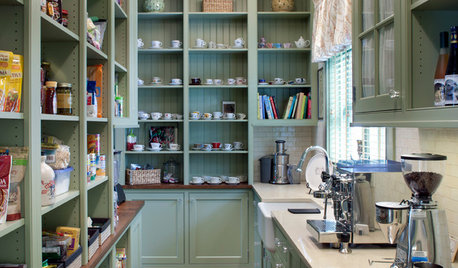
KITCHEN STORAGEShow Us Your Hardworking Pantry
Do you have a clever and convenient kitchen storage setup? Throw some light on the larder and share your pictures and strategies
Full Story

lindac92