

Yeast/Salt Question
11 years ago
Featured Answer
Sort by:Oldest
Comments (6)
 11 years ago
Related Discussions
The Saturday White Bread......Flour Water Salt Yeast........
Comments (10)Bev, I almost always make highly hydrated doughs. I made another batch of this dough today and used it to make pizza, increasing the water from the 720g called for in the recipe to 820g. I used a portion of the dough to make two pizzas. The rest of the dough is in the fridge and will be used in a couple of days to make either bread or another pizza. One plain And one with homemade Italian Sausage and Black Olives. The crust was amazing. Partly, the dough and partly the way it was baked. I baked it on a preheated stone, but instead of the stone being on the bottom rack, it was on the second from the top rack. Preheated for an hour to 550ðF, the pizza was baked for five minutes, and then another two minutes under the broiler. ~Ann...See Morequestion for iheartgiantschnauzer - nutritional yeast -
Comments (3)Tina- I live in TN, but IHGS lives outside of Indianapolis. Hmm not sure what she meant. I know she makes a butternut squash macaroni that has 1/2 cup nutritional yeast in it for 4 people. she also uses more than 2 tbsp in a vegan ceasar salad dressing etc. So in those meals an individual would eat more than 2 TBSP in a portion. When she sprinkles it on a bowl of popcorn, she probably eats 1 tbsp. We have recently started using it. We aren't vegans or even vegetarian, but we are cooking more and more vegetarian meals. Most of the time we just use it salad dressings, dips or sprinkled in bread coatings or on roasted vegetables. My husband and daughter like it on popcorn, but I don't....See MoreYeast, just yeast
Comments (21)If you don't do enough baking to keep sourdough starter going in the refrigerator it can be frozen. Spread it out on a cookie sheet covered with parchment paper. Let it air dry for a couple days...until it crumbles easily. Or, you can dry it in a dehydrator. Put it in a Zip-Lock or better still a Lock 'n Lock - type container & freeze crumbled. To use, add a tablespoon or two when making fresh dough. You can also freeze starter in liquid form. /tricia...See MoreYeast Question
Comments (11)Here is some information from Fleischmann's Yeast website. I usually buy the one pound package of instant yeast and keep half in the fridge and the other half in the freezer. I never proof instant yeast. Recently I bought a new package of yeast and instead of instant it is regular yeast with a coarser grain. I don't bother to "proof it" but I do add the water and the yeast to my mixer first and give it five minutes to soften. I use all the various yeasts interchangeably. I don't make any adjustments. How much dry yeast is in 1/4 ounce envelope? About 2 1/4 teaspoons. How should I store yeast? Store unopened yeast in a cool, dry place, such as a pantry (or refrigerator). Exposure to oxygen, heat or humidity decreases the activity of the yeast. After opening, store in an airtight container in the back of the refrigerator, away from drafts. Use within 3 to 4 months; freezing not recommended. Can I use expired yeast in my recipe? For best results, buy and use yeast before the expiration date. Yeast loses its potency as it ages, resulting in longer rising times. Proof yeast to determine whether it is still active. How do I proof yeast to test for activity? To proof yeast, add 1 teaspoon sugar to 1/4 cup warm water (100 to 110°F). Stir in 1 envelope yeast (2 1/4 teaspoons); let stand 10 minutes. If the yeast foams to the 1/2 cup mark, it is active and you may use it in your recipe. RapidRise yeast loses its fast rising capabilities if dissolved in liquid, and will require two complete rises. Can RapidRise and Bread Machine Yeast be used in Active Dry recipes? Yes. Simply follow the One-Rise Method detailed on every package. For best results, add undissolved RapidRise or Bread Machine Yeast to dry ingredients first. Add liquids and fat heated to 120°to 130°F. To use the traditional Two-Rise Method, add sugar to water before stirring in Yeast Can Active Dry Yeast be used in RapidRise recipes? Yes, but with limitations. The Active Dry has larger granules and it is necessary to dissolve completely for the yeast to work. Therefore, Active Dry works best if dissolved in warm water (100° to 110°F). To use the electric mixer method, combine yeast with 1/4 to 1/3 of the flour and other dry ingredients. What is the difference between Instant Yeast, Bread Machine Yeast and RapidRise Yeast? Mainly names, but these are all the same yeast! Use interchangeably What is the difference between fast-rising yeast (RapidRise/Bread Machine Yeast) and Active Dry Yeast? RapidRise and Bread Machine Yeast are different strains than Active Dry Yeast. RapidRise and Bread Machine Yeast are grown with a higher level of nutrients and are dried to lower moisture content. The particle size of RapidRise and Bread Machine Yeast are finely granulated to allow complete hydration of the yeast cells during the mixing process. The Active Dry Yeast larger particle size should be dissolved in water to achieve complete hydration prior to adding to the mixer. In addition, RapidRise and Bread Machine Yeast contain ascorbic acid resulting in increased loaf volumes. How do I use Fresh Active Yeast? Fresh Active Yeast is the product that Fleischmann's has been manufacturing for over 130 years. It is also traditionally known as compressed or cake yeast. It has not undergone the drying process, so it does not need to be dissolved before use: soften the cake in warm water first OR simply crumble the yeast into dry ingredients (if directed by recipe). Fresh yeast requires two rises. Yeast is available in two different sizes: 0.6 ounces and 2 ounce household cakes How do I substitute dry yeast for Fresh Active Yeast? First determine the amount of dry yeast you will need. One .6 ounce cake is equivalent to 1 envelope of dry yeast. One 2-ounce cake is equivalent to three envelopes of dry yeast. Follow the directions on the package recommended for the type of yeast you substitute Can Active Dry Yeast be used in bread machines? Bread Machine Yeast is a fast-rising yeast specially formulated for bread machines. It is finely granulated to hydrate easily when combined with the flour. Ascorbic acid (vitamin C) is added to promote good loaf volume and structure. Active Dry Yeast may be used but may not yield optimal results. Can any dough be refrigerated? Any dough can be refrigerated for a few hours to inhibit rising if the leavening process is interrupted. Long refrigeration is not recommended unless specified in the recipe. For best results, choose recipes specifically formulated for the refrigerator. Refrigerator doughs have more sugar and less salt than regular dough to keep the dough viable in the refrigerator. Refrigerator doughs are particularly good for rich, sweet doughs, as less flour is used. Refrigerator doughs are typically not kneaded. They become stiffer and easier to shape after refrigeration. Can I freeze my dough? For best results, use only specially developed freezer dough recipes. Freezer dough recipes are high in yeast and sugar and low in salt. Bread flour is recommended. Other flours do not hold up well. Lean dough, such as pizza, freezes better than rich dough. How is freezer dough prepared? After kneading, flatten dough into a disk and wrap airtight, in a freezer-proof plastic bag for up to 4 weeks. When ready to use, thaw at room temperature or in the refrigerator. Once thawed, remove dough from bag; shape, let rise, and bake as directed. To shape before freezing, cover kneaded dough and let rest 20 minutes. Shape as desired and freeze as quickly as possible. Examples of freezer dough recipes in breadworld.com include: Cheese Coffee Cake Freezer Rolls Giant Pecan Sticky Buns Master Bread Dough Master Pizza Dough Can I rescue dough that does not rise? Dough can be 'revitalized' with a fresh sample of Active Dry or RapidRise Yeast. 1. For each envelope of yeast in the recipe, combine in a large, warm bowl: 1/4 cup lukewarm water (100° to 110°F), 1 teaspoon sugar and one envelope (2 1/4 teaspoons) of yeast. Stir to dissolve. 2. With an electric mixer, slowly beat in small (walnut size) pieces of dough until about 1/2 of the dough is mixed into the yeast. 3. With a spoon, stir in the remaining dough. Knead in just enough flour so the dough is not sticky. 4. Let rise, shape and bake as directed in the recipe. Should recipes be adjusted for high altitudes? Yes. But there are no exact rules for adjusting yeast breads at high altitudes. Altitude affects the ingredients and the entire breadmaking process. We suggest these general guidelines for baking above 3,000 feet. * Because atmospheric pressure is lower and leavening gases expand more quickly, yeast dough rises 25 to 50 percent faster at high altitudes. Begin checking the dough halfway through the rising time listed in the recipe. Continue to check frequently. * Flour tends to be drier and absorbs more liquid at high altitudes. Therefore, it is very important to store flour in an airtight container. * When mixing the dough, you may need less flour than called for in the recipe. To compensate, add flour slowly and work in only enough to make the dough easy to handle. Because recipes call for varying amounts of flour, there is no standard measurement for reducing flour. * If dough is slightly sticky during kneading, use greased instead of floured hands. This way, you won't knead in too much flour * Dough dries out faster at high altitudes. To prevent drying, grease or lightly oil the exposed part of dough (whether in a bowl, on a board, or in a baking pan) and cover with greased plastic wrap instead of a towel. * Baking temperature and time should not change at high altitudes, but check for browning at the shorter time listed and use traditional doneness tests * Just as dough dries out faster at high altitudes, so does the finished product. Store cooled bread in airtight plastic wrap, bags, or containers. * If you are using a bread machine at high altitude, refer to the manufacturer's instruction book. Since flour may dry out faster at high altitudes, you may need to adjust the ratio of liquid to flour. Experiment by reducing the amount of yeast, flour or sugar (yeast feeds on sugar), and/or adding liquid or a little gluten. Or try a shorter baking cycle, such as rapid bake, if available....See More 11 years agolast modified: 11 years ago
 11 years ago
- 11 years ago
 11 years ago

Related Stories
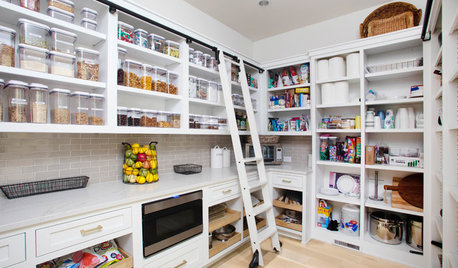
KITCHEN DESIGN9 Questions to Ask When Planning a Kitchen Pantry
Avoid blunders and get the storage space and layout you need by asking these questions before you begin
Full Story
CURB APPEAL7 Questions to Help You Pick the Right Front-Yard Fence
Get over the hurdle of choosing a fence design by considering your needs, your home’s architecture and more
Full Story
WORKING WITH PROS12 Questions Your Interior Designer Should Ask You
The best decorators aren’t dictators — and they’re not mind readers either. To understand your tastes, they need this essential info
Full Story

SHOP HOUZZShop Houzz: Like Salt and Pepper
Cute and kitschy ways to say ‘I love you’ with themed salt and pepper shakers
Full Story
HOUZZ TOURSMy Houzz: Midcentury Cool With a Killer View in Salt Lake City
An all-star cast of iconic vintage furnishings makes this Utah home period perfect through and through
Full Story
HOUZZ TOURSMy Houzz: Wanderlust-Fueled Decor in Salt Lake City
Globally gathered and family pieces bring personal warmth to a historic Utah home
Full Story
DECORATING GUIDESRoom of the Day: Elegant and Eclectic Salt Lake City High-Rise
Hand-blocked wallpaper sets a beautiful organic tone in this young professional’s apartment
Full Story
HOMES AROUND THE WORLDHousehold Habits and Customs to Borrow From Other Countries
Discover why salt may be the perfect house-warming gift, how to clean rugs in snow and why you should invest in a pair of ‘toilet slippers’
Full Story
HOUZZ TOURSMy Houzz: Clutter-Free Minimalism for a Converted Brick Storefront
Open and bright, this Salt Lake City home exudes calmness, simplicity and comfort
Full Story




foodonastump