Stir Fry
17 years ago
Featured Answer
Sort by:Oldest
Comments (11)
- 17 years ago
- 17 years ago
Related Discussions
Best (Healthy) Oil for Stir Fry?
Comments (7)I've been using coconut oils. They can be difficult shopping for though. The extracting and refining process can give different taste outcomes. It does handle some heat ok. For sauteing i have one that does not have a scent or coconut flavor. Barely a hint. Even the Carington Farm one is rather mild and is easily cancelled out with an herb, spice, or citrus. -i do like coconut but not its flavor with everything. So don't be turned off by the label. Some have zero coconut flavor and are very healthy for cooking. I also like that it is very stable and does not go rancid near as fast as most oils. For flavor, a good ev olive oil can't be beat. Finishing sauces, dressings. A mild olive oil, sometimes called 'light', i think has a higher heat tolerance and is an ok choice for a quick stir-fry, but as grainlady mentions, it does change with heat. Most oils change when heated. Especially the grain oils. And most nut/seed oils. (start studying oils and fats and you just might toss out your pans, and your oven, ha, and start nibbling raw, then pureeing raw to break down cell walls for better digestion... ; ) I tend to use grapeseed oil when the cast iron comes out for a fish bake... stovetop, then the oven. Not really a high heat dish. If i need a crisp, for crab cakes, cod cakes, corn cakes, etc i use a pat of butter with a bit of reg olive oil or grapeseed. (i should try the mild coconut) Come to think of it, we have not stir-fried in years. No real reason. I do have a winter thai dish that brings out the wok but not a true high heat fry. Maybe it is the oily heat flavor? I have been doing a high oven heat quick roasting of veggies. Seems to quickly 'bloom' the flavor and toast a bit. No oil. Then add to dishes and finish with a fresh sauce or dressing. Veggies are still fresh and crisp and no oily layer. Grainlady's knowledge of all things cooking and beyond is very impressive. My study is more abstract and surface but i do try and pay attention...i started studying oils, spices and herb oils when my husband kept insisting on buying a very expensive oil for itchy winter skin. So i have lots of oils and looked at skin absorbing properties, etc. And I make a good bug repellant for us and our pups. -He is much happier with my custom blend now and much cheaper! Almond, sesame, toasted sesame, avocado...all 'claim' on labels to be the best and healthiest for everything......See MoreHosta 'Stir Fry'
Comments (3)HH, are you running out of words or do you have a cold? I like the ruffled edges a lot. I wish I had Marilyn Monroe, but for the time being I'll make do with Candy Dish. Another really nice dark green with ruffled edges. Stir Fry is really dramatic....See MoreImprovising Stir Fry Meals From Refrigerator Velcro
Comments (18)Dcarch's comment got me looking up chop suey, and here's an interesting tidbit from wiki: Chop suey is widely believed to have been invented in America by Chinese Americans, but the anthropologist E.N. Anderson concludes that the dish is based on tsap seui (杂碎, “miscellaneous leftovers”), common in Taishan(Toisan), a county in Guangdong Province (Canton), the home of many early Chinese immigrants to the U.S. Seems John's meals certainly qualify as tsap seui, no? Either way, they look great. I've long toyed with the idea of getting one of those high BTU propane burners for wok cooking. There are no great setups for electric that I'm aware of, and taking it outside takes care of the ventilation and splatter all at once. Glad to hear I'm not the only one with picture problems from my phone. It went from working great to working intermittently to not working at all. IMO that's a problem they should fix rather than tell us to email to ourselves, get on a desktop, etc....See MoreStir Fry Technique
Comments (0)ANATOMY OF A STIR-FRY Excerpt From: The Editors of Cooks Illustrated. “The Cook's Illustrated How-to-Cook Library.” Apple Books. TO STIR-FRY PROPERLY YOU NEED plenty of intense heat. The pan must be hot enough to caramelize sugars, deepen flavors, and evaporate unnecessary juices. All this must happen in minutes. The problem for most American cooks is that the Chinese wok and American stovetop are a lousy match that generates moderate heat at best. Woks are conical because in China they traditionally rest in cylindrical pits containing the fire. Food is cut into small pieces to shorten cooking time, thus conserving fuel. Only one vessel is required for many different cooking methods, including sautéing (stir-frying), steaming, boiling, and deep frying. Unfortunately, what is practical in China makes no sense in America. A wok was not designed for stovetop cooking, where heat comes only from the bottom. On an American stove, the bottom of the wok gets hot but the sides are only warm. A horizontal heat source requires a horizontal pan. Therefore, for stir-frying at home, we recommend a large skillet, twelve to fourteen inches in diameter, with a nonstick coating. American stoves necessitate other adjustments. In Chinese cooking, intense flames lick the bottom and sides of a wok, heating the whole surface to extremely high temperatures. Conventional stoves simply don't generate enough British Thermal Units (BTUs) to heat any pan (whether a wok or flat skillet) sufficiently. American cooks must accommodate the lower horsepower on their stoves. Throw everything into the pan at one time and the ingredients will steam and stew, not stir-fry. One solution is to boil the vegetables first so that they are merely heated through in the pan with the other stir-fry ingredients. We find this precooking to be burdensome and reserve it only for vegetables such as broccoli and cauliflower that require it. We prefer to cut the vegetables quite small and add them to the pan in batches. By adding a small volume of food at a time, the heat in the pan does not dissipate. Slow-cooking vegetables such as carrots and onions go into the pan first, followed by quicker-cooking items such as zucchini and bell peppers. Leafy greens and herbs go in last. When the vegetables are done, the aromatics (scallions, ginger, and garlic) are briefly cooked and then the seared meat, chicken, seafood, or tofu is added back to the pan along with the sauce. The result is a complete meal, perfect for weeknight dinners, that takes into account the realities of cooking in an American kitchen. POINTERS FOR SUCCESS We uncovered a number of helpful tips and discoveries in our stir-fry testing. Keep these points in mind as you work through the recipes in this book. FREEZE, SLICE, AND MARINATE PROTEIN Most stir-fries start with some sort of protein, either beef, chicken, pork, shrimp, scallops, squid, fish, or tofu. All protein must be cut into bite-size pieces. We find it best to freeze beef, chicken, and pork for an hour or so to make slicing easier. We marinate all protein, once sliced, in a mixture of soy sauce and dry sherry while preparing the vegetables and sauce. Just make sure to drain the protein before stir-frying. If you add the marinating liquid, the protein will stew rather than sear. PROPER RATIO OF PROTEIN TO VEGETABLES A good stir-fry for four people needs only a three-quarter pound of protein to one and one-half pounds of prepared vegetables. This ratio keeps the stir-fry from becoming too heavy and is more authentic since meat is a luxury used sparingly in China. Serve with plenty of rice (see recipes in chapter six) or over boiled noodles, especially Chinese egg noodles (which resemble linguine) or thin cellophane rice noodles (which look like transparent angel hair pasta). COOK IN BATCHES Most proteins can be cooked in a single batch. The exceptions are flank steak, pork tenderloin, scallops, and squid, which shed a lot of liquid and will stew if cooked all at once. Vegetables, with a few exceptions such as snow peas, must be batched so that no more than one-half pound is added to the pan at one time. In any case, sear the protein first and then remove it from the pan before cooking the vegetables. Start longer-cooking vegetables, such as onions and carrots, first. With the first batch still in the pan, add medium-cooking vegetables, such as bell peppers and mushrooms, and then finally add fast-cooking leafy greens and fresh herbs. Note that vegetable cooking times will be affected by how they are prepared. For instance, sliced mushrooms will cook more quickly than whole mushrooms. Keep this in mind when deciding in what order to add vegetables to your own stir-fries. In some cases, you may need to remove cooked vegetables from the pan before adding the next batch. This is especially important if you are cooking large amounts of leafy vegetables that throw off a lot of liquid, such as spinach. Follow the suggestions in individual recipes. VARY AMOUNT OF OIL BASED ON INGREDIENTS Some foods, such as shrimp and chicken, will not stick much and can be stir-fried in a minimum of oil, no more than one tablespoon. Other foods, such as fish, eggplant, and mushrooms, tend to soak up oil and may require more. See specific recipes for suggestions. PRECOOK VEGETABLES ONLY AS NEEDED We prefer not to precook vegetables, which often adds an unnecessary step. We would rather cut vegetables quite small (no larger than a quarter). However, some vegetables, such as broccoli and cauliflower florets, are difficult to cut this small; they tend to fall apart. Other vegetables, such as asparagus and green beans, may burn on the exterior before cooking through if added raw to a stir-fry. Therefore, we find it is necessary to blanch broccoli and cauliflower florets as well as asparagus and green beans. ADD AROMATICS AT END Many stir-fry recipes add the aromatics (scallions, garlic, and ginger) too early, causing them to burn. After cooking the vegetables, we push them to the sides of the pan, add a little oil and the aromatics too early, causing “causing them to burn. After cooking the vegetables, we push them to the sides of the pan, add a little oil and the aromatics to the center of the pan, and cook briefly until fragrant but not colored, about ten seconds. To keep the aromatics from burning and becoming harsh-tasting, we then remove the pan from the heat and stir them into the vegetables for twenty seconds. VARY AROMATICS AS NEEDED We find that two tablespoons of chopped scallion whites, one tablespoon of minced garlic, and one tablespoon of minced ginger works well in a basic stir-fry for four. But feel free to adjust these amounts based on personal tastes and other ingredients in the stir-fry. For instance, beef works well with more garlic, and many seafood dishes taste fine with more ginger. To add heat to any stir-fry, add hot red pepper flakes or minced fresh chiles with the aromatics. DON'T USE CORNSTARCH IN SAUCES Once the aromatics have been cooked, it's time to add the cooked protein and the sauce. We find that cornstarch-thickened sauces are often gloppy and thick. Omitting this ingredient produces cleaner-tasting and brighter sauces. Without cornstarch, it is necessary to keep the amount of sauce to a reasonable amount (about one-half cup) that will thicken slightly on its own with a minute or so of cooking. USE SUGAR SPARINGLY Even sweet sauces, such as sweet-and-sour, should contain a minimum of sugar. Too much Chinese food prepared in this country is overly sweet. A little sugar is authentic “(and delicious) in many recipes; a lot of sugar is not. READ MASTER RECIPES The following Master Recipe for Basic Stir-Fry is the key to understanding the recipes in this book. Read it carefully. The individual stir-fry recipes in Chapters Three, Four, and Five use the master recipe, with specific proteins, vegetables, and sauces plugged in to create delicious meals. Chapter Six contains recipes for a variety of simple sauces as well as several rice preparations. Master Recipe Basic Stir-Fry NOTE: Figures 1–9, illustrate the essential steps in this recipe. You may use a regular 12- or 14-inch skillet or a 12-inch Dutch oven in place of the recommended nonstick skillet, but you will need to use slightly more oil. This recipe serves four people. 3/4 pound meat, seafood, or tofu, cut into small, even pieces 1 tablespoon soy sauce 1 tablespoon dry sherry 1 recipe any sauce 2-4 tablespoons peanut or vegetable oil 11/2 pounds prepared vegetables, cut into small pieces (none bigger than a quarter) and divided into several batches based on cooking times 2 tablespoons minced scallions, white parts only 1 tablespoon minced garlic 1 tablespoon minced fresh ginger root Basic Stir-Fry 1. Toss meat, seafood, or tofu with soy sauce and sherry in medium bowl; set aside and toss once or twice as you work on rest of recipe. Prepare sauce and vegetables; set aside. 2. Heat 12- or 14-inch nonstick skillet over high heat for 3 to 4 minutes. (Pan should be so hot you can hold outstretched hand one inch over pan for only three seconds.) Add 1 tablespoon oil (2 tablespoons for fish) and swirl oil so that it evenly coats bottom of pan. Heat oil until it just starts to shimmer and smoke. Check heat with hand as before. 3. Drain meat, seafood, or tofu and add to pan. (Add beef, pork, scallops, and squid in two batches.) Stir-fry until seared and about three-quarters cooked, 40 to 60 seconds for fish and scallops; 1 minute for beef, shrimp, and squid; 2 minutes for pork; 21/2 minutes for tofu; and 21/2 to 3 minutes for chicken. Scrape cooked meat, seafood, or tofu and all liquid into bowl. Cover and keep warm. 4. Let pan come back up to temperature, 1 to 2 minutes. When hot, drizzle in 2 teaspoons oil. When oil just starts to smoke, add first batch of long-cooking vegetables. Stir-fry until vegetables are just tender-crisp, 1 to 2 minutes. Leaving first batch in pan, repeat with remaining vegetables, adding 1 teaspoon oil for each batch and cooking each set until crisp-tender, or wilted for leafy greens. 5. Clear center of pan and add scallions, garlic, and ginger. Drizzle with 1/2 teaspoon oil. Mash into pan with back of a spatula. Cook until fragrant but not colored, about 10 seconds. Remove pan from heat and stir scallions, garlic, and ginger into vegetables for 20 seconds. 6. Return pan to heat and add cooked meat, seafood, or tofu. Stir in sauce and stir-fry until ingredients are well coated with sauce and sizzling hot, about 1 minute. Serve immediately with rice....See More- 17 years ago
- 17 years ago
- 17 years ago
- 17 years ago
- 17 years ago
- 17 years ago
- 17 years ago
- 17 years ago
Related Stories

FEEL-GOOD HOME8 Tips for Harmony in the Kitchen
Frustrated by the arguments that arise over kitchen duties? Check out these coping strategies
Full Story

FEEL-GOOD HOMESimple Pleasures: Scent and Memory
Fragrant jasmine, fresh-brewed coffee, baking bread. Scents can evoke memories and bring sensory pleasure to our homes
Full Story
FEEL-GOOD HOME21 Ways to Waste Less at Home
Whether it's herbs rotting in the fridge or clothes that never get worn, most of us waste too much. Here are ways to make a change
Full Story
KITCHEN DESIGNNot a Big Cook? These Fun Kitchen Ideas Are for You
Would you rather sip wine and read than cook every night? Consider these kitchen amenities
Full Story

DECORATING GUIDES12 Deadly Decorating Sins
Are your room designs suffering from a few old habits? It may be time to change your ways
Full Story
KITCHEN DESIGNCreate Your Own Checklist for a Well-Stocked Kitchen
Personalize the kitchen with your own must-haves from our list of top cooking tools, small appliances, pots, pans and more
Full Story

KITCHEN DESIGNA Single-Wall Kitchen May Be the Single Best Choice
Are your kitchen walls just getting in the way? See how these one-wall kitchens boost efficiency, share light and look amazing
Full Story
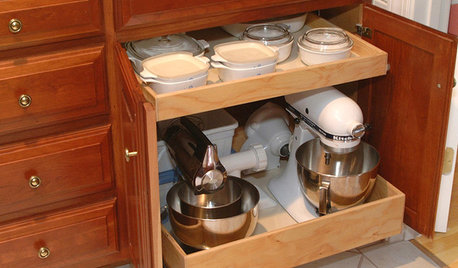
KITCHEN APPLIANCESConsidering a New Kitchen Gadget? Read This First
Save money, time and space by learning to separate the helpers from the hassles
Full Story
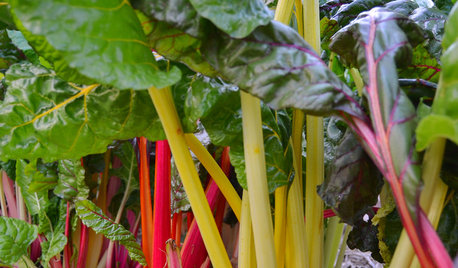
GARDENING GUIDESCool-Season Vegetables: How to Grow Chard
A year-round garden favorite with a colorful stem, Swiss chard comes into its own in early spring and in fall
Full Story

KITCHEN DESIGN8 Kitchen Design Tips for Foodies
If you own at least one pricey knife and have a slew of kitchen tools, you’ll want to read this
Full StorySponsored

ruthanna_gw