Houzz Logo Print
nanabeth

Cookie question for the bakers

12 years ago

We have an oatmeal coconut cookie that we buy from a local bakery. I happened upon the recipe in a cookbook and have been making these, but need to change something. The recipe calls for both brown sugar and white sugar, but mine seems to be a darker cookie than the one from the bakery, but tastes the same. I like the appearance of the lighter cookie (bakery). Can I change to all white sugar without changing the texture/flavor or messing it up somehow?
It also calls for butter or margarine. I have been using butter. Would that cause the color difference?

Comments (17)

  • 12 years ago
    last modified: 11 years ago

    Are you using light brown sugar or dark brown sugar?

    You might be baking yours a bit longer than the bakery, which could cause them to be darker.

    When baking cookies, I use raw sugar instead of white sugar. If you like the taste of the cookies, I am not sure why the color is a concern, unless you think you are overbaking them.

    Lars

  • 12 years ago

    Lars,

    I used the light brown, but will have to try raw sugar. I think the bakery ones (lighter color) are just prettier. I don't think I am overbaking, but will certainly experiment with that also.

    I have checked my oven temperature with a thermometer and it is accurate. I am just baking one sheet (cold) at a time on middle rack, dough is chilled. I have tried different sheets, but no parchment paper. Does baking cookies on parchment have any effect on the cookies, other than not having to clean the sheet?

  • Related Discussions

    Question for bakers

    Q

    Comments (8)
    Consider if this would work. Before you refrigerate the dough, roll into a cylinder shape and then wrap in plastic wrap to refrigerate. When chilled, unwrap, and using a chefs knife, cut into 1 ü inch wide slices. Then cut each slice with the knife into quarters. This way, the dough is just about the right size to roll into a ball before you are handling it and getting it warm. You could even pop it back in the fridge a few minutes after you chunk it before you roll into balls.
    ...See More

    Kitchen design question for bakers

    Q

    Comments (21)
    Nancedar - if you get your countertop marble or granite honed, it won't be shiny. French, Italian, Greek and other european kitchens have been using honed marble countertops for centuries. As to etching, that's an american aesthetic bias. Again, if you go to a french kitchen with marble countertops, the marble is etched, stained by wine, etc. and they don't mind. I mean, the marble IS in a kitchen after all, and used for food prep, so it will show signs of use. Similarly, a wood counter in a traditional french kitchen will scratched and gouged, not babied. But I understand if we are thinking of home resale, and what we prefer, we may not want any etching or patina. As to flour containers, I am surprised no one has brought up the issue of insects getting into flour containers that aren't air tight. The OP's first link, and the pioneer woman link, both seem to me to be flour containers that are invitations for insects. I like a glass container with a tight screw top, but often the mouth is not wide enough for scoop-and-sweep of flour. I also have an assortment of the big Oxo Pop air-tight containers, the Click-clack cubes, and LocknLock containers. They are all BPA free too. A friend of mine doesn't like the chore of transferring flour or sugar from the original bag to another container. If anyone reading this thread is like that, there's the air-tight Flour container or sugar container.
    ...See More

    Sub question for you cookie bakers

    Q

    Comments (11)
    I found the site that had the cookie recipe. The link is below. The ones in the webpage look similar to Snickerdoodles, probably due to them being rolled in cinnamon sugar. Mine look boring, but they taste very good, tender with a good ginger bite. I didn't want to adulterate my 'ginger cookies' with 'cinnamon', so I mixed ginger with the rolling sugar. I used 1 Tbs of regular molasses(you can't taste it at all) and increased the butter to 1/2 cup because 1/4 cup seemed like too little(I don't do low-fat anything). The first part of the batch(on the right in the photo)puffed up a lot into little mountains(maybe the added butter?)and stayed that way. I never noticed(can you say ADD?)that the recipe called for rolling 1/2" balls...really? Does that seem right? I'm used to making fairly large cookies, 1 1/4 to 1 1/2" balls. So for the rest of the batch(the ones on the left), I managed to get the dough balls down to 1" and I flattened them a little with the bottom of a glass. I think they look a little better. Either way I'm happy with the taste and I think my friend will like them too. Here is a link that might be useful: Fresh Ginger Cookies
    ...See More

    Cookie Bakers - I Need Your Help!!

    Q

    Comments (12)
    As long as the paper isn't messy (no dripped chocolate or gooey filling spilled on it), I just leave the same sheets on my cookie sheets through the holidays. It doesn't hurt anything at all to use and reuse. Just shake the crumbs into the trash can between uses. After all, you store your baked cookies at room temperature for days/weeks around the holidays, the paper is not going to 'spoil' if you do the same. Used to work in a very high end bakery. With the price of parchment, they used it until something spilled on it--often used sheets for many many times a day, for days.
    ...See More
  • 12 years ago
    last modified: 11 years ago

    A dark cookie sheet will make your cookies darker. Best to use a bright aluminum sheet like the bakeries use. Preferred cookie sheets are about $7 or $8 each, rimmed (technically a jelly roll pan) at restaurant supply stores, but Walmart also sells them.

  • 12 years ago
    last modified: 11 years ago

    Along with the great information already shared.....

    -Brown sugar adds moistness you might miss by using all white sugar.

    -Does your recipe include any baking soda? A small amount of baking soda in the recipe will neutralize the acid in brown sugar (from the molasses in it). Acids (like the molasses in brown sugar) interfere with carmelization of sugar, which GENERALLY gives them "better" color, but it's not necessarily your preference in this case. If you don't want that particular baking trait, and there IS baking soda in the recipe, leave it out and see if you like the color any better.

    -If you use a "natural" sugar (like turbinado) which has a very large crystal, it can contribute to the cookie spreading. On the other side of that coin, the finer the granulation of sugar, the less the cookie will spread (although that's just one of the many reasons for cookies spreading). If you find the recipe is spreading more using a large crystal sugar than it did using granulated sugar, you can blend the large crystal sugar in a blender or food processor until it's a finer grind.

    -Grainlady

  • 12 years ago
    last modified: 11 years ago

    Why not just make a half a recipe using all white sugar but keeping the rest of the ingredients the same and see how you like them?

  • 12 years ago
    last modified: 11 years ago

    I agree, Ruthanna, I'd just be trying it.

    I agree with Grainlady, though, that the brown sugar is lending a bit of moistness that you might miss if you just switch to granulated. You never know until you try, of course.

    Annie

  • 12 years ago

    Sushipup: All my sheets are light colored (aluminum) flat with no sides, jelly roll, insulated, and they all bake these cookies pretty much the same.

    Grainlady: The recipe does have a tsp. of baking soda; I will experiment with that. I use regular granulated sugar and I don't like the spreading the cookies do either. I was going to do a separate query on that, but since you brought it up...If you google ann t's oatmeal cookies, the picture of hers is close to the color I want and I also like the shape. Why do mine always spread and look dome shaped instead of having a side on them? From doing a search, it seems to be a problem that no one agrees on or knows for sure the cause. Would using a fine sugar lessen the spreading?

    Ruthanna: that's worth a try.

    Annie: Will give it a try, but really don"t want to lose the moistness, either.

  • 12 years ago
    last modified: 11 years ago

    I think that the insulated sheets will cook darker than plain sheets. (Baking sheets with a 1/2 inch side are technically jelly roll pans, Sheets with no sides and just a raised edge for handle are cookie sheets.)

    (Or are you saying that you've tried all those different types of baking surfaces?)

    This post was edited by sushipup on Thu, May 8, 14 at 23:58

  • 12 years ago
    last modified: 11 years ago

    One thing that causes differences in spreading is the kind of shortening. There are good recipes for oil cookies, but in general, they run all over the place. Butter also has a low melting point, so it spreads more than stick margarine, and the newer margarines (0 trans fat) are spreadier than the old bad ones. :) Very few margarines are good for baking anymore. Vegetable shortening is basically solid oil, and behaves more like oil in cookies, so shouldn't be substituted for butter without recalculating the chemistry of the whole, though people who use it regularly get a knack for making it work without a lot of thought. I think, really, it's the water in the type of shortening and how it's released that makes the difference, but I may be wrong on that.

    If you start with semi-frozen butter, or chill the dough before baking, that can help by making it take longer to melt, and remember not to aerate it. Mix well, but you're not trying to fluff up a cake. Also, cookies should be baked at a higher temperature than a cake. 375 compared to 350, possibly higher depending on the oven or the cookie. Get them in and out fast for a firmer cookie. If you want chewy, add a teaspoon of water, rather than gambling on the water that melts out of the butter.

    If they're drop cookies, instead of making a ball, which requires spreading to become cookie shaped, flatten the ball to the cookie shape you want with the back of your spoon or scoop. That allows them to cook faster, and especially lets the edges firm up before they spread. I'm guessing the dome shape is from a ball spreading, but not enough to flatten out.

    Keep an eye on the cookies while they're baking and pull them when the centers are still a little underdone looking, and put the sheet on a rack. The cookies should finish baking in the remaining heat. Getting the timing/look/finish right on this takes a little practice, though part of what's making them too dark might just be from letting them bake just a little too long. I'm sure the suggestions about the sugar are valid, but I've never had dark brown sugar turn an oatmeal cookie brown (or any other kind of cookie), let alone light brown sugar. Usually they come out the same color as the dough, with some toastier color on the edges and the bits that stick up. I'm allergic to coconut, however, and don't know if that has any effect on the color. I don't think it would, but I don't know.

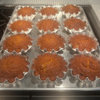
    The "insulated" concerns me too. You want fast even heating for cookies, and insulation prevents the transmission of heat. Just a plain sheet of aluminum is all you need. I chose this picture off of Amazon because it shows the cookie sheet well. The cookies themselves are gigantic, and appear to be molasses cookies, which are supposed to be this brown. :)

  • 12 years ago

    Sushipup: Have all of those pans and tried them all--no noticeable difference. I don't usually like the insulated, but thought I would try all of them.

    Pillog: My butter was straight from the refrigerator, but will try semi-frozen next batch. I also will be careful to not over-mix. The temperature and the over-baking sound like possibilities. The recipe (bakeries own) calls for a oven temp. of 325 and to bake for 6-7 minutes. They never look done enough so I have been baking longer. Will try the time first and then change the temp. if that doesn't work. This recipe makes a large batch, so plenty of time to experiment and grandkids to eat them! Thanks.

  • 12 years ago

    Another tidbit & question. This recipe has you chill the dough over-nite which I do. I routinely chill cookie dough, just not necessarily over-nite.
    This question is just out of curiosity. If you use soft butter and chill the dough, does that take care of the butter melting too fast when baking or is there more at play here?

  • 12 years ago
    last modified: 11 years ago

    I don't know about the sugar/fat question, but I find that my cookies bake the nicest on my good quality stainless steel cookie sheets. They are without sides and have just a little rim at both ends to grab them by. I also like using a silpat reserved for baking.

  • 12 years ago
    last modified: 11 years ago

    lizbeth-gardener-

    --Perfectly softened butter should still look solid, but "give" a little when you press it lightly with your finger and leave a slight indent, but shouldn't be soft in feel or appearance. You don't want partially-melted butter. Using butter that is too soft can cause cookie spread.

    --Instead of the touch test for butter, try taking the temperature (place the thermometer into the stick from the narrow end into the center of the length of the stick) . Optimal temperature for fat/butter is 65-67-degrees F when you measure it with an instant-read thermometer. Since butter warms quickly when it's beat, starting at this cooler temperature prevents it from getting too soft during mixing.

    --Cold-from-the-refrigerator butter will be soft in 30-40-minutes at room temperature. You can speed that up by grating the butter on a large hole box grater, and grating it is a better method than in the microwave.

    --Don't use butter that has been sitting out on the counter for hours/days because it will probably be too soft (aka "slack" butter) due to ambient kitchen temperatures.

    --Thoroughly chilled dough will help assure the fat is solid once again - although if the dough got overly-warm at any point, the texture can change because the moisture and the fat in butter can separate. There are all kinds of tests for the "perfect" amount of refrigerator time, but there are too many variables from recipe-to-recipe to make that determination without testing each one. I have recipes that work best mixed and baked immediately (especially low-fat, or if liquid fat is used in the recipe), others need to be chilled at least an hour or 12-hours works well. If I freeze the dough balls, I prefer thawing them in the refrigerator overnight rather than baking them frozen, although, that's just one more option.

    --If you have a large amount of cookie dough to bake, be sure to keep it in the refrigerator while waiting for use. The heat in the kitchen can cause the fat to melt and the dough to go "slack", especially towards the end of the batch.

    --Don't continue to stir the cookie dough between handling for portioning because mixing it will over-develop the gluten and you'll get tough cookies. Pilllog mentioned not aerating the dough..... It's not so much about aerating as it is about over-mixing and over-developing the gluten once the flour has been added, which will cause the cookies to be tough. Once the fat/sugar have been properly mixed, don't over-mix the dough once the eggs have been added or the fat/liquid can "break".

    --Avoid placing cookie dough on a hot/warm pan. Have at least 3-4 cookies sheets to use so you always have one that is completely cool before loading the dough on it. Even warm pans will begin melting the fat in the dough.

    --Other causes for cookie spread: too much sugar (be sure to measure carefully), large-grained sugar (fine-grained is a better choice), too much baking soda - which makes the pH too high, too much grease or fat residue on the pan (wipe off between batches - better yet, cover them with parchment paper), incorrect temperature or cold oven temperature (be sure to preheat and check your oven for actual temperature using an oven thermometer).

    --Another important, and often missed, point.... When mixing the fat and sugar, be sure to take your time. If you rush through this step you can cause cookie spread because the two ingredients haven't been properly incorporated and the sugar crystals will remain too large.

    Other points to consider:
    -Size of the cookies you make.
    -Use a portion scoop so you get like-sized cookies which bake in the same amount of time.
    -Use a timer, and remember, the first pan normally takes a little longer then the subsequent pans.
    -In a standard oven, only bake one pan of cookies at a time and turn the pan half-way through baking. If you have a convection oven, reduce the temperature by 25-degrees F, and half-way through turn the pans and move the pans top to bottom.

    On a personal note, I've used nothing but insulated baking sheets for over 30-years, however I don't bake directly on the pans, I always top them with parchment paper. Adding parchment paper will give slightly different results on ALL pan types, as would adding a silicon sheet.

    When judging cookies at Fairs I can usually tell which kind of pan was used by the bottom of the cookies. Each pan type will give different results and there are different hints and tips for baking on each of them successfully.

    -Grainlady

  • 12 years ago
    last modified: 11 years ago

    How timely, this article on brown sugar from Serious Eats.

    Here is a link that might be useful: light vs dark brown sugar

  • 12 years ago
    last modified: 11 years ago

    Definitely try pulling them out when they should cooked but they don't look done enough and see if they finish on the cookie sheets well for you. 6-7 minutes might be a commercial bakery multisheet convection oven time, which is different from even the best home oven. I've baked home recipe cookies in a commercial baking oven, and it takes less time at a lower temperature. The low temperature may also be about the oven used by whoever adapted the recipe for the book, but it sounds more like directly from the bakery. I don't know if it's something for the coconut, though, so the coconut doesn't get too brown or something.

    Generally, in home baking, a lower temperature like 325 is used specifically to make cookies spread.

    When butter melts, the water separates out of it. I don't think you can put the water back in the butter. :) The melting point of butter is about body temperature (which is the whole deal about buttery things that melt in your mouth). Even at room temperature, butter can begin to go weird.

    Chilling the dough allows the flour to absorb the moisture and develop the gluten, the flavors to mature, etc. It also firms up the butter that was softened by mixing, cutting down on the spreading (by starting it in the oven at a lower temperature so the dough has a chance to cook some before the butter melts and spreads). You might be fine giving the flour plenty of time (like a day) to absorb the melted butter's water, but I haven't done it that way. Some people portion their cookies then put them back to chill. I think it's overkill, but if you're making a lot at once, or working in a warm kitchen, it might have merit.

    I don't know what the current thinking is, but I was taught that "softening" the butter before mixing was just to make it easier to handle, and that keeping it as cold as possible was best. If you have a hearty mixer, like a KitchenAid, or strong shoulders, you can cut up very chilled or semi-frozen butter and cream it with the sugar without softening it first. It still feels cold when the sugar is thoroughly incorporated. This is the point where I was talking about not aerating it. If it's for a cake, whipping the butter/sugar until it's fluffy helps make for a smooth batter with a lot of air already trapped in it, which contributes to loft. For cookies, you just want well combined, not fluffy because the aeration will also contribute to spread.

  • 12 years ago

    Louiseab: Your cookie sheets sound nice;I've never seen SS cookie sheets. i do have two like you describe, but they are aluminum.

    Grainlady: A lot to digest-most of it I am already doing. The one question your post elicits for me is: how do you tell when you are over-mixing the fat and sugar or under-mixing (re:be sure to take your time) or like baby bear "just right" ? I just go by the time given to mix in the recipe and the appearance (looks creamed/uniform with no lumps and I do use a rubber spatula to swipe under to make sure no dry/unmixed batter.

    Sushipup: That is a timely article. Who knew sugar could be so complex! I want to do some more research on brown sugar. i posted some time back about reading that brown sugar no longer has molasses, but just coloring. Most replies were that wasn't factual, but my C&H brown sugar only lists brown sugar under ingredients. Some other brands list both molasses and sugar. Maybe just a labeling difference.

    Pillog: The recipe came from a spiral bound community cookbook with this bakery listed as the contributor. It is actually a base recipe they use for three different cookies. The one in the book is for the C.C. cookie with the temperature of 325, so I don't think it is because of the coconut. I just substituted the coconut for the C.C.'s and they taste just like the ones we buy. You are probably right on the temp. being for a commercial oven;I doubt there was any adapting of the recipe. After all of this information, I am leaning more to the time in the oven and the temperature as the probable cause of my "too dark cookies".

    Thanks to all for your help!

    Liz

  • 12 years ago
    last modified: 11 years ago

    Liz-

    This link will help you out about creaming fat/sugar.

    -Grainlady

    Here is a link that might be useful: Baking 911