

modus operandi: softened butter
11 months ago
Featured Answer
Sort by:Oldest
Comments (17)
Related Discussions
long, narrow, shady fenced sideyard
Comments (13)Like bahia and michelle I'm in coastal NorthernCA, but as an amateur can't suggest any plants (when I left the Midwest, I wasn't gardening, LOL). But I have a long skinny lot, although ours is a double-slope hill. On the long sides of the house, we landscaped around the arrow-straight concrete paths already there. One side is 5' and sunny, the other 10' wide and shady. The issue is, what's your walkway? Is this just an occasional walkway, or is it your main in/out? An occasional walkway can be narrow and charming, but if it's your main in/out you need a good chunk of it to be clear width in case you need to move big items in/out of your studio. We found that with a judicious use of plantings, those hard straight lines get softened up. It's surprising how pretty you can make a straight path with some thought and energy. Because of where you are, you need to think about what it's going to look like in fall and winter. We have found foliage (color/shape/texture) and vertical layers (low/medium/high) to be key in visual interest. Maintenance is going to be needed - plants always grow into the open space, and need to be tied up/whacked back/staked straight. North shady side: From 2002, looking upwards. This is just to give you an idea of this long (25') straight bed. The sidewalk is actually the neighbor's, she lets us use it. We each have 5' of width. Several years later, with vase-shaped Japanese maples, hellebores, aucuba, iris, and rhododendron: Top half of the bed: Close up detail, top half: callas, variegated plectranthus ciliatis, hydrangea, variegated alstroemeria (for the leaves; it seldom flowers in the shade), brunnera 'Jack Frost': The north beds when you're looking down at them, from the top (street) end. The LH side plants are my neighbor's, a 1' wide-bed with iris, gaura, and a leaning cotoneaster I'd love to take an axe to, LOL: If you have or can borrow building skills, some planter beds, at least 1' tall (minimum for safety - 18" would be better), could nicely break up that long "runway". If you do something like this, be aware that the 'jog' in the path should be wider than the path itself, because turning corners visually constricts a space as you go through it:...See MoreExperience is a Big Fat Liar (Sometimes)
Comments (74)Mr. Clint, I'm not trying to chase you off, just try to make you understand your ability to crank out food comparatively easy for 365 days a year is a direct function of where you live, not from colossal cultural practices. Yes there are some tried and true methods of agriculture that have been around for ages that continue to be practiced and help in the struggle - crop rotation, trashy cultivation, trap crops, etc. But keep in mind none of the "natural" methods was rarely ever the sole means for protecting crops under Midwest conditions. Along with all that timeless advice, it was not uncommon for lead arsenate, Paris green, and other nasty things to be used to protect food crops. All I'm saying is here growing food is more of a battle and aged agricultural principles, although they may help, won't take care of the problem. Heck, last summer an orchard near here lost 100% of its apple crop due to fungus (black rot I believe). Seriously, I'm on their email list (as part of the Kansas Fruit Growers) and they sent an email indicating they canceled all sales. It is more of a battle to grow food here. Farmers around here have experienced it. Dare I mention it, but even the "evil" chemical companies market their crop protectants accordingly (Warrior, Pounce, Ambush, Assail, Stinger, etc.) I'm sure you'll argue the chemical companies are just doing that to keep the war mentality going, but I disagree. They are appealing to experiences that are already there (i.e. losing a whole apple crop to fungus) That growing food here is more challenging doesn't automatically make it unenjoyable. Perhaps an analogy would be rock climbing. It can be very difficult along the way, but can also be rewarding if successful....See MoreHave ants killed my tree
Comments (46)It's obvious to me that the people who claim ants do not kill trees have absolutely no experience with fire ants or any knowledge of them....I've noticed they are all from more northern states than Florida. Yes, certain ants will kill trees. Fire ants kill trees and shrubs. They are a horrible scourage here and were imported from Brazil in the early 1900's into Pensacola via cargo ships. They are one of the most miserable creatures on earth, and a prime example of how careless importation of foreign species is so disruptive to another area. In Brazil there is a fly that keeps the fire ants in check there, and then other birds and animals that keep the flies in check, and so on. Here, our native species do not know what to do with them, and they have flourished and gotten out of control. This is all information given to me by our local extension office. They have become so bad since the last tropical storm on our property, (and other properties in our area that did not flood), that I can't garden or walk to my clotheslines without being bitten. The bites are horrible. They burn, sting, and itch all at the same time, and then the bite forms a nasty pustule. Imagine having 50 bites. Imagine a tree or shrub dealing with them. We are having our farmer's co-op come to treat our whole 10 acres. They are not just present at the mounds. They scout all over the place. Our property did not flood, unlike many unlucky people in my area, so the fire ants have migrated to properties that stayed dry. They literall float mounds of themselves on top of flooded areas. I saw it with my own eyes. They have killed 7 rose bushes on fortuniana root stock, 5 citrus trees, and several of my native holly trees so far since the storm. They eat the roots and they bore up into the trunks of the trees. Once established into and near the trees they are almost impossible to get rid of. I've tried everything, including drenches. I am going to have my husband pull them with the tractor and burn them. Since the roots are so damaged I could actually easily remove them with a shovel, but I won't go near them any more. In addition to all of this it appears that they have displaced many of our native ants, who do not bite, and whom are important to the balance of our ecology. They've even appeared to have eaten all our earthworms. I can't find any in my composted areas. So, unfortunately, we have to "nuke" our whole property and then try to introduce the beneficials back in. So yes, ants may have killed the original poster's tree....See MoreJust purchased new LG WM3677HW Combo Washer/Dryer (mini-review)
Comments (4)If my research is correct, the control board is part number 6871ER1003E. Google search finds a seller on Amazon.com (if legitimate) that has a small supply of them. There are also two board repair services that may (or may not) handle them. Neither one lists the board by number but both of them may handle boards that they don't list. FixYourBoard.com CorecentricSolutions.com...See More- 11 months ago
- 11 months ago
 11 months ago


Related Stories

DECORATING GUIDESHouzz Tour: An Artistic Blend in a Luxe Manhattan Loft
Two New Yorkers move in together and combine their art collections in a sumptous two-story space
Full Story
ART10 Homes Where Art Takes Center Stage
Homeowners’ passion for their collections drives the design of these art-filled homes
Full Story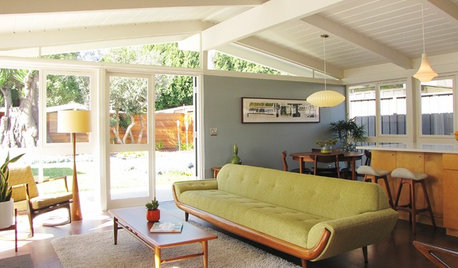
HOUZZ TOURSMy Houzz: 1950s Rebound for a Cliff May House
Loving restoration brings a midcentury gem back to life and its owners to the kind of life they love
Full Story
OUTDOOR ACCESSORIESHow to Organize Your Outdoor Space for Ultimate Summer Enjoyment
A professional organizer offers advice on getting your accessories, tools and toys tidied and ready for the season
Full Story
nicole