Houzz Logo Print
elmerjfudd

Another interesting opinion piece, same source

last year

David Brooks wrote an interesting piece in the NY Times dated Sept 5.

I'd written a new thread to share what I thought was interesting in the piece but apparently it contained enough of the wrong words to get blocked by the auto-screening functions of the site.

Fair enough. What the article talks about is that negative cultural influences more than lack of money can unfortunately lead to negative outcomes for well-being and development. Adverse outcomes for people and for their children. Not cited but a concept I've heard before, the "culture of poverty" that's difficult to escape.

Keep comments cultural and sociological, not political, if possible. I'm not particularly a fan of Brooks but sometimes he says things I find interesting. As with this example.

Comments (33)

  • last year

    I glanced at that piece this morning, didn’t read carefully, but what stood out was that he pointed at relatively short term studies to argue that more money doesn’t result in better outcomes. Seemed like a fairly shallow conclusion to me. Maybe I’ll go bsck and read more later.

    Elmer J Fudd thanked foodonastump
  • last year

    I hope you get a chance to look at it. The bit about the studies was just a warmup introduction. The substance of his argument is found later on. To me, it makes a lot of sense.

  • Related Discussions

    Interesting accent piece or not so much?

    Q

    Comments (24)
    While I love the shape, I would paint it black since it isn't in the perfect condition you're wanting~this would help balance out the piano. I've used vintage French dressers as night stands~nightstands are way too small as well as too low for my bed. Besides, the function is no different than a nightstand, just more spacious. I could definitely see more black in the room~have you considered an area rug w/black background? Black lampshades, changing out the white vases for black, the balls in the glass compote to black, and a black/ gold frame on the mirror would all be ways in helping balance out the space with re:to the black if used it thruout the room. Don't change out the pillows unless you can find a print w/black~I think a solid would be too heavy looking. I would also paint the interior of the front door black~it would make a huge difference.
    ...See More

    Opinions on either one piece and 2 piece toilets

    Q

    Comments (6)
    homebound...good point about the leveling!!! If they still go with it, I'll be sure to pay close attention to that. From what I have read, some of the one piecers have a pressure tank or a bladder for increased flush pressure and a dual flush system in them. They can be quite expensive to repair even for a DIY. The one piece American Standard these folks want to put in is gravity fed. The toilet is chair height and with the one piece, the tank portion has a lower profile than a two piece. The flush valve is 3 inches and the claim is, it will flush sufficiently on 1.6 gallons of water without a reflush. I'll bring up the 2 points already mentioned, to see if they want to reconsider. Even though they are ordering the toilet, I'm putting it in. You know how that goes, if it doesn't perform as they expected or they don't like it, it will be my fault!!!! I'm hoping any folks here that have any negative experience with them, such as the cost of repair or performance would share that info so I can forewarn the client. My only experience with them right now are the sales pitches and they all claim to be the cat's meow.
    ...See More

    opinions on mixing furniture finish in same room?

    Q

    Comments (18)
    vava...so you're mixing gray and black :) It should be wonderful! Srg...my great grandfather made the round one. He's not making tables anymore.... :( But if it helps, it's a simple victorian claw foot kitchen table in oak. I just shook it up a bit by painting the base and antiqued black finish and refinishing the oak on top and it looks like new :) You could do it for half the price or less of a new table since it's not a particularly fancy piece (many grandpa's made them LOL)
    ...See More

    Another opinion question

    Q

    Comments (25)
    Oh boy, how did I miss this.... Marty, I think you did a remarkable job of reproducing the inspiration picture to fit your purposes. Even the turned down routed-edged ornamental thingy is an exact copy. I could do without the button on the bottoms, but for softening the look, that curved front element looks fine.I might consider a 4" deep shelf in that hidey hole above the lower cabinet, but it might be a trashy catchall. Then on your side cabs, I'm sure you plan to put some doors there. Depending upon their width and height, think about going the easy route, and buying a pair of prefinished (or not, if you want to do the painting) bifold shutter doors. Louvered doors and beadboard go together very well. And they come in several door widths too, and you might consider using a pushy magnetic catch instead of a door knob. But match the knobs to the beadboard doors. And I love the doors. Awesome. Your DH did a great job with those. When the borders are painted too, they will be first rate. I have front loading laundry equipment too. But mine is a stacking laundry center from Frigidaire, now a few years old, and (knock on wood) never had a problem. Very easy to use, and not huge, which is important in a small home. BTW, when it looks that nice, you won't mind doing the laundry. So tell your DH that he doesn't need to get his head cracked, stay out of that laundry! It is built for us shorter folks. All he need do is drop his dirties in the basket, and wait for the laundress to do her magic with them. With a smile worthy of the 1950s GE ads too, wearing high heels, crinoline petticoats, and makeup. Doing laundry in the 50s was a privilege to young housewives with brand new tract homes, new Buicks in the driveway, and new appliances to make housework easy. And then they all began to go to work too.......oh well, it was good while it lasted I suppose.
    ...See More
  • last year

    I did read this piece and found it interesting. I have lots of respect for Brooks even when I don’t agree with him.

    It is hard to fault the value of values. His point is directly opposite to some other readings that posit (with references) that simply giving money frees people enabling them to make good choices.

    In our current very unequal economy where entry level jobs do not permit one to work hard and get ahead or even pay rent, a supportive family with great values doesn’t seem like enough to achieve more.

    Elmer J Fudd thanked lisaam
  • last year

    Well put - the value of values.

  • last year
    last modified: last year

    First off how about a link. Seems like the first thing needed to discuss an article.

    https://www.nytimes.com/2025/09/05/opinion/liberal-conservative-left-right-politics.html?unlocked_article_code=1.kE8.ILWr.7T9a2OwQ-L1-&smid=url-share

    If the argument is that simply throwing money at poverty doesn’t solve it, I agree and think most would agree. But to argue that the parental role is more important than money after meeting a child’s basic needs seems to kind of skip right over the part about meeting a child’s basic needs.

    Honestly the whole thing seems a little disingenuous to me. Starting witb my original comment about short term studies. I’d need a lot of convincing to get behind basic guarateed income, a LOT, but when adults are struggling to survive while working full timr st the best jobs they csn find, we’ve got a problem. And it’s pretty rich coming from a conservstive whose party thinks women should be forced into giving birth and then stay home to raise the kids properly.

    If this isn’t a particularly articulate post so be it, it’s all the effort I’m putting in.

    Elmer J Fudd thanked foodonastump
  • last year
    last modified: last year

    It does seem like it is a fairly tricky political needle to thread, there is a current push from some government planners to convince families that they should have more children (so that there are enough workers) and yet also convince them that it isn't necessary to budget additional government funds for those families to avoid the difficulties of reduced opportunity for poor families trying to raise children.

    Elmer J Fudd thanked lucillle
  • last year

    " If this isn’t a particularly articulate post so be it "

    It's just fine, why would you think otherwise? You expressed your views, thanks for spending the time and then making a contribution.

    I have a NY Times digital account and sometimes when I copy/paste URLs to put into an email, they don't function. So I don't try anymore. I know I get a certain number of "guest" link sharing per month but I don't want to know what happens when put into a public forum and it gets clicked on who knows how many times.

  • last year

    Oh, I forgot to say something.

    food, you said :" And it’s pretty rich coming from a conservstive whose party thinks.......... "


    Did you see where he said:

    " I’ve been driven away from the right over the past decade, but I can’t join the left because I just don’t think that tradition of thought grasps reality in all its fullness. "

    So, it's not "his party" as you suggest.

    I think he's talking about the need to find ways to break the "cycle of poverty" (I offer that word into the conversation) and the other party and policies he says might have been a refuge for his increasingly more centrist views also doesn't get it.

  • last year
    last modified: last year

    Thanks for that correction. Though I’ll say the camel is morphing from one hunp to two, so it starts to feel like it’s one side or the other. I self-identify ss a moderate myself but we’re a dying breed.

    Elmer J Fudd thanked foodonastump
  • last year

    Quote: " Rising out of poverty also requires the nonmaterial qualities we now call human capital, such as skills, diligence, honesty, good health and reliability. " And..." it is culture, not politics, that determines the success of a society. "


    I totally agree 100%! I found that people who have goals, stay on course, become more productive...feel like a part of society. When people focus on the now...there is no future.

    Elmer J Fudd thanked nicole
  • last year

    Nicole it seems to me like you’re agreeing with one statement but then going off in a separate direction. Just stating it in case it wasn’t intentional.

    I agree with your statement about goals, they do help. But I only half agree with the statement you quoted. A big part of skills is what is provided in the form of public education, and a big part of health - especially among the poor - is tied to government funded healthcare and nutrition. I don’t see how it’s possible to say these aren’t political when one side tries to expand these programs and the other side tries to gut them.

    I personally don’t find it difficult to say that individuals have the responsibility to strive to become their best selves, and simultaneously acknowledge that we don’t all start on the same playing field. Be it intellectual, economic, social, etc.

    Elmer J Fudd thanked foodonastump
  • last year


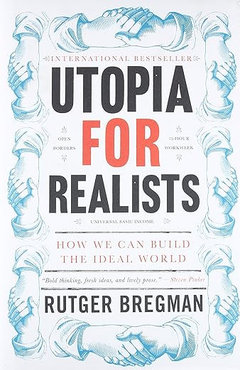
    I don’t know how I mislaid my copy of this book but it’s interesting and pretty persuasive.

    Elmer J Fudd thanked lisaam
  • last year

    A couple of news chanels recently cited studies saying that younger Americans no longer believe that 'hard work' leads to 'getting ahead'.

    I'm wondering about how those polled define 'hard work'. What is 'getting ahead'?

    The same day I read a story about 'starter homes'. The author compared the 900-square-foot home he grew up in with what are today considered 'starters' (2400 square feet with every bell and whistle).

    Here in the Chicago area, there's a lot of focus on a little one-bathroom house in Dolton that was a perfectly adequate home to the new Pope -- whose parents both worked hard.

    Elmer J Fudd thanked chisue
  • last year
    last modified: last year

    I found an article about the study that David Brooks failed to link:

    https://www.nytimes.com/2025/07/28/us/politics/cash-payments-poor-families-child-development.html?smid=url-share

    Links to the actual study are within. There are several points which are acknowledged within both, including that the pandemic took place during the study, the study was performed during the early four years of the childrens’ lives so later and longer term outcomes are unknown, the $333 may not have been enough to notice the difference, etc. By the way, the study also did not find that the mothers worked less as a result of the free money, with the exception that some were able to reduce their hours during the pandemic. This was deemed a positive result.

    Like I said before, I’m not arguing for guaranteed basic income. I’d be much more interested addressing wage gaps. But what bothers me is that people tend to grab onto stuff like this for confirmation bias. Heck, Mr. Brooks couldn’t even be bothered to link the study. Yes, there are certainly cultural issues, and the cycle of poverty is real. These can take generations to repair. But it’s more comfortable to pin it all on culture, as that takes the responsibilty out of our hands.

    America shows poorly on several measures in comparison to other western nations. Income inequality, access to healthcare, violence and homicide, etc. But I’d imaginr we rank high in resisting real efforts to do anything positive about it if it means taking some more money from our wallets. Just like we grip onto our guns.

    Elmer J Fudd thanked foodonastump
  • last year

    I'm not troubled by the absence of a link. It's an Op-Ed piece and Brooks is an opinion columnist, not a news reporter.

    Aside from the "this works, that doesn't " versus "No, you have it backwards. It should be the other way around" standoff, it seems apparent that whatever is done or not done isn't effective. I'm a believer in the old adage that a chain is only as strong as its weakest link. All in our society are less well off and are brought down by the long existing underclass. Some can escape, others can't. Whatever we're doing doesn't work. I feel strongly that fresh ideas and new approaches should be welcomed, funded, and tried.

    I enjoyed reading the interesting comments and perspectives. Thanks.

  • last year

    FOAS...I believe goals are "potential"...what could be....sustainable development goals for instance.....forward thinking. I also believe culture, people who come from poverty, see govt help as normal....they might look for a handout rather than get three part-time jobs. People in poverty have to "want" to break the cycle.


    Quote,"I'm a believer in the old adage that a chain is only as strong as its weakest link."

    chisue said " I'm wondering about how those polled define 'hard work'. What is 'getting ahead'? "

    Good point. People want more than a 900sq ft home to start out in. People want more today.

    Elmer J Fudd thanked nicole
  • last year
    last modified: last year

    " You’re not troubled by him leaving off a source that’s key to his opinion? You certainly don’t give posters here that latitude! "

    No, I'm not troubled at all. As I said above, Op-Ed pieces are not news reports. The standards for one don't apply to the other. Op-Ed pieces are by definition the opinions of the writers or sponsors, biases are always assumed to be involved. News pieces are supposed to be independent, factual and free of biases. That's not always accomplished but that's a cornerstone in the foundation of the expected integrity of professional journalism.

    Opinions can be well-founded or baseless, they still exist as opinions. If you think or expect opinion pieces should be otherwise, fine.

    As for my questioning sources here, I'd say it's for two reasons. The first is that I've found that too many internet users, are ready to latch onto search findings without giving the information they're marching with any iota of a smell test, a common sense assessment of the legitimacy or creds of the source. They treat word matches as finding relevant info sources that convey to THEM knowledge they don't have and that they assume they can put into context. This happens in this forum regularly. Oftentimes looking through to cited sources disclose that they originate from people who are not qualified on the matters they profess knowledge of. And are simply offering opinions or wishes and hopes about how they'd like things to be or favorable to what they're pushing - books, goods for sale, etc.

    Secondly, the anonymous and unaccountable nature of sites likes this are often seen by people as license to fudge what they say. That it's the Wild West, anything can be said, anything can be made up, anything can pretended to be so. When I read something that seems fabricated or from a questionable source , I ask.

  • last year
    last modified: last year

    “they might look for a handout rather than get three part-time jobs.”

    The study cited doesnt happen to support that.

    Yes, people have to want to break the cycle. They also need help knowing they can. Growing up in poverty surrounded by poverty, seeing grandparents in poverty, hearing about great grandparents’ poverty, doesn’t help.

    I’ve read your own rags to riches story. It makes you not the norm but somewhat exceptional. Which I’m guessing is why you saw fit to share it.

    Not everyone is born with the same potential and the same drive and under the same support system. Some people need help. Many do.

    And maybe if the most wealthy among us weren’t so busy keeping the bulk of their own handouts in the form of tax loopholes, exempted inheritances and extraordinary executive pay, there’d be a bit more spread around to help raise others up.

    Elmer J Fudd thanked foodonastump
  • last year
    last modified: last year

    And maybe if the most wealthy among us weren’t so busy keeping the bulk of their own handouts in the form of tax loopholes, exempted inheritances and extraordinary executive pay, there’d be a bit more spread around to help raise others up.

    Poverty, by America by Matthew Desmond was pretty eye-opening for me in this regard. And it's not just the most wealthy who have been helped enormously by certain laws and government programs, like the mortgage deduction, for example.

    Elmer J Fudd thanked Bookwoman
  • last year

    FOAS....Who better to know what poverty is...than someone who had nothing. You sound disgusted by that? I keep saying it's a series of choices.


    My book club asked if we'd read " Evicted: Poverty and Profit in the American City by Matthew Desmond" to see if it was a good club read the library should buy multiple copies of. I offered to read it and give my opinion. Thing is....it was unrelatable...but...accurate. It was sad, but factual. Part time jobs are everywhere. They have no benefits, but are easily obtained until you get a college degree, that will net you something better.

    Dave Ramsey quote..." He promotes working and increasing income as core components of a larger strategy to escape poverty. He makes a distinction between being "broke" (a temporary state) and "poor" (a permanent mindset) and argues that disciplined financial habits are key to building wealth. (he's always telling people to get a job delivering pizza if they need extra income)

    Elmer J Fudd thanked nicole
  • last year

    FOAS....Who better to know what poverty is...than someone who had nothing. You sound disgusted by that? I keep saying it's a series of choices.

    No, Nicole, I’m not “disgusted” or anything like that! Of course it’s an impressive story, as are many similar stories. You’re allowed to be proud and you should be proud! I just caution against taking an attitude like “I did it so anyone can” because it can overlook a whole lot of obstacles someone might come across that are far more complex than “choices”. Mental health, intellect, disability, environmental influences, discrimination, relationships, bad luck, etc.

    Suggesting that all these can be overcome by making the right choices is no less simplistic than saying all people need is money to pull themselves out of their predicament.

    Elmer J Fudd thanked foodonastump
  • last year
    last modified: last year

    OK, to be fair, I asked my hubby....ALL the people we know are "Rags to riches" , he said, "That's right." No college, no inheritance. We started naming couples that fit THIS:

    The construction superintendent married to the female electrician(no trade school, she got an apprenticeship). The electrician married to the old-folks-home attendant(3rd marriage, going to lunch with them in a few days). The plumber married to the HP accountant(ran into him at the dive shop, renting a dry-suit, going to Iceland for a vacay). The air-craft mechanic manager(self trained) married to the quality inspector(see him @ the gym, he's 84, used to be our neighbor). The oil-rig supervisor, his GF rents rooms in her house(traveled scuba diving with them for 3 years). The buyer for HP(taught himself the program), married to the landlord/she purchased houses using MIL's money as loans(recently divorced, she just paid cash for 2 homes, moved to Idaho).

    ALL are single percenters. At the gym, I just met Mya who's a wedding photographer, just had her 30th B-day! Has 2 kids(she just shot 3 weddings $10k each!), the construction worker that owns a Landscape Company, met him last week.....so many success stories.....NONE had it easy. ALL are a success! I meet new success stories every day....I'm nothing special. Never thought so either.

    Edited to add: Neighbors kid is a paraplegic, Drone-photographer in CA. $$

    Elmer J Fudd thanked nicole
  • last year
    last modified: last year

    Though never poor, I’m also a single percenter who came from humble beginnings. But being single percenters makes us exceptions, by definition, regardless of how we made our money.

    Elmer J Fudd thanked foodonastump
  • last year

    yall are not getting the point here. If you are born into an area rife with poverty with crappy schools and nothing to do it will not matter how good your choosing would be if you have no choices in the first place. If your parents are drug addicted criminals and you have siblings who will set the house on fire while you all starve to death if you dont stay home way too often to look after them then where are your choices. Kids who have after school jobs to buy food for their brothers and sisters are not having the same possibilities in life as the kid in the upscale middle class neighborhood who goes to math and computer camp in the summer. That is reality in America. Because we as a country are hopelessly ignorant about the facts of life to the point of making sure our children know nothing about where babies come from, well guess what there are going to be babies having babies. Poverty ensues. And so on.

    So if you need more money you need to deliver pizzas on the side. Delivering pizzas requires a vehicle. The vehicle requires fuel and maintenance and the biggie, insurance. So where is this to come from? Choosing doesn't come up when you are poor.


    There have been more than a couple of documentaries of people trying to live on the money you get from welfare programs for food. These people inevitably have extras in their cupboards to supplement what they can afford. They toss in some spices and some extra noodles.........and that is the dim mindset of people who cant imagine a world without a spice collection.


    patriciae

    Elmer J Fudd thanked HU-279332973
  • last year

    " If you are born into an area rife with poverty with crappy schools and nothing to do it will not matter how good your choosing would be if you have no choices in the first place. "

    Someone born into impoverished circumstances is already chin-deep into the cycle of poverty. In some respects, it's not completely too late for them but to make something more of themselves after such a difficult start is as hard as it gets.

    What steps did that child's parents take in their lives to try to prevent passing such problems on to their children?

  • last year
    last modified: last year

    How to interrupt the poverty cycle?

    DIL's first teaching assignment was junior high in Poverty/Criminal Central in Chicago. 'Parenting' was rare, with lots of 'guardians'. She carried on for the sake of the few kids with some concerned family member in their corner -- occasionally a sib. These children were neglected, hungry, and had no idea there was anything outside of that mile square shooting gallery where the 'rewarding enterprise' was drugs.

    I propose devoting the same family welfare funds to public boarding schools, enrollment voluntary, with rules regarding expulsion; home visits permitted. (This is not an orphanage system; family ties encouraged -- with limits.)

    Most parents love their children and want to see them succeed. If they haven't learned how to succeed on their own, they can't be expected to pass on anything but their own failure -- which becomes the expected norm within that community. (Don't go getting 'airs' or you'll be shunned.)

    Elmer J Fudd thanked chisue
  • last year
    last modified: last year

    What Steps? well mostly none. That is part of the problem. The parents are still working on their own problems and the unwanted children are just that. Sometime they want a doll but mostly not. And so the cycle continues. It is impossible without a LONG TERM plan. One that spans generations and we are incapable of doing that.

    This article is the essence of instant gratification. We need to see progress NOW, TODAY, THIS INSTANCE. And that is never going to happen.

    patriciae

    Elmer J Fudd thanked HU-279332973
  • last year

    " What Steps? well mostly none. That is part of the problem. "

    I'm not that pessimistic. A big deal is made in my area to celebrate high school, community college, and college graduations of students described as being the first in their extended families to have attained that accomplishment. There aren't enough of them but they're out there and I believe the numbers are growing.

    It takes time. Nothing will change today, now. Cycles are cycles - they originate over time and don't change overnight.

  • last year
    last modified: last year

    "DIL's first teaching assignment was junior high in Poverty/Criminal Central in Chicago. 'Parenting' was rare, with lots of 'guardians'. She carried on for the sake of the few kids with some concerned family member in their corner -- occasionally a sib. These children were neglected, hungry, and had no idea there was anything outside of that mile square shooting gallery where the 'rewarding enterprise' was drugs."

    These poverty-stricken, high crime areas are by design. Not all poverty-stricken places have high crime. That is by design. The U.S. has a big problem, especially in our big blue cities. Also, by design.

    Elmer J Fudd thanked OllieJane
  • last year

    OllieJane - here’s some info from a Google search for you to compare to your statement of “The U.S. has a big problem, especially in our big blue cities.“ This is definitely not a ’big blue city’ - just ask Mike.

    Shreveport's crime rate has been described as high, with some sources labeling the city as one of the most dangerous metro areas in the U.S.. In 2023, SafeWise ranked the Shreveport-Bossier City metro area as 6th most dangerous in the country. While the exact rates can vary by source and year, studies frequently place Louisiana, and thus Shreveport, among the states with higher crime rates compared to the national average.

    Elmer J Fudd thanked KW PNW Z8
  • last year

    Shreveport is not a big city but it is definitely 'blue'.

    Elmer J Fudd thanked LoneJack Zn 6a, KC
  • last year

    Well, I stand corrected! From www.bestneighborhood.org Educated women making the difference….


    Shreveport tends to be slightly democratic based on voting results in recent elections. Compared to other nearby cities, Shreveport has more democratic voters. Compared to the nation as a whole, Shreveport leans more democratic.

    Highly educated populations with bachelor’s degrees or higher tend to vote for more liberal candidates. In Shreveport, 29.95% of all adults have earned a bachelor’s degree or higher. Educated women are far less likely to vote for conservatives, and in Shreveport women make up 51.54% of the population.

    Elmer J Fudd thanked KW PNW Z8
Sponsored
Whisler Home Improvement
Average rating: 5 out of 5 stars9 Reviews
Franklin County's Committed Home Improvement Professionals