Houzz Logo Print
ninapearl_gw

my $50 bill wasn't good enough

8 months ago
last modified: 8 months ago

i took my list to the dollar general store in my tiny little town. since i knew my purchases wouldn't total more than $50, i put a $50 bill in my pocket, left my purse in the van. i go in, grab what i need, head to the checkout counter.

my purchase came to just under $50, i whip the bill out of my pocket and the cashier says "oh, so sorry, we can't accept that." flummoxed, i asked why and he told me that because so many people try to pass counterfeit $50 bills off, corporate has told all dollar general stores they are no longer allowed to accept them.

thankfully, there was no line behind me so i didn't hold anyone else up while i went out to my van and got some smaller bills.

i pay cash or still write checks. i don't have a debit card and while i know it would probably be easier, i'm old and set in my ways.

Comments (64)

  • 8 months ago
    last modified: 8 months ago

    When billionaires start paying their share of taxes, I’ll start worrying about whether the cash I pay my gardeners or window washers is being claimed for tax purposes.

  • 8 months ago

    I ran into a similar issue once when I tried to pay for something with a $2 bill. They didn't think it was real currency.

  • Related Discussions

    Guess what? I wasn't watering enough.

    Q

    Comments (19)
    Greybird, unfortunately, it doesn't rain all the time. It's just humid all the time (which I like). This summer we had a lot more rain than in the recent past - often 2 or 3 times a week. I would water so that they'd be watered every other day, one way or the other. Apparently, that was not enough by the looks of my plants now. There's really no comparison. The rain pretty much stopped in mid-October, and we'll get maybe 2 - 3 inches per month on average until late June. Sometimes we get a few months worth in one month, and then it's real dry for long stretches. When I got home from work, I stuck my fingers in the ground in a couple of places. The top 3" weren't even damp but not quite dry, so I watered again. It is becoming very apparent that the roses need it. It is making a huge difference. Jean Bach Sisley is no longer a see-thru bush, and they're all leafing out like I haven't seen except for early spring. I'm just amazed. I water each plant by counting one-thousand-one, one-thousand-two up to 15 or 20. That should be putting at least a gallon (maybe more; I need to measure it in a bucket) daily. Even the potted roses are doing better (they were leafless sticks for the last several months watered every other day). Roses growing in my garden definitely need daily watering - and it's only in the mid-80s during the day and down in the 50s at night. And still they dry out too much to keep the roses satisfied. I have read many times that water, water, water is the main thing with roses, especially in Florida, but I had no idea they required it daily. You folks with clay need to count your blessings, because you are definitely blessed. Which is not to say that we here are not blessed. We have other blessings that need to be counted, too, but moisture-holding clay is not one of them. I guess all that sunshine accounts for a lot of our blessings :)) Sherry
    ...See More

    Decided it wasn't the right time :(

    Q

    Comments (15)
    Insurance varies by state -- talk to your insurance company or agent to get the right info. Renter's insurance is typically to insure what the renter has on the property -- their belongings, not yours or the land and structures. It is not generally liability insurance and his getting that would be more difficult and expensive. Your property insurance would generally be the insurance to cover any damage, and you may pay more for insurance with a tenant on the premises (not only can he cause damage, he could be injured and sue you for having a dangerous condition -- where that responsibility for maintaining the property would need to be clearly set out in writing). Your situation is different from a home with daily living and the risks that come with it (cooking, plumbing, floods, fires, etc.) Contractors are often bonded to cover loss to property they work on. Something like that might be possible for your situation. The dollar amount on the property is negligible -- about $37 per acre. Make sure you know what the taxes are. Typically they would be prorated, so you would normally have 1/4 but would be agreeing to the additional 3/4. Make sure he isn't behind on the taxes or that there aren't other surprises. I think you need to talk to the pros to verify what these costs are. That should make your answer a lot easier. I don't think you can make an intelligent decision without knowing those things first.
    ...See More

    When good enough isn't good enough....

    Q

    Comments (6)
    I remember reading an article years ago that said, "70% is not passing". It suggested that, rather than putting up their diploma, doctors should post the marks that they got in med school ... ... and if you found that yours got 70% in surgery - would you happily have him take a scalpel to your belly/head/wherever?? And that the rest of us should strive for excellence, as well. We need to model high performance for our children, for we're the major influence in their lives. When they take international tests of proficiency, often our kids don't do so well. They're going to be in global competition in future years and they need to set high standards for themselves. Or the young folks from other countries (with lower quality educational systems) will hang their hides on the fence. Have a great week, folks ... what's left of it. ole joyful
    ...See More

    It wasn't just my imagination.....

    Q

    Comments (11)
    I am using an old computer, don't have a firewall and free-edition AVG hasn't deleted some nefarious tenants, having notified me of their presence, I believe ... ... so I don't do financial stuff online. I have a bank-issued credit card with accounts at the bank that issued it and, being a senior, don't have to pay a fee to pay credit card, utility, oil bills and such. I'm red-faced, though - when the electric bill came in on Thursday, it had last month's bill added, as I hadn't paid it. That was during the time that I was having a difficult time being mobile and I missed paying the utility bills ... at the bank. During that period I've considered that it's time to have some of the money-related situations that I deal with, including gov't.-related pensions and income tax issues dealt with by automatic electronic transfer. ole joyful
    ...See More
  • 8 months ago
    last modified: 8 months ago

    They want cash so they do not have to pay the credit card fee. The big businesses factor in the fee in their prices, the guy doing construction work cannot.

  • 8 months ago

    I suspect many places make money on credit card fees now, in NY they’re allowed to surcharge 4% which I’m guessing is more than most cards charge.

    For bigger discounts like the 10% mentioned above, or ”saving the sales tax” I’d expect it’s more about making a cash transaction disappear altogether.

  • 8 months ago

    Foas, You pay a fee on your credit card if you do not pay in full AND the company that accepts it pays a fee on each transaction. A large company pays a smaller %.

    A small company, like my local nursery, pays 4%. They want cash or checks. They will take your card, but charge the 4%. They are not making extra money, they have to pay it to the the credit card company.

  • 8 months ago

    I find it's not uncommon for retailers not to accept large bills - many of them don't really like cash at all, and usually don't have a lot of change on hand (fewer people pay cash, and more cash is more tempting to theft).

    I will try to pay cash or debit for small purchases from independent stores, to cut down on their transaction costs, but I usually don't use a $50 unless my purchase is over $40 to begin with (like a recent take out food order).

    " They want cash so they do not have to pay the credit card fee. "

    They don't want cash, because it makes them a bigger target for theft and fraud (counterfeits). In addition to that, a business spends more time (and sometimes money) making cash deposits to the bank.

  • 8 months ago

    I was in a bakery and wanted to pay for my $9.50 purchase with a $10 bill. The cashier said that she had no change, so I could not expect my fifty cents back, if I paid with cash. If I used my card, there was a 3% upcharge. Go figure.

    On a recent trip to London, I found that no one took cash. Card only just about everywhere. I always like to leave a couple of pounds each day for the housekeeping staff, and I had quite the time trying to come up with the coins.

    I try to be careful where I use my credit cards.

  • 8 months ago
    last modified: 8 months ago

    Thanks for the reminder about using credit cards rather than debit. I got in the habit of using my debit card quite a bit - I need to rearrange the cards in my wallet and put the credit card on top!

    I don’t think I’ve ever in my life had a $50 bill. The only time I have a $100 bill is when I’m going to do a bit of casino slot playing. $100 is my budget. If I lose all that, I quit.

    When I used to have garage sales I was astounded at the people who would whip out a $100 bill for a $10 purchase. Always a person who appeared to be of a low socio-economic class. WTH?

  • 8 months ago

    I have heard that with 100 bills..but not 50! (yet anyway). This is getting crazy.

    What if your total is for $99...should you give them 99 one dollar bills?

    Yeah, right. They over charge for everything, and want cash but want to dictate what money you use too ? Solution.., tell the clerk.. "Actually,.you don't have the proper objects I want anyway...sorry." And don't shop there anymore.


  • 8 months ago
    last modified: 8 months ago

    I agree with Sherry. I live in an upscale suburb. There are two gourmet shops that charge a fee for using your credit card. This bothers me so I do try to have cash on hand when shopping there.

    Luckily you had extra money so it wasn’t a wasted trip.

    However, I’m not liking that you leave your purse in the car. Why not get a small handbag and just put in mney and ID for times when you want tonrun in and out,. I get not always wanting a larger bag on your shoulder.

  • 8 months ago

    “A small company, like my local nursery, pays 4%.”

    I’d challenge that thers the norm. Google (have at ir, Elmer) says the averags effective rate for small businesses is around 3%, and in looking to set up credit card service the first quote I got for in person transaxtions was 2.6% plus 15¢ per swipe. Which would make any transactin over abojtt $10 less than 4%.


  • 8 months ago

    Foas, I am not going on and on wth you! I do not know the actual % they charge, because I always pay cash. I just know that they do. I used the #4% you quoted as an example. All the small businesses here pass on the fee, so I always carry some cash with me for them.

  • 8 months ago

    I’m not liking that you leave your purse in the car.

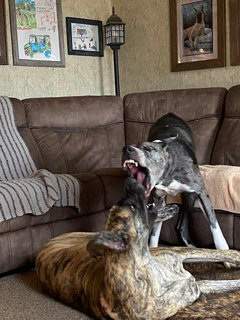
    this made me giggle. not only do i leave my purse in the van, i often leave the van running if i'm just going in for a quick grab of a couple of things. anyone crazy enough to try to steal my purse or my van would have 2 very large great danes to deal with, one of which is VERY protective of HIS van. it wouldn't end well for the wannabe thief.

    besides that, everybody knows everybody else in this tiny town so thievery just isn't a concern for me.

  • 8 months ago

    @littlebug Zone 5 Missouri....I had a neighbor, across from my rental, tell me, he pays his bills, then gets the rest of his monthly income in large bills/cash. He spends the cash freely until it runs out...then...he has "no" back-up, no credit cards...he just stays home...eats what's in his cupboards until the next pay-day arrives. That's how poor-people have large bills on hand. I never understood it before he explained it either....

  • 8 months ago

    I used to always pay cash for things. But during the pandemic everything was on a credit card. It was a bad habit for me because of how easy it was to just use that card without thinking. Since then I always plan to have cash when I am going to a store. My bank is right down the street. I know that the small businesses appreciate getting as close to exact change as possible and that is what I aim for. When I get my haircut, I get a discount for paying cash because of the credit card charge for the shop. Using cash makes me really think about what I am buying and it has really cut down on the impulse shopping that I used to do.

  • 8 months ago

    Sherry, my only point is that I ”believe” they often tack on a higher percentage than they’re actually charged, and I’m happy to pay that in order to help keep my transactions recorded for tax purposes. Like Elmer, I pay my taxes and appreciate everyelse doing the same. Cheating taxes is neither a victimless crime nor a way to effecively protest tax code.

  • 8 months ago

    Im another debit card user. It's just so easy. Plus the grocery store in town that I prefer doesn't take credit cards, only debit or cash. I dont like to carry cash. Its just bulky and heavy and dirty, and a pain to acquire. I use credit for larger purchases for the points, when I can. All of my bills are auto deducted, I love that, and I still have a few occasions where I have to write a check.

  • 8 months ago

    I've seen a number of stores with signs for no bills over $20.

  • 8 months ago
    last modified: 8 months ago

    I have one bank account with a debit card attached and if you make 12 debit purchases a month they pay a really nice interest (currently over 4%) on the money in the account. So I use the debit at Starbucks, Trader Joes, my Food Coop and the small grocery store where I shop. I can usually make the 12 transaction goal. I don't use the debit card other places.

  • 8 months ago

    " A small company, like my local nursery, pays 4% "

    Really? They could be using Square or Clover, and paying 2.5 -2.8%. And I find it hard to imagine that payment processing systems made for small businesses are charging more than banks would charge.


    I also occasionally leave my wallet in my car when I leap out for a quick purchase, but I often use ApplePay, where my credit card is linked to my phone. I had never really wanted to put my credit card on my phone, but when I was in Edinburgh I found that was the fastest and easiest way for me to pay for public transit.

  • 8 months ago

    @lucillle i really do appreciate your concern so thank you for that! i get that small town innocence is rapidly becoming a thing of the past but for here, it's still very much alive.

    our "neighborhood watch" facebook group is very active but it usually pertains to the occasional door-to-door sales person warnings and those are few and far between. the only people in town who routinely lock their doors are almost always new to the area and not used to the style of living in a tiny rural town.

    i do lock my van when i have to be in the city and i'm obsessive about making sure my extra key is in my purse because locking myself out of my van would be soooo easy to do since i'm not used to it.

    i'm pretty sure this is the picture you are referring to. yes, this was all play. i just happened to catch them at the very second they were pretending to be bad guys. 🤣 honestly, i don't worry about untoward things around here although i do lock things up when i go to the city since the dogs are rarely with me for city trips unless they have a vet appointment.

    last summer when i had a crew of 2 guys here to build a deck, we went through introductions the first couple of days so the dogs would know they were friend and not foe. i was gone one day while they were working. one of them told me that he approached my sliding glass door pretending to try to come into the house just to see what the dogs would do. in an instant, frank was off the couch and at the door giving his best "don't even think about coming in here" bark. even though both dogs were super friendly with them, the fact that he was even pretending to come inside without me being here elicited frank's very protective actions. he told me there was no way he or anybody else would have the nerve to actually open the door. i have never discouraged my danes from being protective of me, my house, my vehicle. i rather like that they think they need to guard the place when i'm gone.


  • 8 months ago

    In July I was in Italy for two weeks. We did not use cash for any transaction, large or small, from a single coffee to our accomodation We paid by phone app. I am now in France for two weeks. All the businesses take cashless payment. But the property owner has asked for cash for a meal and the deposit. None of us (6 people) had any. We don't normally even use cards let alone cash. We use our phones. Luckily, at the last minute leaving home I grabbed a credit card and was able to go to an ATM to withdraw cash. I imagine the reason for requesting cash is to not declare the income for tax purposes. That would be the case at home. If a work person asked for cash we'd suspect them of working illegally and wouldn't employ them. Bona fide workers submit an invoice on line and we pay by on line bank transfer.

  • 8 months ago

    We have debit cards, but have never used them even once. We try to pay with a card everywhere they take them, but at our greedy vets, we write a check because I'll be darned if I'm paying 4% more for an already outrageous bill. My daughter uses her phone for all transactions. Bops her iPhone and boom! I'm just an old Luddite.

  • 8 months ago

    " Bops her iPhone and boom! "

    From the customer's standpoint, a digital payment with a phone has the same result as using a proximity (tap to pay) card.

    It may have changed but at one time, using a credit card provided more customer safety and remedies/protection from fraud than debit cards. It's a matter of differences under the law and financial institution policies. That's why using debit cards for retail purchases and other payments was regarded as a less desirable alternative to using a credit card.

  • 8 months ago

    Last year, I was in Canada and we did not use cash once. Paid for everything with credit card.

    On another trip, last year we went to Europe, in Switzerland, did not use cash once. In Budapest, no cash was needed except, sometimes to use the toilets. It was a real pain, because we did not have cash on us and there were no nearby ATM. In Vienna, surprisingly many places required cash, it was hit and miss and difficult as we did not expect it.


    My vet charges 3% for credit card purchases so I use my Apple pay and pay with my debit card.


    I do sometimes go to a low-cost store and they dont accept credit cars or Apple pay so I have to remember to bring my debit card.

  • 8 months ago

    I seem to recall that some years ago, maybe 10-15, San Francisco adopted a city ordinance requiring all businesses to provide medical insurance at a minimum level for all employees working more than a baseline number of hours per week. The law reached down to small employers with I think 5 or more employees.

    Price surcharges started to appear on menus, saying something to the effect "The total shown on your bill will be increased by a surcharge of X% (I think I often saw 5%) to cover the cost of providing our employees medical insurance". I don't think anyone reacted badly to that.

    For me, if a retailer or other business chooses to add a supplemental charge for taking a credit card, that's obviously not on a par with offsetting a medical insurance expense as far as being a societal good thing to do, but fine. It's of the same nature.

    Gas stations that do that in my area post 2 prices - pay by credit card, pay by cash. Usually a 10 cent per gallon difference. There's a choice. I always use my card, it's an inconsequential added amount and worth the convenience to me. It also helps me keep track of fuel costs on the rare occasion when I want to look at that. I use Quicken for convenience for my own financial organization, it helps me spot issues easily and in one place. I don't keep track of cash expenses and all bank and financial institution transactions get downloaded and classified by type automatically.

  • 8 months ago
    last modified: 8 months ago

    " That's why using debit cards for retail purchases and other payments was regarded as a less desirable alternative to using a credit card. "

    I thought it was because the money is immediately removed from your bank account, rather than not needing to be paid for until some time in the future. Credit cards do still offer some of those same guarantees, but they're really kind of unimportant for most of our retail purchases (most aren't big ticket items like furniture, appliances, or sports equipment).

    "Last year, I was in Canada and we did not use cash once. Paid for everything with credit card.....On another trip, last year we went to Europe, in Switzerland, did not use cash once. In Budapest, no cash was needed except, sometimes to use the toilets. It was a real pain, because we did not have cash on us and there were no nearby ATM. In Vienna, surprisingly many places required cash, it was hit and miss and difficult as we did not expect it."

    My sister is planning a cruise for her upcoming birthday, and asked about currencies - I was telling her that virtually all places accepted credit cards for just about everything. The only times I've needed cash while travelling were for small street-vendor and farmers market purchases in Netherlands.

  • 8 months ago

    " I thought it was because the money is immediately removed from your bank account, "

    That wasn't what I was referring to. Did you miss where I said:

    (Quoting myself)

    " at one time, using a credit card provided more customer safety and remedies/protection from fraud than debit cards. It's a matter of differences under the law and financial institution policies. "

    Anyway, I was describing the US and you're in Canada. I'm sure card laws and bank/financial institution policies are different where you are. No reason why they would be the same.

  • 8 months ago

    " Anyway, I was describing the US and you're in Canada. I'm sure card laws and bank/financial institution policies are different where you are. "

    I wasn't commenting on the laws, I was commenting on the perception of using credit vs debit cards. But go ahead and find fault with what I post because you can't understand what I wrote. You do you.


    " The only times I've needed cash while travelling were for small street-vendor and farmers market purchases in Netherlands. "

    I forgot the Seychelles, where I needed cash to buy a charging plug because I didn't bring the right type for the local outlets (they use type G, like in the UK). I just pulled out my small amount of foreign cash I have from trips over the last 15 years or so: United Arab Emirates, Japan, Seychelles, French Polynesia, and Fiji. At least I'll get a chance to use the Yen again next year.

  • 8 months ago
    last modified: 8 months ago

    " But go ahead and find fault with what I post because you can't understand what I wrote. "

    I'll try again. I think you don't want to follow this. I'll quote your quoting me

    I said

    " That's why using debit cards for retail purchases and other payments was regarded as a less desirable alternative to using a credit card. " ( because of less fraud protection)

    And your response following it was :

    "I thought it was because the money is immediately removed from your bank account,"

    To which I said "That wasn't what I was referring to."

  • 8 months ago

    I just remembered something else about my debit card. About a year ago, the hair salon i go to started charging a fee for using a credit card. That was around the same time many small businesses were starting to do this. So one could write a check, pay cash or pay the fee (2.something% iirc). I would usually forget to take my checkbook anywhere or enough cash. A couple of months later they told me that they would not charge a fee if using a debit card. So I’ve been using mine there with no issues, just as before. it’s a privately owned shop and I have known the owners for many years.

    So I’m wondering, do other businesses handle debit transactions this way too and the business just doesn’t tell you about it?

  • 8 months ago

    " debit transactions "

    Debit transactions cost the business a flat fee, usually in the range of 20-40 cents, regardless of the amount of the sale. That's why most businesses don't charge debit card users extra for using the card instead of cash - it amounts to a tiny percentage of the sale. Here I see some businesses say that the total sale must be at least $5 or $10 before they will accept a debit card, because they don't want to pay a 25 cent service charge on a 50 cent profit (for example).

    I'm kind of surprised they didn't offer you the option of a debit card the first time 'round. It's why I try to remember to use my debit card for small local businesses, and save my credit cards for big businesses with higher profit margins.

  • 8 months ago

    " Debit transactions cost the business a flat fee, usually in the range of 20-40 cents, regardless of the amount of the sale. "

    Is this true in the US?

  • 8 months ago

    " Is this true in the US? "

    Yes. I know how to use Google and look up appropriate sources. I'm sure I could have added "virtually always cost the business", because you will no doubt find an exception in a country with tens of millions of businesses.

  • 8 months ago

    It is illegal for a business to add a charge for using credit or debit cards here. Plus it is far less effort for them. The computer system deals with the payment and manages inventory. Staff don't need to handle cash, give change or bank receipts. Most businesses nowadays positively discourage cash and some refuse to take it altogether.


    Regarding cheques, banks are trying hard to phase them out but a few elderly customers still want them.

  • 8 months ago

    Bops her iPhone

    I wish I could bop.

  • 8 months ago

    lucille, you make me laugh.

  • 8 months ago

    " Yes. I know how to use Google "

    I think that's a common skill. I think it would be more interesting if you were to share what you know or what you've learned that doesn't involve an internet search.

  • 8 months ago

    Back in the dark ages you could not use large bills in places like Las Vegas. The counterfeit bills of choice.

    We went to Europe a good while back before they were as accepting of credit cards and debits cards . We took 50's to change for Euros. We had a hard time getting banks to take them.


    patriciae

  • 8 months ago

    I remember a retail experience back in the 80's, before cellphones and when checks were used more often than debit/credit cards. I was buying fabric in Calico Corners - I had my checkbook out of my purse and the clerk asked to see my driver's license - the clear window with my license had a quarter over it so I had to slide the license out and said to her I had the quarter in case of emergency. She said she always had a $50 bill in hers. So I wished her good luck making a phone call with that.

  • 8 months ago

    Ha! I remember back in the 70's, when I lived in San Francisco. ATM machines had just come out and how exciting it was to get cash like that. At that time I made it a habit to keep a $5 bill tucked away. Some years later it became a $20 bill tucked away. I have given up all hope of having any money tucked away. It is just so convenient now to go down to the ATM whenever I need/want some cash.

  • 8 months ago

    " We went to Europe a good while back before they were as accepting of credit cards and debits cards . We took 50's to change for Euros. "

    I traveled often to Europe from the mid-70s on and lived and worked there for nearly 3 years (a private sector, non-governmental job). While credit cards are more widely accepted now, I can't remember when they weren't accepted at larger businesses of all kinds.

    Back in those days, the best practice for traveling abroad was to carry some money in the form of traveler's checks, not in the form of actual currency. To a redeeming bank, a traveler's check is paid by common bank transfers, used for clearing checks and other interbank payments. Common, cheap, secure and so better exchange rates. Actual paper money is a commodity that needs to be safeguarded and transported in order to be redeemed. For that reason, a less favorable exchange rate prevails.

    Lost or stolen travelers checks would be replaced same day by some issuers, like American Express (that had offices all over Europe). Lost or stolen cash - end of story.

    You either didn't get good advice or didn't get any advice, if you resorted to carrying paper money.

  • 8 months ago

    Elmer, we were in Austria in that awkward period when travelers checks were going out of style and were even harder to cash in and a wide spread acceptance of credit and debit cards was still not happening everywhere. We always traveled in the back waters. We had no trouble exchanging twenties. It was larger bills. We did a lot of research as in learning we needed a Visa for instance. We got an international one with links to a debit account. Fine if they took CC's. Since we stayed in B and B's and they all only took cash you had to have cash. We were not back door travelers, we were basement door travelers. A beer in a Gasthaus was a cash transaction as was schinken and other lunchables at the grocery store.

    We were in Melk trying to get some Euros and I had to dig out my rusty southern charm to convince the bank guy to take my 50's.


    patriciae

  • 8 months ago

    I don't remember experiencing any period as you describe but maybe so.

    You had to have passed through more inhabited areas before going off into the boondocks and in such places, there would have been bank branches to cash traveler's checks.

    However "lucky" you thought you were to convince someone at a bank branch to take US paper money, you can be sure he felt equally lucky because of the "favorable to the bank, unfavorable to you" exchange rate and fees, if any, he was able to charge.

  • 8 months ago

    I still keep about $300 in cash in my house, in a small fire safe, in case I need money = if ATMs are unavailable (power out) or my cards are unavailable (damaged).

  • 8 months ago

    When travelling in mainland Europe in the 70s we took travellers cheques for security. They had to be counter signed by the holder to redeem them. The problem was finding a bank which was open to cash them. Banking hours were very restricted. We were not always in a place with a bank or a bank which was open. For safety we only took a small amount of sterling. There was never an issue exchanging it.


    It's so much easier now. We just pay with our phones almost everywhere. If we absolutely need cash we use our UK cards in an ATM and get Euros out.


  • 8 months ago
    last modified: 8 months ago

    True, bank hours were limited. But ATMs started to appear later in the 70s.

    When we lived on the continent. one benefit useful for travelling was that we had a Eurocheque account. We could write checks in all Western European countries, in any local currency, and they would be gladly accepted everywhere and anywhere. Even when written for an amount in excess of the purchase (like in a restaurant or hotel) to get cash back in the local currency. Or, to cash a check for that purpose. Some places had Eurocheque decals on doors or window panes at their front entrances.

    Each check was unconditionally guaranteed for an amount in excess of anything a traveler would write one for (like the equivalent of several thousand dollars), For me, the exchange rates used were more favorable than those used by my credit card companies.

    This is pre-Euro currency introduction.

  • 8 months ago
    last modified: 8 months ago

    When I first started travelling abroad independently I was 15 and didn't have a bank account. Hence the travellers cheques. Later we had Eurocheques as our normal cheques from our own UK banks. But we travelled on a shoestring so we weren't buying anything expensive enough to warrant writing a cheque. No hotels or restaurants. We cashed them at a bank. When I did live in Germany I simply had a German Bank account. No exchange necessary. Eurocheques no longer exist afaik. They're not needed.

  • 8 months ago

    My hair salon accepts debit card payments without a fee but it charges 3% on credit card payments.


Sponsored
Preferred General Contracting, Inc.
Average rating: 4.8 out of 5 stars15 Reviews
Fairfax County's Specialized, Comprehensive Renovations Firm