

World Food Explorers
last year
Featured Answer
Sort by:Oldest
Comments (22)
Related Discussions
world food source is going according to....
Comments (7)I've been thinking about this a while. Peak oil, war, terrorists, increasing natural disasters, large power outages, the huge explosion in the world population, global warming....etc. We've gotten dependent on so much from outside the country, outside the area, if all that isn't coming in or isn't adequate or affordable in the future, what do you do then? Growing veggies, herbs, grains and fruits is good. All kinds of emergency supplies...putting together what we can to get through disasters. It requires a lot of thought. Most people alive now have no idea how to survive without all that global stuff, gas, food, etc. Or how to provide for their family if it wasn't coming from somewhere else. Emergency supplies for a disaster are so important. Lots of food...it should be able to last for a long time. We can't always count on the government coming in and doing it...we've already seen an example of that. I've started on a plan because what happened last year opened my eyes.Not such a big deal, an ice storm with no power, no heat (except a fireplace and burners on a propane stove) no phones, no water (one day with no water, but 3 days of the rest) and we couldn't leave because of ice on hilly roads, etc. And a FIL in the midwest had worse problems for a longer period of time during a long ice storm and power outage. This happened last year and got me thinking but it's hard. Money problems limit people. But we're starting to work on it. So what would you do if things got bad? It could happen...anywhere!...See MoreSynthetic genes in the brave new world of food crops
Comments (26)This letter to the journal Nature outlines the safety risk of antibiotic resistance due to horizontal gene transfer from GMOs and points out that this is not the only risk that needs to be urgently addressed by the authorities. ------ Ampicillin threat leads to wider transgene concern Sir: We are concerned by the suggestion, in your Editorial "Don't rely on Uncle Sam" (Nature 434, 807; 2005), that the US Food and Drug Administration does not consider the presence of the ampicillin-resistance gene in Syngenta's unapproved variety of genetically modified Bt10 maize to represent a safety problem. This is not the view of the UK government's scientific advisers (the DEFRA Antimicrobial Resistance Coordination Group), who state that some important veterinary pathogens remain susceptible to ampicillin (K. L. Goodyear et al. J. Antimicrob. Chemother. 54, 959; 2004). They state that there is "extremely low or no detected resistance in certain bacterial species", so that "any occasional transfer of resistance genes to these organisms would be a very significant event". If, as a result of such horizontal gene transfer, it became necessary to use more modern antimicrobials to treat animal disease, they write, "then there could be significant consequences for the consumer through the food chain". The risk of horizontal gene transfer from genetically modified organisms (GMOs) is not a theoretical one. One study found that, after Bt genes in plasmid form were incubated in the saliva in a sheep's mouth for a few minutes, they could still transform Escherichia coli bacteria so that they developed antibiotic resistance (P. S. Duggan et al. Br. J. Nutr. 89, 159$B!](B166; 2003). In addition, it is worth noting that the ampicillin-resistance gene in Bt10 maize and other genetically modified crops is a remnant of the bacterial plasmid inserted into these varieties, and would therefore function very efficiently if taken up by bacteria as a result of horizontal gene transfer. Once the Bt10 maize incident has been dealt with, we feel there should be a review of the general question of horizontal gene transfer from GMOs. There is no reason to believe that any health implications are confined to antibiotic-resistance marker genes; they could, for example, equally apply to the inserted Bt toxin genes present in all genetically modified Bt crops. However, the transfer of antibiotic resistance is the only such risk currently being addressed by the authorities that regulate GMOs. We consider that the case-by-case approval approach used by the authorities does not adequately address such problems, which are common to all GMOs. Gundula Azeez Soil Association, 40-56 Victoria Street, Bristol BS1 6BY, UK...See MoreLas Vegas World Food Championships
Comments (9)I'm doubly-excited for you. Not to mention, judging food (particularly bacon :) has always been a dream of mine - isn't it everybody's? Btw, SS, I've had the best luck entering contests at the last minute - I suppose I work best under pressure. So I have a feeling this will be the experience of a lifetime for you. This is also one occasion where "What happens in Vegas..." gets tossed out the window. We want details and lots of pictures. Enjoy your European vacation! Sol...See MoreThe wacky world of Fake Food
Comments (8)The wacky world of fake food As long as there have been cooks, there have been foods made to look and sometimes taste like other foods By EMILY NUNN Chicago Tribune Article Last Updated: 10/22/2008 01:46:02 AM PDT Bac-Os, Quorn Dogs, Cool Whip, near beer, sea legs, fish balls, Tang and Vienna sausage. That's a pretty vile menu. But it's great food for thought for anyone who wishes to consider the existence of food impersonators in our midst. Why must man make mock food? Especially since it tends to be eminently more mockable than the food being mocked? (Take mock lobster please  if you need a good example; one version is made from soybeans, then molded and painted lobster red, and sold at May Wah Vegetarian food in New York's Chinatown, along with a lot of other moxamples.) "Because we can," said John L. Stanton, chairman of the department of food marketing at St. Joseph's University in Philadelphia. It seems like the most obvious answer. "Man has always sought to create, whether it's an atom bomb or a cheaper piece of meat. If we can make meat that is cheaper, we will," he said. And according to Australian food historian Janet Clarkson, who is proprietor of the site, theoldfoodie.com, as long as there have been cooks there have been foods made to "look and sometimes taste like other foods," as she puts it. Mock food is one of Clarkson's favorite topics, and her period of interest falls somewhere between the time man grew bored with mere hunting and gathering and the days when he began full-throttle synthesizing, processing or preparing such food and drink as turkey bacon, soy milk, city chicken, Cremora, Cool Whip, cheese-food "singles," movie popcorn "topping," mock tuna salad made of tofu with soy mayo, and burgers made of nuts and vegetable-based bolts. She pointed out some of the reasons mock food was made in the past: · "To deceive. Often this means to impress. Of course it backfires badly if the ruse is discovered," she said, offering the Samuel Pepys diary entry for Friday 6 January 1659/60 as an example: "I went home and took my wife and went to my cosen, Thomas Pepys, and found them just sat down to dinner, which was very good; only the venison pasty was palpable beef, which was not handsome." How embarrassing. Clark also mentions: · Faux food created for religious or other ethical reasons, such as the fake meat served at Lent throughout the ages. · Faux food for fun, as in illusion foods ("in medieval times ... a meatloaf called yrchouns, meaning either urchins or hedgehogs  they were stuck all over with slivered almonds to indicate spines. No one was fooled but everyone enjoyed the artistry"). · Faux food as a substitute in times of scarcity ("During the American Civil War, particularly, the range of (coffee) substitutes was creative in the extreme," said Clarkson: e.g., acorn, chicory and okra coffees). · And faux food for reasons that are "lost to us today," she said. "There are instructions for mock cock's comb in some 17th-century cookbooks." Not to mention recipes for mock asses' milk. Eeeeek. All these reasons still exist in the world of food fakery today. And so do some of the foods: marzipan fruit, an ancient example of mock food as pure whimsy, is still around and as adorable as ever; near beer, drunk by teetotalers and certain religious groups, is a more palatable version of small beer, drunk by children and just about everybody else in early American history, because the water was risky. And today we also have fake food for health/diet/intolerance reasons (Egg Beaters, Lactaid, NutraSweet/Splenda, etc.). Not to mention replication/simulation-for-profit reasons. "For me," Clarkson said, "the interesting question for each mock food is: Was it intended to deceive?" If so, it's best to be clear about it from the get-go if you're going to be a successful food faker. "Foods that try to trick people always fail," Stanton said. One recent example is Kraft guacamole. In 2006 a woman sued the company for fraud after noticing that it didn't taste very "avocadoey." In fact, it contained less than 2 percent of the fruit. But unlike, say, peanut butter, which laws have decreed must contain 90 percent peanuts, guacamole, a relatively new staple in the American diet, had no such requirements. Kraft claimed it only intended to be selling a "flavored" dip, and the company subsequently changed the name of the stuff to Dip-Guacamole Flavor. We'll willingly accept the poser as just as good as the pose-ee, as long as the poser isn't pointedly lying to us. NutraSweet has never pretended to be sugar. So we add it to our coffee without complaint or much suspicion. But if margarine-makers made claims to butterhood, it would certainly have been more vilified than it is today. "Who's to say, by the way, that whipped cream is better than Cool Whip, just because it came along first?" Stanton added. And a lot of mock food eaters feel the same way about their mock tuna salad, soy mayonnaise, "I Can't Believe It's Not Butter!," mock turtles (the soup and the turtleneck, actually), Miracle Whip and mocktails. One of the most familiar and iconic examples of mock food, of course, is benevolent rather than malign: the Ritz Mock Apple Pie, which contains not a single apple but does contain 36 Ritz crackers, sugar, water, cinnamon, butter or margarine, cream of tartar, and lemon juice, all of which is baked in a crust. According to Jean Anderson, in her "American Century Cookbook," Ritz's pie, which was introduced to the American public in 1934, smack in the middle of the Great Depression, has since become the most requested recipe at the Nabisco company. A similar formula for apple pie from large soda crackers appeared as early as 1872, and pioneers were also known to bake a mock apple pie while on the trail, when they had very little fresh food. Like the delicious-sounding fried mock oysters that early American settlers made from corn, it has served people throughout American history as a form of comforting self-deceit that always accompanies hard times; it's a means of emotional survival. On the other hand, the horrifying mock crown roast recipe we found, allegedly from a 1949 cookbook called "Interesting Recipes ... From Canada Meat Packer's Food Clinic," seems more interested in marketing than in comforting anyone. The recipe directs cooks to sew together 1-2 pounds of Maple Leaf Wieners to simulate standing crown roast, then stuff the resulting ring of wieners with sauerkraut or creamed cabbage and wrap it all in bacon. A more noble form of marketing is used by restaurateur Karyn Calabrese, Chicago's vegan priestess. The menu at one of her vegan restaurants, Karyn's Cooked, includes dishes that mimic meat using wheat gluten, textured soy protein, tempeh, seitan, tofu and other mock-meat building blocks. The "meat" dishes  such as Slab of Ribs, Home Style Meatloaf and Steak Sandwich  take their cue from ancient Buddhist cuisine, whose meat analogues are today considered the finest meat substitutes in the world. Naturally, the question many non-vegans ask her is: What is the impulse to eat meat when you object to it? It seems a little like watching pornography: just because you're not participating doesn't mean you're not guilty in your heart, right? "It's a cultural lure," said Calabrese. "I serve 'ravioli,'" she said, "but they're made of turnips and the filling is macadamia nut cheese. Who do you think would buy it if I said, 'I have a plate of turnip and macadamia nut cheese.' Who do you think would venture to eat that? But if I offer them ravioli, it's something they can relate to." "I make a raw apple pie at my restaurant," she continued, referring to her all-raw cafe, Karyn's. "What's making it mock or fake? That it doesn't contain egg and sugar? Well, I like to call it the real deal  all that other stuff is fake." Which, philosophically speaking, seems to be the attitude that most faux-food devotees  whether they consume Tofurky, Liquid Smoke, Egg Beaters, unchicken, SmartDogs, Caviar Dreams ("seaweed caviar capsules") or mock apple pie through the centuries. It's all about perception. And perceptions are changing: A recent Associated Press story pointed out that in the United States the demand for fake food  specifically fake meats  is on the rise, especially those made from soy. (The Soyfoods Association of America Web site reports that sales increased to nearly $4 billion from $300 million from 1992 to 2007.) And at a time when food prices also are on the rise, worldwide hunger is front-page news, and we have dangerously overfished the ocean, it seems unsurprising that people might have a growing desire for foods that put less stress on the food chain. (Especially the animal-rights organization PETA, which recently offered $1 million to the first person to make the first in-vitro chicken meat and sell it to the public by June 30, 2012.) A German Internet-based project called Future Food (futurefood.org) is already making plans to accommodate that desire. Project leader Kurt Schmidinger said that Future Food's focus is on the "possibilities for replacing animal products with ... vegetarian meats, non-dairy drinks and egg replacements" as well as "in-vitro meat, or cultured meat," a process that he describes as, "for the time being, still a dream." While Future Food's dream is to shorten the food chain from plants to humans by taking the animal out of it, their targets are not just vegetarian, religious and health-conscious markets but also the general public. Fake foods are a venerable part of our past, and they're growing in the present, so it seems natural to wonder: Are we headed for a future of fake and simulated food? Either way, it might not be a bad idea to learn a few mock-versions of your favorite foods right now. And remember: Philosophically speaking, if it's real to you, it's real food....See More- 8 months agolast modified: 8 months ago
- 8 months agolast modified: 8 months ago
- 8 months ago
 8 months ago
- 8 months ago
 8 months ago
 8 months ago
- 8 months agolast modified: 8 months ago
- 8 months agolast modified: 8 months ago
- 8 months ago
- 8 months agolast modified: 8 months ago
- 8 months ago
- 8 months agolast modified: 8 months ago
- 8 months ago
- 8 months agolast modified: 8 months ago
- 8 months ago


Related Stories

KITCHEN DESIGNWorld of Design: Favorite Recipes From Food Lovers Around the Globe
Travel with your tastebuds and experience for yourself these international foodies' favorite dishes
Full Story
MOST POPULARDare to Decorate With ‘The World’s Ugliest Color’
See how this hue can actually look quite handsome inside your home
Full Story
MOST POPULARArchitectural Icon: The World’s First Bauhaus House
The Haus am Horn in Weimar is the first architectural example from the famed school, and the only one in the German city where Bauhaus began
Full Story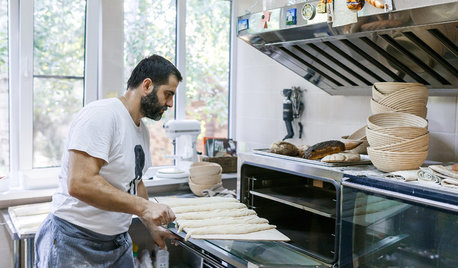
KITCHEN DESIGNWorld of Design: Global Foodies and Their Kitchens
Join us as 11 food lovers tell us about their kitchens and give us a taste of their culinary heritage
Full Story
ARCHITECTUREWorld of Design: A Tokyo Exhibit Experiments With the Future of ‘Home’
Japan’s architects and housing industry explore new ideas for dwellings that respond to changes in society, tech and the natural world
Full Story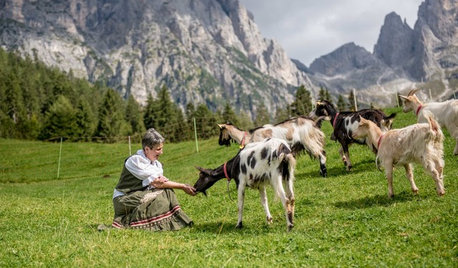
FARMHOUSESWorld of Design: See How 9 Families Live and Farm on Their Land
Join us as we visit the homes and farms of passionate food producers and hear about rural life around the globe
Full Story
APARTMENTSMy Houzz: London Living for an Architect-Turned-Food Stylist
We tour this unconventional designer’s apartment and find out why she loves her home kitchen
Full Story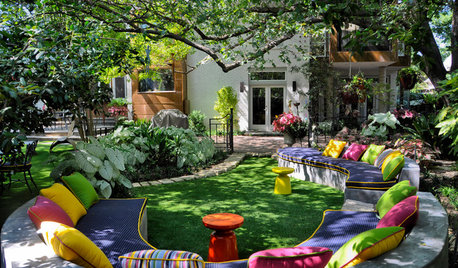
LANDSCAPE DESIGNExplore Your Garden Personality: The Extrovert
People who need people will be some of the happiest gardeners in the world with these design strategies
Full Story
LANDSCAPE DESIGNExplore Your Garden Personality: The Philosopher
Deep thoughts call for a garden design that’s a study in balance, texture and intriguing art
Full Story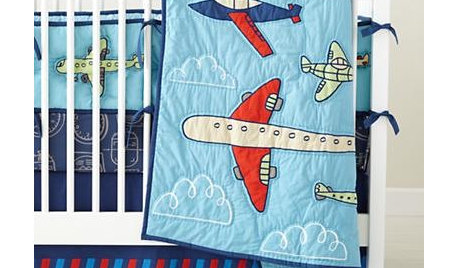
KIDS’ SPACESGuest Picks: Explore a Travel-Theme Nursery
Inspire your little explorer's imagination to take flight with travel-inspired decor
Full Story
John Liu