

What Spring foods are you eager to eat?
last year
Featured Answer
Sort by:Oldest
Comments (45)
 last year
 last year
Related Discussions
Do you eat foods past their expiration date?
Comments (29)We may be way over cautious but I'd rather err on the side of caution especially with children. Your local County Extension Service can give you FDA guidelines for food safety. Travel became an issue for me. Years ago while in Madrid I was violently sick to my stomach the first few nights after dinner. Our host practiced, as many Europeans, not refrigerating items which are commonly refrigerated here in the U.S. For the remainder of the trip I ate only saltine crackers and gingerale, I was already drinking bottled water only as was DD. My dear friend made a lovely fritata (eggs, potatoes, onions, etc.) which she served hot upon our arrival. It then sat on the counter unrefrigerated for the next few days while they snacked on it. When we returned home I visited my MD. He told me that I became ill due to bacteria introduced that my body was not equipped to handle. I am not at all immune compromised Our hosts have always lived this way so their bodies treat that bacteria differently. I found the refrigeration issue to be the same in France, Germany, Norway, Sweeden, Iceland. They just don't refrigerate commonly refrigerated food items as we do here in the States. Have been to many underdeveloped countries and DH has never had a problem? He is of the "when in Rome" mindset. I've seen him drink from the tap in places that just scream "you're gonna have an issue". He must have some superhuman immune system. Me, I drink only bottled water/drinks and always travel with a stash of pre-packaged foods items, as I want to be able to enjoy the entire trip wherever the destination. Over the years, I've discovered that four star doesn't mean the same thing once you leave the States. In fact, four star in some odd out of the way places means 1/2 a star by U.S. standards. As for meds, I was under the impression (with the exception of vitamins) that at most they can lose their effectiveness, not make you sick. Thanks for linking the article terriks....See MoreWhat food would you never eat...
Comments (51)For those that "THINK" they would be willing to try chitterlings, once you smelled them you would gag..They smell like sh_t....There is this restaurant in the town over from us that started serving them. It is a little mom and pop place that serves really good food. We use to go in there all the time and we did not know that they had started serving chitterlings on Wednesday nites starting at 4:30p.m. We walked in there and OMG is smelled like the sewer! We asked the hostess what the heck was wrong with their bathrooms...and she told us what they were serving. We walked OUT, NEVER to go back again. What was so bad, the parking lot was full....See Moredry food for cats that can't eat dry food ;)
Comments (11)Lukkiirish, the problems with your cats was not due to wet feeding. Dry food is made to shatter IF the cat bites down on it. Of course, when it does, it's nothing but mealy grit that easily lodges in the gingiva. This leads to periodontitis, resorption, and other painful conditions. The only way to care for cat teeth at home is to brush them. Your claim that dry food is good for feline oral health is no different to claiming that eating saltines will clean your own teeth. If you know the anatomy of a cat's mouth, you can see that there are no chewing surfaces, ie., the molars are high on the outside and low on the inside near the tongue. This facilitates shearing action, which, rather than chewing, is what a cat's mouth is evolved to do. Chewing animals have flatter molar surfaces, so that food can be kept in place for chewing. Imagine the action of a mortar and pestle. The tool is designed to hold stuff in place for grinding. That's what your teeth are made for. Cat teeth are shaped to provide a scissor-like action. So, on that alone, you can understand why dry food is useless for feline oral health. Next, dry food is by nature very high in carbohydrates. It must be, since the plant matter is needed to glue the meat meal grit into kibbles. If you're reading labels, good-but if you're not translating them, then you have no idea what you're feeding your cats. Any claims on dry food labels of "50% protein" are utter hogwash. Firstly, any plant matter that is useful protein in any other animal feeds is also considered useful protein in cat food, despite the fact that cats cannot utilise plant protein. You need to know how much animal protein is in the mix, and manufacturers are not always going to tell you that if you call them. Secondly, you need to calculate dry weight to get a grasp of how much of ANY protein is in the mix. If you're lucky enough to get facts from the manufacturer, then you still do the maths. The best dry food on the market is probably less than 20% animal protein, which is grossly insufficient for obligate carnivores. Then you need to consider that cats are not particularly interested in drinking water. Everyone claims that "my cat drinks plenty of water!" But no one can tell you how much water "plenty" is! A cat's natural diet is prey, which is about 70%-80% water. So is wet food! Dry food? Under 10% water. Cats will drink, but are not thirst-driven, so are unable to know if they're getting enough water to function. The dry-fed cat will walk away from the water dish long before it has consumed sufficient water. As a result, dry-fed cats have undue strain on kidney function, digestion, urinary function, and who knows what else because they are always dehydrated. Dry-fed cats are also far more likely to be obese and to develop diabetes and hypertension. Oh, and let's not forget how many dry-fed cats end up with an excess of urinary crystals or even blockages! This is almost always due to dry feeding, which leads to concentrated, alkaline urine. Cats need the sufficiency of wet food fluid intake in order to reduce urine's concentration and to flush out crystals. The higher animal protein in wet food helps to maintain appropriate urine acidity. Another interesting thing is that so many people are completely hoodwinked by the"grain-free" movement! It doesn't matter! Grain-free does NOT equate carbohydrate-free! Grains are often primary suspects in food allergies. The grain-free bandwagon needs to be halted for the sake of our cats. Grain-free dry foods contain as much carbohydrate as do grained foods. You'll frequently see claims that cats in the wild will eat the stomach contents of their prey, but this is not fact. Cats are not keen on stomach acids needed for plant breakdown and carefully avoid eating any part of prey digestive tracts. I suppose that laboratory cats who are only fed digestive tracts will consume them in hope of avoiding starvation, but not cats in more normal surroundings. Lastly, I'm always hearing from people who claim to have cats who were dry-fed only, and lived to be 32 and never had a problem. Well, genetics can make some cats lucky enough to slip past troubles, but these are very much the minority. I also suspect that some of the owners were lying about the cats' longevity, or the cats had outdoors access so supplemented their dry food with nice juicy prey. It is also likely that the cats were never taken to the vet so any problems they may have had were never diagnosed. It's like the centenarian who, when asked the secret to his long life, answers " booze, cigars, and unrestrained sex!". Does that mean that EVERYONE should live like that in order to become a centenarian? Of course not. I see no problem with using dry food in place of cat treats. It's less expensive. Ten to twenty pieces of dry food in a day are amazing as training rewards. But there is no real benefit to dry feeding....See MoreSpring Swap Food & Logistics--what will you bring?
Comments (19)I'll bring whatever looks best at Sams on my way through. My flight getting home at 1030 am yesterday turned into one arriving at 6:30 pm, didn't get home until 9, so all of my digging for peonies, daylilies, blackberry lilies and aloha's iris turned into digging them this morning, no time for cooking...I know all of you would rather have plants than something this mediocre cook could throw together, anyway! Faith, if there is anything specific you can think of that you need please email or text, I'll try to get it. I'll send an email to you in case this isn't read in time!...See More last year
 last year
 PROlast year
 last year
 last yearlast modified: last year
 last yearlast modified: last year
 last year
- last year
- last year
- last yearlast modified: last year
- last year
- last year
- last yearlast modified: last year
- last year
- last year
- last yearlast modified: last year
- last year
- last yearlast modified: last year
- last year
 last year
- last year
- last year
- PROlast year
 last year
- last year
 last year
 last year
- last year
- last year
- PROlast year
- last year
- last year
- PROlast year
 last year
- last year
- last year
- last year
- last yearlast modified: last year
- last year
- last yearlast modified: last year
- last yearlast modified: last year
- last yearlast modified: last year


Related Stories
GARDENING GUIDESDoes Your Garden Welcome Wildlife Visitors With Something to Eat?
Learn which flowers and plants provide essential food for pollinators and other beneficial wildlife
Full Story
FARM YOUR YARDHello, Honey: Beekeeping Anywhere for Fun, Food and Good Deeds
We need pollinators, and they increasingly need us too. Here, why and how to be a bee friend
Full Story
FARM YOUR YARD6 Things to Know Before You Start Growing Your Own Food
It takes time and practice, but growing edibles in the suburbs or city is possible with smart prep and patience
Full Story
KITCHEN DESIGNWorld of Design: Favorite Recipes From Food Lovers Around the Globe
Travel with your tastebuds and experience for yourself these international foodies' favorite dishes
Full Story

WINTER GARDENING6 Reasons I’m Not Looking Forward to Spring
Not kicking up your heels anticipating rushes of spring color and garden catalogs? You’re not alone
Full Story
KITCHEN DESIGNHow to Waste Less Food
Here are 9 relatively painless ways to throw away less food and stretch your grocery dollars
Full Story
KITCHEN DESIGNSpring Clean Your Kitchen
Scour our 15 ways to ditch the dirt and get rid of the gunk, leaving your kitchen spick and span in time for spring
Full Story
HOUSEKEEPINGFind Your Perfect Spring Cleaning Plan
Choose from six flexible approaches to refresh your home without the stress
Full Story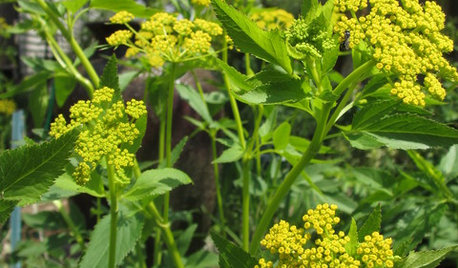
GARDENING GUIDESGreat Design Plant: Golden Alexanders for Early Spring Color
Get sunny flowers while other garden growers are still asleep, with this adaptable prairie plant beloved by butterflies
Full Story
floral_uk z.8/9 SW UK