

Sources of inadvertent plastic ingestion, inhalation
last year
last modified: last year
Featured Answer
Sort by:Oldest
Comments (13)
Related Discussions
So how poisonous is lantana really?
Comments (48)So sorry to hear about your friend's dog getting sick, but glad he's okay. That's quite a hefty vet bill. As our expert Tally said above usually oleanders are so bitter that it's not nibbled by dogs, but there's always an exception. Thank you for the warning and letting us know that it can happen. Sago palms are another story. It's not at all unusual to hear about dogs chewing on the seeds and dying. When he was a young pup I saw Alfie starting to chew on the new sprouts around the bottom of my 30 year old mature Sagos. I prompty cut the sprouts back and surrounded the trees with heavy black plastic and then covered the plastic with a VERY thick layer of mulch. It's been almost three years. No more sprouts and the dogs and trees are fine. It all these years my female tree has only flowered three or four times. I carefully remove the seeds before they fall....See MoreLate blight
Comments (19)Since all new infections are spread by air and in raindrops I really can't see the sense of stripping the lower part of the plant unless LB has infected plants in a previous year AND the garden is in a very warm climate where any spores dropped to the ground are protected by living tissue and could be splashed up onto the foliage. Daniel, Daconil is not stronger than copper, it's more effective since it covers the specific attachment sites on the upper leaf surface where fungal pathogens bind. Mancozeb or copper can be a backup to Daconil if desired but are much less effective. Your copper treated plants look fine but how do you even know that LB was a threat in your area for any specific season, including the one when that picture was taken I've pointed out here before that Daconil has LESS toxicity to humans, pets and the environment than does Rotenone, which is organic and approved by all organic certifying agencies that I know of. Not all organic products are without toxicity and not all synthetic products have significant toxicity. We've been through this all before here, and I'd like to point out that daconil is THE most used effective anti=fungal in the world and has been so for several decades so there's more info about that one than any other. No human has died of cancer, no bees, no fish, no pets. When I research a particular product I prefer to use EXTOXNET for info and I've linked to the one for Daconil below. Read it carefully and you'll see that with humans it's possible eye irritation that can be a problem. read it and you'll also see that rats have been most used for studies and one can't extrapolate to humans from rat studies. That I know since I once did studies with Golden Hamsters and mice many years ago now. In my faves I have lots of links for different garden products and as for Daconil I can find many links that condemn it and many that lay out the truth, such as the EXTOXNET links. Below I'm linking tothe EXTOXNET Daconil link and I suggest that anyone interested read it very carefully.And pay attention to the names of Universities and government agencies that are part of the EXTOXNET newtwork. Carolyn Here is a link that might be useful: Daconil...See MoreBamboo: Morning Star v. EcoTimber?
Comments (3)I'm having the same concern. I originally went to lumber liquidators and found a nice hand scraped strand bamboo flooring. I then went online and researched a load of companies. So far, I like Cali bamboo. My biggest concern was the formaldehyde in the products. Cali bamboo has little to no formaldehyde added in there product. I've read those same reviews about Morning star, but they were outdated. I was emailed a material safety data sheet on Morning Star brand, but no one could tell me how much formaldehyde content was in the morning star product. At the bottom of the sheet there was a disclaimer: "The information and data herein are believed to be accurate and have been compiled from sources deemed to be reliable. It is offered for your consideration, investigation and verification. Lumber Liquidators makes no warranty of any kind, express or implied, concerning the accuracy of completeness of the information and data herein. Lumber Liquidators will not be liable for claims relating to any party's use of or reliance on information and data contained herein regardless of whether it is claimed that the information and data are inaccurate, incomplete or otherwise misleading. It is incumbent upon the user to obtain the most up-to-date information". So I guess what they mean is that the info on the safety data sheet is BS. I'd like to know. Cali bamboo is great, but I actually prefer the hand scraped look they have from Morning Star at lumber liquidators. Does anyone know if Morning Stars 2011 line has added formaldehyde?? (That's the lovely odor you smell from the floors). I can't seem to be able to get a solid answer. This is what the safety data sheet states for Morning Star: 3000 John Deere Road Toano, VA 23168 Emergency phone: 1 800-HARDWOOD Fax: 1 757 259 7295 IMPORTANT NOTICE: This material Safety Data Sheet (MSDS) is issued by LUMBER LIQUIDATORS. LUMBER LIQUIDATORS flooring will issue a new MSDS when there is a change in product specifications and/or regulations. LUMBER LIQUIDATORS will not accept any responsibility for any change to its MSDS in content by other person or organization. IDENTIFICATION Product name: Prefinished Strand Bamboo Flooring Trade name: Morning Star Bamboo Flooring Other Names: Various Manufacturer Information: Lumber Liquidators Inc 3000 John Deere Road Toano, VA 23168 Tel: (757) 259-4280 Fax: (757) 259-7295 www.lumberliquidators.com Description: This product is composed of bamboo fibers bonded together with urea formaldehyde (UF) resins. The fibers are mixed and pressed together to give a unique shade blend and increase hardness. The wear layer is finished by 7 coats of polyurethane with aluminum oxide coating manufactured by Treffert or Klumpp UN number: Not applicable Dangerous goods class: Not applicable Product Use: Building Materials � Commercial or Residential MSDS Morning Star Strand Bamboo Flooring, Revision 3, April 2009 Page 2 of 7 Hazardous ingredients/identity information: Name CAS #2 % Agency Exposure Limits Comments Bamboo1 None 89-90 OSHA3 OSHA ACGIH4 ACGIH PEL5-TWA6 15 mg/m3 PEL-TWA 5 mg/m3 TLV7-TWA 3 mg/m3 TLV-STEL8 10 mg/m3 Total dust Respirable dust fraction Respirable dust fraction Inhalable particles Urea Formaldehyde resin solids 9011- 05-6 10-11 OSHA OSHA ACGIH PEL-TWA 0.75ppm PEL-STEL 2 ppm TLV - Ceiling 0.3 ppm Free gaseous formaldehyde (contains less than 0.1% free formaldehyde) UV Finish Polymerized polyurethane None 0-1 OSHA ACGIH PEL-TWA none TLV-TWA none None None 1 CAS # = Chemical Abstract System. 2 OSHA = Occupational Safety and Health Administration. 3 AGCIH = American Conference of Government Industrial Hygienists. 4 PEL = Permissible Exposure Limit. 5 TWA = Time Weighted Average. 6 TLV = Threshold Limit Value. 7 STEL = Short Term Exposure Limit Note: Bamboo is a member of the grass family which has distinct anatomical differences from that of wood. Therefore, bamboo would be regulated as an organic dust in a category known as "Particulates Not Otherwise Regulated" (PNOR), or Nuisance Dust by OSHA. The ACGIH classifies dust or particulate in this category as "Particulates Not otherwise Specified". Physical data: Physical State: Solid Boiling Point: Not applicable Freezing Point: Not applicable Specific Gravity: 0.58 g/ml Vapour Density: Not applicable % Volatiles By Volume: 0 Melting Point: Not applicable Vapour Pressure: Not applicable Percent Moisture 5% - 9% Solubility in H20 (% by wt.): Evaporation Rate (Butyl Acetate = 1): Not applicable pH: Not applicable MSDS Morning Star Strand Bamboo Flooring, Revision 3, April 2009 Page 3 of 7 Appearance and odor: Bamboo fibers mixed creating a shade blend unique to each plank (light yellows for natural, light browns for carbonized or a mix of lights yellows and light browns shades). This product can also be stained with various colors. Low-fuming urea formaldehyde resins have a slightly aromatic odor. Fire and explosion data: Flash Point: Not applicable Auto ignition Temperature: Not available, however, it is usually accepted that the ignition of bamboo begins when the temperature reaches 204-260�C (400�500�F). (Depends upon duration of exposure to heat source and other variables). Explosive Limits in Air: Not applicable. See below under "Unusual fire and explosion hazards" Extinguishing Media Water, Carbon dioxide, Dry chemical, Sand. Special Fire Fighting Procedures None Unusual Fire and Explosion Hazards Sawing, sanding or machining can produce bamboo dust as a by-product which may present an explosion hazard if a dust cloud contacts an ignition source. An airborne concentration of air is often used as the LEL for bamboo dust. Reactivity data: Conditions Contributing to Instability Stable under normal conditions Conditions to avoid Excessive moisture, condensation or water vapor; Open flame or conditions above 400 F. Incompatibility Avoid contact with oxidizing agents. Avoid open flame. Product may ignite when temperature reaches in excess of 204�C (400�F). Hazardous Decomposition Products Thermal and/or thermal oxidative decomposition can produce irritating and toxic fumes and gases, including carbon monoxide, hydrogen cyanide, aldehydes, organic acids and polynuclear aromatic compounds. Hazardous Polymerization Not applicable MSDS Morning Star Strand Bamboo Flooring, Revision 3, April 2009 Page 4 of 7 HEALTH HAZARD INFORMATION Carcinogenicity Listing: (X) NTP1: Group 2, A & B Formaldehyde, Wood dust NTP-Group 2: Reasonably anticipated to be a carcinogen. A) Limited evidence of carcinogenicity from studies in humans which indicates that causal relationship is credible. B) Sufficient evidence of carcinogenicity from studies in experimental animals (X) IARC2 Monographs; Formaldehyde, Group 2A, Wood dust, Group 1 IARC-Group 1: Carcinogenic to humans; sufficient evidence of carcinogenicity. This classification is primarily based on studies showing an association between occupational exposure to wood dust and adenocarcinoma of the nasal cavities and paranasal sinuses. (X) OSHA3 Regulated: Formaldehyde IARC-Group 2A: Probably carcinogenic to humans; limited human evidence and sufficient evidence in experimental animals. Studies of cancer incidence among workers in a wide variety of occupations have failed to convincingly show carcinogenic activity of formaldehyde in humans. Gaseous formaldehyde has been shown to cause cancer in certain laboratory animals after long-term exposure to very high concentrations (14+ ppm); concentrations which are far above the levels of formaldehyde gas emitted by this product. 1 NTP = National Toxicology Program 2 IARC = International Agency for Research on Cancer 3 OSHA = Occupational Safety and Health Administration Exposure hazard: Eye Contact Wood dust can cause mechanical irritation such redness and watering. Skin Contact Not applicable for this product in its purchased form, however various species of wood dust may evoke allergic contact dermatitis in sensitized individuals. High concentrations of gaseous formaldehyde may cause allergic contact dermatitis. Ingestion Not likely to occur under normal use. If ingested, may cause gastrointestinal tract irritation. MSDS Morning Star Strand Bamboo Flooring, Revision 3, April 2009 Page 5 of 7 Inhalation Not applicable for this product in its purchased form, however, wood dust may cause nasal dryness, irritation and obstruction. Coughing and sneezing; sinusitis and prolonged colds have also been reported. Wood dust, depending on species, may cause respiratory sensitization and/or irritation. However, gaseous formaldehyde may cause respiratory difficulties for sensitized/allergic individuals. Emergency and first aid procedures: Eyes Flush eyes with large amounts of water. Remove to fresh air. If irritation persists, get medical attention. Skin Wash affected areas with soap and water. Get medical advice if rash or persistent irritation or dermatitis occurs. Inhalation Although not applicable for this product in its purchased form. However, if inhalation of bamboo dust, remove to fresh air. Get medical advice if persistent irritation, severe coughing or breathing difficulty occurs. Ingestion Not applicable under normal use. PRECAUTIONS FOR USE Accidental Release Measures Not applicable for product in purchased form. Dust generated from sawing, sanding, drilling, or routing of products may be vacuumed or shoveled for recovery or disposal. Avoid dusty conditions and provide good ventilation. A NIOSH-approved dust respirator should be worn if dust exposure limits are exceeded. Handling and Storage No special handling precautions are required for products in purchased form. Keep in cool, dry place away from open flame. This product will release small quantities of gaseous formaldehyde (≤0.12 mg/m3, which is below the E1 classification in accordance with EN 717-1:1998 test methods). Store in well ventilated area. MSDS Morning Star Strand Bamboo Flooring, Revision 3, April 2009 Page 6 of 7 Personal Protective Equipment: Respiratory Protection Not applicable for product in purchased form. A NIOSH-approved dust respirator is recommended when allowable exposure limits are exceeded. Protective Gloves Not required. However, cloth, canvas, or leather gloves are recommended to minimize potential mechanical irritation slivers from handling and machining product. Eye Protection Not applicable for product in purchased form. Goggles or safety glasses are recommended when machining this product. Other Protective Clothing or Equipments Not applicable for product in purchased form. Outer garments may be desirable in extremely dusty areas. Work/Hygiene Practices Follow good hygienic and housekeeping practices. Clean up areas where wood dust settles to avoid excessive accumulation of this combustible material. Minimize blowdown or other practices that generate high airborne-dust concentrations. Local Exhaust Provide local exhaust as needed so that exposure limits are met. Special / other None OTHER INFORMATION Disposal Consideration If disposed of or discarded in its purchased form, incineration is preferable. Dry land disposal is accepted in most states. It is, however, the user�s responsibility to determine at the time of disposal whether your product meets RCRA criteria for hazardous waste. Follow applicable federal, state, and local regulations. Transport and Regulatory information Not regulated as hazardous material by the U.S Department of Transportation and the Canadian Transportation of Dangerous Goods (TDG). Not a controlled product by WHMIS...See MoreStrand Bamboo Brands
Comments (12)I'm having the same concern. I originally went to lumber liquidators and found a nice hand scraped strand bamboo flooring. I then went online and researched a load of companies. So far, I like Cali bamboo. My biggest concern was the formaldehyde in the products. Cali bamboo has little to no formaldehyde added in there product. I've read those same reviews about Morning star, but they were outdated. I was emailed a material safety data sheet on Morning Star brand, but no one could tell me how much formaldehyde content was in the morning star product. At the bottom of the sheet there was a disclaimer: "The information and data herein are believed to be accurate and have been compiled from sources deemed to be reliable. It is offered for your consideration, investigation and verification. Lumber Liquidators makes no warranty of any kind, express or implied, concerning the accuracy of completeness of the information and data herein. Lumber Liquidators will not be liable for claims relating to any party's use of or reliance on information and data contained herein regardless of whether it is claimed that the information and data are inaccurate, incomplete or otherwise misleading. It is incumbent upon the user to obtain the most up-to-date information". So I guess what they mean is that the info on the safety data sheet is BS. I'd like to know. Cali bamboo is great, but I actually prefer the hand scraped look they have from Morning Star at lumber liquidators. Does anyone know if Morning Stars 2011 line has added formaldehyde?? (That's the lovely odor you smell from the floors). I can't seem to be able to get a solid answer. This is what the safety data sheet states for Morning Star: 3000 John Deere Road Toano, VA 23168 Emergency phone: 1 800-HARDWOOD Fax: 1 757 259 7295 IMPORTANT NOTICE: This material Safety Data Sheet (MSDS) is issued by LUMBER LIQUIDATORS. LUMBER LIQUIDATORS flooring will issue a new MSDS when there is a change in product specifications and/or regulations. LUMBER LIQUIDATORS will not accept any responsibility for any change to its MSDS in content by other person or organization. IDENTIFICATION Product name: Prefinished Strand Bamboo Flooring Trade name: Morning Star Bamboo Flooring Other Names: Various Manufacturer Information: Lumber Liquidators Inc 3000 John Deere Road Toano, VA 23168 Tel: (757) 259-4280 Fax: (757) 259-7295 www.lumberliquidators.com Description: This product is composed of bamboo fibers bonded together with urea formaldehyde (UF) resins. The fibers are mixed and pressed together to give a unique shade blend and increase hardness. The wear layer is finished by 7 coats of polyurethane with aluminum oxide coating manufactured by Treffert or Klumpp UN number: Not applicable Dangerous goods class: Not applicable Product Use: Building Materials � Commercial or Residential MSDS Morning Star Strand Bamboo Flooring, Revision 3, April 2009 Page 2 of 7 Hazardous ingredients/identity information: Name CAS #2 % Agency Exposure Limits Comments Bamboo1 None 89-90 OSHA3 OSHA ACGIH4 ACGIH PEL5-TWA6 15 mg/m3 PEL-TWA 5 mg/m3 TLV7-TWA 3 mg/m3 TLV-STEL8 10 mg/m3 Total dust Respirable dust fraction Respirable dust fraction Inhalable particles Urea Formaldehyde resin solids 9011- 05-6 10-11 OSHA OSHA ACGIH PEL-TWA 0.75ppm PEL-STEL 2 ppm TLV - Ceiling 0.3 ppm Free gaseous formaldehyde (contains less than 0.1% free formaldehyde) UV Finish Polymerized polyurethane None 0-1 OSHA ACGIH PEL-TWA none TLV-TWA none None None 1 CAS # = Chemical Abstract System. 2 OSHA = Occupational Safety and Health Administration. 3 AGCIH = American Conference of Government Industrial Hygienists. 4 PEL = Permissible Exposure Limit. 5 TWA = Time Weighted Average. 6 TLV = Threshold Limit Value. 7 STEL = Short Term Exposure Limit Note: Bamboo is a member of the grass family which has distinct anatomical differences from that of wood. Therefore, bamboo would be regulated as an organic dust in a category known as "Particulates Not Otherwise Regulated" (PNOR), or Nuisance Dust by OSHA. The ACGIH classifies dust or particulate in this category as "Particulates Not otherwise Specified". Physical data: Physical State: Solid Boiling Point: Not applicable Freezing Point: Not applicable Specific Gravity: 0.58 g/ml Vapour Density: Not applicable % Volatiles By Volume: 0 Melting Point: Not applicable Vapour Pressure: Not applicable Percent Moisture 5% - 9% Solubility in H20 (% by wt.): Evaporation Rate (Butyl Acetate = 1): Not applicable pH: Not applicable MSDS Morning Star Strand Bamboo Flooring, Revision 3, April 2009 Page 3 of 7 Appearance and odor: Bamboo fibers mixed creating a shade blend unique to each plank (light yellows for natural, light browns for carbonized or a mix of lights yellows and light browns shades). This product can also be stained with various colors. Low-fuming urea formaldehyde resins have a slightly aromatic odor. Fire and explosion data: Flash Point: Not applicable Auto ignition Temperature: Not available, however, it is usually accepted that the ignition of bamboo begins when the temperature reaches 204-260�C (400�500�F). (Depends upon duration of exposure to heat source and other variables). Explosive Limits in Air: Not applicable. See below under "Unusual fire and explosion hazards" Extinguishing Media Water, Carbon dioxide, Dry chemical, Sand. Special Fire Fighting Procedures None Unusual Fire and Explosion Hazards Sawing, sanding or machining can produce bamboo dust as a by-product which may present an explosion hazard if a dust cloud contacts an ignition source. An airborne concentration of air is often used as the LEL for bamboo dust. Reactivity data: Conditions Contributing to Instability Stable under normal conditions Conditions to avoid Excessive moisture, condensation or water vapor; Open flame or conditions above 400 F. Incompatibility Avoid contact with oxidizing agents. Avoid open flame. Product may ignite when temperature reaches in excess of 204�C (400�F). Hazardous Decomposition Products Thermal and/or thermal oxidative decomposition can produce irritating and toxic fumes and gases, including carbon monoxide, hydrogen cyanide, aldehydes, organic acids and polynuclear aromatic compounds. Hazardous Polymerization Not applicable MSDS Morning Star Strand Bamboo Flooring, Revision 3, April 2009 Page 4 of 7 HEALTH HAZARD INFORMATION Carcinogenicity Listing: (X) NTP1: Group 2, A & B Formaldehyde, Wood dust NTP-Group 2: Reasonably anticipated to be a carcinogen. A) Limited evidence of carcinogenicity from studies in humans which indicates that causal relationship is credible. B) Sufficient evidence of carcinogenicity from studies in experimental animals (X) IARC2 Monographs; Formaldehyde, Group 2A, Wood dust, Group 1 IARC-Group 1: Carcinogenic to humans; sufficient evidence of carcinogenicity. This classification is primarily based on studies showing an association between occupational exposure to wood dust and adenocarcinoma of the nasal cavities and paranasal sinuses. (X) OSHA3 Regulated: Formaldehyde IARC-Group 2A: Probably carcinogenic to humans; limited human evidence and sufficient evidence in experimental animals. Studies of cancer incidence among workers in a wide variety of occupations have failed to convincingly show carcinogenic activity of formaldehyde in humans. Gaseous formaldehyde has been shown to cause cancer in certain laboratory animals after long-term exposure to very high concentrations (14+ ppm); concentrations which are far above the levels of formaldehyde gas emitted by this product. 1 NTP = National Toxicology Program 2 IARC = International Agency for Research on Cancer 3 OSHA = Occupational Safety and Health Administration Exposure hazard: Eye Contact Wood dust can cause mechanical irritation such redness and watering. Skin Contact Not applicable for this product in its purchased form, however various species of wood dust may evoke allergic contact dermatitis in sensitized individuals. High concentrations of gaseous formaldehyde may cause allergic contact dermatitis. Ingestion Not likely to occur under normal use. If ingested, may cause gastrointestinal tract irritation. MSDS Morning Star Strand Bamboo Flooring, Revision 3, April 2009 Page 5 of 7 Inhalation Not applicable for this product in its purchased form, however, wood dust may cause nasal dryness, irritation and obstruction. Coughing and sneezing; sinusitis and prolonged colds have also been reported. Wood dust, depending on species, may cause respiratory sensitization and/or irritation. However, gaseous formaldehyde may cause respiratory difficulties for sensitized/allergic individuals. Emergency and first aid procedures: Eyes Flush eyes with large amounts of water. Remove to fresh air. If irritation persists, get medical attention. Skin Wash affected areas with soap and water. Get medical advice if rash or persistent irritation or dermatitis occurs. Inhalation Although not applicable for this product in its purchased form. However, if inhalation of bamboo dust, remove to fresh air. Get medical advice if persistent irritation, severe coughing or breathing difficulty occurs. Ingestion Not applicable under normal use. PRECAUTIONS FOR USE Accidental Release Measures Not applicable for product in purchased form. Dust generated from sawing, sanding, drilling, or routing of products may be vacuumed or shoveled for recovery or disposal. Avoid dusty conditions and provide good ventilation. A NIOSH-approved dust respirator should be worn if dust exposure limits are exceeded. Handling and Storage No special handling precautions are required for products in purchased form. Keep in cool, dry place away from open flame. This product will release small quantities of gaseous formaldehyde (â¤0.12 mg/m3, which is below the E1 classification in accordance with EN 717-1:1998 test methods). Store in well ventilated area. MSDS Morning Star Strand Bamboo Flooring, Revision 3, April 2009 Page 6 of 7 Personal Protective Equipment: Respiratory Protection Not applicable for product in purchased form. A NIOSH-approved dust respirator is recommended when allowable exposure limits are exceeded. Protective Gloves Not required. However, cloth, canvas, or leather gloves are recommended to minimize potential mechanical irritation slivers from handling and machining product. Eye Protection Not applicable for product in purchased form. Goggles or safety glasses are recommended when machining this product. Other Protective Clothing or Equipments Not applicable for product in purchased form. Outer garments may be desirable in extremely dusty areas. Work/Hygiene Practices Follow good hygienic and housekeeping practices. Clean up areas where wood dust settles to avoid excessive accumulation of this combustible material. Minimize blowdown or other practices that generate high airborne-dust concentrations. Local Exhaust Provide local exhaust as needed so that exposure limits are met. Special / other None OTHER INFORMATION Disposal Consideration If disposed of or discarded in its purchased form, incineration is preferable. Dry land disposal is accepted in most states. It is, however, the user�s responsibility to determine at the time of disposal whether your product meets RCRA criteria for hazardous waste. Follow applicable federal, state, and local regulations. Transport and Regulatory information Not regulated as hazardous material by the U.S Department of Transportation and the Canadian Transportation of Dangerous Goods (TDG). Not a controlled product by WHMIS...See More- last year
- last year
 last year
 last year
- last year
 last year
- last year
 last yearlast modified: last year



Related Stories
PETSPet-Proofing Your Home: A Room-by-Room Guide
Not all pet dangers are obvious. Keep furry friends safe and sound by handling all of these potential hazards
Full Story
CONTAINER GARDENSHappy Houseplants, Happy People
Potted plants add life and beauty to a room. Learn easy ways to keep them healthy
Full Story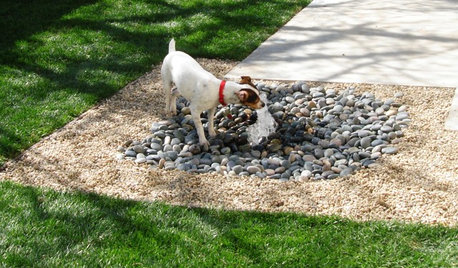
MOST POPULAR8 Backyard Ideas to Delight Your Dog
Cue the joyous soundtrack. These pet-friendly landscape and garden ideas will keep your pooch safe, happy and well exercised outdoors
Full Story
LANDSCAPE DESIGN10 Ways to Make Your Landscape More Environmentally Friendly
From creating wildlife highways to planting pretty pollinators, there are lots of simple ways to be green in the garden
Full Story
GARDENING AND LANDSCAPING4 Good Ways to Get Rid of Mosquitos in Your Yard
Stay safe from West Nile virus and put an end to irksome itches with these tools and methods for a porch, patio or yard
Full Story
laceyvail 6A, WV