

Team Dog / Team Cat
last year
last modified: last year
Featured Answer
Sort by:Oldest
Comments (62)
Related Discussions
Another team for HSDM!!!!
Comments (5)Thank you all, but the real trainers are the puppy raisers, foster homes and trainers at HSDM, I just guide the client through the learning once the dog is ready! It is a great big warm fuzzy for me when they don't need me anymore! And I can't imagine NOT doing it, I'd hate the thought that even one person couldn't get a hearing or service dog 'cause they couldn't find someone out here in the sticks to help once they got the dog home....See MoreHSDM rocks! Meet my new team!
Comments (4)You guys are so great, thanks for letting me share and for understanding. Jenny, I can really relate to the waterworks. I finally got my butt to Minneapolis to attend one of HSDM's graduations this fall. The Puppy Raisers and/or Foster Families "present" the dog to the client as the emcee describes the dog, where they came from, the client, what the team does, and how their lives have been enriched. I can't describe how much those people GIVE...on and on and on... (kleenex please). To take in a cute, cuddly puppy...socialize it in every conceivable way...raise it as your own...attend obedience classes...devote MONTHS of love and training...and then WILLINGY give that wonderful puppy to a stranger in need. I could barely talk to these great people for the tears. They are so special. (And the tears fall as I type.) You've got to be pretty special to do that, I don't know that I could... but thank God there are people that understand the gift they have and can give. There are so many people in need out there. If you think you can be a puppy raiser or foster home for a reputable service organization....or help out at a shelter...go for it! Or help in ANY way, no matter how small you think it may be. May the world will be a better place for all our furry friends, and all the humans they can help, next year. Merry Christmas, Sarah...See More'Teaming with Microbes'
Comments (17)Suzy, it's a book called "Teaming with Microbes." It's a book on the soil food web and the kinds of microbes that live in the soil. One thing it states is that chemical fertilizers kill portions of the soil web because the salts in it destroy many of the microbes by sucking out the water in them, like a slug is killed by pouring salt on it. The death of the microbes affects the other organisms in the soil as well; earthworms, for example, leave. The book says that different kinds of plants require different types of nitrogen, either nitrates or ammonium based, and that soils are either fungally or bacterially dominated depending on what kinds of plants live there. Or the kinds of plants that live in a soil depend on the kinds of microbes that live in the soil. Either or/both and, I guess. That's the part they're talking about above, the succession of plants that are annuals or weeds with soils that are bacterially dominated, to a soil that is fungally dominated that will support shrubs (roses), trees. The way that soils are changed, then, from a soil that is bacterially dominated and that will only naturally support annuals (weeds) to one that will support trees and shrubs, is to encourage the development of the soil food web by composting and allowing microbes themselves to reuse the rotting composted material. They will produce the kinds of nitrogen the plants need so the soil will support other kinds of plants. The book goes on to talk about using AACT, actively aerated compost tea, to spray on your plants to increase the amount of microbial activity. That's what Barbara has been doing the last couple of years to try to increase the health of her plants and to get rid of her rose midge plague. There's also a large amount of interplay between roots and various kinds of microbes that goes on. I just think of it all as some kind of drama that's taking place outside my home that I don't hear or see. Kind of like the drama that's going on with the insects and birds that I scarcely understand at all. I think that Vintage Roses changed to AACT as their way of dealing with disease a couple of years ago. There are a couple of old threads that discuss his change and this book; whether they're still around, I don't know. The way this book impacted me is a much increased awareness of soil science and the activity in the soil. As to whether the book is completely true, I don't know. I garden with manure and alfalfa, I have a used chipper shredder that I use to make mulch out of garden stuff. I sometimes use a chemical booster, especially to help the mulch compost w/o killing the surrounding plants. Here's a link to the book. It's interesting reading, and I notice it's been revised since I bought it. Makes me wonder what's been added. FWIW. If I said something wrong about the book, please correct me. Gean Here is a link that might be useful: Teaming with Microbes...See Moreboric acid v. 20 Mule Team borax
Comments (104)Hoosiergirl... the molecule of borax or boric acid that kills insects is the boron molecule. It takes decades to degrade. Air moisture might cause clumping of the powder and unable to stick to the legs of insects crawling across it but it will remain active as a killing agent for decades. another user, for termites or ants... HOT water is used because boric acid has a low soluble point in water. Using hot water increases the amount that can be dissolved in water. The idea behind this is to dissolve as much boric acid in water as possible then water log the wood so it absorbs the boron molecules. So the insects that eat the wood also eat the poison. It is effective and treated wood you would buy at a store use that method along with pressing it more to make it harder and harder for insects to bite....See More last yearlast modified: last yearAnnegriet thanked martinca_gw sunset zone 24
 last year
- last yearlast modified: last year
- last year
- last yearlast modified: last year
 last year
- last yearlast modified: last year
- last yearlast modified: last year
 last year






Related Stories
PETS30 Dogs and Cats Cozying Up for the Holidays
Houzz users shared pictures of their pets laying low, getting their nap on and taking advantage of winter downtime
Full Story
LAUNDRY ROOMSStylish Laundry Room With a Dog Wash Station and a Drying Closet
A designer adds function and style in this renovated San Antonio space
Full Story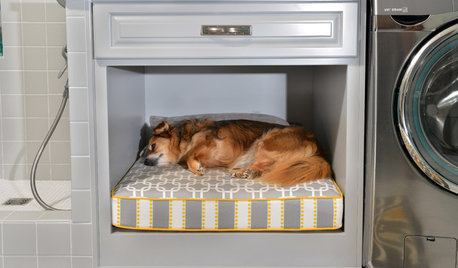
PETSRoom of the Day: Laundry Room Goes to the Dogs
Muddy paws are no problem in this new multipurpose room
Full Story
PETSHouzz Call: Send in the Design Cats
Post your best photo of your cat at home, in the garden or with you in your studio. It could be published in a featured ideabook
Full Story
LIFEThe Polite House: On Dogs at House Parties and Working With Relatives
Emily Post’s great-great-granddaughter gives advice on having dogs at parties and handling a family member’s offer to help with projects
Full Story
EVENTSBarkitecture 2016: Playful Designs for Cool Dogs
Architects push doghouse design to the limit in this annual Austin fundraiser
Full Story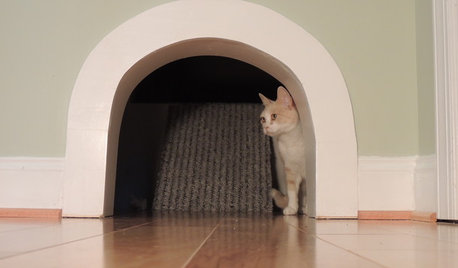
PETS15 Design-Friendly Places to Hide the Cat Litter Box
Built-in solutions include putting it in a cabinet, under the stairs, behind a wall and inside a window seat
Full Story
PETS50 Dog Photos Worth a Wag
Design hounds: Share in the pet love with Houzzers' snapshots of their beloved dogs at home, in the workshop and at play
Full Story
PETSPet of the Week: Brother Cats Inspire a Climbing Space
Los Angeles homeowners give 2 cats their own ‘stairs’ during a home remodel
Full Story
CRAFTSDIY Project: Vintage Suitcase Dog Bed
Save Your Own Furniture With a Comfy Dog Bed You Can Make This Weekend
Full Story

Ninapearl