

sous vide in something other than water?
2 years ago
Featured Answer
Sort by:Oldest
Comments (20)
- 2 years ago
 2 years ago
Related Discussions
Sous Vide Supreme or other?
Comments (5)Another vote for a cheap crock pot + a controller. We have the Auber instruments controller. The benefit of doing it this way is that we can also use the set-up as a slow cooker that holds the temperature WE want, not a temperature designed to avoid any risk of legal liability (modern slow cookers run too hot). We looked at the SVS and decided it was too bulky and too heavy (you have to pick the whole thing up to tip the water out)....See MoreTGFIO, Vacuum Sealer, Sous Vide, Griddle, Etc.
Comments (36)Posted by mike9 : " How large of a cooler do you recommend? " How big a cooler will depend on how much food you try to sous vide. Since the components of my system are portable, I have several container sizes, from a small one to cook a few eggs to a good size cooler for large roasts. "How much power do i need? " The pump is less than 10 watts, the rest depends on the electric heater. Remember the heater use not much power to keep the water at the set temperature. "If i had to raise that the temperature of the cooler 30-40 degrees above hot tap water then its going to take a long time with 300w. I'd have to pull out the pans boil water on the stove etc. Could say a 1500w heater be too much and have problems with overshooting? I plan on using a PID and solid state relay. " I always use boiling water to get the water bath temperature high enough. 1,500 W heater will not overshoot if you have a good enough circulator. PID controller with a solid state relay, I believe, but not sure, throttles the heater from low to high. PID will, using self-tuning, self-adjusting to compensate overall equipment overshooting. "How much power does it take to sustain the equilibrium temp after everything has been cooking for many hours? " Depends on the insulating property of your container and the size of the container. "How much power does it take to maintain the set water temperature after a bunch of frozen food has been dropped into the bath? That could be important if i have an item already cooking and then later throw something frozen in there, if the temp of the water dropped for a long time it could mess up the cooking time of the first item. " Just keep an eye on the temperature reading, add more boiling water if needed. "I was looking at these heaters. http://www.amazon.com/NORPRO-559-Immersion-Warming-Liquids/dp/B000I8VE68/ http://www.amazon.com/Bush-CH-101-Energy-Saving-Immersion-Heater/dp/B003DLB5KW/ http://www.amazon.com/Reliance-9000129-045-Electric-Heater-Element/dp/B000H5W1TQ/ " The first two not too good: 1. they are not long lasting. 2. They are not completely submersible. The third one is very long lasting, but requires you to build something around the exposed terminals to waterproof and shock-proof. ------------------------------------------- I would like to say this to those of you who may be reading this thread, do not worry about any of these tech stuff. They are not what sous vide cooking is all about. A ready-made sous vide cooker is not that expensive anymore, plug it in, set the temperature and enjoy the superior food. That is all. All these annoying tech stuff are for crazy folks like me, who hasn�t quite outgrown his toy playing delinquencies yet. dcarch...See MoreSous Vide, take 2, 3, 4...
Comments (6)Very interesting post, FOAS. Thank you for taking the time to do the experimentations/investigations. Your efforts definitely will further everyone's knowledge in this Forum. Ultimately that is a very important part for the participation here. It is interesting that you have had mixed results. Let's look at it this way; at least it was not a total lost for you. Obviously your experience is not the same as mine. That is not to say that you have done anything wrong or you don't have good taste. Eating experience is very subjective and details for preparation can be unpredictable. I have been luckier. I have sous vided many kinds of foods. As I can remember, the biggest failure I had was with squid. My timing was wrong and the squid turned into mush. Otherwise all meats, all seafood; lobsters, clams, fish, scallops --- all were from good to fantastic. Unlike you, I had great results with shrimps, but I did my shrimps at 138 F for 25 minutes, and I was able to get very fresh shrimps, not the chemically treated ones you now find in stores. I can only suggest to you, given that fact that if you search the WEB you will realize the practice of sous vide cooking is more than just a fashion trend, that you may want to play with it a few time times before giving up. I am not going to discredit Jonathan Gold's opinion about sous vide, after all he is a Pulitzer-price winning writer. However, I do humbly disagree that a perfectly cooked piece of meat is by definition boring. No one eats a steak directly as it comes out from the cooker, there are other preparation steps before the steak is to be served. Off-topic, I noticed that Costco is now selling sous vide cookers. I must point out again that sous vide only guarantees that you will not overcook or undercook your food, but it cannot guarantee that your food will taste good. It is like having a fancy grill will not automatically give you great BBQ. I might also add that sous vide cooking for chefs is not necessarily easier than regular cooking, but that's another topic all together. dcarch...See Morehot air sous vide revisited
Comments (4)Hi Islay, fwiw the first attempts at low temp were done w/hot air. I will take a stab at enumerating the pros/cons from my limited experiments. Air pros: 1. don't need to fill with water (more of a problem with a cooler than a pot) and shlep. Also better for water conservation if you are into that, or for making your operation more portable. 2. in water the bag is there to prevent exposure to water, as it will dilute the flavors. In air you are trying to retain moisture, so you can use saran wrap, oiled parchment, probably foil, etc. Air is more flexible there. You still want it to catch the juices though, so don't put the seams on the bottom. 3. preheat is nearly instantaneous since air is low mass, I don't even bother pre-heating, just drop the food in and plug it in, though heater power is a factor in pre-heat time. Less energy spent on the heat transfer medium only to pour it down the drain. 4. doubles as a precision dehydrator. Air cons: 1. The specific heat of air is much less than water. For a given set temperature it takes longer for the heat to be absorbed by the food to attain that temperature. 2. needs more complicated control scheme as temperature can change quickly, though this is a solved (affordably) problem. 3. very few people experimenting with it, and almost every recipe is geared towards a water bath these days, so while the temperature recommendation holds, the timings are way off. 4. Longer cook times will mean more energy spent on heating the food product (lots of variables). It is an interesting experiment in thermodynamics in any event. That is probably my main motivator :) edit: this site describes the heating difference pretty well https://amazingribs.com/more-technique-and-science/grill-and-smoker-setup-and-firing/thermodynamics-cooking-and-how After all your hand is made out of meat. "Put an empty frying pan and pot of water in a 200°F oven for an hour. Open the door and stick your hand in the warm air of the oven and count how long you can hold your hand in there. Perhaps a minute? Then plunge one hand in the 200°F water and place the other hand on the frying pan. After you get back from the hospital, ponder the fact that not everything that is 200°F transfers energy at the same rate."...See More- 2 years agolast modified: 2 years ago
 PRO2 years agolast modified: 2 years ago
 2 years ago
- 2 years ago
- 2 years agolast modified: 2 years ago
 2 years ago
- 2 years agolast modified: 2 years ago
- 2 years ago
- 2 years ago
- 2 years ago
 2 years agolast modified: 2 years ago
 2 years ago
- 2 years ago
 2 years ago
- 2 years ago
- 2 years ago
- 2 years agolast modified: 2 years ago

Related Stories
GARDENING GUIDESGreat Design Plant: Anemone Canadensis Adds Pizzazz to Water’s Edges
Plant Canadian anemone along pond, lake or stream edges for a splash of white flowers in late spring
Full Story
LANDSCAPE DESIGNHow to Move Water Through Your Landscape
Swales, underground pipes or a mix of both: There’s more than one way to distribute water in the garden
Full Story
COLORWhy You Should Paint Your Walls More Than One Color
Using multiple colors can define zones, highlight features or just add that special something
Full Story
GARDENING GUIDESDoes Your Garden Welcome Wildlife Visitors With Something to Eat?
Learn which flowers and plants provide essential food for pollinators and other beneficial wildlife
Full Story
KITCHEN DESIGNRelocated Colonial Kitchen More Than Doubles in Size
Putting the kitchen in a central location allows for a big boost in square footage and helps better connect it with other living spaces
Full Story
LANDSCAPE DESIGN20 Wonderful Outdoor Water Features
See how fountains, lily ponds, reflecting pools and other architectural water features can add tranquillity to your yard
Full Story
HOUSEPLANTSOrchids 101: Try Something Different With Dendrobiums
If you’re looking for something out of the ordinary, these orchids may be a good choice
Full Story
BATHROOM DESIGNWater Damage Spawns a Space-Saving Bathroom Remodel
A game of inches saved this small New York City bathroom from becoming too cramped and limited
Full Story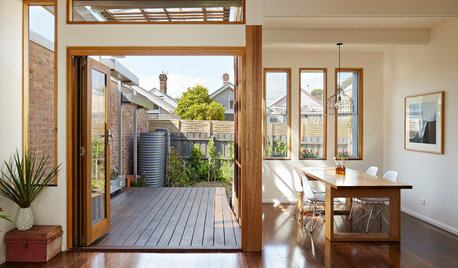
SAVING WATER11 Ways to Save Water at Home
Whether you live in a drought-stricken area or just want to help preserve a precious resource, here are things you can do to use less water
Full Story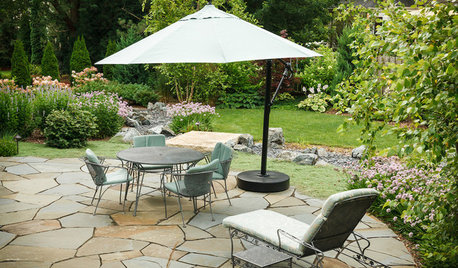
LANDSCAPE DESIGN15 Ways to Create a Beautiful Water-Wise Landscape
Learn how simple swaps — or a different approach — can reduce your yard’s water consumption
Full Story
John Liu