

they [????] are talking rice shortage again
3 years ago
Featured Answer
Sort by:Oldest
Comments (8)
Related Discussions
Fertilizer Shortage......
Comments (43)paulinct, I think you summed it up pretty well. Just doing the animals is not a trivial exercise. Adding a full scale crop rotation has never been done. I am not sure what the yields would be for modern corn planted in the 1840s Missouri, but the idea is to restore the soil to the condition found by the farmers of the original tall grass prairie. Bison, sheep, antelope, and dung beetles prepared that soil. The farmers plowed and depleted it. Tall grass prairie plants have roots that extend to 10 feet. The reason the multi billion dollar world wide food industry has not already fed the world is due to politics, not dung beetles or fertilizer. Famine is controlled by dictators. This argument does not explain why the US producers are not raising their animals this way. For that I would say it is because daddy didn't do it that way. I don't think land is a problem. In north Texas you can easily can drive a hundred miles and not see any agriculture production. For the sake of discussion it does take several years to restore fertility. That is the time the crops will be in production depleting the fertility in the rotated fields. But don't get the impression the livestock land is out of production. It is producing cattle, sheep, hogs, goats, and/or chickens at a rate of at least 280 pounds per acre per year. A 640-acre section of land could produce 180,000 pounds of meat, and that is using Texas rainfall amounts. At a dollar per pound of meat, the farmer with a section can make enough to live. A lot of crop farmers cannot make anywhere near that much cash and the headaches are more frequent (IMHO). But you are not cutting production, you are in full production all the time. If you want to read more, there is a book called Holistic Resource Management that is very tedious to read. Remember that part about daddy didn't do it that way? Well, the average livestock producer is N-E-V-E-R going to follow a plan called holistic resource management. Furthermore there is no help from the universities. When they look at the HRM concept, they cannot reproduce the results. My sense is that it is hard to find a sponsor for HRM research because there are no chemicals or medicines used. Inputs are so minimal that there are no corporate sponsors. To the universities, it looks like nothing more than intensive rotation grazing. But even among the livestock producers who might see the book, most won't understand it. There is a second book called the Holistic Resource Management Workbook. That book cuts to the chase, but the title is still a huge impediment. The idea is to manage the entire ecosystem at once - the "whole" ecosystem including plants, animals, and insects. Herbicides kill plants so that's not good. Insecticide and parasitide kills insects, so that's not good. Fertilizer is simply not needed. To summarize the way this works, the sun sends energy to every inch on Earth. You can capture that energy with photosynthesis. To maximize photosynthesis you must have plants covering the property from fence to fence. Those are the tall grass prairie plants. To most people those are weeds. They don't need fertilizer other than what nature provides. The plants convert sunlight to carbohydrates and protein. The animals eat the plants and convert the carbohydrates and protein into meat. If the animals are not poisoned with deworming medicine, the insects will continue to work the soil after the livestock leave the pasture. Here are some of the 'offbeat' websites that subscribe to at least part of this. Holistic Resource Management Managing Wholes Acres USA Check the links for still more info....See Morepossible food shortage
Comments (37)David and quietlife were at least reading the newspapers ;-); this is not an entirely fabricated concern. There *has* been a food shortage, boys and girls - Africa and Asia have borne witness to it this year. In Asia, India and China - remember the two countries with the two most massive populations? - went from being a net exporters of food to net importers. Both Asia and Africa - beyond the standard stock of drought-prone areas - were sorely short of food. Both continents saw a huge uptick in food prices, and, btw, so did we with bread and bananas grossly more expensive than even just last year and most vegetables substantially more. (Last week on either WSJ or NYTimes or WashingtonPost or The Economist there was a comparison made of the price of various food commodities betwen 1998, 2007 and 2008 - in general, small differences in price between 1998 and 2007 but LARGE differences between 2007 and 2008 for most of those items). I never did get so panicked about food that I would horde it (I'd rather reduce my intake and eat less of the fresh stuff than continue to eat the same quantity of canned/tinned/stored food). But I certainly noticed it in the RAPID and substantial increase in our green-grocery bills this year - and in my house, it is just DH and me. I can't believe you folks didn't notice it! You all have to tell me where you live so I can move there because out here in Boston parts, we certainly felt the pinch. Oh yes, in addition to the increasing cost of food, I did notice that there were more empty shelves at times also - in particular, I think, over the summer time. Causes for the shortage (yes, shortage) and the high costs in the US? Well, this was all being speculated on A LOT earlier this year. High oil costs and some climactic crises were thought to partly blame but those are 1-off things, right? True, but one concern the economists had was if the weather thing was going to be more habitual than aberrant if this is a by-product of climate change. For the veracity of that hypothesis, I imagine we'd have to see what next year and the years after bring - if more food shortages in India/China/Africa; well, that does put pressure on global food stocks. More pressingly, as quietlife said, the wide-scale subsidies on food crops and the huge market for ethanol - which is not subsidized - was considered much more worrisome as growing corn for ethanol is so much more lucrative for farmers over growing food. I'm a bit surprised that so many of you missed all this debate about the food crisis - whether it was the shortage overseas or the price hikes globally. WSJ and The Economist were all over this subject for several months earlier this year....See MoreRegular White Rice / Instant White Rice
Comments (26)shaun, I hope I didn't make you feel that I was criticizing your choice in instant rice. I'll admit, I'm picky. I don't like pizza, or red tomato based sauces, or blue cheese, or olives or white pasta or a zillion things that other people just love. I don't like beer or wine either and people look at me like I've grown an extra head when I say the best wine I ever tasted only got rated a "that doesn't completely suck". However, I will eat peanut butter and Miracle Whip sandwiches, so I'm sure not going to criticize anyone else for anything they like! Like others, though, I don't think instant rice saves much time, by the time I boil the water, stir in the rice, let it set for 5 minutes or whatever. It takes about 10 or 15 minutes to make instant rice and about 20 to make regular rice, so I can't say I'll make instant rice if I'm in a hurry, it only takes about 5 minutes more to make regular rice. Whatever I make, I usually make extra so I can have some for breakfast or use leftovers for rice pudding or fried rice. And I did find that I shouldn't just use arborio rice in chicken rice soup when I'm out of regular long grain. (grin) I did that last week and ended up with a big ole' pot of chicken flavored rice, no soup to it at all. The rice sucked up every bit of broth I had in the pot! Annie...See MoreSeriously.... of all the things that there are shortages of....
Comments (64)"I definitely notice a difference in flavor/aroma with conventional vs. organic whole milk. Conventional milk often has a hint of stinkiness even when fresh - like it's verging on spoiled. And yes, organic milk is processed to have a much longer shelf life, compared to conventional." Fresh milk has a sweet, even "fresh" dairy/milk smell. If you detect a stinkiness in fresh milk, it's not fresh. Whether in your hot Florida climate or elsewhere, that suggests that the milk was not maintained at a proper low temperature somewhere along the path from processing to the store. As far as ultra pasteurization is concerned, any milk product can be put through that process. It's not restricted to organic milk. In most areas, there are reasonably local dairy operations that provide fresh milk and because of proximity to stores and the fact that the ultra process spoils the normal flavor people expect, it isn't needed or used for local milk. There are a much smaller number of organic dairy producers. Many are large national and regional brands and their products are often subject to long shipment distances to get to stores around the country. The ultra pasteurization treatment allows them to sell their products far and wide. It's done for the convenience of the producers, not for the convenience of consumers....See More 3 years ago


Related Stories

MATERIALSHow Lumber Shortages Are Affecting Home Builds Globally
Houzz editors around the world report on how countries are adapting to an unprecedented shortage of construction wood
Full Story
HOUZZ CALLHouzz Call: How Are Shortages Affecting Your Home Project?
Have you noticed higher material and product prices? Experienced project delays? We want to hear about it
Full Story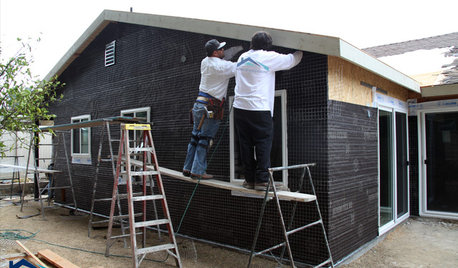
INDUSTRY RESEARCHData Watch: As Labor Shortages Grow, So Do Project Wait Times
Houzz research finds average project wait times ranging from 3.5 weeks in St. Louis to 13.2 weeks in Boston
Full Story
INSIDE HOUZZData Watch: Confidence Rising, but Labor Shortages Worry Many Pros
The latest Houzz Renovation Barometer report shows industry pros are rosy about the market while still struggling to find skilled workers
Full Story
HOUSEPLANTSOrchids 101: How to Keep Your Moth Orchids Alive and Blooming
Growing Phalaenopsis — and getting it to flower again — is easier than you might think
Full Story
DESIGNER SHOWCASESLuxurious Looks From the 2014 Hamptons Show House
Talk a walk through a collection of imaginative rooms by top designers working for a good cause
Full Story
HOUZZ PRODUCT NEWSHouzz Barometer Shows Continued Confidence Despite Record Delays
Home construction and design firms report longer project wait times in Q4 2021 as labor and material shortages persist
Full Story0
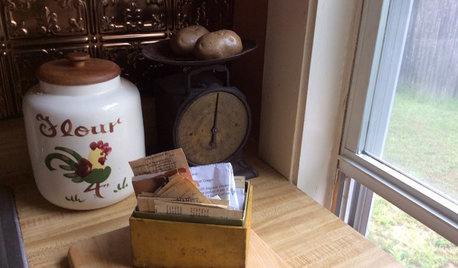
KITCHEN DESIGN5 Home Cooks Share Their Favorite Family Recipes
Peek inside the kitchens of these Houzz users and learn how to cook their time-tested, passed-down dishes
Full Story
KITCHEN COUNTERTOPS7 Low-Maintenance Countertops for Your Dream Kitchen
Fingerprints, stains, resealing requirements ... who needs ’em? These countertop materials look great with little effort
Full Story
GARDENING GUIDESNew Ways to Think About All That Mulch in the Garden
Before you go making a mountain out of a mulch hill, learn the facts about what your plants and soil really want
Full Story

Rho Dodendron