

Anyone cook with cider apples?
4 years ago
Featured Answer
Sort by:Oldest
Comments (12)
 4 years ago
 4 years agolast modified: 4 years ago
Related Discussions
AVC - Apple Cider Vinegar for migraines or weight loss
Comments (23)>> "No form of vinegar changes body pH or has any effect on toxins. The body's natural processes, mediated largely through the liver and kidneys, eliminate waste products and toxic substances." It's as if you are still rejecting the efficacy of Cinchona bark for treating malaria because the Amazonian Indians haven't discovered the formula for the quinine it contains. Instead, they say that the bark of the Cinchona tree contains the spirit of the God Xohopichulato, which destroys the evil spirit that causes malaria. If you want to rest in your beliefs that there is no Xohopichulato and therefore Cinchona cannot help with malaria, fine. Just don't pretend it is science. It is arrogant ethnocentrism, not scientific empiricism. Your arguments are based on an arbitrary and artificial definition of the word 'toxin'. You are ignoring the fact that ordinary substances can build up to toxic levels under many conditions - for example, glucose can build up to toxic levels when there is insulin resistance. In such a case, anything that reduces insulin resistance or lowers glucose levels would in fact be a 'detoxification' process. Likewise, immune hormones like the interferons and interleukins are necessary under certain conditions, but at higher doses (ie when there is infection or chronic inflammation) they often cause side effects that range from unpleasant to lethal. In SARS, H5N1 bird flu, and other killer influenzas, the body's immune system destroys the body. Immune hormones that might sometimes be beneficial are produced at toxic levels. This is quite different from your idea of metabolic toxins that are normally handled by the kidneys and liver. The short chain fatty acids present in vinegar (acetate, proprionate, butyrate) have been repeatedly shown to lower inflammatory cytokines (which have been implicated as a contributor to migraines). These simple compounds also affect levels of leptin, adiponectin and other compounds that regulate glucose, and there is research implicating this in the pathogenesis of migraines. You have stooped to pseudoscience by refusing to look at the evidence that vinegar can dramatically change certain chemicals in the body. You seem to take comfort in linguistic tautologies about 'toxins' that have little bearing on the underlying facts of the matter. Here is a link that might be useful: Glucose, Adiponectin, Immune Hormones and Migraine....See MoreCider Apples
Comments (11)It's true that the American cider heritage is primarily Apple Johnny Seed seedlings, which are mostly crab apples that have no added value besides cider. I don't know much about the British cider industry, but the above is definitely not true for the Continental European cider varieties, including the famous Normandie cider apples, and those of Spain and germany. The cider apples there take on one of all of the following attributes: sweets, sharps, bitters. In the case of sweets and sharps, these are quite good table and cooking apples as well. Bitters are also suitable as cooking apples. (Nothing like a chocolate covered cooked bitter apple.) The trouble with the "popular" cider apples like Kingston Black is that they produce poorly or irregularly. That's where the French and the Germans have a head start - there's a rather big gene base of large, balanced and productive cider varietal selections. Golden Russet is quite popular for cider, and it is an eating apple. Something like Kingston Black, a bittersharp, is added only 5-7% to a base combining sweets and sharps. Of course, by Modern American standards, only the bland and pretty apples seem to be candidates for table apples, as it seems based on the popularity of golden delicious, red delicious, braeburn and gala. Personally, I can't even eat these apples, they're horrible in my view, like sweetened sawdust. When gotten fresh of a tree, it's different, but they are usually picked before they are ready, and unlike good heirloom late Winter apples, they don't improve in storage, especially the commercial nitrogen controlled atmosphere storage. The art of good Winter apples that sweeten up and become their best after mellowing in storage has largely dissapeared except for the few hobbyists that still practice the trade for fun, and the even fewer small commercial operations that are trying to bring heirloom apples back to the table....See MoreApples: cider, juice, applesauce
Comments (3)There's only one state that I know of in the US that differentiates between juice and cider. They say juice is filtered clear, cider is cloudy. You don't have to filter to get clear, a little pectic enzyme will clear cider quickly but there's a lot of waste and you are removing some of the healthy stuff (the pectin for one). Europe has the difference between juice and cider as unfermented and fermented. Fermented is "hard cider" in the US. So here it's up to you what you call it. To me "better" for applesauce is a little tart and cooks down easy. My niece likes my Arkansas Black sauce for taste but you could cook them forever and they'd never turn to sauce without a stick blender. She hates tart which is why she started giving me the apples from her old tree. So flavor is in the eye of the beholder. I think any apple that softens readily in storage would be a good candidate for cooking down easily. I've done Cortland (stays white as sauce) and McIntosh and they do good. Yellow Transparent and Lodi are said to be good sauce apples....See Morelooking to can apple cider syrup
Comments (10)From my files. I hand this out when I teach classes.: FRUIT SYRUPS I use this all the time with great results. Syrups made from blackberries, huckleberries, raspberries, boysenberries, loganberries, sour cherries, and Island Belle grapes as well as mixtures of berries are of good flavor, color, and consistency (thin like maple syrup, medium thick like corn syrup, or slightly jelled). Syrups can be made with or without pectin and lemon juice. Lemon juice may improve color. Use of pectin will vary consistency. To Prepare Fruit Puree: Sort, stem, and wash ripe fruit or thaw frozen unsweetened fruit; crush fruit thoroughly; measure crushed fruit. Add 1 cup boiling water to each 4 cups crushed fruit and bring to a boil. Reduce heat and simmer to soften--about 5 for soft fruits...about 10 minutes for firm fruits like cherries and grapes. Press through sieve. SYRUPS MADE WITH PUREE 4 cups puree 4 cups sugar 1/2 package or less powdered pectin (if desired) 3 or 4 Tbsp lemon juice (if desired) 1. Mix puree, sugar, pectin and lemon juice. 2. Bring to boil and stir for 2 minutes (boil till jelly thermometer reaches 218F). 3. Remove from heat, skim off foam, and pour into 1/2 pint or 1 pint jars to within 1/2 inch of top. 4. Adjust lids and process in boiling water bath canner for 10 minutes. 5. Remove from canner and cool. 6. Check lids, label, and store in cool, dry place. To Prepare Fruit Juice: Sort, stem and wash ripe fruit or thaw frozen, unsweetened fruit; crush fruit thoroughly. Place crushed fruit in dampened jelly bag and drain. For clearest juice, do not press bag to extract juice. For firm fruits, heat is needed to start flow of juice. Add about 1/2 cup water to each 3 cups crushed fruit. Bring to a boil, reduce heat and simmer 10 minutes. Place hot fruit in dampened jelly bag; drain. SYRUPS MADE WITH JUICE 4 cups juice 4 cups sugar 1/4 cup lemon juice (if desired) 1/2 package or less powdered pectin (if desired) 1. Mix juice, sugar, lemon juice and pectin. 2. Bring to boil and boil 2 minutes. 3. Remove from heat, skim off foam, and pour into 1/2 pint or 1 pint canning jars to within 1/2 inch of top. 4. Adjust lids and process in boiling water bath canner for 10 minutes. 5. Remove from canner and let cool. 6. Check lids, labels, and store in cool, dry place....See More 4 years ago
 4 years ago
- 4 years agolast modified: 4 years ago
- 4 years ago
- 4 years ago
- 4 years ago
 4 years agolast modified: 4 years ago
 4 years ago
- 4 years ago

Related Stories
KITCHEN DESIGNA Cook’s 6 Tips for Buying Kitchen Appliances
An avid home chef answers tricky questions about choosing the right oven, stovetop, vent hood and more
Full Story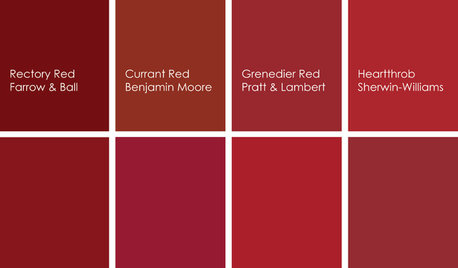
KITCHEN DESIGNCooking With Color: When to Use Red in the Kitchen
Candy Apple Red, Red Licorice and more for your kitchen walls, cabinets or island? The color choices are as delicious as they sound
Full Story
HOMES AROUND THE WORLDHouzz Tour: Apple Sheds Inspire a Tasmanian Home
A pavilion house on Australia’s Apple Isle takes advantage of its local history, natural setting and water views
Full Story
MOST POPULAR6 Kitchen Flooring Materials to Boost Your Cooking Comfort
Give your joints a break while you're standing at the stove, with these resilient and beautiful materials for kitchen floors
Full Story
APARTMENT LIFEWarm Up Fall With an Apple Pie Party at Home
A pie enthusiast shares a recipe, ideas for pretty crusts, and tips on how she makes the most of her rental kitchen
Full Story
KITCHEN DESIGNThe Cure for Houzz Envy: Kitchen Touches Anyone Can Do
Take your kitchen up a notch even if it will never reach top-of-the-line, with these cheap and easy decorating ideas
Full Story
KITCHEN DESIGNHouzz Call: What’s Cooking in Your Kitchen?
Most of us turn to recipes, videos and culinary shows when we cook. Where do you set your cookbook, tablet or TV screen?
Full Story
KITCHEN DESIGNLove to Cook? We Want to See Your Kitchen
Houzz Call: Show us a photo of your great home kitchen and tell us how you’ve made it work for you
Full Story
OUTDOOR KITCHENSYour Guide to Grills and More for Great Outdoor Cooking
Learn the pros and cons of gas versus charcoal grills, and about neat add-ons that let you do more
Full Story
BLACKCooking With Color: When to Use Black in the Kitchen
Consider sampling Caviar or Cracked Pepper on your kitchen walls or cabinets for richness and impact
Full Story
annie1992