

Using Sous vide for proofing bread
6 years ago
Featured Answer
Sort by:Oldest
Comments (8)
- 6 years agolast modified: 6 years ago
Related Discussions
Sous Vide - First Impressions
Comments (35)I definitely have a Sous Vide Supreme on my want list but since I recently dropped about $700 on a VitaMix set at Costoc it will probably be a while. :D One dish that really fascinates me when prepared Sous Vide is Fried Chicken. Have you tried this before? I love experimenting with new techniques to improve fried chicken and this one is very promising. (My other favorite method is pressure cooker fried chicken but that's pretty dangerous if you don't have the right equipment!) To make Sous Vide Fried Chicken soak your chicken in a strong brine for 30-40 minutes, rinse and soak in seasoned buttermilk for 8-12 hours. Season the meat with your preferred spices, maybe a little hot sauce or fresh buttermilk. Put the chicken in vacuum bags and cook at 160F for an hour. At that point you can dry the meat, coat in seasoned flour and fry it. Alternatively you can chill the meat down in ice water and hold in the fridge for quick frying later. The benefit to that method is that you can do all of the prep work for fried chicken in advance. Also, there are no worries about undercooked centers or dried meat. The chicken stays incredibly moist and the flavors really penetrate the meat. It's great if you want to cook a large amount of fried chicken for a crowd in a short amount of time. It's also good if you want to fry chicken to order. One warning though, you might want to cook the chicken to 165 though since the USDA has recently revised their meat cooking guidelines. Here is a link that might be useful: Hacking Your Slow Cooker: D.I.Y. Sous Vide Setup...See MoreFor those interested, sous vide circulator 2 for $249
Comments (24)I just had a lightbulb moment! I decided to go for it in May for the milk and eggs, but after overindulging in luscious almond duck, and thinking how sad it was that there were meats I couldn't serve at my apps party, like almond duck, because of the prep/production schedule... LIGHTBULB! Sous vide! Cook and hold at constant temperature. Never overdone. And I have two coming... mostly because it was fun participating in their kickstarter campaign, even though I had saved Arley's DIY instructions. Okay. Sometimes I'm slow. I get it now. :) I bet I could even cook the chicken drummettes that way, then just coat them and flash fry. That would be so much easier than fry cooking that many, and they could go straight out, rather than taking oven space. Okay. Revolutionary. I get it... And I can still pasteurize eggs......See MoreRacking Up Sous Vide's Pros/Cons, Reprise
Comments (10)Posted by annie1992 "I don't like lamb in any form, so won't conjecture on the proper cooking of it. (grin) ----" Annie, I didn't use to like lamb at all, until they start charging a lot of money. Expensive = taste good ? LOL FOAS, thank you. I look forward to seeing more of your sous vide creations. Alexa, at the risk of being accused of anti Occam's Razor law, let's take a little time to chew the fat. First, the pictures might be a little misleading. I take food pictures using only the auto setting on my camera to save time. Depending on if the light is from the window (day) or from the CFL (night) or if the shot is wide-angle or close-up and the predominant color of the food item, the camera's built-in software takes charge and determines the red/white/blue balance for each picture. The colors on the first two are closer to the real thing. Rack of lamb, very expensive. If you take away the fat, and the bones, and shrinkage, it probably comes to $60.00 a pound here in NYC. Meat, bones and fat have different thermal conductivities, adding to it, the small size and the shape of a rack of lamb, it makes it very difficult to cook it perfectly unless you prefer the whole thing well-done. It is challenging to find a way to maximize perfection to every tiny morsel of this wondrous victual. At the temperature I set at 135F, it is too low to render the fat. Since I don�t eat the fat, it does not bother me just to scrape the fat off while I eat. But if I were to serve others who are not followers of the Paleolithic diet, I probably BBQ the fat a little longer and that will make the issue go away. No, you cannot make Schmaltz using a sous vide cooker. I think it needs to be emphasized that sous vide is merely a particular way of cooking with a special appliance. There is really no recipes for sous vide, no more than recipes for microwave, or cast iron frying pan, etc. It is unfortunate that the French word "sous vide" gives this concept a lot of unjustified mystique; the fact that top chefs and upscale restaurant use it makes it appearing un-approachable. It makes it seem like practitioners of this way of cooking belong to some religious cult. The truth is this: sous vide is just a water oven that can keep constant temperatures. If I were to name this appliance, I would call it "Cookware For Making Perfect Meats For Dummies" If you show a 10-year-old kid how to set the temperature, the kid can cook the meat sous vide just like a top chef. A sous vide cooker simply will not allow you to overcook or undercook, it makes no difference if your piece of meat is frozen on one half and the other half at room-temperature, thick on one end and thin on the other end. No doubt, sous vide is going to go thru similar fade as the microwave oven did. First microwave oven was scosting like $5,000 and there were many myths and fears surrounding these bizarre new electronic "radar ranges." By the seventies, more and more people were finding the benefits of microwave cooking to outweigh the supposedly risks, and none of them were dying of radiation poisoning, going blind, becoming sterile, or impotent. As fears ebbed, acceptance began pouring into the kitchens. dcarch...See Morehot air sous vide revisited
Comments (4)Hi Islay, fwiw the first attempts at low temp were done w/hot air. I will take a stab at enumerating the pros/cons from my limited experiments. Air pros: 1. don't need to fill with water (more of a problem with a cooler than a pot) and shlep. Also better for water conservation if you are into that, or for making your operation more portable. 2. in water the bag is there to prevent exposure to water, as it will dilute the flavors. In air you are trying to retain moisture, so you can use saran wrap, oiled parchment, probably foil, etc. Air is more flexible there. You still want it to catch the juices though, so don't put the seams on the bottom. 3. preheat is nearly instantaneous since air is low mass, I don't even bother pre-heating, just drop the food in and plug it in, though heater power is a factor in pre-heat time. Less energy spent on the heat transfer medium only to pour it down the drain. 4. doubles as a precision dehydrator. Air cons: 1. The specific heat of air is much less than water. For a given set temperature it takes longer for the heat to be absorbed by the food to attain that temperature. 2. needs more complicated control scheme as temperature can change quickly, though this is a solved (affordably) problem. 3. very few people experimenting with it, and almost every recipe is geared towards a water bath these days, so while the temperature recommendation holds, the timings are way off. 4. Longer cook times will mean more energy spent on heating the food product (lots of variables). It is an interesting experiment in thermodynamics in any event. That is probably my main motivator :) edit: this site describes the heating difference pretty well https://amazingribs.com/more-technique-and-science/grill-and-smoker-setup-and-firing/thermodynamics-cooking-and-how After all your hand is made out of meat. "Put an empty frying pan and pot of water in a 200°F oven for an hour. Open the door and stick your hand in the warm air of the oven and count how long you can hold your hand in there. Perhaps a minute? Then plunge one hand in the 200°F water and place the other hand on the frying pan. After you get back from the hospital, ponder the fact that not everything that is 200°F transfers energy at the same rate."...See More- 6 years agolast modified: 6 years ago


Related Stories
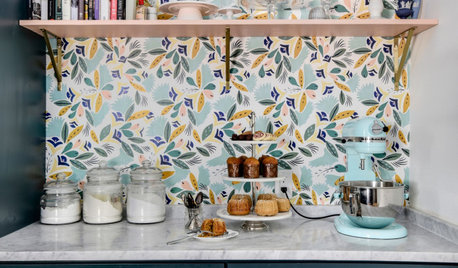
KITCHEN DESIGN12 Items Worth a Spot on Your Kitchen Counter
Keep these useful tools and accessories out in the open to maintain high function without spoiling the view
Full Story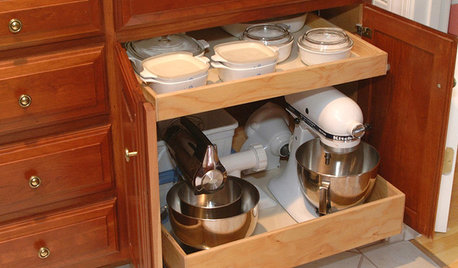
KITCHEN APPLIANCESConsidering a New Kitchen Gadget? Read This First
Save money, time and space by learning to separate the helpers from the hassles
Full Story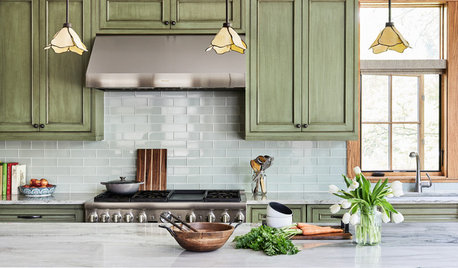
KITCHEN DESIGN11 Must-Haves in a Designer’s Dream Kitchen
Custom cabinets, a slab backsplash, drawer dishwashers — what’s on your wish list?
Full Story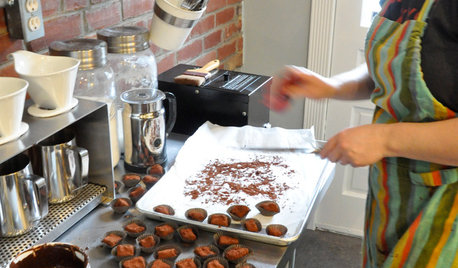
KITCHEN DESIGNLove to Cook? We Want to See Your Kitchen
Houzz Call: Show us a photo of your great home kitchen and tell us how you’ve made it work for you
Full Story
KITCHEN STORAGEWalk-In Pantries vs. Cabinet Pantries
We explore the pros and cons of these popular kitchen storage options
Full Story
PETS5 Finishes Pets and Kids Can’t Destroy — and 5 to Avoid
Save your sanity and your decorating budget by choosing materials and surfaces that can stand up to abuse
Full Story
KITCHEN DESIGNHouzz Quiz: What Kitchen Countertop Is Right For You?
The options for kitchen countertops can seem endless. Take our quiz to help you narrow down your selection
Full Story
HOUSEKEEPINGYour Guide to a Sparkling Clean Kitchen
Tackle food messes with this comprehensive collection of targeted and tested cleaning methods
Full Story
KITCHEN DESIGN5 Home Cooks Share Their Favorite Family Recipes
Peek inside the kitchens of these Houzz users and learn how to cook their time-tested, passed-down dishes
Full Story
KITCHEN DESIGN8 Kitchen Design Tips for Foodies
If you own at least one pricey knife and have a slew of kitchen tools, you’ll want to read this
Full Story
lindac92