Houzz Logo Print
dcarch7

TGFIO, Vacuum Sealer, Sous Vide, Griddle, Etc.

TGFIO (Thank God Friday Is Over!) So much to talk about.

I had some unexpected guests yesterday. Started out with just one couple to get together, then, "Have you seen Mary and Larry recently? Let's give them a call."

I ended up with a total of eight including myself for dinner.

Totally unprepared, I had not much in the refrigerator just some frozen beef tenderloin. My friends did promise to do some shopping before they come.

I ended up making quails and squabs, razor clams, and beef tenderloin steak.

Also three different kinds of vegetables and bread.

It got late and everyone was hungry, so we ate as I cooked, there was no chance to take pictures, but everything went very well.

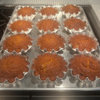
Today, I had leftovers from yesterday. See picture.

So let's talk about a few things that were topics on a few recent threads:

Vacuum sealer:

I just use regular veggie bags or Zip lock type bags and a hand vac to remove air. The beef tenderloin you see in the picture was at least 8 months in the freezer, no sign of freezer burn.

However, if you have a vacuum sealer, I really think you should also start looking into the sous vide cooking method.

Why sous vide?

Meat is very expensive. How do you enjoy the most of a $100's worth of prime ribs? There is no practical way to make a perfect prime rib, steak, chicken or lamb using any normal cooking method. You only end up with pretty good results if you are skillful enough.

But if you use sous vide cooking, you are guaranteed a perfect end result, rare, medium rare, or medium, the entire piece of meat, not just part of it. You will notice from the picture, the tenderloin was cooked medium rare, almost 100%. You cannot make a mistake, and you cannot overcook the meat.

You normally cook clams at 212 degrees. Have you had clams cooked at 142 degrees? The sous vide cooked razor clams were super fantastic.

Have you notice that you cannot duplicate meats cooked in good restaurants ? That's because they mostly use the sous vide method.

Anyone here has cooked sous vide?

In last night's dinner, two guests wanted the steak medium well. So I had my reversible cast iron griddle on a portable camping propane stove on the dinner table, they made the steak medium well themselves, and they had fun doing it on the dinner table. I also use the stove for fondue. I like stove with flame better than electric or induction. It is my superstition that, after a million years of adaptation to cooking with flame, there is some instinctual psychological satisfaction with using fire. Have you notice that fireplaces are mostly not used for warmth?

I have two cast iron reversible griddles, one single burner and the other double burner. After I use them I always just take them to the sink and run cold water over them, even while they are red hot. I have not had them cracked yet. Just lucky I guess?

dcarch
Leftover Dinner


Comments (36)

  • 15 years ago
    last modified: 11 years ago

    I would like to try cooking sous vide, but don't have room or budget for a lot of new equipment. I recall there is a fairly cheap controller that will maintain an simple rice cooker at a preset temperature as measured by a probe in the cooker.

    http://www.auberins.com/index.php?main_page=product_info&products_id=44

    Do you think this would work well enough for a beginner? I have the rice cooker and this wouldn't take up much additional room.

  • 15 years ago
    last modified: 11 years ago

    I'm definitely interested, and have wondered if cheap/simple solutions like what John posted are sufficient or if there's a real benefit to heating/circulator units like what Wms Sonoma sells for $800.

    What equipment did you use for the water bath? And for preparing the pouch? (I've surmised from several of your posts that you don't own a vacuum sealer.)

    Did you sear the meat before or after sous vide? Seems most folks finish the meat after cooking, but intuitively I'm thinking it might be safer to sear it first to kill any bacteria on the surface, then vacuum, then let temp drop before the water bath.

    One of my bigger concerns would be adjusting for individual's tastes in doneness. I suppose your solution of supplying guests with a butane burner is one way, but what about for a more conventional presentation? One of the claimed benefits is that you can leave the meat in the bath as long as needed so you don't have to worry about timing your dinner. But say you're trying to serve up a bunch of 1.75" thick strip steaks and half your guests prefer it M/R at around 130 and the other half prefer M at closer to 140, how you do accommodate that with one setup? Throwing a M/R on the grill or in the oven to come up to 140 seems to defeat the purpose, no? Even just cooking for my wife and me would present a problem. She likes beef a bit more well-done than I, and the current solution is a couple minutes longer cooking time for hers.

    Anyway, the short answer is yes, I'm interested, nope, never done it.

  • Related Discussions

    Sans Vide cooking

    Q

    Comments (20)
    Hi all, Thanks for your advice particularly to FoxCrane for his detail explanation with photos. Actually it is not difficult to build a hot water bath for "sous vide" cooking. A temperature controller, a circulation pump, a heating element and a circuit relay would do the job. While I was in Industry, I have built several similar systems for temparture control on plastic injection molds. Omron offers a wide-range of digital temperature controller in market for precise temperature control. But I won't build this system in kitchen at home. I would buy the Sous Vide Professional on market. However before purchasing I would do some experiments in kitchen first. I tried poached eggs according to following video. The quality is perfect and wonderful! Perfect poached eggs http://www.youtube.com/watch?v=6Mr5QNLbLcY 4 min plastic film Poached Eggs - How to Perfectly Poach an Egg http://www.youtube.com/watch?v=Rtst1iRXI1g I'll try "Sous Vide Steak" according to following video; Sous Vide Steak ⢠ChefSteps http://www.youtube.com/watch?v=q21O515OLxU I don't have Sous Vide Professional nor Vacuum Sealer. I'll use the cooking thermometer to monitor water temperature and water displacement method for vacuum sealing. Seal Food for Sous Vide Cooking or the Freezer with Just a Bowl of Water http://lifehacker.com/5978333/seal-food-for-sous-vide-cooking-or-the-freezer-with-just-a-bowl-of-water Comment and advice would be appreciated. Rgds satimis
    ...See More

    Please tell me about your sous vide set up

    Q

    Comments (21)
    FOAS, the the STC 1000 is not a PID controller. I think it is just a digital thermostatic controlled relay. It can control a heater and a refrigerator at the same time and it has some delay logic in turning the heater/refrigerator on/off. For the heater, I use a stove heating element or a domestic hot water heating element. They are very cheap and they last a long time. In general, they are high wattage/220v heaters (2,000W to 4,000W). However, you can run them at 110V and the wattages become about 1/4. Angie, yeas the Cal 9300 is expensive and they don't even give you the thermocouple sensor with it. I like the cheap PIDs because they have dual displays, set themperature and real time temperature. I am very impressed that you have done Op-amp work. Programing op-amps require real electronic know-how. Anyone else who may be reading this thread, FYI, a sous vide cooker cannot make crepes. LOL! dcarch
    ...See More

    Sous Vide Moves to the Countertop

    Q

    Comments (11)
    (aptosca will read your link later) DH says: There are several ways of doing this. Easiest is to set the oven to what ever temp you want. Put in a big heavy pot. Fill with water and cover. Take your food in a vacuum bag with spices etc, seal and put in water. Let sit and eat. There is no need to spend a lot of money on a temp controller, since the oven will do it. The large pot of water will maintain the temp stable. I am willing to try it however. Making an immersion bath with a temperature controller is quite easy. They can be bought on the used restaurant market not too expensive. basically a steam table. A crock pot can be converted to low temp cooking. I do worry about bacterial contamination however.
    ...See More

    Chamber vacuum - Anyone bought, or considered?

    Q

    Comments (39)
    FOAS, I have a couple of boxes of cooking grade rolls branded Sous Vide Supreme (competing circulator) because I couldn't remember for awhile where I put the first box. I'm still working my way through them. I couldn't find any at the time that listed the plastic type, but these are marked BPA and phthalate free, and the Food Saver ones didn't used to be. The rest of my research back then said these were a good choice. They're smooth, though one roll has some wrinkles where the tube was obviously a bit askew when filled, and I think it vacuums better if the wrinkles are kind of worked out. They don't mark the food, though. I actually like the texture of the Food Saver bags for storage. I think it helps both with pulling out the air and taking the food out. I haven't had the cheese issue, but I've only sealed pretty hard cheeses (parm, gruyere and emmenthaler) and they had plastic wrap on them. I don't know that the Food Saver bags are unsafe to cook in, though I think you have kids you're feeding regularly, and it's better to be extra cautious with the young. Good, nutritious homemade food is more important than plastic residues and breakdown chemicals, but good to make sure that it's as safe as you can get. So it occurs to me that I could just try the Food Saver cooking grade bags for less than a new vacuum sealer, but then I thought it's the power, not just the seal quality, so I think I'll go forward with finding a new one. Much as I might like to have Freddy and Zero (Irinox) there's nowhere to put them. :)
    ...See More
  • 15 years ago
    last modified: 11 years ago

    I have a few things to get done today. I will respond in more details later. Just to get started, imagine how overcooked most meats are cooked at over 212 degrees F to reach internal safety temperature, based on the follow saftey chart:

    dcarch

    Meat Internal Temp.

    Fresh ground beef, veal, lamb, pork 160�F 71�C

    Beef, veal, lamb roasts, steaks, chops: medium rare 145�F 63�C

    Beef, veal, lamb roasts, steaks, chops: medium 160�F 71�C

    Beef, veal, lamb roasts, steaks, chops: well done 170�F 77�C

    Fresh pork roasts, steaks, chops: medium 160�F 71�C

    Fresh pork roasts, steaks, chops: well done 170�F 77�C

    Ham: cooked before eating 160�F 71�C

    Ham: fully cooked, to reheat 140�F 60�C

    Ground chicken/turkey 165� F 74�C

    Whole chicken/turkey 180� F 82�C

    Poultry breasts, roasts 170� F 77�C

  • 15 years ago
    last modified: 11 years ago

    Those look like the USDA's guidelines, and outdated ones at that. At those temperatures those meats are overcooked regardless if the source of heat is above or below 212. Give me a break, beef roast at 145? Try medium well, not medium rare.

    While sous vide has been around for a while, as I understand it its use has become more wide-spread in just the past several years. To say that "most" meat cooked with traditional methods is overcooked would sound pretty far-fetched to me.

  • 15 years ago
    last modified: 11 years ago

    Check out this link for one guy's homemade heating/circulating system plans, cost around $75.

    Here is a link that might be useful: $75 sous vide

  • 15 years ago
    last modified: 11 years ago

    I am running around trying to get many things done. I am sorry if my answers are too brief. Ask me again, any questions.

    1. I see in the kitchen renovation thread people spend hundreds of thousand dollar in upgrades, when now a sous vide cooker can be bought for under $500.00.

    2. Or, I have done it this way:

    a. A digital aquarium temperature controller capacbable to sense temperaturte to over 99 degrees C cost me $20.00. It is capable to within one degree of accuracy and has relay output to control a heater up to 2500 watts.
    b. An aquarium water pump to circulate water for $12.00
    c. A 300 watt aquarium water heater for $15.00
    d. A beer cooler. I forgot how much I pay for it.

    3. The above system seems to perform well within one degree of accuracy reliably. The beer cooler is insulated to save operating cost.

    4. I did have to make a box to house the above with switch-able plug-in outlets for the pump and the heater.

    I will post a picture sometime.

    dcarch

  • 15 years ago
    last modified: 11 years ago

    dcarch, when you have a chance, could you post the actual model numbers of the aquarium temperature controller and the water heater? And maybe a source?

    I assume that in essence, the aquarium temperature controller is an 'open on rise' thermostat--that is, when the temp reaches a certain level, it breaks the circuit and no more heat occurs until the temp falls to a certain level.

  • 15 years ago
    last modified: 11 years ago

    Posted by johnliu "I would like to try cooking sous vide, but don't have room or budget for a lot of new equipment. I recall there is a fairly cheap controller that will maintain an simple rice cooker at a preset temperature as measured by a probe in the cooker.

    http://www.auberins.com/index.php?main_page=product_info&products_id=44

    Do you think this would work well enough for a beginner? I have the rice cooker and this wouldn't take up much additional room."

    John,
    1. Re. No Room - The unit requires no attention, once the temperature is set, that's it. Because the temperature is set, you cannot over cook, so timing is not very critical. Therefore, you can locate the unit in your garage or basement, where I have mine.

    2. Re. No money - See my other posts. You can get going with such low budget. Here is a great incentive to go sous vide. Expensive meats are actually less flavorful, it's just that they are more tender. With sous vide, you can buy the cheapest meat, and they can be tender and more flavorful. Now that's saving money!

    3. Re. Rice cooker - Yes you can use a rice cooker and a temperature controller, but you will need to add a water circulator(pump $10.00) to get the water temperature uniform. A rice cooker is kind of small for many recipes.

    dcarch

  • 15 years ago
    last modified: 11 years ago

    Posted by arley "dcarch, when you have a chance, could you post the actual model numbers of the aquarium temperature controller and the water heater? And maybe a source?
    I assume that in essence, the aquarium temperature controller is an 'open on rise' thermostat--that is, when the temp reaches a certain level, it breaks the circuit and no more heat occurs until the temp falls to a certain level."

    I got all the components on eBay.

    http://cgi.ebay.com/Mini-Digital-Temperature-Controller-Thermostat-Aquarium-/130437058987?pt=LH_DefaultDomain_0amp;hash=item1e5ea791ab

    http://cgi.ebay.com/500-watt-titanium-aquarium-heater-/250718771677?pt=LH_DefaultDomain_0amp;hash=item3a6000d9dd

    The aquarium controller comes with a temperature sensor. It actually has two relay outputs, one for heat, and one for a refrigerator. Each relay can handle 2500 watts of current. When your set temperature is reached, the relay shuts the heater, then turns on the heater when the temperature drops below. It seems to me that it can keep your set temperature well within one degree margin. Not bad at all!

    The heater is a submergeable heater, except I needed to remove the built-in thermostat, which was not easy, so that the temperature controller can take over. Instead, you can use a cheap immersion electric heater, the kind you use to make a cup of hot water. You can get them from Amazon.com. If you use one of those, make sure that you don't submerge the whole thing. It may not be fully submergeable.

    dcarch

  • 15 years ago
    last modified: 11 years ago

    Posted by foodonastump "Those look like the USDA's guidelines, and outdated ones at that. At those temperatures those meats are overcooked regardless if the source of heat is above or below 212. Give me a break, beef roast at 145? Try medium well, not medium rare. "

    A disclaimer: When cooking temperature is discussed I will have a tendency to post information that�s more conservative, if that�s enough to illustrate a point in discussion. Yes, those temperatures are on the high side. Not only that, they are actually just part of the safety story. There is also a time factor involved. In other word, 140 degrees F can actually be lower if the cooking time is longer. The most important thing is to do your own research.
    "While sous vide has been around for a while, as I understand it its use has become more wide-spread in just the past several years. To say that "most" meat cooked with traditional methods is overcooked would sound pretty far-fetched to me."

    Far-fetched or not, I am not sure. When you cook lobster, what�s the water temperature? 212 F? Have you tried lobster cooked in 140 F? You roast your beef at 350 F (some at 500 F). Have you tried 130 F? Pork at 180 F? Chicken at 142 F?

    You tell me, Lobster cooked at no more than 140 F in its own juice, compared with 212 F steamed or boiled, which one will be more tender and flavorful?

    Another disclaimer; I have said, you do get wonderful tasty cooking with traditional cooking methods, but sous vide cooking is a new world.

    I will answer your other questions when I come back from work today.

    dcarch

  • 15 years ago
    last modified: 11 years ago

    dcarch, when you have time, if you happen to have bookmarked any good websites on sousvide, I would be very interested in doing some more reading. Thanks for making the effort to post all that you already have shared.

  • 15 years ago
    last modified: 11 years ago

    dcarch - Nope, never had any of the above so I can't speak to them. Definitely interested, but questioning the practicality for the home cook. Of course if I can really make it cheaply and easily to play with, I'm game.

    Regarding that controller, you said, "It actually has two relay outputs, one for heat. Each relay can handle 2500 watts of current." Sounds more like line voltage than relay, correct?

    Regarding the heating element, the link states that there is no internal thermostat, so what's to disable or bypass? Does the out-of-water safety shut-off kick in at lower than sous vide temps? Can you just wire it directly to the controller and call it a day?

    I take it you've not had any issues with the control unit overheating? The unit that John linked warns that quantities over 3 gallons must be preheated or it will pretty much self-destruct. Considering the container that WS sells to go with their 1100W unit holds close to seven gallons, I'm wondering if that's a concern.

  • 15 years ago
    last modified: 11 years ago

    John,

    I don't know of a dedicated forum or WEB site for sous vide. When I need to find a recipes I just Google, say, sous vide prime ribs.

    I think you know a few cooking forums where there are many professional chef members where you can ask questions.

    dcarch

  • 15 years ago
    last modified: 11 years ago

    Posted by foodonastump "-----Regarding that controller, you said, "It actually has two relay outputs, one for heat. Each relay can handle 2500 watts of current." Sounds more like line voltage than relay, correct? "

    An electrical relay, is just like a switch. It turns things on and off. It does not supply power. You have to connect it to power. The controller has three output positions/situations for the relays. (a) "ON" for the heater if water temperature is not hot enough. Separate "OFF" for refrigerator, if you hook up to a refrigeration machine. (b) "OFF" for the heater the moment water temperature reaches set temperature, still, "OFF " for refrigerator. (c) If for some reason the water temperature goes somewhat above set temperature, "OFF" for the heater, and "ON" for the refrigerator.
    Obviously, if you have a $100,000 worth of aquarium fish, you will need a refrigerator to prevent the temperature from going above the optimum temperature.

    "Regarding the heating element, the link states that there is no internal thermostat, so what's to disable or bypass? Does the out-of-water safety shut-off kick in at lower than sous vide temps? Can you just wire it directly to the controller and call it a day? "

    Most aquarium water heaters have internal thermostats. They are mostly bi-metal mechanical type, which does not have enough accuracy, abut 10 degrees +-. The digital controller can keep the temperature within one degree. If your heater does not have a thermostat, just plug it in the controller and call it a day. If you use a rice cooker or slow cooker, set the thermostat to the highest, and plug in the controller, and the controller will take over.

    "I take it you've not had any issues with the control unit overheating? The unit that John linked warns that quantities over 3 gallons must be preheated or it will pretty much self-destruct. Considering the container that WS sells to go with their 1100W unit holds close to seven gallons, I'm wondering if that's a concern."

    I have been sous vide-ing for about a year with my setup. I never posted anything about the system because I don�t believe I should post anything that�s not been tested reliable. Digital controllers do not self-destruct. They are all solid state electronics. The things that can go bad are the relay contacts in the controller if they are not rated to handle high electric current. The unit I linked can handle 2,500 watts. I don't see you needing an aquarium heater higher than 500 watts. A rice cooker may have 1,500 watts. I don't know. I don't have one.

    Imagine, you can enjoy sous vide cooking for about half the price you paid for a Thermapen. BTW, with sous vide, you don't have to check temperature with a thermometer.

    A ready made sous vide cooker is now under $500.00, if you don't want to fool around with configuring your own.

    dcarch

  • 15 years ago
    last modified: 11 years ago

    It turns things on and off. It does not supply power.

    I know. Which is why I questioned if the one you linked is really powering a relay or if it's providing line power. 2500W (your words), 10A/220VAC (wiring diagram): Not values I'd typically associate with simply powering a relay. Sounds like line voltage to me.

    Most aquarium water heaters have internal thermostats.

    I know. Which is why I questioned if the particular one you linked has one, considering they state in all caps and huge font, "THIS HEATER NEEDS A CONTROLLER."

    Digital controllers do not self-destruct.

    I paraphrased the following warning which I'm now quoting from the manufacturer of a controller that DOES supply power directly to the heater:

    "The controller should not be used for heating pot that contains more than 3 gallon (12 liter) of water unless it is preheated to the setting temperature. This limitation is due to heat produced inside the controller by the solid state relay during initial heat up. To make the controller compact size and splash proof for kitchen environment, the controller uses the top surface of the box to release the heat. That limits how much heat can be released. During the initial heating up, the controller is limited to run full power of 14 A for 30 minutes only. This is just enough energy to heat 12 liter (3 gallon) of water from 20 �C (68 �F) to 80 �C (176 �F). Longer time will cause the controller to overheat. It will not only damage the controller but also is dangerous. It should be noted that once the temperature reaches the set temperature, the controller only outputs very limited power to maintain the temperature. Very little heat will be produced by the controller. Therefore, the only way to control the larger pot is to preheat the water without using the controller first."

  • 15 years ago
    last modified: 11 years ago

    Okay. That unit is basically a PID controller hooked up to a solid state relay, which is typically a Controller Silicone Rectifier. Some CSR circuits may not be designed to handle inductive electric load, only resistive loads. A mechanical relay can handle all kinds of loads.

    It has some advantages that there is no mechanical contacts to be worn out. However, the disadvantage is it is somewhat heat sensitive from over-loading.

    What they are trying to do is to make it easy to plug in a rice cooker to do sous vide. but I will never do sous vide that way without a circulating pump. You will not get a completely even water temperature without one, and that is not good at all.

    The price for that unit plus shipping is about $150, The unit I have will perform well for $20.00 and handle a higher electric load. I don�t see the need for an alarm and a timer for sous vide cooking.

    Regarding the heater thermostat, apparently I linked to a 500 watt unit, which some have no thermostats. Most 300 watt units have.

    Just a note, some sous vide cooking recipes need 48 hours or more cooking time, I don�t want to use an un-insulated rice cooker or slow cooker to be on that long. My beer cooler is insulated.

    To all others who are reading this thread. Please don't let all these tech stuff turn you off. Sous vide cooking is much simpler than regular cooking:

    "Set it, and forget it"

    dcarch

  • 15 years ago
    last modified: 11 years ago

    Somehow all this talk of aquarium heaters has me envisioning truite au bleu.

  • 15 years ago
    last modified: 11 years ago

    Ok, thanks. Obviously I'm electronically ignorant, it's just that I think of relays as being triggered by low voltage, very low amperage. That's why the 110/220 10A output threw me off. I assumed that was the power source for the heater. So, with that cleared up (I guess) can you link the relay that you used? Anything else missing? Since the heater doesn't seem to need any modification, I'm thinking this shouldn't be brain surgury, right?

  • 15 years ago
    last modified: 11 years ago

    On one hand I am trying to explain things a little, on the other hand, I am hesitant to. I don't want to make it sound so complicated.

    The relays come inside and part of the controller.

    At the end, the system and components are plug-&-play.

    The mechanical relay is electrically connected, and I know how it is grounded. The control unit John linked with a solid state relay that's optically linked, which is not an unusual design, but that breaks the ground loop. I am sure they have condsidered that. If I am working around water and electricity, I want to be sure that everything is grounded.

    I will post a picture of my setup sometime soon.

    dcarch

  • 15 years ago
    last modified: 11 years ago

    DCarch, I hope it is very soon. I have been following this discussion with much interest. I already told my DH once he is done modifying our smoker/BBQ, I have another project for him waiting.
    I am still trying to find a way to cook the cheaper cuts of beef and pork here, so that is is edible and Sous Vide might be the key, else I will give up on those cuts.

  • 15 years ago
    last modified: 11 years ago

    Posted by punamytsike "----I am still trying to find a way to cook the cheaper cuts of beef and pork here, so that is is edible and Sous Vide might be the key, else I will give up on those cuts. "

    The surprising thing is that this method of cooking acutually make those cuts very delicious, not just edible.

    dcarch

  • 15 years ago
    last modified: 11 years ago

    Disclaimers:

    1. While the technical skills and knowledge involved in configuring a custom sous vide cooker is fairly basic, it is important that you should seek professional advice if you are not familiar with electrical work. I am offering this information for your amusement only, not as instructions for construction.

    2. While the concept and practice of sous vide cookery is not new or sophisticated, as you know, anytime preparing food in low temperature, there are serious concerns with health safety that you need to verify. Please do your own recipe research, and do not assume that my information is suitable for your health.

    -------------------------------------------------------------------

    Here are pictures of my $50.00 sous vide set up.

    The key component (the brain) is the temperature controller unit.

    I have the controller housed in a metal case together with a master switch "S" and three outlets.

    The master switch turns everything off/on, including the controller.

    The controller�s built-in relay connects/disconnects power to outlet #1 depending on the set temperature.. This outlet is for the electric heater.

    Outlet #2 is for the water circulator pump, and it runs fulltime.

    Outlet #3 is a spare.

    I have removable (pink) foam boards that I use to divide the cooler lengthwise or widthwise, depending on what I am cooking, so that I don�t have to heat up the entire cooler�s water.

    The blue bracket is for hanging pouches.

    I also made a foam cover to fit over the cooler to minimize temperature and moisture lost.

    The entire set up is portable so that I can still use the beer cooler as a beer cooler.

    Dcarch


  • 15 years ago
    last modified: 11 years ago

    Nice! Looks pretty straightforward and I've got parts on order.

    So, on to COOKING... Are you willing to discuss the safety issues? You cooked your chuck at 139.5 which I suppose is close enough to the bottom end of the safety zone, but I think for most folks (me definitely) that would be overdone. How does one mitigate risk at lower temps? Like your lobster for instance.

    I know you tend to be cautious about giving advice in this regard, so I'm also wondering if you have a recommended book on the topic or if most of your research was online.

  • 15 years ago
    last modified: 11 years ago

    Books: If you search "sous vide books" on Amazon.com, a few will come up.

    Lobster: I know they do serve lobster sushi. Any temperature below 212 degrees F (steam, boil, broil) will be better.

    Food safety. It is always a controversial topic. I don�t want to get into spending time every time to get into "Can you proof to me that it is safe" discussion. We can talk about it sometimes. I do it the brainless way. When I need to do a dish, I just Google, for instance beef short ribs, many recipes with temperature and timing recommendations will come up. I will pick one that seems to be the most reasonable to use.

    dcarch

  • 15 years ago
    last modified: 11 years ago

    Actually over a hundred come up, a couple dozen with high reviews. That's why I asked if you had any favorites.

    I'm sorry you don't want to discuss actual cooking, but then that never has seemed to be your thing. But thank you for the advice and inspiration - I'm looking forward to building and experimenting!

  • 15 years ago
    last modified: 11 years ago

    Shared this technique and your instructions with DH. Unfortunately electric system would not work here, too expensive to run. So my task is to look into propane water heaters and see if anything like that is feasible, else I need to look into different solution to deal with the tough, inedible meats :-/

  • 15 years ago
    last modified: 11 years ago

    punamytsike - I have no idea what you pay for electricity but I have a hard time thinking the usage is cost prohibitive. Once the water is up to temp (which you can do stove-top or by any means you'd like) all you're doing is maintaining temp in an insulated box. dcarch used a 300W heater, so if it's running 25% of the time (total guess) you're at less than 2KW over the 24 hour period. For me that would be less than 50 cents, and I'd be saving a lot more than 50 cents by purchasing cheaper cuts of meat. The pump I bought (although in retrospect I think it might not be an appropriate one) is a mere 2.7 watts, and I'm sure the controller is equally negligible.

    Sound about right, dcarch?

  • 15 years ago
    last modified: 11 years ago

    Dcarch, that meat
    (well, the whole dinner, actually)
    Looks absolutely AMAZING!

    Rusty

  • 15 years ago
    last modified: 11 years ago

    Rusty, thanks.

    punamytsike, what FOAS said. An insulated beer cooler to cook sous vide uses so little power.

    FOAS, the power used by the pump is not wasted power, it converts into heat because it is inside the cooker. One watt = 3.41 BTUs.

    The power used by the entire system at the end, heats up your house, and the energy is not wasted in the winter time.

    dcarch

  • 15 years ago
    last modified: 11 years ago

    We are considering going all solar for power generation. We are sizing our system for 300 KW hours per month, our current usage if around 270 Kw/H. So I cannot use up 48 KW/H to make one dinner, if FOAS numbers and assumptions are correct.

  • 15 years ago
    last modified: 11 years ago

    Punamytsike - Less than 2KW total over 24 hours, not 2KW/H for 24 hours. Huge difference.

  • 15 years ago
    last modified: 11 years ago

    CHECK OUT QVC's web for Food Saver. Seems that they have some special prices (this week) on FS machines and items that are used for vacuuming with the machine.

    I purchased my Food Saver from them several years ago, and it is still working for me! (Really need a new one.)

    Here is a link that might be useful: Food Saver

  • 15 years ago
    last modified: 11 years ago

    Darch nice setup. I want to try suis vide but i too have a limeted budget.
    I can imagine how your energy usage compares to those people using an open tray plus an aquarium air bubbler for circulation, a lot less evaporative cooling.

    I've heard the aquarium water pumps work fine for 130F-150F water but they die above that and some things should be cooked at 180F like vegatables or some meats? I plan to start with mostly beef and things so i suppose an aquarium pump would be good enough to start with but i'd need something else if were to do those other things.

    For $15 on ebay i've found a small coffee maker style pump that can go over 212F but its a puny 1.8W. I've found many dishwasher pumps for the same price that can go up to 180F. I think they start at 40W and get several times larger. They arent submerged so theres some heat loss there.

    I've also though about using my paint mixing paddle with a drill mounted through the cover.

    After an hour or two of cooking is the water bath and meat surface equalized enough that the circulation can be shut off??

    Could you tenderize a piece of meat by doing it sous vide in a front loading washing machine j/k lol.

  • 15 years ago
    last modified: 11 years ago

    mike9,

    Absolutely, air circulator bubbles carry away a lot of heated air and vaporization carry away a lot of BTUs.

    I don't know what's the upper temperature limit is for the circulating pump. I don't think it will fail for sous vide temperature ranges. I do have back up pumps, they are cheap.

    You really don't need a lot of power to circulate water. Drill and a paint mixing paddle would be way over doing it.

    Circulating pump should be operating as long as you are cooking, otherwise the temperature controller would not be able to keep uniform precise temperature.

    "Could you tenderize a piece of meat by doing it sous vide in a front loading washing machine j/k lol."

    Don't laugh. People have done it using a hot tub for large parties, and people have done it using a dish washer.

    dcarch

  • 15 years ago
    last modified: 11 years ago

    How large of a cooler do you recommend?

    I have a 36 quart cooler on hand.

    Instead of a pink foam divider , I could place a weight in my mini-cooler and drop that into my 36 quart cooler to displace half the volume

    How much power do i need?

    If i had to raise that the temperature of the cooler 30-40 degrees above hot tap water then its going to take a long time with 300w. I'd have to pull out the pans boil water on the stove etc. Could say a 1500w heater be too much and have problems with overshooting? I plan on using a PID and solid state relay.

    How much power does it take to sustain the equilibrium temp after everything has been cooking for many hours?

    How much power does it take to maintain the set water temperature after a bunch of frozen food has been dropped into the bath? That could be important if i have an item already cooking and then later throw something frozen in there, if the temp of the water dropped for a long time it could mess up the cooking time of the first item.

    I was looking at these heaters.

    http://www.amazon.com/NORPRO-559-Immersion-Warming-Liquids/dp/B000I8VE68/

    http://www.amazon.com/Bush-CH-101-Energy-Saving-Immersion-Heater/dp/B003DLB5KW/

    http://www.amazon.com/Reliance-9000129-045-Electric-Heater-Element/dp/B000H5W1TQ/

  • 15 years ago
    last modified: 11 years ago

    Posted by mike9 :

    " How large of a cooler do you recommend? "

    How big a cooler will depend on how much food you try to sous vide. Since the components of my system are portable, I have several container sizes, from a small one to cook a few eggs to a good size cooler for large roasts.

    "How much power do i need? "

    The pump is less than 10 watts, the rest depends on the electric heater. Remember the heater use not much power to keep the water at the set temperature.

    "If i had to raise that the temperature of the cooler 30-40 degrees above hot tap water then its going to take a long time with 300w. I'd have to pull out the pans boil water on the stove etc. Could say a 1500w heater be too much and have problems with overshooting? I plan on using a PID and solid state relay. "

    I always use boiling water to get the water bath temperature high enough. 1,500 W heater will not overshoot if you have a good enough circulator. PID controller with a solid state relay, I believe, but not sure, throttles the heater from low to high. PID will, using self-tuning, self-adjusting to compensate overall equipment overshooting.

    "How much power does it take to sustain the equilibrium temp after everything has been cooking for many hours? "

    Depends on the insulating property of your container and the size of the container.

    "How much power does it take to maintain the set water temperature after a bunch of frozen food has been dropped into the bath? That could be important if i have an item already cooking and then later throw something frozen in there, if the temp of the water dropped for a long time it could mess up the cooking time of the first item. "

    Just keep an eye on the temperature reading, add more boiling water if needed.

    "I was looking at these heaters.
    http://www.amazon.com/NORPRO-559-Immersion-Warming-Liquids/dp/B000I8VE68/
    http://www.amazon.com/Bush-CH-101-Energy-Saving-Immersion-Heater/dp/B003DLB5KW/
    http://www.amazon.com/Reliance-9000129-045-Electric-Heater-Element/dp/B000H5W1TQ/ "

    The first two not too good: 1. they are not long lasting. 2. They are not completely submersible.
    The third one is very long lasting, but requires you to build something around the exposed terminals to waterproof and shock-proof.
    -------------------------------------------
    I would like to say this to those of you who may be reading this thread, do not worry about any of these tech stuff. They are not what sous vide cooking is all about.

    A ready-made sous vide cooker is not that expensive anymore, plug it in, set the temperature and enjoy the superior food. That is all.

    All these annoying tech stuff are for crazy folks like me, who hasn�t quite outgrown his toy playing delinquencies yet.

    dcarch